Posted By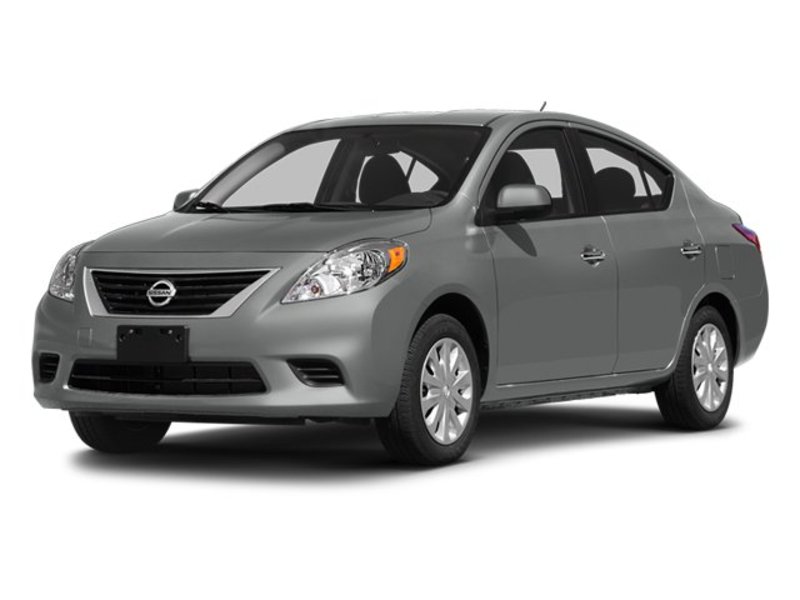
One of the features of the Decumulation years is making limited funds stretch. Below, early retiree and Montreal resident Michael Trani shows his analysis for his decision to lease rather than buy late-model cars for 20- and 30-year periods following his early retirement at age 55. He uses income from an investment to fund the lease, a strategy that lets him drive a new car every four years. He says he’ll never buy outright again.
By Michael Trani,
Special to the Financial Independence Hub
A few months ago, for family-related reasons, I was forced to retire from my job at the relatively young age of 55. Yes, lucky me, I was now living the Freedom 55 dream! I was well aware that in this new phase of my life, my future earning capabilities would be severely restricted. Wishing to provide stability to my financial affairs, I embarked on a mission to essentially fix all the present and future costs I could control.
My first order of business was to develop a low-cost strategy to provide me with a car for the next 20 to 30 years. While employed, I had saved quite a bit of money to purchase and carry out the required maintenance on a new car. However, now that I did not have the safety net of a job, I knew that once this money was spent, it would be gone for good. I certainly would not be able to replace it. I had been buying cars at 10-year intervals, and for my potential future car in 2024, things did not look good.
The solution to my predicament was simple. Why not simply invest the money I had saved in an investment that returned regular, monthly, tax-advantaged income, then use this income to finance a car lease in perpetuity?
With the aid of a spreadsheet, I compared the cost of purchasing a new car for “cash” every ten years with a car lease financed strictly with the monthly distributions of my investment. My comparison looked exclusively at the 20- and 30-year timeframes, as these represent my future driving years. I also factored in the necessary tax treatment for the monthly distributions and the residual value of the investment.
The investment I used to finance my car lease strategy is: Investors Group Allegro Balanced Growth Canada Focus Class –T J DSC. This is a special balanced mutual fund that distributes 7% yearly on a monthly basis. The distributions are treated as a Return of Capital, and when all the capital has been returned (in approximately 15 years) the distributions become capital gains. I am sure that other well-established financial institutions will have similar products available.
In the following table I have summarized the findings of my comparison.
Comparison of car strategies for 20 and 30 years
Car: 2014 Nissan Versa Note
Duration of lease: 48 months
| Car strategy | 20-yr strategy; cost per month | 20-yr strategy; total cost 20 years | 30-yr strategy; cost per month | 30-yr strategy; total cost 30 years |
| purchase “cash” | $300.60 | $72,144.00 | $300.60 | $108,216.00 |
| lease strategy | $119.08 | $28,579.76 | $119.53 | $43,030.76 |
| savings of lease over “cash” | $181.52 | $43,564.24 | $181.07 | $65,185.24 |
Note 1: The lease includes the dealer-offered free scheduled maintenance for the duration of the lease (in this case 48 months) and a $600 winter tire credit ( ufficient to purchase 4 brand-new Michelin X-ICE tires)
Note 2: With the purchase “cash” strategy there is no free scheduled maintenance and no $600 winter tire credit
I was totally blown away by these results. Certainly, I had made assumptions in my calculations, but, nevertheless, it is clear that the leasing strategy considerably reduces the cost of financing new cars, in perpetuity I may add. The cost reduction is not trivial when I can lease a car with only a third of the money required to purchase that same car.
Leasing yields a new car every four years
Sure enough, I followed through on my plan. I implemented my investment strategy and recently leased a Versa Note. Now every four years I will have a new car. I realize that at the end of 20 or 30 years, I certainly will not own a car, but will instead own the units of the Allegro fund, which will continue to generate monthly income. I believe I succeeded in my mission to devise a low-cost strategy to finance my future car requirements. I will never buy a car outright again.
As a side note, while negotiating my car lease, I learned that car dealers are willing to give away quite a bit of goodies for free. I negotiated four years of free scheduled maintenance and four really good, brand-name, winter tires for free as well. What more could I ask for?
The following table I details all my calculations, to permit easy verification.
Fund: Investors Group Allegro Balanced Growth Canada Focus Class – T J DSC
Date: June-27-2014
Unit Value on this date: $10.8492
Monthly Distribution: $0.0616 per unit
To generate $332.50 monthly requires 5,397.7273 units or $58,561.02 to be invested in the Allegro fund (the initial cost)
20-year strategy
Purchase price of a 2014 Versa Note: $19,072.00 cash payment in full, assume value of trade-in cancels the sales tax
Average maintenance cost per year: $1,700.00
Total cost for 10 years: $36,072.00
Total cost of purchasing per month: $300.60
Total cost for 2 cars over 20 years: $72,144.00
Leasing a 2014 Versa Note for: $332.50 per month line 1
Maintenance expense: $0.00 per month, free scheduled maintenance line 2
Insurance for replacement value: $17.51 per month, $840.40 for 48 months line 3
Insurance for end of lease protection: $19.79 per month, $950 for 48 months line 4
For 20 years this will cost: $88,752.00
The actual cost of leasing: $67,513.02 A. the initial cost of the Allegro fund + ((lines 2+3+4) x 240 months)
The capital gains tax: $4,987.50 B. to be paid on the distributions from years 15 to 20
The net cost of leasing for 20 years: $72,500.52 C. defined simply as (A + B)
Residual value of the Allegro fund: $43,920.77 D. value of the Allegro fund after all return of capital has been used up and units theoretically sold
The “true cost” of leasing for 20 years is: $28,579.76 E. defined simply as (C – D)
The “true cost” of leasing per month is: $119.08 F. defined simply as (E / 240 months)
30-year strategy
Purchase price of a 2014 Versa Note: $19,072.00 cash payment in full, assume value of trade-in cancels the sales tax
Average maintenance cost per year: $1,700.00
Total cost for 10 years: $36,072.00
Total cost of purchasing per month: $300.60
Total cost for 3 cars over 30 years: $108,216.00
Leasing a 2014 Versa Note for: $332.50 per month line 1
Maintenance expense: $0.00 per month, free scheduled maintenance line 2
Insurance for replacement value: $17.51 per month, $840.40 for 48 months line 3
Insurance for end of lease protection: $19.79 per month, $950 for 48 months line 4
For 30 years this will cost: $133,128.00
The actual cost of leasing: $71,989.02 A. the initial cost of the Allegro fund + ((lines 2+3+4) x 360 months)
The capital gains tax: $14,962.50 B. to be paid on the distributions from years 15 to 30
The net cost of leasing for 30 years: $86,951.52 C. defined simply as (A + B)
Residual value of the Allegro fund: $43,920.77 D. value of the Allegro fund after all return of capital has been used up and units theoretically sold
The “true cost” of leasing for 30 years is: $43,030.76 E. defined simply as (C – D)
The “true cost” of leasing per month is: $119.53 F. defined simply as (E / 360 months)
Montreal-based Michael Trani can be reached at michael_trani@hotmail.com.