
Debt & Frugality

As Didi says in the novel (Findependence Day), “There’s no point climbing the Tower of Wealth when you’re still mired in the basement of debt.” If you owe credit-card debt still charging an usurous 20% per annum, forget about building wealth: focus on eliminating that debt. And once done, focus on paying off your mortgage. As Theo says in the novel, “The foundation of financial independence is a paid-for house.”

How to set long- and short-term financial goals

By Angela Baker

Finances are always problematic, and everyone struggles to find balance in this field.

At the beginning of our professional careers, we are on a tight budget with little perspective for any progress. As time passes, our financial goals get higher and desires may seem unrealistic.  There are many ways to plan finances and to set long-term and short-term financial goals. Below, we will try to explain steps for success in this activity.

Define goals and objectives

If you decided to set financial goals, start with clear contemplation about what you need and how you will achieve that. This is the first and most important step. Decide how much money you want to possess each day, month or year. Then after you have determined the amount, start to plan the way for realizing the financial goal.

This may include a new activity like running a website, opening a store, renting houses or finding a well-paid job. No matter what is it, you need a lot of planning and counting. Also, you must research a lot, listen to advice from friends, people around you, and acquaintances. Only with fully-planned action will you be on the way to achieve short- and long-term financial goals.

Identify your financial requirements

The second strategy in setting your financial objectives includes identifying personal needs about money. Everyone spends a certain amount of money daily for basic needs as food, car, hygiene, or meetings with friends. If you live alone, it will be easier to recognize personal requirements because we all know our own needs. Otherwise, if you have a big family and  have to maintain all of them, it will cost you days to count how much money you need. Also, you should not leave out extra spending for a holiday, services in the house, clothes, etc. The final list could make you scared or nervous, but you must face it.

Improve your saving habits

Continue Reading…

Millennial Money: How I deal with my Financial Anxiety

How do I deal with my Financial Anxiety? Other than “I don’t.”

As a ‘mature student’ and a Millennial I find myself really struggling to maintain any sort of enviable lifestyle on a basically non-existent budget. At 25, it feels beyond embarrassing to still be relying on my parents, especially after having had a 1-year contract (in Hong Kong) which kept me self-sufficient. Though it has felt at times like a back-track, I know that in the long run this step back into financial dependence will be worth it.

In discussions with some of my friends, it became clear that I was in no way alone in feeling a little lost and hopeless in the finances department. It has been said time and time again that as millennials, we are meant to be discovering our passions and taking risks with our careers, but clearly all of this does little to dissuade those of us in the midst of these struggles from feeling as if we’re doing something terribly wrong.

Stop comparing yourself to your peers

How am I meant to reconcile these feelings with the facts I know to be true ( it’s just temporary! As soon as you’re finished school you’ll feel so much better about your finances)? One of my closest friends had some helpful words when I came to her with how I was feeling: You have to stop comparing yourself to people around you.

I’m sure that response has elicited at least one “duh!” from this audience, and even I myself am well aware of this simple truth. It is, however, a different thing to actually put into practice.

We’re at the age now where half of us are well into our careers, purchasing first homes, getting married, and even starting to have children. Meanwhile the other half (the camp I fall into) are running around like chickens with our heads cut off trying to find one stable thing in our lives to grab hold of to keep us steady. Continue Reading…

Is a fixed-rate or variable-rate mortgage right for you?


By Alyssa Furtado, RateHub.ca

Special to the Financial Independence Hub

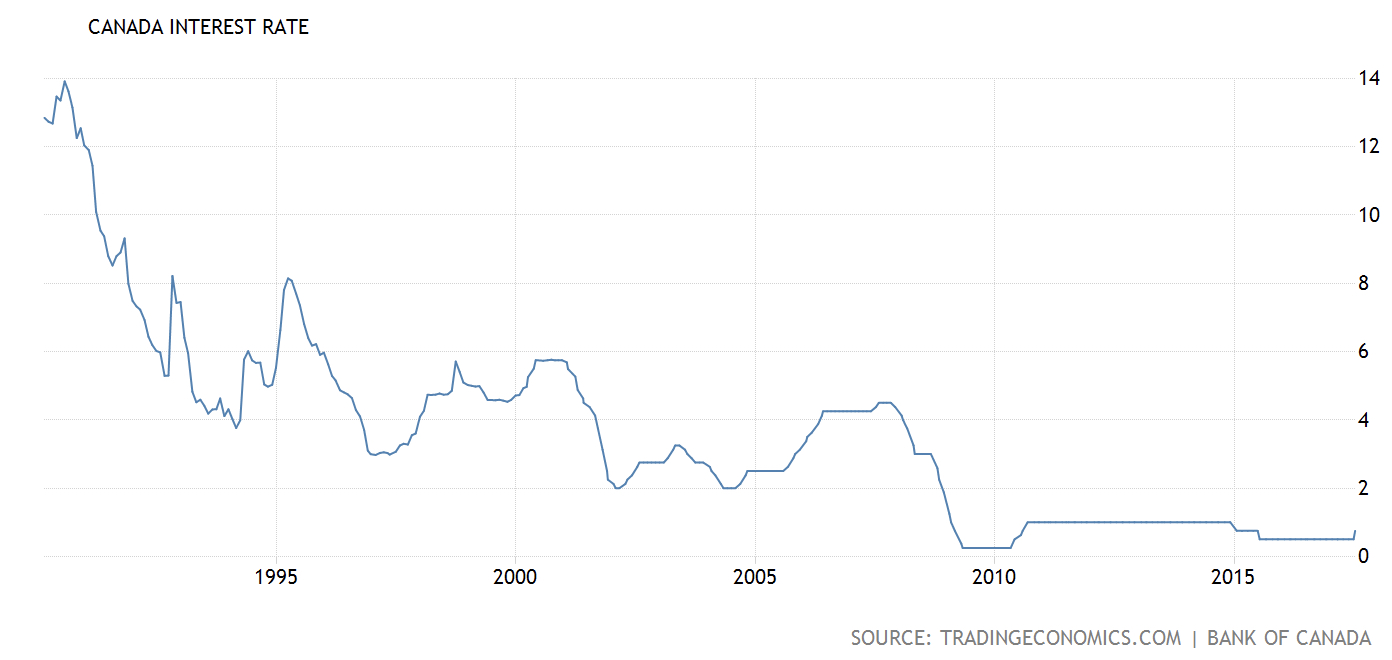
Interest rates in Canada have rarely seen such lows, which makes borrowing money to buy a home pretty attractive. But when you start looking around for the best mortgage rates, homebuyers face a choice of going with a variable-rate or a fixed-rate mortgage.

So what’s the difference? A variable-rate mortgage follows interest rates as they move up and down. And a fixed-rate mortgage is locked in for a certain term. Sounds simple, but deciding which option works for you can depend on a number of factors. Here are some essential pros and cons:

Fixed-rate mortgages

Pro: Added security

You don’t have to worry about whether your payments will change because of economic factors you can’t control during the mortgage term. This makes long-term financial planning much easier.

Say you get a five-year fixed-rate mortgage, with a 2.5% interest rate. Regardless of whether interest rates go up or down elsewhere, the rate will stay at 2.5% for the entire five-year period. This allows you to set it and forget it until it comes time to renew your mortgage, at which point you’ll need to renegotiate your rate. At this point your rate could be higher or lower.

Con: Added expense

The luxury of knowing your rate will remain the same will likely cost you, as fixed rates tend to be higher overall.

Variable-rate mortgages

Pro: You can save a bundle

Although by no means guaranteed, historically borrowers save more money over time with this method. Your rate is correlated to the prime lending rate, which can fluctuate. Your rate is quoted as the prime rate plus or minus a certain percentage, such as prime minus 0.4%. In this instance, if the prime rate is 2.7%, your mortgage rate will be 2.3%. Such a small percentage might not look like it will affect your payments, but the savings will add up significantly over time.

Con: Rates can always go up

The variable-rate option comes with a certain risk. If your bank’s prime lending rate changes, the interest moves up or down in conjunction with it. The amount you actually pay your lender on a regular basis (biweekly, monthly, etc.) won’t necessarily change. If the interest rate goes down, more money from your payment will go toward paying down the principal. If the rate goes up, more of the payment will be eaten up by interest, and sometimes your regular payment can also rise. Continue Reading…

Choosing ETFs: the best ones are diversified and have low MERs

If you want to include the best ETF investments in your portfolio, then it’s important to consider a variety of components. That’s because all Exchange-Traded Funds aren’t created equal

ETFs are one of the most popular and most benign investing innovations of our time: and the best ETF investments can be great low-fee ways to hold shares in multiple companies with a single investment.

The best ETFs practice “passive” fund management

The best ETFs practice “passive” fund management, in contrast to the “active” management that conventional mutual funds or some new ETFs provide at much higher costs. Traditional ETFs stick with this passive management: they follow the lead of the sponsor of the index (for example, Standard & Poors).

Sponsors of stock indexes do from time to time change the stocks that make up the index, but generally only when the market weighting of stocks change. They don’t attempt to pick and choose which stocks they think have the best prospects.

This traditional, passive style also keeps turnover very low, and that in turn keeps trading costs for your ETF investments down.

We think you should stick with “traditional” ETFs.

The best ETF investments have lower MERs

The MERs (Management Expense Ratios) are generally much lower on ETFs than on conventional mutual funds. Continue Reading…

How to save money on TV, Phone and broadband packages

By Jeremy Dawson

(Sponsored Content)

Many people have made the blunder of subscribing to TV, phone or broadband packages without due diligence about the kind of service they are paying for. This leads them to pay hefty bills on a monthly, quarterly or yearly basis without realising that they can actually save more on those subscriptions.

They only realise they have been getting a raw deal when a friend alerts them to a better service with which they have experimented. In most cases, these people still see adverts of cheaper subscriptions online or in the media, but they are skeptical to try new services with which they have no experience.

Before subscribing to any TV, phone or broadband services, it’s advisable to conduct thorough research, both online and offline. This will help you identify the service provider with the best yet affordable deal. Some people have the notion that a cheap service provider offers low-quality products and hence, they tend to stick to the overrated and sometimes inferior services. There are various factors to look for when shopping around for the best service provider for TV, phone and broadband, which can save you a considerable amount of money in the long-term.

Type of subscription

The first factor you may want to consider when choosing the best service provider for TV, phone and broadband packages is the kind of subscription. Different service providers have diverse types of subscriptions, depending on the kind of services they are offering. Continue Reading…