By Winnie Jiang, Vice President, Portfolio Manager, BMO ETFs
(Sponsor Content)
Little about the current economic cycle has conformed to historical norms. With divergence in employment data and leading economic indicators, recent data released sent mixed signals that left investors perplexed about the near-term economic outlook.
On one hand, the job market remains overwhelmingly strong, with ISM (Institute for Supply Management) Services bouncing back from extreme lows in December and retail sales also rebounding. The re-opening of the Chinese economy will likely provide a breather on global supply chain issues while boosting demand. Consumer credit remains well retained as default rates stay low with no warning signs of near-term upticks.
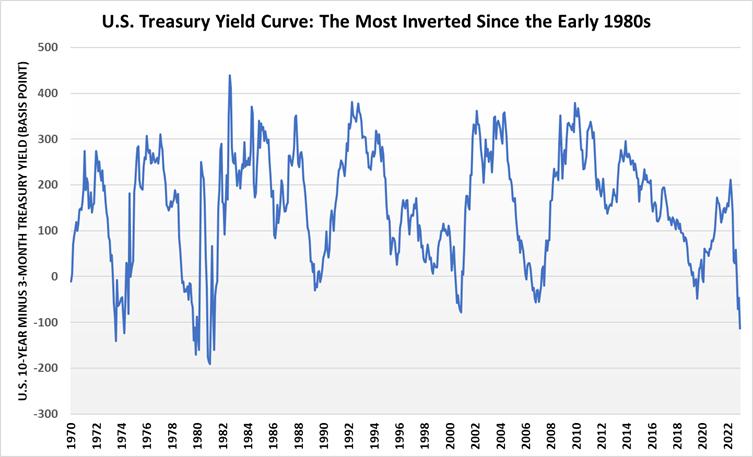
On the other hand, yield curve inversions, a precedent of most recessions, continue to worsen. 3-month U.S. Treasury yields are pushed above 10-year yields by the widest margin since the early 1980s. ISM Manufacturing PMI (purchasing managers’ index) and housing data also point to a gloomy outlook. Corporate sentiment and capital expenditure showed little signs of recovery, and housing permits have rolled back to pre-pandemic levels after surging strongly during Covid.
Source: Bloomberg, January 31st, 2023
The Outlook
While robust job markets and consumer data keep inflation well above the Fed’s long-term target, recent CPI (Consumer Price Index) announcements indicate things are steadily, albeit slowly, moving towards the right direction. The inversion of the yield curve caps the magnitude of further rate increases that could be absorbed by the economy before it slips into a recession.
The first home savings account goes live on April 1, 2023. [It was confirmed in Tuesday’s 2023 federal budget.] The FHSA is a program to help first time home buyers save for a home, in tax-free fashion. The program can be used on top of the current Home Buyers Plan (HBP) that is part of the RRSP savings vehicle. We can also throw in the Tax Free Savings Account (TFSA) for ways that Canadians can save in tax-free or tax-deferred fashion. The first home savings plan is a wonderful addition to the Canadian saving and investing landscape.
And special thanks to financial planner Mark McGrath for his tweets and help. Mark is a Wealth Advisor at Wellington-Altus Private Wealth.
Be sure to follow Mark on Twitter. He often provides wonderful insights on financial planning basics, and is always happy to answer questions.
What is the first home savings account?
The First Home Savings Account is a type of registered savings plan for Canadians saving to buy their first home. Canadian residents aged 18 years or older can open an FHSA to save towards the purchase of a home in Canada.
There are limits to how much you can put in your FHSA:
$8,000 – yearly contribution limit
$40,000 – lifetime contribution limit
Contribution amounts are tax deductible, just like the RRSP program. They will reduce the amount of income taxes that you will pay. The annual contribution limit would apply to contributions made within a particular calendar year. Unlike RRSPs, contributions made within the first 60 days of a given calendar year can not be attributed to the previous tax year.
Contribution room carries forward to the next year if you don’t put in the full amount. Carry-forward amounts only start accumulating after you open an FHSA for the first time. The carry-forward room does not automatically start when you turn 18.
An individual would be allowed to carry forward unused portions of their annual contribution limit up to a maximum of $8,000. For example, an individual contributing $5,000 to an FHSA in 2023 would be allowed to contribute $11,000 in 2024 (i.e., $8,000 plus the remaining $3,000 from 2023).
Who can open a first home savings account?
To open an FHSA, an individual must be a resident of Canada and at least 18 years of age. In addition, an individual must be a first-time home buyer, meaning you cannot have lived in a home that you or a spouse/common-law partner owned in the current year or the previous 4 calendar years. And you can only use the FHSA once.
Combine FHSA with the RRSP home buyer’s plan
As you may know you can remove up to $35,000 from an RRSP account to be used for a first time home purchase. It’s called the Home Buyer’s Plan (HBP). You can use monies from both the HBP and the FHSA for that first home purchase. You can combine amounts.
There is no limit to how much you can use from your first home savings plan. Meaning, for your first home purchase.
What can you hold in an FHSA?
An FHSA can hold savings or investments. The same qualified investments that are allowed to be held in a TFSA can also be held in an FHSA. This could include ETFs, stocks, mutual funds, bonds, savings accounts and GICs.
What if you don’t use the FHSA funds for a home purchase?
Any savings not used to purchase a qualifying home could be transferred on a tax-free basis into an RRSP or Registered Retirement Income Fund (RRIF) or would otherwise have to be withdrawn on a taxable basis. Individuals that make a qualifying withdrawal could transfer any unwithdrawn savings on a tax-free basis to an RRSP or RRIF until December 31 of the year following the year of their first qualifying withdrawal.
Withdrawals that are not qualifying withdrawals would be included in the income of the individual making the withdrawal. Financial institutions would be required to collect and remit withholding tax on non-qualifying withdrawals, consistent with the treatment applicable to taxable RRSP withdrawals.
Transferring your FHSA to your RRSP or RRIF
Your FHSA must be closed by December 31st on the soonest of:
a) the 15th year after you open it
b) the year you turn 71
c) the year following the year of your qualified home purchase The balance can be taken as taxable cash or rolled over, tax-deferred, to your RRSP. Continue Reading…
The 2023 federal budget dropped on or about 4 pm Tuesday (March 28.) You can click here and here for budget documents and the latest from the Department of Finance. Below are links to some of the early media coverage, much of which is in Wednesday’s papers.
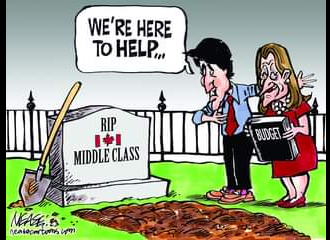
The theme of the budget is Making Life More Affordable, a somewhat comic choice given that government’s inflationary policies and high-spending, high-taxing behaviour is a big part of what makes life so expensive, especially for one-income couples. [See Steve Nease cartoon below on his take on the impact on the middle class.]
Here’s the Department of Finance’s backgrounder on it.
Pre-budget one of the biggest concerns expressed by investors was whether the capital gains tax or the inclusion rate might be hiked. That did not appear to transpire in the budget, at least for the middle class. See however Christopher Nardi’s article in the National Post highlighted below: he suggests those affected by the Alternative Minimum Tax (AMT) may indeed pay more in capital gains tax.
Also hoped for was measures to delay or reduce annual forced taxable withdrawals from Registered Retirement Income Funds (RRIFs). I saw no mention of this in early coverage listed below.
CBC’s summary
On TV, the CBC highlighted that the deficit will grow by $69 billion between 2022 and 2028, no longer projecting a balanced budget in this fiscal framework. On the CBC website it provided the following highlights:
$43B in net new spending over six years.
3 main priorities: health care/dental, affordability and clean economy.
Doubling of GST rebate extended for lower income Canadians, up to $467 for a family.
$13B over five years to implement dental care plan for families earning less than $90K.
$20B over six years for tax credits to promote investment in green technologies.
$4B over five years for an Indigenous housing strategy.
$359 million over five years for programs addressing the opioid crisis.
$158 million over three years for a suicide prevention hotline, launching Nov. 30.
Creation of new agency to combat foreign interference.
Deficit for 2022-23 expected to be $43B, higher than projected in the fall.
Higher than expected deficits projected for next 5 years.
Federal debt hits $1.18 trillion. Debt-to-GDP ratio will rise slightly over next 2 years.
$2.5 billion for a GST tax credit billed as a ‘grocery rebate’
$46.2 billion for federal-provincial-territorial health deals
$13 billion for expanding the federal dental plan
2 per cent cap on incoming excise duty increase on alcohol
Advancing passenger protections but upping a traveller charge
$4.5 billion for 30 per cent tax credit on clean tech manufacturing
$15.4 billion in savings from public service spending cutbacks
Much of the budget was previously announced or telegraphed
The National Post weighed in with this: Chrystia Freeland abandons budget balance plan, adding $50 billion in debt. It noted “much of what is in the budget has been previously announced — or at the very least telegraphed. Ottawa will spend an extra $22 billion on health care over the next five years, as per provincial deals announced last month. It’s also adding about $7 billion for expanded dental care. Low-income Canadians will receive an extra GST credit, at a cost of $2.5 billion.
“From blue-collar bluster to giant green subsidies, Made-in-Canada packaging and make-the-rich-pay rhetoric, Canada’s federal budget borrows from the U.S.”
Green tax credits, more dental care as expected pre-budget
Also expected, according to this FP story published before the budget was released, was “significant” tax credits for the green economy, more measures on dental care and other ways to make life more “affordable,” including amendments to the Criminal Code to reduce predatory lending. It was expected the criminal interest rate be lowered to 35%, as it is in Quebec. The predatory lending measure is indeed included, as you can see in the link to the backgrounder above.
Also leaked earlier in the day was a report in the Globe & Mail that there will be a clean-tech manufacturing tax credit to encourage domestic mining of critical minerals.
Alternative Minimum Tax (AMT) rises
Here is an early overview from the Globe & Mail after 4 pm: Federal budget 2023: Trudeau government bets on green economy, expands dental care. The G&M reported Ottawa plans to raise “nearly $3-billion through changes to the Alternative Minimum Tax, which is a second way of calculating tax obligations to ensure a high wealth individual can’t make excessive use of tax deductions … 99 per cent of the AMT would be paid by those who earn more than $300,000 a year and about 80 per cent would be paid by those who earn more than $1-million.”
‘With this first overhaul since 1986, the AMT will now apply largely to Canadians in the top income tax bracket (over $173,000) and will see their capital gains inclusion rate jump to 100 per cent and a host of eligible tax deductions, like moving or employment expenses, dropped to 50 per cent.”
It’s everyone’s nightmare: watching retirement assets vanish in a bear market, especially in or just before retirement.
Many of you will remember the severe market downturn of 2000-2002, the Dot Com Bubble, when the Standard & Poor’s 500 Index fell 37%.
We’d be lying to say that this declining market didn’t affect us. Our finances dropped about the same as most others on a percentage basis. As retirees, with no regular paycheck coming in on Friday, this event could have spelled disaster for our future plans of maintaining our financial independence.
Then there was the 2007-2009 “Great Recession,” where the market fell by almost 50% lasting 17 months, testing our courage.
The 2020 Covid scare shook the market’s foundation, earning the title of the “shortest bear market” in the S&P 500 history, lasting only 33 days.
And now here we are again in 2023, where the market is in the grip of a bear. How much longer will this last? How low will we go?
What should we do? How do we cope?
First, we’ve learned from past bear markets the importance of some cash flow. Having aged a bit and now receiving Social Security we have adjusted our portfolio to a more balanced one adding DVY, iShares Select Dividend ETF as a dividend-producing asset as well as increasing our cash holdings.
Then, there are regular chats about our finances and the state they are in, in hopes of averting a possible worst-case meltdown. We have discussed the fiscal facts and tried to extrapolate them out into the future.
One obvious problem: No one can predict the future.
Friend asks “Billy, why are you investing now? You know the market is crashing, right?” Same friend 10 years later: “Hey Billy I heard you retired early. How did you do that?”
Using history as a guide
Researching bear markets, we take heart from the knowledge that past downturns always ended.
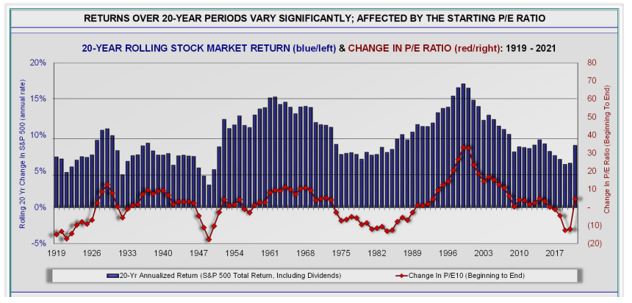
Retiring is definitely easier when markets are rising as compared to when they are falling. But how do you know if you are in a rising or falling market? That depends on your starting point and there has been no 20-year rolling negative returns.
Another question to ask – is this is a good time to buy equities? For every buyer there is a seller and they both think they are right. Maybe the cure for cancer will be announced tomorrow or the global economy will collapse. We just don’t know.
Canadians who collect Old Age Security (OAS) now get a 10% increase in benefits when they reach age 75. The amount of the increase isn’t huge, but it’s better than nothing. A side effect of this increase is that it makes delaying OAS benefits past age 65 a little more compelling.
The standard age for starting OAS benefits is 65, but you can delay them for up to 5 years in return for a 0.6% increase in benefits for each month you delay. So, the maximum increase is 36% if you take OAS at 70.
A strategy some retirees use when it comes to the Canada Pension Plan (CPP) and OAS is to take them as early as possible and invest the money. They hope to outperform the CPP and OAS increases they would get if they delayed starting their benefits. In a previous post I looked at how well their investments would have to perform for this strategy to win. Here I update the OAS analysis to take into account the 10% OAS increase at age 75.
This analysis is only relevant for those who have enough other income or savings to live on if they delay OAS. Others with no significant savings and insufficient other income have little choice but to take OAS at 65.
OAS payments are indexed to price inflation, and the increases before you start collecting are also indexed to price inflation. So, the returns that come from delaying OAS are “real” returns, meaning that they are above inflation. An investment that earns a 5% real return when inflation is 3% has a nominal return of (1.05)(1.03)-1=8.15%.
In many ways, the OAS rules are much simpler than they are for CPP, but two things are more complex: the OAS clawback and OAS-linked benefits. For those retirees fortunate enough to have high incomes, OAS is clawed back at the rate of 15% of income over a certain threshold. This complicates the decision of when to take OAS. Low-income retirees may be eligible for other benefits once they start collecting OAS. These factors are outside the scope of my analysis here.
A One-Month Delay Example
Suppose you’re deciding whether to take OAS at age 65 or wait one more month. For the one month delay, the OAS rules say you’d get an additional 0.6%. So, for the cost of one missed payment, you’d get 0.6% more until you reach 75. After that, you’d be getting 0.66% more.
For a planning age of 100, the real return from this delay is a little over 7%. So, your investments would have to average 7% plus inflation to keep up if you chose to take OAS right away and invest the money.
All the One-Month Delays
The following chart shows the real return of delaying OAS each month for a range of retirement planning ages, based on the assumption that the OAS clawback and delaying additional benefits don’t apply. The returns are slightly higher than they were before CPP payments rose 10% at age 75. Continue Reading…


 Posted By


 Posted By