General

Everything you need to know about Multifamily Commercial Real Estate Investing

Real estate low-rise construction building for multiple families

By Veronica Baxter

Special to the Financial Independence Hub

If you are looking to get serious about real estate investing, then a multifamily commercial real estate investment offers you a great ROI, portfolio diversity, and strong growth potential. But, before we get too far ahead, what exactly is a multifamily property?

What is a Multifamily Property?

In the commercial real estate sector, a multifamily property is an apartment building that has five or more units. According to this definition, multifamily properties are very diverse. They can include everything from towering apartment complexes to city rowhomes converted by property developers.

Because there is a wide range of property types that can be designated as multifamily property, many smaller investors with less capital than large investment conglomerates can potentially reap some of the benefits.

Later on in the post, we will discuss three methods investors use to invest in real estate, but it helps to mention them here to show that even smaller investors can get in on the lucrative returns of real estate. Investors can directly purchase the property or pool their capital with other investors in a real estate investment trust or private equity firm.

Opportunities for both Passive and Active Investors

Another benefit of investing in multifamily commercial real estate is that it is profitable whether or not you are an active or passive investor. As the names imply, active and passive investors assume opposite engagement roles with their investments. Though there is plenty of nuance and overlap between the two, in general, passive investors are in it for the long haul. They plan to hold on to the property for as long as possible. In contrast, active investors see multifamily property as an opportunity to buy cheap, renovate and sell at a higher price.

For Passive Investors

Passive investors often leave the property management and financial management to other parties, which truly embodies the idea of passive income. Many of these investors receive only quarterly disbursements from the portfolio manager and have little else to do with the procedural technicalities. Passive investors, in this sense, only really front the initial investment and reap the rewards.

This passive strategy has been shown to be less risky over time and, as a result, more lucrative. In addition, passive investors see multifamily commercial real estate investments as tangible assets to grow their wealth in.

For Active Investors

Active investors search the markets for opportunistic buys. For example, they often look for cheaper, older property to renovate and refurbish into more expensive multifamily property. Then, after the flip, they either sell for a much higher price or hold if the asset is projected to appreciate rapidly. In general, active investors take more risks than passive investors, but when they strike gold, the profits come fast.

They are much more hands-on in their approach, working alongside developers, contractors, and designers to upgrade older properties. As a result, they must know the commercial real estate process and terminologies, such as NOI, commercial real estate cap rate, and other terms.

Benefits of Multifamily Commercial Real Estate Investing

Whether you seek to become an active or a passive investor, there are numerous benefits to multifamily real estate investing. Here are a few of the advantages:

Diversification

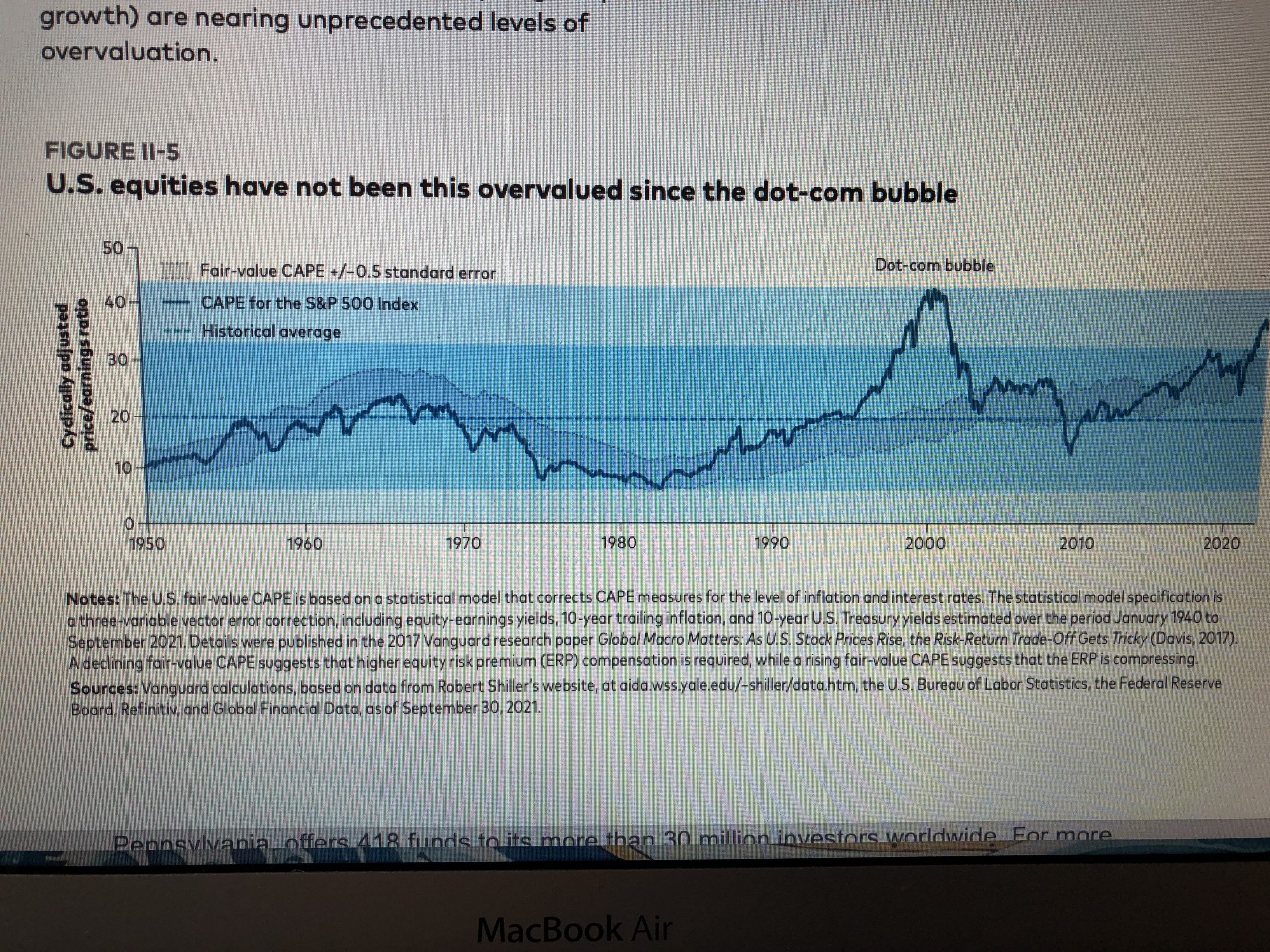
Having a diverse investment portfolio helps to mitigate the risks associated with economic downturns. Generally, commercial real estate is not highly correlated with the movement of the stock market, so it is an ideal asset class to hold opposite of stocks. Moreover, having wealth invested across various assets is the surest way to reduce risks if the stock market crashes or in lieu of a natural disaster that disrupts the global markets.

“Forced” Appreciation

Commercial property is valued on NOI, or net operating income, whereas residential real estate is usually valued on comparisons with other similar properties. NOI valuations allow property managers to directly increase the value of their property by raising rent and reducing operation costs. This alters the NOI equation, which, in turn, raises the value of their property. This is called forced appreciation.

Dispersion of Vacancy Risk

The more units in a property, the less any one vacancy will affect revenue. This is one significant benefit to investing in a multifamily property. If you rent out your residential property, you are solely dependent on your tenant for income. However, the more tenants you have, the less impactful a single vacancy will be. Multifamily property investments reduce the risks associated with numerous vacancies.

Lease Escalations

It is common practice for commercial leases to have escalation clauses built into them. These clauses stipulate rent increases over time. If operational costs generally remain stable, then the yearly ROI increases with the periodic rent increases.

What are different ways to Invest?

As mentioned above, there are three main ways investors can invest their capital in multifamily real estate. These different methods allow both large and small investors to get a stake in commercial property.

Direct Purchase

A direct purchase involves an investor or group of investors coming together to purchase commercial property directly. They usually form an LLC for liability purposes and have total control over the process. This freedom comes with a cost, however. The investors are responsible for finding a property, raising capital, and negotiating a deal. Once purchased, the investors are then entirely responsible for managing the property, drawing up leases, and outreaching to potential tenants.

This is a very involved route. For new investors looking to diversify their investment portfolio, this might not be the best place to start.

Real Estate Investment Trusts

Real estate investment trusts (REITs) are corporations that perform the above functions of a direct purchaser but as a corporate entity. Investors buy shares or stocks in the corporation, which can be publicly or privately traded. Continue Reading…

How to generate Passive Income 

Image Credit: Pixabay

By Mike Khorev

Special to the Financial Independence Hub

Many of us strive for financial security; luckily, passive income investments open up the opportunity to make extra money on the side. 

All you need is the willingness to put in some fundamental groundwork: you don’t necessarily need savings to kickstart your investment. There are plenty of options when it comes to generating passive income that go far beyond the realms of compound investing. Here are some fresh ideas to get you started.

1.) Investments

Exchange-traded funds (ETFs)

Exchange-Traded Funds, known as ETFs, are a great way to invest in the stock market without needing to research individual companies. Investing in ETFs provides both capital gains and dividends. Diversify your investments to receive the maximum benefit. ETFs are rather low maintenance and yield a lower risk than regular equities.

Dividend-paying stocks

Feel the benefits of dividend stock investments with a range of stocks yielding up to 5% dividends. The hardest part is knowing which stocks are worth investment. The best way to generate larger profits is to choose dividends that come with franking credits. Stock market unpredictability is no secret, be willing to face a sudden rise and fall in value or cut dividends altogether.  

Robo-advisors

If you’re looking for an affordable financial advisor to manage your investments, Robo-Advisors could be for you. They personalise automated trading decisions based on your financial targets, limits and time frames for a fraction of the cost. They are one of the most passive forms of income. 

2.) Real estate

Rental income

Rental yield can be one of the most profitable forms of passive income. Experts state that small apartments containing 1-2 bedrooms have more success on the market generating returns of over 8%. Real Estate Agents will handle legal documentation, rent collection, and advertise your property for a recurring fee of 5-12% of the monthly rent.

Airbnb

Airbnb is a thriving marketplace with host’s estimated monthly earnings sitting at $924 per month. While properties are free to list, hosts are charged a 3-5% service fee and are liable to income tax. Many hosts invest earnings into outsourced housekeepers to maintain passiveness. 

Real estate investment trusts (REITs)

REIT investments are perfect for those who are interested in real estate without the responsibility of sustaining individual properties. Typically, REITs support non-residential buildings such as offices, apartment complexes, and retail centres. Commercial buildings are famous for yielding large profits, passive income will be paid in the form of dividends.

3.) Content creation and advertising

Affiliate marketing

Affiliate links are more negotiable than ever, not only do they support affiliate businesses, they are also a manageable form of passive income. Invest some time into digital content creation that generates healthy volumes of traffic. Aim to recommend products you truly believe in to build a trusting relationship with your audience and boost clicks.  Continue Reading…

How (In)credible is the Transitory Inflation argument?

By John De Goey, CFP, CIM

Special to the Financial Independence Hub

If there’s one thing we’ve all learned in the past two years, it is that central bankers mean business: both literally and figuratively.  In other words, when central bankers say they ‘have our backs’ in both extending the business cycle by promoting fuller employment and doing so without causing meaningful inflation, we should take them at their word.

As such, central bankers “mean business” literally (meaning they will promote business interests) and figuratively (meaning they are serious, determined and dedicated to their mission).  Then again, for the past two years, those two objectives have been mostly aligned.  What if new circumstances were to make them mutually exclusive?

Looking south of the border, we had a modest yield curve inversion in the spring of 2019 and within a few weeks, then President Trump applied some considerable political pressure (something arms-length central bankers are supposed to be immune to) in order to get the federal reserve to cut rates, which they did in three successive meetings that autumn.

At the time, inflation was benign and tellingly, unemployment was at its lowest level in a generation.  In other words, by any reasonable standard, the fed had done a superb job to that point and no interventions or adjustments seemed necessary.  Despite this, there were changes and a purportedly imminent recession was averted.  Or not. After all, there’s no reliable way of knowing what might have happened had rates not been lowered that autumn.

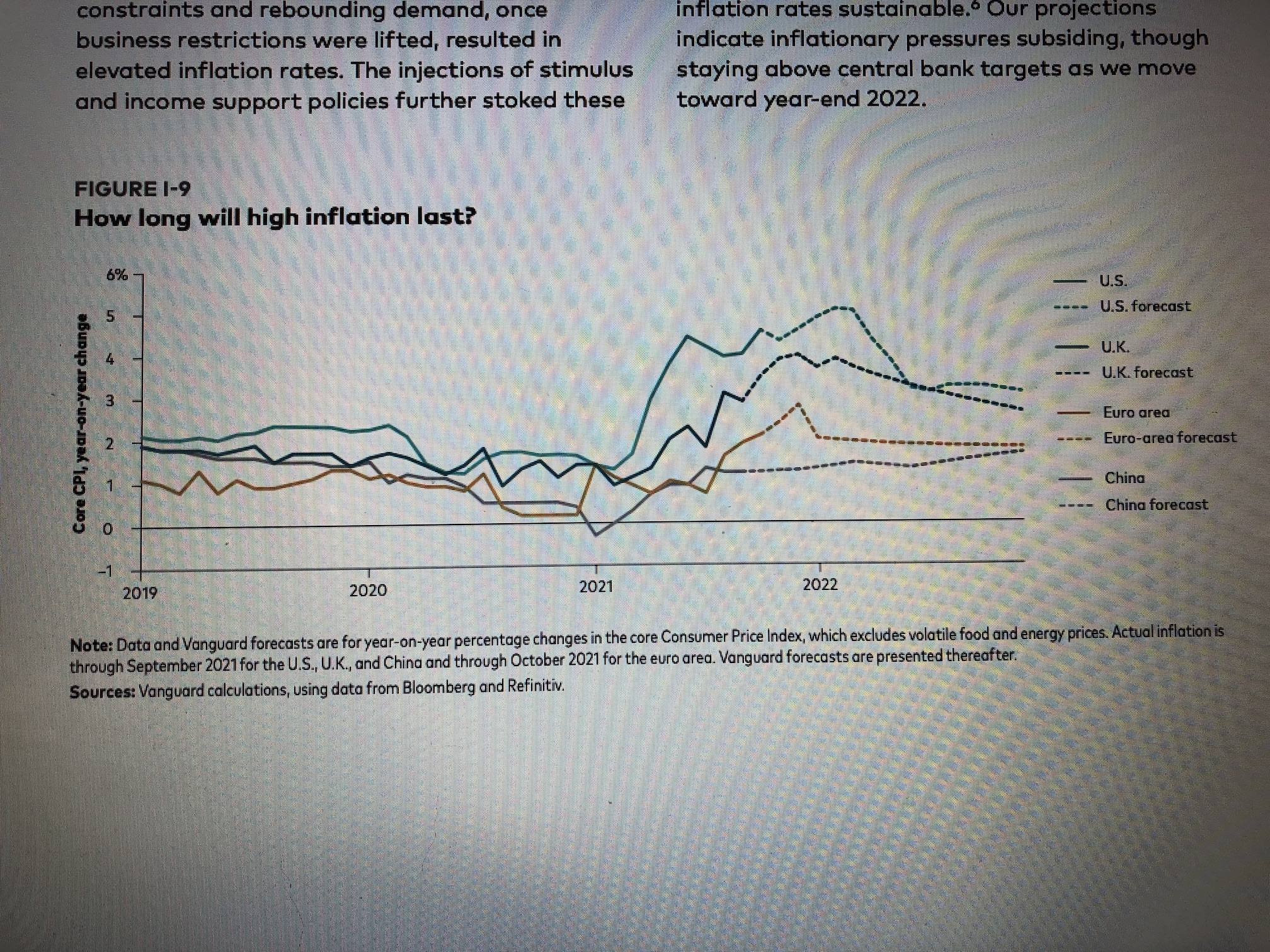
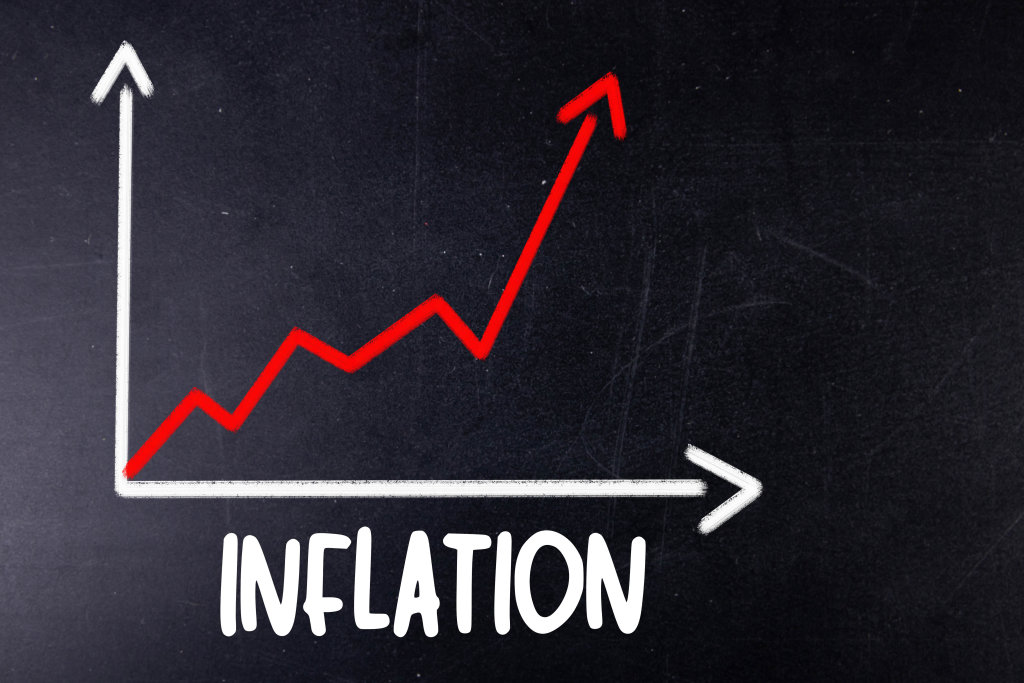
These days, the narrative coming from central banks is that the recent spate of above-average inflation is ‘transitory,’ meaning it will likely normalize around more traditional levels once the artificially low data of the post COVID year (basically Q2 and Q3 of 2020) falls out of the data set.

Skeptical of the Central Bank line on inflation

Of course, no one knows for sure if the inflation we’re seeing now is genuinely transitory or the harbinger of a more prolonged period of elevated prices. There’s a Chinese proverb that states, “to be uncertain is to be uncomfortable, but to be certain is ridiculous.”  I’m not for a moment suggesting that inflation is or is not transitory. Rather, I am respectfully skeptical of the central bank line.

It may indeed be true that the inflation fear will dissipate into nothingness before the end of the year. Then again, Deputy Prime Minister and Minister of Finance Chrystia Freeland has boasted that the fiscal support offered to Canadians over the past 15 months can act as a sort of ‘pre-loaded stimulus’ that will keep the economy humming long after the government cheques stop coming.  What if Freeland is understating the impact?

Specifically, what if Canadians are so euphoric about the economy re-opening that they start buying things and experiences like never before?  Wouldn’t that kind of spike in purchasing activity risk a spike (or at least prolongation) in inflation?

Higher for Longer

There are some who think central banks are managing expectations about inflation being higher for longer to buy time and provide cover for an anticipated period of deliberate bank inactivity.  In essence, what if central banks don’t act to control high and prolonged inflation because doing so (i.e., raising rates significantly and sooner than expected) would destroy both the economic recovery and the bull markets so many are currently enjoying? Continue Reading…

Is everyone thinking of Retiring?


By Dale Roberts, Cutthecrap investing

Special to the Financial Independence Hub

It’s just a coincidence perhaps. But much of my blog and reads for the week research landed on that retirement theme. Everyone’s thinking of retiring or writing about retirement. And why not? That is a big end goal for most of us; some form of financial freedom. This Sunday Reads post offers a nice slice of retirement thinking, from the emotional to the money side of things. And of course, there’s some non-retirement ‘stuff’ in here as well.

This is a very good topic and post on My Own Advisor – the emotional side of retirement. In fact on this site I wrote an article that offered that waiting for your spouse was the hardest part of retirement.

Mark offers up on that period after the retirement honeymoon stage (after year one) …

At this point in retirement, the honeymoon is over and potentially it isn’t as enjoyable for some as they may thought.

Maybe some folks go back to work – as part of FIWOOT [Financial Independence: Work on own Terms]. There are only so many rounds of golf you can play …

I’ve read feelings of disenchantment can set in for some. Even depression. That’s certainly something I wish to avoid. By maintaining some form of work into my routine (may or may not be daily), it is my hope that I can stay active (socially, physically, cognitively) to support my health in early retirement and far beyond.

We certainly have to take greater care when we design our life in retirement. We need to be busy and we have to have purpose – from my life experience and from many studies. Having the money to retire in some form is just the half of it, or less.

The waiting is the hardest part

In my post link above, I touched on my first taste of semi-retirement experienced alone. My wife still works and will likely work for a a few more years. I also took off down east to be with my daughter as I launched this blog …

That said, I got a good taste of that ‘waiting’. And as Tom Petty (RIP) sang ‘The Waiting Is The Hardest Part’. While I have a very generous amount of loner in me I was surprised at how uncomfortable a feeling that was – that working alone and being alone for many hours on end. I couldn’t wait for my daughter to finish work and head up to the cottage for dinner and a walk along the beach.

I may have got a taste of what if feels like to make that transition.

The Boomers Retire

On the retirement front Jonathan Chevreau takes a look at a new edition of The Boomers Retire. The book is co-authored by Alexandra Macqueen, a Certified Financial Planner who co-authored Pensionize Your Nest Egg with famed finance professor Moshe Milvesky. David Field is an investment advisor and financial planner and co-creator of the CPP Calculator.

From Jonathan’s post on MoneySense …

“That’s just responding to the reality of retirement income planning for the growing numbers of the ‘pensionless’,” Macqueen says. “If you don’t have lifetime income, you’ll need to create it or take your chances. Whatever you decide, here’s a collection of the relevant facts, principles and issues you’ll need to take into consideration when you’re making your plan.”

While the book is written for advisors and planners, it is also a good read for the rest of us offers Jon.

Of course Alexandra is no stranger to this site. A retirement and pension expert Alexandra penned one of the most read (and most important) posts on this site.

Must read: Defined benefit pension planning. Bad advice could cost you your retirement.

And the Maple Money Podcast is on point this week as well with how to design your retirement lifestyle, with Mike Drak. Mr. Drak is a co-author of retirement heaven or hell, which will you choose? Continue Reading…

7 things you can do now to have a Debt-free Life

By Emily Roberts

For the Financial Independence Hub

Living debt-free might seem like a distant pipe dream to many, and that’s unfortunate. Being crippled with debt is difficult, and even more so when you feel like the situation is hopeless. The reality is that most people who have large amounts of debt could be making simple steps every day to turn their situation around. The issue for many is knowing where to start. Let’s take a look at what you can do today to get on the road to a debt-free life.

Take a long hard look at your Financial Situation

The first thing you have to do is know exactly how much debt you have. This will allow you to get a clear assessment of your finances and start working on repaying them. Not only that, but there could be cases where your situation might not be as bad as you thought. For instance, did you know that entries on your credit report have to be removed after a certain period? This means that some of the debt that you thought you had may have been expunged from your report a long time ago. This is why you need to keep a close eye on your credit report and get your annual statutory copy from the one of the three major credit reporting agencies. Once you know exactly what you owe, you can build a plan.

Call your Creditors

The next thing you have to do is get in touch with your creditors and work on a plan. There are some cases where you can work with a professional who will help consolidate all of your debt and have you pay a fixed sum per month. This can be a good option in some cases, but you don’t necessarily have to hire someone. Calling your creditors and speaking with them directly could help you shave off a few dollars of your debt. Also note that the more you can pay upfront, the more they will be willing to lower the amount of money you owe. Try to get them to report the payment to the credit reporting agencies in writing as well so it can be reflected on your credit score.

Use your Credit Cards wisely

If you have multiple credit cards, we would suggest that you start paying them off one by one. Tuck away the one with the highest balance and commit to paying it in full. Set up automatic payments if you have to. This will allow you to both reduce your overall debt and significantly improve your credit score by lowering your credit utilization ratio.

You then have to use your other cards wisely. A lot of people believe the myth that paying the minimum is something credit card companies will reward, but that’s complete hearsay. In reality, companies love people who use credit responsibly, and one of the best ways to do that is to use as little of your credit as possible. So, if you want to be viewed favorably by creditors, aim to keep your total utilization ratio under 30%.

If you want help with credit card debt and feel like you don’t have the discipline to pay them off on your own, we suggest you check out Tally. Their app will allow you to manage your credit cards all in one place and could even help you save on interest if you qualify for their low-interest line of credit. They will help you pay your cards automatically through an easy-to-understand interface, ensuring you don’t have to deal with a late fee ever again.

Know what you’re signing up for

Very few people take the time to read the fine print when they get a credit card and more people should. One piece of research reviewed credit card agreements for clarity and found that the majority of people surveyed could not understand them. That’s a big problem when considering that credit card agreements can include provisions that will allow them to change the interest rate at will. Continue Reading…