General

How to raise money-smart kids

Shutterstock

By Gaurav Kapoor, Founder, Mydoh

(Sponsor content)

Financial literacy isn’t an innate skill. Like most skills in life, financial literacy must be learned – the problem is who teaches it? Parents know they play a part, but they may lack the confidence, or the knowledge.

Helping your children develop good money habits as they enter their teen years is a great place to start their financial literacy journey. Teenagers are eagerly seeking out financial independence and may be earning money through an allowance or an after-school job.

As they look to spend their hard-earned money, it’s crucial to set them up for success. After all, money isn’t just about dollars and cents, it’s about the choices we make with it. Parents want to teach their children to be money-smart – to have skills to earn, budget and spend, but they also want to share the value, emotions and experiences that come with money.

This notion of early financial literacy is what motivated me to create Mydoh, the Smart Card for kids.

Check out my best tips below for raising money-smart kids with the help of Mydoh:

Leverage technology that helps your kids learn how to save, and spend, their money

Kids today are more tuned in to technology than ever before – so why not use tech to teach them financial literacy?

Mydoh is a Smart Card for kids that comes with a money management mobile app, available on iOS and coming soon to Android. Kids gain financial skills by earning money through tasks and an allowance (set up by their parents) and by making their own purchases (wherever Visa is accepted) using their Smart Card issued by RBC through the app, with a physical card coming soon. This gives kids the autonomy, competency, and confidence to make their own earning and spending decisions – learning values that help build a strong foundation for the future.

Through the app, kids can manage their own money in the real world, making decisions to spend and earn, while parents get visibility to their spending and can have better money conversations. Continue Reading…

Fine Wine: The Alternative Asset for today’s challenges 

By Atul Tiwari

Special to the Financial Independence Hub

The current market backdrop is making the case for alternative assets, such as fine wine, even stronger. Traditional financial asset classes have grown expensive and concentrated, and initiating or increasing an exposure to fine wine can provide important diversification and enhance potential returns.  

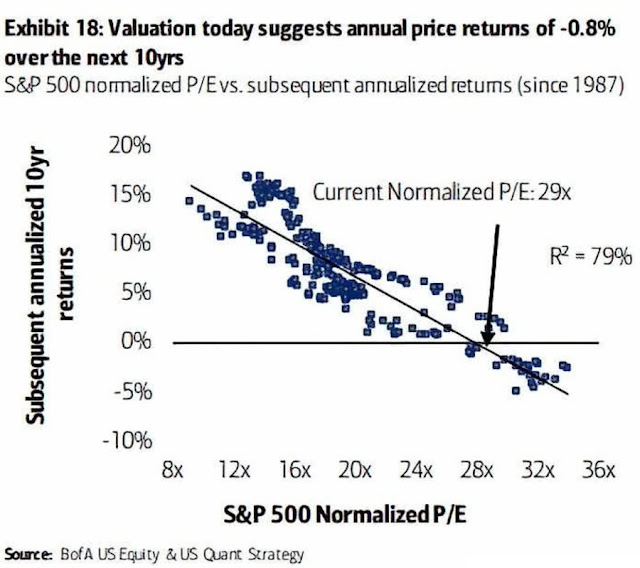
It is no secret that equity valuations are stretched. The massive levels of fiscal and monetary stimulus globally have propped up asset prices despite ongoing disruption from the COVID-19 pandemic. The S&P 500 price/earnings ratio exceeded 30 in mid-April, its highest level since the 1990s dotcom bubble, which did not end well for investors. With a potential economic recovery following vaccine rollouts largely priced in, prices appear to leave limited upside in the near term. 

Investors will also struggle to find attractive returns in the bond market. Even before the pandemic, yields globally were low, or even negative. Again, the downside appears to outweigh the upside as the recent selloffs in government bonds indicate.  Both fixed income and equity markets remain susceptible to a shift in the economic outlook or macro policy, which should prompt investors to consider alternative ways to diversify their portfolios.  

The increasing concentration of equity markets forms another reason why alternative assets make sense in the current backdrop. The sky-high equity returns of the past year have come overwhelmingly from the tech sector with the FAANG stocks — Facebook, Amazon, Apple, Netflix and Google (Alphabet) — significantly outperforming the wider market. Consequently, ETFs and other index-linked investments may not be as diverse as they might appear.  

This is where fine wine can help. As a real asset, fine wine prices are primarily driven by their own market dynamics, meaning they have low correlation to traditional asset classes and can help de-link an investment portfolio from swings in the wider markets 

Fine wine’s limited and decreasing supply over time (as wine is consumed) alongside demand that goes beyond wine’s immediate benefit as a financial instrument can support wine prices regardless of the wider macro environment. Indeed, prior to the recent tech stock surge, fine wine often delivered better performance with significantly lower volatility over a range of backdrops going back to before the financial crisis.  

Healthy returns with low volatility  

Comparison of volatility and annualised return across financial assets 


Source: S&P, Bloomberg, Liv-ex & ishares. Data as of 31 Mar 2021  Continue Reading…

Mutual Fund Deferred Sales Charges designed to hide bad news

By Michael J. Wiener

Special to the Financial Independence Hub

Mutual fund investors caught by deferred sales charges (DSCs) understand their downside.  They’d like to sell their funds but face penalties as high as 7% if they sell.
DSCs are set to be banned across Canada (but only restricted in Ontario) in mid-2022.  Until then, mutual fund salespeople masquerading as financial advisors can still sell funds with DSCs to unsuspecting investors.
[Editor’s Note: last week, Ontario announced it would be joining the other provinces in banning DSC as of mid-2022.]

Before DSCs existed, it was common for advisors who sold mutual funds to get a “front-end load,” which is a fancy term for giving some of an investor’s money to the advisor or the advisor’s employer.  So, an investor might invest $50,000 with an advisor, but the first account statement might show only $47,500.  The missing $2500 was a 5% front-end load offered as an incentive to the advisor to hunt for mutual fund buyers.

Not surprisingly, investors didn’t like to see a big chunk of their savings disappear like this.  Mutual funds had a problem.  They needed to give commissions to advisors so they would sell mutual funds, but investors didn’t like to see some of their money disappear.  The solution to this dilemma came in two steps.

Raising Annual Fees

Mutual funds charge annual fees to investors called the Management Expense Ratio (MER).  MERs are expressed as a percentage of invested assets, and while they seem small, they build up to intolerable levels over decades.  Many mutual fund investors don’t know about MERs and don’t notice their corrosive effects.

One way to cover the cost of advisor commissions is to simply raise a fund’s MER.  This works well when investors stay for the long term.  When investors stay longer than 5 years, a one percentage point  increase in the MER covers a 5% up-front advisor commission.

But what happens when an investor sells out of the fund after less than 5 years?  In this case, the mutual fund can’t recover the advisor commission.  Even, worse, advisors would have an incentive to move investor money frequently from fund to fund to collect more commissions, and investors wouldn’t mind because it wouldn’t cost them anything.

Deferred Sales Charges (DSCs)

Someone had the bright idea to charge investors penalties when they leave a fund too soon.  Today, it’s common for DSC funds to charge investors as much as a 7% penalty for withdrawing their money in the first year.  This penalty typically declines each year until it’s gone after investor money has been in a fund for 7 years. Continue Reading…

CRA can now compel Oral Interviews

By Anna Malazhavaya

Special to the Financial Independence Hub

I  never met anyone who said they enjoyed being interviewed by an auditor with the Canada Revenue Agency. For sure, CRA audits can be stressful and disruptive to a business, but this is the price we pay to maintain the integrity of our tax system. The CRA’s audit powers are already quite broad and now they are about to expand even further. Anyone who must file a tax return in Canada (and, therefore, can be audited) should pay attention.

The 2021 Federal Budget announced on April 19th includes a proposal that gives CRA officials a new power to compel oral interviews of “persons.” This means you, me, your employee, your neighbour and virtually anyone else who may have information relevant to determining and enforcing someone’s Canadian tax liability.

The current rules

How are the proposals different from the existing rules? The CRA already wielded the power to examine taxpayers’ documents or property that may be relevant to determine one’s tax obligations. As the CRA examines the documents or property, they have the power to ask questions about the documents or property. However, there is no general power for the CRA to compel oral interviews. In practice, this meant CRA auditors still used oral interviews when conducting selected types of audits, but it didn’t happen often.

In fact, a good portion of CRA audits were handled without much face-to-face interaction at all between auditors and taxpayers and/or their employees. Taxpayers’ authorized representatives, which means accountants and tax lawyers, handled most of the audit “heavy lifting” on behalf of their clients: they attended on-site meetings, had phone calls, answered questions, and provided documents. Taxpayers generally had the opportunity to answer the auditor’s questions in writing. This means that people had time to review their records, consult with their representatives, and keep a record of their specific answers. This trend of written audit questionnaires has become more pronounced during the COVID-19 pandemic as the CRA auditors tried to minimize in-person contact with taxpayers for safety reasons.

What prompted the Federal Budget change?

The most likely cause of the proposed change is a two-year-old Federal Court of Appeal decision in MNR v. Cameco Corporation (2019 FCA 67). On its website Cameco calls itself “one of the largest global providers of the fuel needed to energize a clean-air world.” That fuel is uranium. Based in Saskatoon, Saskatchewan, Cameco has offices in Canada, the United States, Switzerland, Kazakhstan, and Australia.

As part of the audit of Cameco, the CRA asked upwards of 25 employees of Cameco (including those of foreign subsidiaries) to attend oral interviews.

Notably, that was the CRA’s second time requesting to interview Cameco’s employees. The first came as part of another, earlier audit and Cameco complied with the earlier request. Later, it found that the auditor’s notes of the interview differed from the recollections of Cameco employees. The dispute over results of that earlier audit was about to reach the Tax Court of Canada.

So, when the CRA asked for oral interviews again during a subsequent audit, Cameco refused, offering to provide only written answers. Cameco argued that the CRA has no general power to compel oral interviews. Cameco was concerned that the oral interviews can prejudice the upcoming Tax Court litigation relating to the previous audit.

The CRA brought an application seeking a compliance order first to the Federal Court, and then to the Federal Court of Appeal. Both those courts sided with Cameco, stating that the CRA had no general power to compel oral answers to its questions. Fast forward to 2021, and the Federal Budget proposes to override the Cameco decision.

What’s next?

 If the proposal is adopted, we will see more oral interviews with CRA auditors and the scope of interviews will be much broader. Of course, it’s too early to tell exactly how the CRA plans to use its newfound powers, but the following concerns are already obvious:

First, taxpayers’ answers during oral interviews can expose them to penalties or criminal prosecution. There are several tax rules where the taxpayer’s experience, knowledge of certain information, or taxpayer’s intentions are important. Some questions may trick you into admitting something that it is not entirely true, but your answer can later be used to impose penalties or even initiate criminal proceedings. Continue Reading…

Who speaks for the Self-Directed investor?

By Ian Duncan MacDonald

Special to the Financial Independence Hub

Recently I read an article by a financial advisor with “25 years of experience in dealing with individual investors.”

He sees his role as a coach helping” investors ignore Wall and Bay Street hype and hysteria ….” As he sees it, only investment advisors can protect investors from themselves.  He sees these ignorant self-directed investors as, “piling into the market after superior stock returns and before inferior returns,” “ignoring tax ramifications” and foolishly “investing for entertainment.”

When you give access to your money to an advisor you are immediately creating the potential for that advisor to use your money in their self-interest: not yours.   While this advisor does address investment advisor fees, “The financial regulators require us to disclose them.” He does not touch upon the seemingly daily reporting of investment advisor thefts of client money nor all the “legal” but murky ways that investment advisors can siphon of your money.

(The “full-service fee schedule” account you signed probably allows all the following fees to be charged against your investment account: operating fees such as custody fees, interest charges on debit balances, fees for manages and fee-based programs, transaction fees, foreign transaction tax, issuer commissions, service fees, fee for managing funds, deferred sales charge, referral fee, etc). Self-directed investors are shielded from almost all of these fees.

On rare occasions investment advisors get charged with theft:

“Posted On Wednesday March 24, 2021

The Halton Regional Police Service – Fraud Unit has arrested a Burlington man in relation to a fraud investigation.

The accused was an investment industry professional who worked for a financial company that was registered with the Investment Industry Regulatory Organization of Canada (IIROC).  Between 2011 and 2016, two victims invested a total of approximately $1.6 million with the accused to purchase insurance and other investments. The accused diverted the funds he received from the victims to his own bank accounts.”

The following is just the last month’s reporting of investment advisor IIROC disciplinary hearings plus their last statistical complaints report:

Release Date Title
5/4/2021 In the Matter of Edward Ho Rha – Adjournment Related Documents
4/30/2021 In the Matter of Joan McCarthy – Set Date Appearance Related Documents
4/30/2021 In the Matter of James Robert Harris– Settlement Hearing Related Documents
4/21/2021 In the Matter of Neil DiCostanzo – Adjournment Related Documents
4/20/2021 In the Matter of Bonnie Wyatt – Settlement Accepted Related Documents
4/16/2021 In the Matter of Alberto Storelli – Discipline Hearing Related Documents
4/13/2021 In the Matter of Joseph Anthony Thomson and Douglas Gerald McRae – Discipline Hearing Related Documents
4/8/2021 Staff Policy Statement – Early Resolution Offers
4/7/2021 In the Matter of Dean Martin Jenkins – Penalty Decision Related Documents
4/1/2021 In the Matter of Thomas Stock – Appearance to set a hearing date Related

Statistics Filed by Dealer Firms (COMSET)

“IIROC rules require Dealer Members to inform IIROC, using IIROC’s Complaints and Settlement Reporting System (ComSet), when certain events occur, including when a Dealer Member receives a written client complaint, when criminal charges are laid against a Dealer Member or any of its individual registrants, or when a securities-related civil claim is brought by a client.” Continue Reading…