General

6 tips for managing your Kids’ bank accounts

By Emily Roberts

(Sponsored Content)

It’s 2018 and the days of buying your kids a piggy bank are long gone. It makes much more sense to let your kids have a bank account that will not only help them keep their money safe but also teach them how to grow and save it. Unfortunately, it seems as if most modern banks offer little to no incentive for kids to save their money and many focus on charging them as much as possible.

Transaction fees and unexplained charges can easily chew up what little money you deposit. Many banks will continue to charge exuberant monthly fees on small balances to the point where everything that was deposited is gone within a few months. This is why it’s important for you as a parent to find the right bank account for your kids that will help them get the most out of their money and hopefully grow it at the same time.

1.) Check those transaction fees

Most bank accounts come with a PDF or pamphlet (depending on how you apply) that stipulate the charges for every type of transaction. Sometimes these numbers are changed without notice, so be sure to check the fees for each type of deposit, withdrawal, and transaction. Advise your kids to deposit their money through your account or an ATM at the very least, as doing it over the counter is expensive.

2.) Teach your kids about saving

Educating your children about properly managing their money should be done long before they leave for college. Teach them how interest works, how saving their money is the right thing to do, and how to budget correctly. This way, they’ll know how to manage their funds better when they become independent.

3.) Link their bank to your phone number

Doing this means you can see every transaction that goes through. All of these usually come from a single number, so it won’t fill up your inbox. Not only can you see where their money goes, but if its stolen or their bank accounts are hacked, you’ll know first. Continue Reading…
By James Gauthier, CIO, Justwealth

Special to the Financial Independence Hub

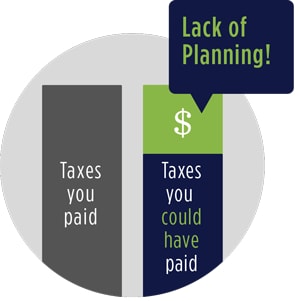
When investors run out of contribution room in their tax-sheltered investment accounts such as RRSPs and TFSAs, they often continue investing in a non-registered account that does not have the same automatic benefit of avoiding or deferring taxes. Managing investments in a taxable portfolio then becomes a much more complicated exercise: one that attempts to maximize wealth on an after-tax basis instead of a pre-tax basis, which is how investments would be structured in a registered account.

Any investment income that is earned in a non-registered account is subject to taxation annually and can therefore be thought of as a “fee,” similar to the annual fees charged by your financial institution or advisor. As a robo-advisor that provides low-cost investment options for investors, we devote much time and resources to educating investors about the negative impact that investment management fees can have on their overall wealth. But unlike management fees, which are generally easy to identify and compare amongst different investment options, it is virtually impossible to find after-tax rates of returns for making apples-to-apples comparisons between various products and providers.

Most investment providers, including robo-advisors, use the exact same portfolio recommendations for their clients’ non-registered accounts as they do for their registered accounts, as long as the “risk” level is deemed to be the same. To illustrate the true cost of tax inefficiency, we can show how altering a portfolio recommendation, without materially altering the risk level or other characteristics of the portfolio, can improve the after-tax return of the portfolio.

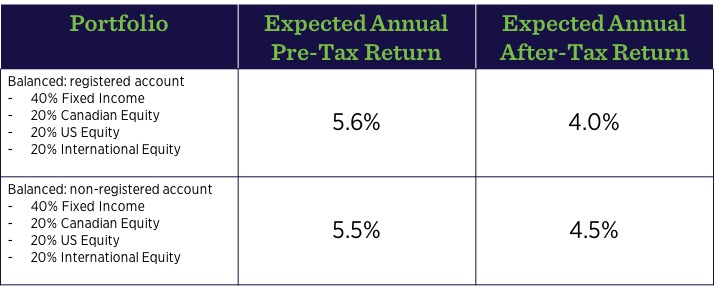
Consider an investor in the top marginal tax bracket who is considered to have an “average” risk tolerance and is invested in a Balanced portfolio of 40% bonds, 20% Canadian equity, 20% U.S. equity and 20% international equity. A reasonable long-term expected annual rate of return on this portfolio, on a pre-tax basis, is 5.6%. Applying tax rates to the interest, dividends (Canadian and foreign) and a conservative estimate for capital gains, the after-tax return on the portfolio is reduced to 4.0%.

By making some minor changes to the portfolio’s asset allocation, such as emphasizing asset classes that receive more favourable tax treatment and finding investment vehicles (ETFs in our case) that are innovatively structured to receive more favourable tax treatment, we can create a new portfolio that is very similar from a high-level asset allocation and risk perspective. The expected pre-tax return on this new, tax-efficient portfolio is slightly lower at 5.5%, but after taxes are applied, the return is a more favourable 4.5%.


The difference of 0.50% in after-tax returns should be considered the MINIMUM cost of tax inefficiency, since we have not yet addressed any other tax-inefficient practices. Extending the analysis across our entire range of investor risk tolerances (from Conservative to Aggressive) shows that the cost of tax inefficiency can vary from a low of 0.40% up to 1.00%. In most cases, the cost exceeds our 0.50% management fee, meaning that you would be better off paying our fee rather than having your assets managed for FREE at any another institution that does not use tax-efficient portfolios!

Continue reading →

Are you concerned about Retirement?

“Retirement: World’s longest coffee break.”
—Author Unknown

Families are becoming increasingly concerned about achieving and maintaining their long term retirement goals. Some retirements will be in doubt. Others will fall short of the objectives. Having sufficient, reliable sources of funds is at the top of the worry list. Deploying a secure retirement plan spanning 20 to 30 years, often longer, is a demanding journey for many.

Planning for retirement remains a balancing exercise between providing for today and salting away a big enough portion for the later years. Sadly, not everyone gets it right. Hopefully, you will never have to face that dreaded realization. That is, you don’t have enough money to retire, or continue retirement, as planned.

“Most retirement concerns or mishaps typically surface after age 60.”

Someone who is broadly qualified should be in charge of stickhandling this exercise. Perhaps, someone who can take on duties of a “wealth pilot.” Extensive experience is desirable in navigating the nest egg through the myriad of temptations for making sudden moves. Logical decisions that place the family’s best interests first are a must. It also manages overreactions to daily headlines.

Canadian families rely on a combination of financial sources to fund retirement: personal savings such as cash, RRSP, RRIF and TFSA accounts. A variety of real estate properties contribute. Employer pension plan benefits are important to many. Government benefits typically include Old Age Security payments net of clawbacks and the Canada Pension Plan. The last two offer some flexibility as to when they commence. American families have their own assortment of registered accounts, such as 401(k) and IRAs, along with entitlements to Social Security.

Most retirement concerns or mishaps typically surface after age 60. This situation may pose a variety of difficulties to recover from. Some investing landscapes have been getting a little tattered of late. Continued low-return environments contribute to the dilemma.

What causes shortfalls

All retirements need to deal with several moving parts at once that develop along the roadway. I summarize some of the more critical reasons that affect retirement funding shortfalls:

  • Not saving enough to fully fund the family retirement.
  • Being in denial that the nest egg is not sufficient.
  • Spending more than can be safely drawn from the nest egg on hand.
  • Incurring large investment losses or borrowing more than safe limits.
  • Sustaining a breakup of the marriage or relationship.
  • Employer developments forced you to early retire sooner than planned.
  • Enduring a business failure or financial setback.
  • Involuntary payment reductions from an employer pension.
  • Incurring significant health costs or financial emergency.
  • Investment game plan is too conservative or concentrated.
  • Underestimating costs incurred, such as a retirement home facility.
  • Ignoring the adverse impact of inflation over the long run.

Investors are wise to delve into the pressures of delivering long-term portfolio results. Most nest eggs receive little or no saving capacity after retirement begins. Think of this as having to rely only on investment returns, say for 30 years. That is both hard to imagine and accomplish.

In addition, emotional attachments to investments owned typically prevent portfolios from taking corrective actions in a timely manner. For example, investors hold onto loss positions far longer than necessary.

Any one reason, or combination, can abruptly slam the brakes on family retirement goals. You typically need to act quickly to rectify the setback in the making.

I suggest starting with a deep breath. Then proceed to methodically analyze and estimate the size of your retirement shortfall. Sketching a few “what if” scenarios should help your family identify and select the best ways to move forward.

Assess your options

Continue Reading…

My search for the next great stock

By Aman Raina, SageInvestors

Special to the Financial Independence Hub

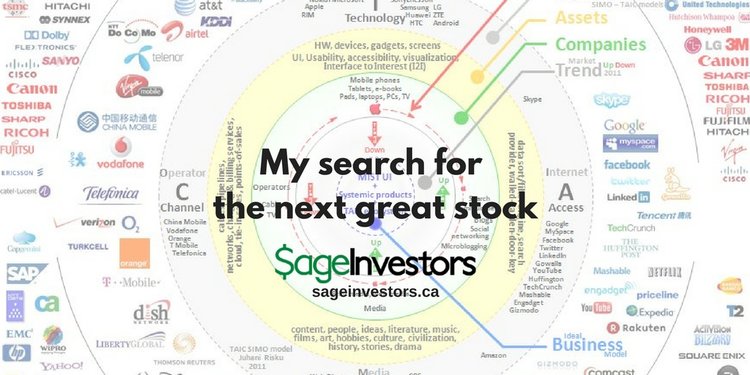
I get asked a lot about how to find companies and stocks to invest in. Where do you start? It’s a great question and also an overwhelming question to people. They’ve set up the broker account. They put in some money. They’re now ready to buy stocks. Where to start?

A few years ago I wrote a blog on how to find stocks to invest, where I suggested a simple and easy starting point in identifying companies to evaluate. The premise was identify the core necessities of life that we need on daily basis and find those stocks that offer that value proposition. The necessities of life are essentially food, clothing, shelter, and transportation (I may add another one communication). Identify the companies in each pillar and evaluate them to find the best run, best managed, best performing.

These days, one of the prominent business thought leaders is Scott Galloway. He is a walking market research machine and can hit with you with so much data you’ll faint. If you want proof check out one if his presentations.

Galloway blogs as well and awhile back he posted a piece of how Uber could get its groove back after all the leadership missteps. He mused on the following:

“…Begin thinking of Uber as an OS. The most impressive firm of the nineties was the original gangster leveraging the operating system — Microsoft. The most influential firms of the last decade, the Four (Amazon, Apple, Facebook, and Google), have become operating systems for retail, media, connections, and information, respectively … and extract serious rents from the apps that sit on top of the OS. What firm has busted a move and blown through $100B market cap that isn’t effectively an OS? The latest, Netflix, has taken advantage of the extraordinarily lame cable industry and now occupies the second-most-important screen, the television. Netflix has increased its market cap 2400% in the last five years.

In sum, the only way Uber gets from $70B to $700B is to become the OS for travel, becoming the user interface / API / rules for all transportation. Leveraging AI, cheap capital, and relationships with 40M of the planet’s wealthiest consumers each month, Uber should expand its offering (dramatically). Same interface, but instead of entering “ACK airport,” where I’m headed Sunday morning, I type in “London,” and using AI — connecting the dots of my preferences, economic weight class, deals at the time, APIs — Uber presents the best options for not just the ride to the airport, but the flights to JFK, then London, the car that picks me up, and the hotel I stay at. Uber has the license to do this. The ride-hailing firm can’t get there on its own and will acquire other firms…”

It’s a pretty compelling argument and it made me wonder what other “OS’s” are out there in other industries? Then I thought about my pillars, food, clothing, shelter, transportation? Has anyone staked their claim as owning the OS for these pillars? Where would Google, Amazon, Facebook, Apple play in this? I thought it would an interesting exercise to carry out and may it can uncover some interesting investment opportunities. My search for the next great stock had begun.
Continue Reading…

GreedyRates.ca: The 5 degrees of Financial Freedom

Image: GreedyRates.ca/Shutterstock

My first article for GreedyRates.ca ran over the weekend. Click on The 5 Degrees of Financial Freedom for the full article. It talks about how many terms in personal finance are used interchangeably, and often imprecisely: financial security, financial independence, retirement and especially financial freedom.

I suggest that most of us travel through a financial life cycle as predictable as the human life cycle, and there is a corresponding hierarchy of growth stages that we need to keep in mind in order to continually meet and exceed our financial goals. But because the term financial freedom can apply to so many stages, I argue it’s better to use more precise terms to identify the various degrees of Financial Freedom.

From the 5-stage hierarchy below, I argue that the key milestone in our financial lives is Findependence (a contraction of Financial Independence), a turning point that I define as the moment all sources of passive income exceed your monthly living expenses. Note that the full version at GreedyRates.ca contains three key bullet points for each of the stages, for a total of 15. Below, I summarize just the stages themselves.

Stage (Sub) 0: Indebted Wage Slavery

We may start out our financial lives with student debt, credit-card debt or mortgage debt in the early years of forging careers and raising families. Whatever its nature, debt keeps you chained to employment or work of some type.  Since those starting their financial journey in debt haven’t really begun their financial journey at all, I call the preliminary stage Stage 0. As a character in my financial novel, Findependence Day, tells a young Millennial couple still in debt: “You can’t climb the tower of wealth while you’re still mired in the basement of debt.”

Stage 1: Financial Security

The next level to aspire to in the ascending hierarchy is Financial Security. In this stage you have eliminated your debts and have accumulated enough wealth so that your absolutely necessary monthly expenses (rent/mortgage, food, utilities, travel and basic entertainment) are taken care of for the near future.

Stage 2: Financial Vitality

It can take a long time just to establish a modicum of financial security but I argue you need to aim higher than mere financial survival and embrace what Tony Robbins dubs Financial Vitality. You want enough flexibility in your cash flow that, after the necessities are taken care of, you can enjoy little luxuries like new clothing or intangibles like gym or yoga memberships, and attend the occasional sporting or cultural event. It’s the difference between financially surviving and financially thriving.

Continue Reading…