Like troubled Brazil, Russia is another trouble spot among the four BRIC nations. (Brazil, Russia, India, China). While most investors probably have minimal exposure to BRIC economies (either through BRIC ETFs or mutual funds, or in more diluted fashion, Emerging Markets funds), this is an example of a geo-political emerging event that bears carefully watching.
Sometimes these seemingly limited local eruptions have a way of spreading globally and ultimately impacting markets far beyond. For an example, check out this Wikipedia entry on the 1997 Asian crisis, which began in Thailand. I dare say when investors first heard about trouble with the collapsing Thai baht, they had no idea the trouble would soon spread to the rest of Asia, with possible global repercussions. To contain it, the IMF had to step in with US$40 billion.
So investors should monitor the events in Russia closely. This is a good example of why we need to pay attention to geopolitics and macroeconomics. Right now, ISIS, oil, Turkey and the Middle East is at centre stage of investor concerns but the events in Russia, including the Ukraine, call for scrutiny and caution. Here’s Business Insider’s take on Russsia’s encroachments on the Ukraine.
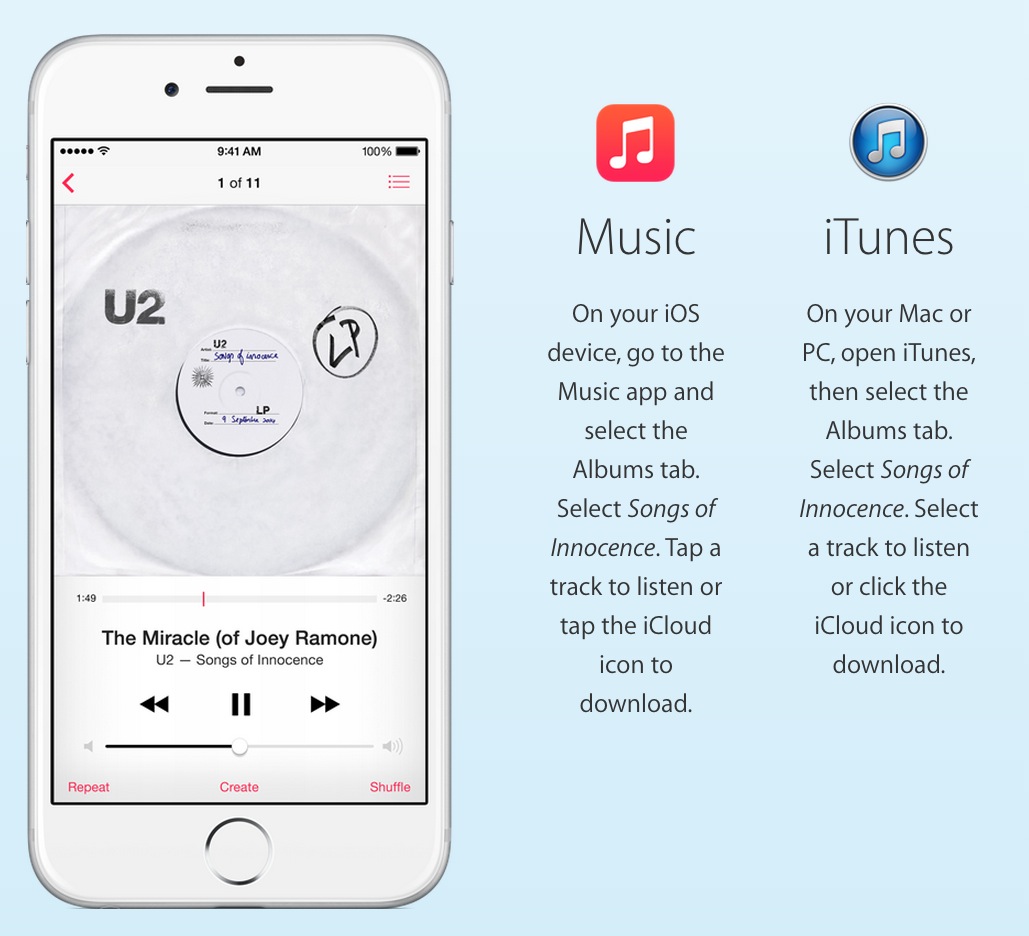
Interesting followup in the New York Times on the weekend to the September 9th release of U2’s album, Songs of innocence and its controversial decision to download it unasked-for on to the playlists of half a billion iTunes users. Despite the blowback, the paper reports that 100 million people have listened to at least a song or two and 30 million people had listened to the whole album.
Including me. In this blog at our sister site a few weeks ago, I argued that U2 is going to be repaid for its experiment with many more paid downloads of its back catalogue. That’s how I justified the Financial Independence angle in the blog: it was more about U2’s ultimate findependence than that of its listeners. Still, I feel richer for the listening exprience.
In fact, after I wrote the first blog on the old site, I confessed I had bought two more U2 albums each for $5.99. Since I posted that, and as I predicted of myself, I’ve purchased most of the other albums I missed. My 23-year old daughter is already berating me for playing nothing but U2: as I said earlier, when it comes to music, I’m a serial monogamist.
Right now, I like No Line on the Horizon the best of all U2’s albums. I had totally missed it when it came out in 2009, its 12th album. Remember, and as the Times points out, it was almost exactly a decade ago that Steve Jobs and U2 appeared on stage together to introduce “an odd-sounding device called the iPod and a marketplace for music called iTunes.”
While most homeowners won’t pay off their mortgages and reach financial freedom until right before retirement, I plan to do it a lot sooner — by age 31. I’ve managed to accomplish this in Toronto, Canada’s second most expensive housing market. How did I do it? Through frugal living, sacrifice and hard work. I was inspired to reach my “findependence” so early after reading Jonathan Chevreau’s book, Findependence Day: How to Achieve Financial Independence: While You’re Still Young Enough to Enjoy It. Here’s my story of how I plan to reach mortgage freedom and findependence and how you can, too.
My Journey Towards Mortgage Freedom and Independence
Sean Cooper
Owning a home has been a goal of mine ever since a young age. My lifelong goal of homeownership became a reality when I purchased a beautifully-renovated bungalow in the suburbs of Toronto in August 2012 for $425,000.
Buying a home at such a young age took a lot of sacrifices, but it has been well worth it. Instead of living on the main floor, I rent it out and live in the basement. I was inspired by the host of HGTV’s Income Property Scott McGillivray, who lived in the basement of his first house for nine years to get financially ahead. In my spare time I work as a freelance financial journalist.
Even after graduating from university, I continued to live like a student. I didn’t go out and buy a fancy car or go on a five-star vacation – I continue to ride my bicycle to work, pack my lunch and shop at discount grocers. Those savings alone add up to thousands a year. Instead of renting an expensive condo downtown, I was fortunate enough to be able to live at home, paying my parents rent, saving towards a down payment.
While not everyone can afford to buy a house at age 27 and be able to make the sacrifices I’ve made, there are still things you can do to help pay down your mortgage sooner and reach findependence.
Pay Yourself First
In the words of David Chilton, you should “pay yourself first.” I’ve been able to pay down my mortgage through pre-payment privileges. Most closed mortgages come with pre-payment privileges that allow you to make lump sum payments and increase your payment. The easiest way to pay down your mortgage is to pay yourself first: set up automatic withdrawals from your bank account, so you’re not tempted to spend. You’ll save thousands in interest over the life of your mortgage and be mortgage-free years sooner. Ease yourself into it – see what money you can afford to contribute right now towards your mortgage. Even an extra $25 a week can shave years off the life of your mortgage.
SMART Goal Setting
I’m a big fan of goal setting. Through goal setting I’ve been able to realize my lifelong dream of home ownership. Goals are most effective when they’re SMART (Specific, Measurable, Attainable, Realistic, and Timely). For example, if you’re saving towards a home, by putting aside an extra $200 per week in your savings account, you’ll have $10,400 saved in a year that you can use towards a down payment or a lump sum payment against your mortgage.
Create a Budget and Track Spending
It’s hard to know if you’re on your way to reaching your financial goals if you don’t have a budget. A budget is the most basic tool and effective tool for managing your money. Are you guilty of living paycheque to paycheque? Do you often wonder where your money goes each month? Not only can a budget help you gain control of your finances, it can help you achieve your long-term goals, like mortgage freedom.
A budget acts as a roadmap that helps you stay on course. Creating a budget doesn’t have to be complicated. It can be as simple as a Microsoft Excel spreadsheet. Just creating a budget can often lead to savings. You may be surprised how much you spend a month on coffee: by saving $2 a day, you’ll have $60 extra a month to put towards your mortgage.
While a budget is helpful, don’t forget to track your spending. Tracking your spend is vital to ensure you’re not going over-budget every month and putting your dreams of mortgage freedom in jeopardy.
Live Frugally
There’s a difference between frugal and cheap. Today it’s hip to be frugal. Being frugal means having the willpower to say no to spending from time to time. Changing a few costly spending habits can lead to big savings.
Rather than spending $10 everyday buying your lunch, why not brownbag your lunch instead? You’ll eat healthier and save a bundle. Instead of driving to work, why not take public transit or bike like me? The savings can add up quickly.
Frugal doesn’t have to mean being boring. You can still have an active social life. Instead of going to a pricey restaurant, you can host a potluck or have a picnic in the park.
Streams of Income
While living frugally can help save money, if you want to reach mortgage freedom sooner, boosting your income goes a long way. There are many ways you can bring in extra income: renting out your home, working part-time, or freelancing.
If you have some spare time in the evenings and on weekends, why not put it to good use by getting a part-time job? Rather than using your basement for storage, you could transform it into a rental suite and start bringing in a steady stream of income. With the extra money, subsidize your mortgage and make lump sum payments against your mortgage to pay it off years sooner.
If you’re willing and able to make a few small sacrifices, you can reach mortgage freedom and financial independence a lot sooner like me. You can work because you enjoy working, not because you have to.
Sean Cooper is a Personal Finance Expert and Financial Journalist. He is a first-time homebuyer and landlord who aspires to reach findependence by age 31. Follow him on Twitter @SeanCooperWrite and read his blogs and request his Writing and Web Design services on his website: http://www.seancooperwriter.com/
Good piece in Monday’s Entrepreneur section in the Post by Rick Spence (@rickspence on Twitter.) Rick describes a new series of videos from the Canadian Foundation for Economic Education, which seeks to raise financial literacy. The videos are each five or six minutes, and are entitled Entrepreneurship: The Spirit of Adventure. Initial interview subjects include David Chilton (@wealthy_barber) , Cirque du Soleil founder Guy Laliberte, and Tim Hortons co-founder Ron Joyce.
The new series follows one 20 years earlier, also created by CFEE president and financial literacy guru Gary Rabbior (@cfee1).
The Wall Street Journal reports in Young Face a Savings Deficit that the under-35 generation (millennials) have stopped saving, so much so they have a negative savings rate: minus 2%. Moody’s Analytics says those aged 35 to 44 have a positive savings rate of 3%, while the 45-to-54 cohort have a 6% savings rate. The older you are, the higher the savings rate: it’s 13% for those 55 or over, which seems to be in the realm of being adequate enough to establish a modicum of financial independence ( as we say here at FinancialIndependenceHub.com, “while you’re still young enough to enjoy it.”)
In the linked subscriber-only piece (sorry!), the WSJ says the personal finances of millennials have become “increasingly precarious despite five years of economic growth and job creation.”
Back in 2009, the savings rate reached 5.2% for those under 35, the WSJ says, briefly surpassing the savings rate of those 35 to 44. But today the median millennial has a net worth of US$10,400, down from US$18,200 for Generation X.
Student loans are also problematic: the median student debt for borrowers under 35 has risen to US$17,200 from US$6,100 in 1995.


 Posted By
 Posted By