No doubt about it: at some point we’re neither semi-retired, findependent or fully retired. We’re out there in a retirement community or retirement home, and maybe for a few years near the end of this incarnation, some time to reflect on it all in a nursing home. Our Longevity & Aging category features our own unique blog posts, as well as blog feeds from Mark Venning’s ChangeRangers.com and other experts.
The question may sound absurd but if you are a healthy Canadian in your 40s having a 40-year retirement is not just possible but very likely.
According to the World Health Organization, a male’s life expectancy in Canada is 80 and 84 if you are female. Let’s take the half-way point between 84 and 80 and say longevity will be age 82.
The median retirement age in 2011 was 63.2 for men and 61.4 for women. The half-way point will be age 62. It seems logical to calculate your retirement years as your life expectancy minus the age in the year in which you retire. If you retire at age 62 and expect to live to age 82 then you should save up enough money to generate income for 20 years right? Wrong!
Planning for your retirement paycheque is a lot more complicated. Life expectancy is a moving target. In Canada, we have increased life expectancy by 5 years over the past 25 years. Increased life expectancy has been consistent for decades and there’s no indication it will stop.
If we continue at this pace, we will add 10 additional years of longevity within the next 50 years. If you are in your 40s today, it’s quite reasonable to expect your life expectancy will increase from 82 to 92. But now it gets even more complicated. Life expectancy for a surviving spouse is longer than an individual’s. As long as one or both spouses survive, savings are required to support their retirement.
Life expectancy around the world has risen by a whopping six years since 1990, according to a global survey released Friday.
As the CBC reports here, these longer lifetimes are occurring in both rich countries and poor ones, although for different reasons.
In the affluent west, it’s driven by falling death rates from the two big scourges of cancer and heart disease. In poorer countries, increased life expectancy is the result of progress in fighting tuberculosis, malaria and diarrhea. The tragic exception, however, is southern sub-Saharan Africa, where life expectancy has actually fallen five years because of rising deaths from HIV/AIDS.
The 2013 Global Burden of Disease Study was published in the Lancet medical journal.
For those born in 2012, life expectancy in Canada is now 80 for males and 84 for women, according to this report in May of 2014.
We’ve mentioned Mark Venning and ChangeRangers.com several times in this site as well as sister site FindependenceDay.com. His insights on Aging and Longevity are a big reason why we have included a regular section of the Hub on this topic. One of his aphorisms is particularly insightful and directly related to financial planning and financial independence: “Plan for longevity, not retirement.”
As the previous blog in this section (by Doug Dahmer) explained, the fatal flaw in most retirement plans is failing to take into account extended longevity. Mark also regularly writes on this theme, as in a recent piece on Financing Longevity, which also provides a nod to the Financial Independence Hub.
Below, specially for the Hub, Mark has composed a year-end reflection on these themes, based on his recent travels. We hope to run more like this in the new year!
Mark Venning, ChangeRangers.com
By Mark Venning,
Special to the Financial Independence Hub
Hardly a day goes by that there isn’t some symposium, book or report (not to mention a blog post or three like this one) about an aging world, longevity and retirement. You can even Google search longevity calculators that can project how long you can expect to live. It’s an aging obsession.
As Ted C. Fishman says in his 2010 book, Shock of Gray – “…although the aging world is the sum of choices made by large populations, how we navigate the future of this world – how we love and care for ourselves and those we cherish – will also be an intensely personal matter.”
Here at the Hub we make a big distinction between Wealth Accumulation and its mirror image, Decumulation. Decumulation is all about drawing an income from your investments and pensions once you’ve stopped working full-time. The mindset is quite different from working and saving to invest.
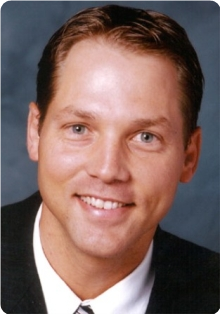
We plan to run a number of contributors by guest experts on Decumulation. This is the first of what we hope will be many contributions by certified financial planner Doug Dahmer (pictured), founder and CEO of Emeritus Retirement Income Specialists.
Doug Dahmer
By Doug Dahmer
Special to the Financial Independence Hub
There is a critical issue that continually arises that people don’t tend to think about when it comes to their retirement planning. I’m not discussing their retirement income requirements, retirement age, accumulated assets, government benefits or even their expected rates of return, though those are all important. What’s often ignored is their life expectancy.
Your life expectancy is probably a more important decision than deciding how close you are to retirement. Yet the latter is what the focus is put upon. Deciding this critical factor then allows you to consider other important things like where are you going to live and for how long will you live there? When should you downsize and when should you consider a retirement home?
Also consider your spouse’s life expectancy
Don’t forget to consider the life expectancy of your spouse – the disparity between your two longevities can have even more significant implications to your planning. How should you split incomes and which assets you should draw from first?
Longevity has increased thanks to medical advances and the fact that many boomers have adopted better lifestyles that often allow them to celebrate their 100th birthdays. However, many variables play a role in how long you may live. These include reducing stress, genetics, eating healthy, exercising and even being married. While we would all agree that living a long life is a good thing, it is important that each individual is prepared for the financial consequences of their longevity.
When Canada set the retirement age, almost a half century ago, at age 65, life expectancy was approximately 72 years old. In a report from Statistics Canada, the average life expectancy for a 65 year old man in 2009 was 83.5 and for a woman it was 86.6. Remember, this is the average, which means over half the population will live longer than this.
As you can’t see into the future, it’s unclear exactly how long you’ll live in retirement; however there are superior ways of estimating this rather than simply making a guess based on how you feel about yourself on any given day.
The Longevity Game
A fun, easy and free way to accomplish this is to visit The Longevity Game website, courtesy of Northwestern Mutual Life Insurance. By completing the questionnaire, you will receive a life expectancy calculation tailored to you, generated by factors like your levels of stress, lifestyle habits, current health and family history.
In a recent report by the Society of Actuaries entitled ‘Key Findings and Issues: Longevity,’ it has been revealed that more than half the population undervalues their life expectancy. As a result their retirement planning time horizons are much too short.
Preparing for the ‘No Go’ Years
If you overestimate your life expectancy, you’ll leave your heirs with a little bit extra. However, if you underestimate your life expectancy, you could end up running out of money and having inadequate resources to secure your dignity and independence during your ‘No Go Years’.
According to the report from the Society of Actuaries, “As in 2009, retirees say they typically look five years (median) into the future, while pre-retirees typically look 10 years (median) ahead when making important financial decisions.”
For most, a big part of retirement planning is making sure your money lasts as long as you do, so to avoid a fatal flaw in your retirement planning it would be a good idea to start with a better understanding of how long each of your journeys may last.
Below is the text for a speech I delivered Monday evening at Toastmasters Port Credit. I’ll be devoting some full blogs to Toastmasters in time, probably under the Entrepreneurship section, because it helps people of any age cultivate two critical skills: public speaking and leadership. Since the idea is to speak without notes, my actual delivery was not identical to what you see below. It has been adapted for the blog but in a few days I may put up a video of my performance, which was clocked at around eight minutes. I imagine this expanded version would take 15!
Jon Chevreau (Twitter).
Thank you Mr. Toastmaster, fellow Toastmasters and esteemed guests. As I look around this room, I see a mix of people: everyone from students and those just embarking on the workforce to people who are already retired.
I’ve worked as a financial journalist for more than 20 years and can tell you the word Retirement is a favorite word of both the financial industry and the media. It’s a handy way to depict a far-in-the future “dream” that conveniently helps banks, mutual fund companies, insurance companies and others sell various financial products, from funds to annuities. And we in the media are almost as fond of the term retirement: I’ve seldom witnessed a newspaper, magazine or web site that turned away financial advertising!
I’m 61 and you could call me semi-retired. But my message to the younger people in the audience, and even some of the middle-aged ones who fear they’ve not saved enough, is FORGET RETIREMENT!
Is this heresy? Not at all. Because there is a better term: Financial Independence. As some of you may know, a month ago I launched a new web site called the Financial Independence Hub and everything I’m saying here can be found at the site.
XY Planning’s Alan Moore
In fact, it includes a guest blog by Alan Moore of XY Planning Network in the US who posted a blog on exactly the topic I’m talking about here. The X and Y refers to Generations X and Y, so he is providing financial planning advice to millennials and young people. And he too is telling them to forget about retirement but instead to seek Financial Independence.
Aren’t the two terms the same thing? Not really. To me, Retirement is the full-stop retirement our parents or grandparents enjoyed if they were lucky. They got a job out of college, enrolled in a Defined Benefit pension that guaranteed a certain steady future stream of income, hung in for the gold watch for 30 or 35 years, then retired at the traditional retirement age of 65. They could now watch day-time TV, golf, nap, play bridge or putter in the garden to their heart’s content for a decade or three. This is what I call the “full-stop” sudden retirement.
Perhaps some of you here are now enjoying such a retirement. Like Mark over there.
Show of hands: how many of you younger people here think they’ll be able to rely on a DB pension when they’re as old as Mark or me? And how many think they’ll stay with a single employer long enough to collect a big enough pension that they’ll never have to work again?
To the young, Retirement is a remote unattainable concept
The problem with the term Retirement is that it seems so terribly far away for young people. The official retirement age keeps rising: it’s now 67 for younger folk instead of 65, if you’re talking about the eligibility age for Old Age Security, and I wouldn’t be surprised if it reached 70 at some point. So telling a 20-year old they should cancel their SmartPhone service in order to save money for a retirement half a century away is hardly an inspiring message, is it?
But that’s what all the retirement peddlers want you to do: put away 10% or preferably 20% of your income by practicing delayed gratification. They may tell you that you’ll need a million dollars or more in order to retire one day. Too often, sadly, young people hear that and figure it’s so impossible they may as well give up and spend it while they have it.
In other words, they are telling young people that in order to enjoy a decade or two of leisure when you’re old and grey, that you need to deny yourself pleasures like travel or eating out while you’re enjoying your youth.
Let me tell you, any of the grey hairs here would probably love to take their retirement savings and use it to book passage on a time machine that would let them relive the Swinging Sixties. If you’re 20 today, I imagine that your 70-year old future self would feel the same way about your life right now.
A more attainable goal
So what do I suggest as a substitute for the word Retirement? I call it Findependence, which is just a contraction of Financial Independence. I’ve written a book, Findependence Day, which is just the day you’ve reached Financial Independence. The ebook I talked about in my third speech here is a sort of “Coles Notes” summary of that book.
Financial independence is generally used to describe the state of having sufficient personal wealth to live, without having to work actively for basic necessities.[1] For financially independent people, their assets generate income that is greater than their expenses.
In practice, I think this means being able to survive without the single stream of income most call a full-time job.
Leaving the nest at 27 is NOT Financial Independence!
Defined this way, Findependence can occur decades before the traditional Retirement, so it’s a goal that young people may find is more worth shooting for. Interestingly, last week I blogged at MoneySense and at the Hub about a study about young people and their financial readiness to leave home. They used what I consider an incorrect definition of financial independence: that if they left the nest and stopped depending on the Bank of Mum and Dad, that they were therefore financially independent. If they could get a job and pay their rent, that was the definition, which resulted in the absurd headline that most millennials hope to be financially independent by age 27.
I don’t think so. Even with DB pensions, the earliest most people aspired to Financial Independence was 55, which is the earliest some pensions permit early retirement. Anyone hear of Freedom 55? That London life campaign was one of the most successful sales pitches for Early Retirement. Yet only a few government workers or business executives who strike it rich ever retire that early.
Why do billionaires keep working?
Why is that billionaires like Warren Buffett continue to work? Or young tech entrepreneurs like Mark Zuckerburg? Don’t you think Zuckerburg, who’s all of age 31 or so, couldn’t be findependent by now? Obviously, they have passion and are driven by purpose.
What does that tell you? Age 55 is way too young to “retire’ in the classic sense of doing nothing: playing golf, watching daytime TV, reading all day. Yes, many people THINK they’ll travel all the time once they retire but as I wrote on another blog last week, travel is overrated and expensive, and is really something you would only want to do some of the time, not ALL of the time.
Integrating the Three Boxes of Life
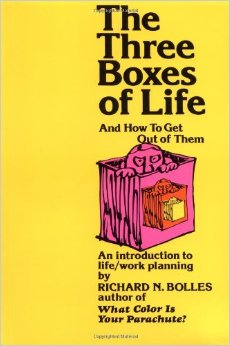
Findependence is about integrating education, work and play. On my sister site, Findependence.TV, I’m interviewed about a concept called The Three Boxes of Life, which is the title of a classic book by Richard Bolles. In the old days, we started life in the first box, Education, spent 15 or so years there, then graduated to the second box, Work. We stayed there for 35 to 50 years, and then came traditional Retirement, the third box of total play and leisure.
On the video, I talk about there being really only a single day: you work a bit each day and make money, you learn a bit each day and at the end of the day, you may “play” by getting some exercise, reading, watching TV or whatever.
On the site, there are blogs on concepts like mini-retirements and the four-hour workweek. Wouldn’t it make more sense to take the occasional mid-career sabattical or series of three-month vacations earlier in life, rather than saving it all for ten or 20 years of doing nothing when you’re too feeble to appreciate it? That’s why the subtitle of Findependence Day as well as The Financial Independence Hub is “While you’re still young enough to enjoy it.”
Plan for Longevity, not Retirement
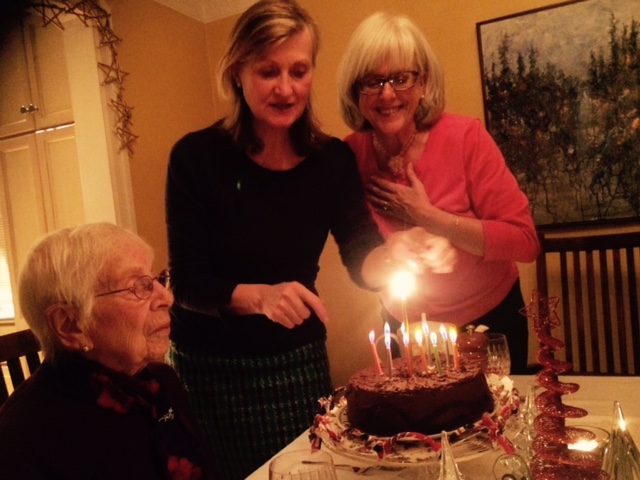
Meta celebrates her 98th birthday. With Alizon Sharon (c) and Ruth Snowden (r).
Life expectancies are on the rise because of advances in medical science and more of us are practicing better health habits, with a focus on proper diet and exercise.
We can all expect to live a lot longer than we once thought, which is why the “Hub” ends with a section on Aging and Longevity. There you’ll find some blogs by Mark Venning of ChangeRangers.com, who coined the phrase “Plan for Longevity, Not Retirement.” I think it’s a great concept.
And it isn’t just a theoretical concept. On Sunday, we had a dinner party for a female friend of ours who celebrated her 98th birthday. She showed us a custom-printed card from – get this – her co-workers. You see, Meta still works two half-days a week at a local printing company. So she still spends a little time in the Work box. She also reads a lot, swapping books with my wife (Ruth, above), so part of her days are in the Education box. And she still travels and parties, so that’s the Leisure box.


 Posted By