Building Wealth

For the first 30 or so years of working, saving and investing, you’ll be first in the mode of getting out of the hole (paying down debt), and then building your net worth (that’s wealth accumulation.). But don’t forget, wealth accumulation isn’t the ultimate goal. Decumulation is! (a separate category here at the Hub).

Top 3 benefits of investing in Real Estate

Image by unspash/Blake Wheeler


Special to the Financial Independence Hub

Learning how to invest your money at an early age can set you up for success in the future. One of the most popular ways to invest is through real estate. This will allow you to earn a cash flow outside of your regular 9–5. However, many take this up as a full–time gig if they find it more appealing or successful than their typical job.

The benefits of real estate investing are almost countless, but there are a few that stand out from the rest. Let’s take a closer look at the top three benefits of real estate investing:

Buying is Cheaper than Building

If you plan to start your investment route in real estate, you’ll find that buying a home is typically much cheaper than building. Start by figuring out how much house you can afford and then apply for the proper mortgage. The process is relatively simple, especially with the help of a real estate agent.

The waiting game starts here, but compared to the length of time a home build is, this process is much shorter. Once your offer on the home has been accepted, you can then decide what you plan to do with the house; whether it’s to earn passive income, live in it, or both. Either way, your home’s equity will begin to grow. The only difference between the two is making money on the home on a consistent basis or collecting the equity of your home once you sell.

Earning Passive Income

In recent years, finding new ways to earn passive income has been a very popular side hustle. Especially for young adults, this is a great way to earn money while also working a full–time job. Check out our top 3 ways to start real estate investing to help you choose which route you want to take. Whether you choose to rent the home out monthly or are considering the flip and sell method, you can earn a significant amount of passive income. Continue Reading…

An income strategy for new retirees: HDIF

By David Kitai,  Harvest ETFs

(Sponsor Content)

One third of recently retired Canadians surveyed by RBC insurance said they retired sooner than they planned because of the COVID-19 pandemic. That same survey found that retirees, especially new retirees, are increasingly concerned about affording their retirement.

More than 78% of survey respondents said they were concerned about the impact of inflation on their savings. 47% said they were concerned about a lack of guaranteed income and 48% said they worry about outliving their savings.

All three of these concerns come down to income. New Canadian retirees, many of whom retired early due to COVID, are worried that they don’t have a stable source of income that can overcome the rapidly rising cost of living and last for their whole lifespans.

One income asset class can help with those worries.

Inflation worries come after years of low-yielding bonds

The income concerns discovered by the survey should come as no surprise. For the better part of a decade income yields from fixed income investments have been at or near historic lows. Retirees used to live on the income these investments provided but yields at sub 2% levels have been unsustainable.

More recently, rates have begun to rise as central banks attempt to reign in inflation. However, with inflation in spring of 2022 hitting levels above 6%, those rising bond yields are still paying negative real income.

That trend is reflected in the fact that 78% of survey respondents said they were concerned about inflation. Many traditional income sources seem incapable of matching what inflation has done to ordinary retirees’ balance sheets.

Many income sources, but not all.

Equity Income ETFs for retirees

An equity income ETF takes a portfolio of equities — stocks — and uses a combination of dividends and a covered call strategy to generate consistent monthly cashflows for unitholders. This results in an ETF with a target annual yield that can be as high as 8.5%, paid in the form of a monthly cash distribution. These assets can still participate in market growth opportunity, like an ordinary equity ETF, albeit with some growth opportunities limited due to the covered call strategy. The end result is a product paying consistent income with exposure to market growth opportunities. Continue Reading…

How to mitigate the burden of Sudden Wealth

Image Source: Pixabay

By Beau Peters

Special to the Findependence Hub

You’ve always dreamt about it and now it’s happened. Your ship has come in. You’ve found the pot of gold at the end of the rainbow. Your future is secure. You have found sudden wealth and now the world lies at your feet, just as you’ve always wanted.

And yet, perhaps life isn’t quite what you expected. Perhaps the affluence you’ve found has brought with it as many unanticipated burdens as it has alleviated. Indeed, no matter how you came into your good fortune, the simple truth is that sudden wealth has its own challenges, ones that you must be prepared to address effectively if you want to secure your own future well-being.

The Psychological Toll

Before you came into your money, you probably imagined that if you were only rich, your life would be perfect. To be sure, wealth can solve a lot of problems. You no longer have to worry about how you’re going to keep a roof over your head or food on the table. You don’t have to worry about the car note or your student loans. You’re secure, as is your family.

However, when you’re absolved of financial worries, especially when this relief comes quickly, that can all too often shine a bright spotlight on other issues in your life. The obligation to make a living and pay off your debts might well have served as a distraction, enabling you to avoid confronting challenges in your relationships, your career, or even your own mental health.

With this obligation removed, so too is the distraction it once provided. You may well find yourself overspending in the effort to continue the avoidance. You may panic buy to comfort yourself or to relieve boredom. 

You may lavish your friends and loved ones with expensive gifts in an unconscious attempt to buy their affection or to compensate for guilt you may feel over your sudden prosperity. In fact, emotional spending is one of the most significant, and most pernicious, ways people waste money because the pattern is such a difficult one to break.

Whatever the reason, overspending can be one of the first and most important symptoms of psychological distress in your new life. Confronting the source of the issue, the depression, fear, guilt, or trauma that often lies at the root, is essential to overcoming it.  

Managing the wealth

When you’ve had a windfall, it can be tempting to think that the hard work is done. It’s often just the beginning. Far more often than not, the greatest challenge lies not in acquiring wealth but in keeping it.  Continue Reading…

Is a higher dividend yield better? Not Always. Learn how to spot the good from the bad to avoid this costly mistake.

Investors Interested In Dividends Should Only Buy The Highest-Yielding Canadian Dividend Stocks If They Meet These Criteria—And Don’t Have These Risk Factors

Dividend yield is the percentage you get when you divide a company’s current yearly payment by its share price.

The best of the highest-yielding Canadian dividend stocks have a history of success

Follow our Successful Investor philosophy over long periods and we think you’ll likely achieve better-than-average investing results.

Our first rule tells you to buy high-quality, mostly dividend-paying stocks. These stocks have generally been succeeding in business for a decade or more, perhaps much longer. But in any case, they have shown that they have a durable business concept. They can wilt in economic and stock-market downturns, like any stock. But most thrive anew when the good times return, as they inevitably do.

Over long periods, you’ll probably find that a third of your stocks do about as well as you hoped, a third do better, and a third do worse. This is partly due to that random element in stock pricing that we’ve often mentioned. It also grows out of the proverbial “wisdom of the crowd.” The market makes pricing mistakes and continually reverses itself. But the collective opinion of all individuals buying and selling in the market eventually beats any single expert opinion.

Canadian dividend stocks and the dividend tax credit

Canadian taxpayers who hold Canadian dividend stocks get a special bonus. Their dividends can be eligible for the dividend tax credit in Canada. This dividend tax credit—which is available on dividends paid on Canadian stocks held outside of an RRSP, RRIF or TFSA—will cut your effective tax rate.

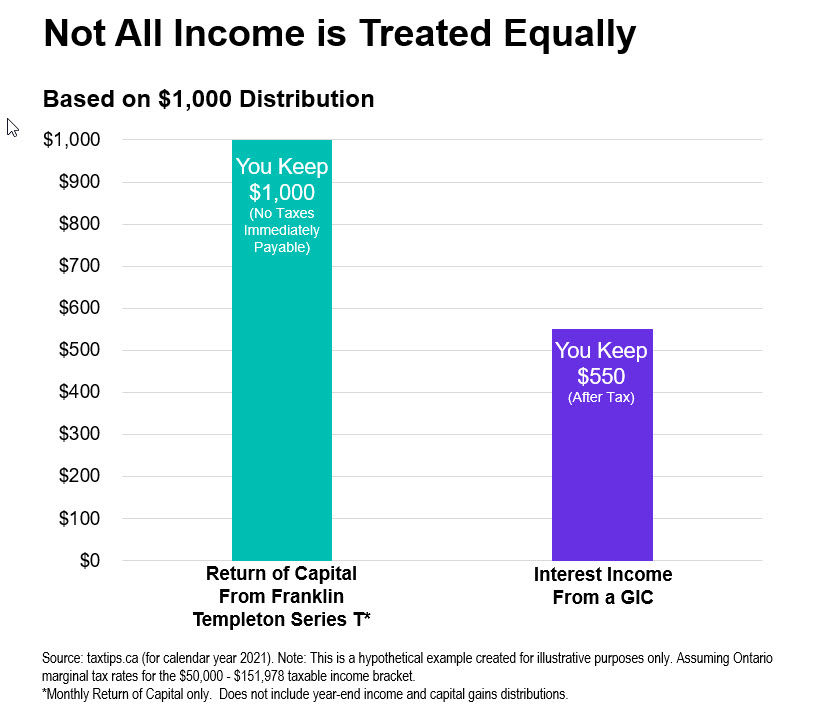
That means dividend income will be taxed at a lower rate than the same amount of interest income. Investors in the highest tax bracket pay tax of around 29% on dividends, compared to 50% on interest income. At the same time, investors in the highest tax bracket pay tax on capital gains at a rate of about 25%. Continue Reading…

MoneySense Retired Money: Reboot Your Portfolio book review

My latest MoneySense Retired Money column is a belated review of Dan Bortolotti’s recently published ETF book, Reboot Your Portfolio. You can read the full review by clicking on the highlighted text: The Canadian Book about ETFs that will have you saying eh-t-fs.

The book has already been well reviewed by prominent financial bloggers: for example, early in December the Hub ran this blog by Michael James on Money’s Michael J. Wiener: Do as I say, not as I do. 

As the column notes, MoneySense readers should find the book a nice complement to the MoneySense ETF All-stars feature that I used to write each spring, and which was initially a collaboration between myself and Dan back when we were both full-time MoneySense editorial staff. The 2022 edition ran last week and is now written by Bryan Borzykowski.

Dan’s book is an excellent primer for any aspiring do-it-yourself investor who wants to buy ETFs at a discount brokerage, or someone wanting to create an ETF portfolio with or without the help of a financial advisor like Dan or his employer, PWL Capital.

Since the dawn of Asset Allocation ETFs early in 2018 (starting with Vanguard, soon matched by iShares, BMO and Horizons), it’s now possible to have an entire portfolio consisting of a single ETF. Those who like the traditional pension fund allocation of 60% stocks to 40% bonds could choose VBAL, XBAL or ZBAL, or Horizon’s slightly more equity intensive, HBAL (with a slightly more aggressive 70/30 stocks/bonds mix).

One-decision funds and automatic rebalancing

Bortolotti is quite enthused with these Asset Allocation ETFs, as are most of the other ETF experts in MoneySense’s ETF All-stars feature. One thing he particularly likes about such funds is the automatic rebalancing between asset classes, or at least between the stocks and bonds that most of them hold in varying proportions. As he says in chapter 8 (Keep it in Balance), “There’s a lot of research suggesting that people do better when the rebalancing decision is taken out of their hands.”

The book takes a holistic approach to financial planning and ETF portfolio creation. In fact, he makes a point of not even addressing ETFs until chapter 5, after first covering the need to cease trying to beat the market, set financial goals, determine the right asset allocation and then fine-tuning.

Like most indexing enthusiasts, Bortolotti takes a dim view of such investing sins as market timing and stock picking.   In his chapters on Asset Allocation, Bortolotti does not restrict his readers to strictly ETFs: there may be a place for GICs and high-interest savings accounts. He says many could put half their fixed-income allocation in GICs and use bond ETFs for the other half.

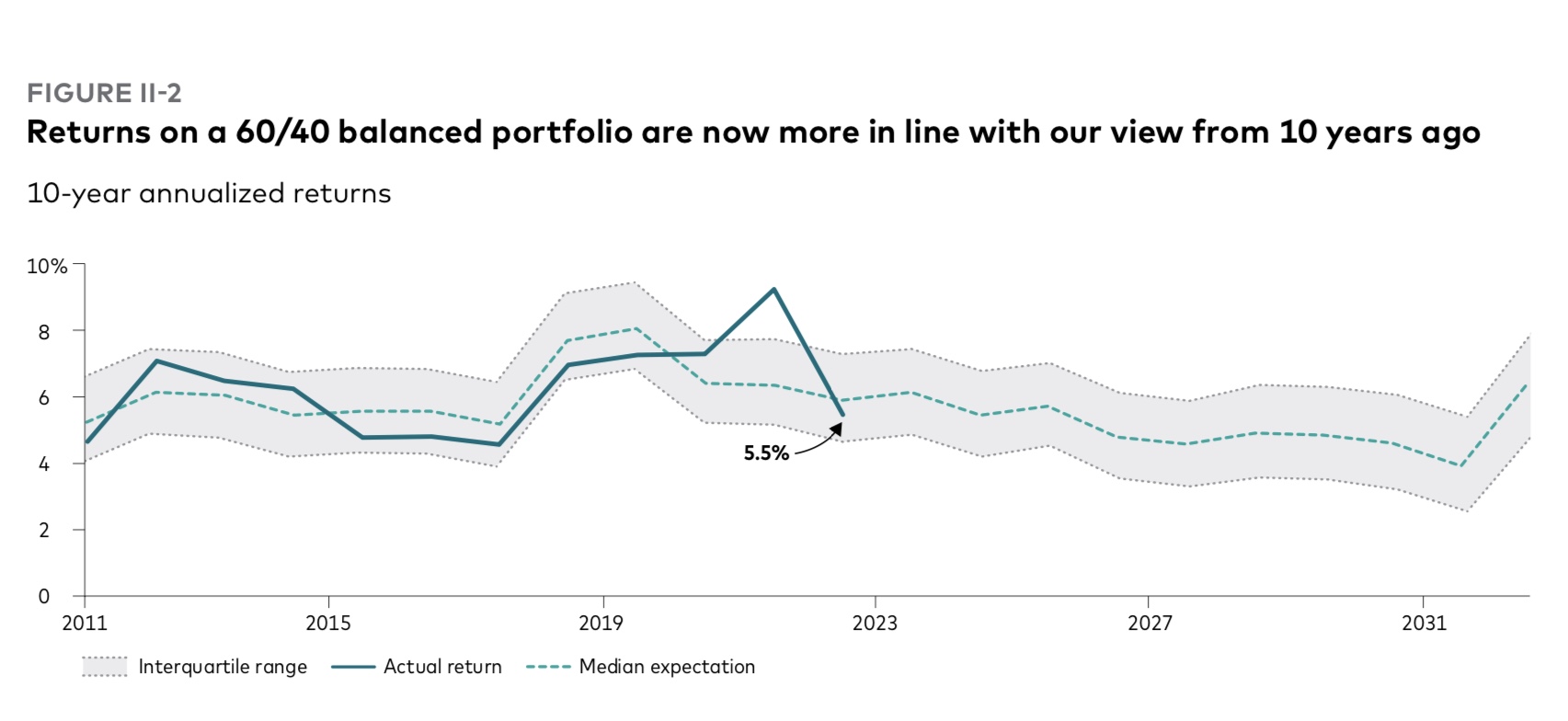
But he does believe that even very conservative and very aggressive investors should have at least some exposure to stocks and bonds; conservative retirees should still have at least 20% in stocks and aggressive stock investors should have at least 20% in bonds. For those between, he is comfortable with their holding the traditional 60/40 portfolio, which has returned between 6 and 7% a year since 1990.
Beyond stocks and bonds, however, Bortolotti is less enthused. He doesn’t recommend commodities like gold and other precious metals, collectibles like rare coins, fine wine and artwork, or even REITs, preferred shares or Real Return Bonds: whether held directly or via ETFs.

When it comes to ETF portfolios, Bortolotti is primarily focused on broadly diversified low-cost ETFs that use traditional market-cap weighting, although he also sees the case for equal-weighted ETFs. But he does not recommend what he calls “narrowly focused” sector or “theme” ETFs. He covers the pros and cons of “smart beta” ETFs, which usually cost more than plain-vanilla ETFs but will at least be cheaper than actively managed mutual funds.

All in all, any MoneySense reader will probably find the combination of Reboot Your Portfolio and the ETF All-Stars as a nice one-two punch for their portfolio.