By Aman Raina, SageInvestors.ca
Special to the Financial Independence Hub

Update from Author:
Since I posted this in the early days of the pandemic, it’s been quite interesting to see how some of these mind maps have played out. Global supply chains are more stressed creating bottlenecks and driving prices up. Alternative payment mechanisms and digital currencies are becoming more embraced. The exodus to suburbs has been joined. Curb-side pickup and other retail distribution channels are being more accepted. There have been struggles in how we educate our kids and social media thanks to the ramblings of a Mad King have now come under the eye of regulatory bodies around the world. Many mechanisms will need to be refined. Even though we’re closer to getting to the other side of the pandemic, many seismic shifts I describe are still in the early days of playing out and as they evolve, investing opportunities will also emerge.
The COVID pandemic has become the seminal moment in our lives. As of this writing, we are still well into growth phase of the virus but there are signs that the spread may be flattening out. The literal full-stop of our daily lives, socially, economically, and psychologically will be embedded in how we approach how we live, work, trade and invest much in the same way the Depression of the 30’s and the two world wars shaped the people of those generations.
What’s different is those periods were man-made. This episode has been driven by a virus introduced by Mother Nature. Unlike our parents and grand-parents, we are not hunkering in a bunker covering our ears while our countries get bombed or are being drafted to carry a gun and lie in rat infested bunker. We are isolating at home watching Netflix, baking bread, and washing our hands every 30 minutes. It’s different but I feel the impacts could be the same.
The COVID period like the Depression will also shape how we approach investing. Many research studies have delved into the investing behaviour of people living through the 30’s and 40’s and how much it shaped their decision-making and risk tolerances. The generations that are living through this period will have developed a value system, and biases that will shape their attitude, confidence, and ultimately how successful they will be as investors. We are seeing literally millions of people who have lost their jobs and livelihoods overnight. Their approaches to saving and investing will not be the same.
I’ve been thinking about how the events we are living through right now are going to influence our behaviours going forward and trying to map to how society and business will respond, adapt and subsequently mind map out possible new investing themes that could emerge. I haven’t tried to identify specific companies or stocks. In fact some companies probably don’t even exist right now. Times of stress can be viewed as opportunities. In between home schooling my kids, and answering many questions from worried people about how to manage their shell-shocked portfolios, I took a shot and put together some preliminary ideas and mind maps that may trigger some ideas to consider.
We’re not in charge
If isn’t clear now, it should be … we’re not in charge.
Up until now, the narrative regarding our earth and environment has been very superficial and revolved around the premise that the planet is getting hotter and altering our environment in profound ways. There has been an ideological debate about how valid this is. We’ve been conditioned to think that climate change is associated with extreme weather events such as hurricanes, flooding, tsunamis or mass earthquakes that level cities or bleaching of coral reefs. The other narrative that we have overlooked is at the molecular level which as we are discovering that while not as dramatic cinematically (Contagion movies not withstanding) viruses can be just as devastating. These debates are revolved on the premise that we as human beings are in charge and will dictate the rules of engagement with the planet. The planet will do what we tell it.
This is false.
What is incredibly clear is we as humans are not in charge of this narrative. The earth is … and the earth is not happy with us. It has watched as we fumble and delay and make excuses back and forth about respecting the planet. It has watched as we put a priority over material wealth, living vicariously through Kardashiean and Justin Beiber instagram posts and immediate gratification at the cost of the health of the planet. The earth has sat there politely and taken the abuse we have unleashed upon it.
The earth has had enough of all this. It has decided to give us a timeout and sent us to our homes to isolate and think about we have done.
We’re not in charge. The earth is in charge and if we want to live happy lives, we need to respect the earth. It has called a time-out on us. It is telling us the status quo is unacceptable and that we better get our sh$t together … now. Whatever attempt we have initiated to respect the planet have been superficial and full of platitudes.
Wall Street, Bay Street, Governments of all shapes and stripes are working under a narrative that once a vaccine is created, we’ll get our injections and go back “normal.” The stock market is pricing in this narrative. I think it’s completely wrong.
It’s going to cost us in so many ways …. and it’s going to make us better in so many ways.
Whatever happens, I’m convinced that whatever comes out of this event will be inflationary in the long-term. Everything is going to cost more and it’s going to take longer. The days of being spoiled with low cost of goods made in China, India, and wherever have ended. To live and function under this paradigm will require complete rethinks on how we will exist while respecting our planet and will require significant investment and behavioural changes. If we can identify these new paradigms then as investors we can participate and profit from these new paradigms. The core performance metric for investment decisions is making decisions that protect our purchasing power of our savings. We need to grow our savings to insulate us so we can afford the necessities we need in our older years to survive. Owning GIC’s won’t cut it. Heck we’re entering a world of negative interest rates! We will need to invest in people, ideas, goods and services. As investors we need to consider what these opportunities will look like in a post-COVID world.
The Earth is breathing better
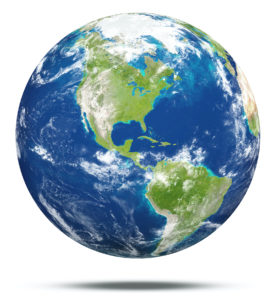
During this time, as I walked around my neighborhood or went on what has become my more frequent jogs, I noticed how much more quiet the neighbourhood has been. The air has also felt crisper and cleaner. There seems to be less smog in the air. I thought it was just me but apparently in many parts of the world, air quality has dramatically improved as a result of the idling of the economies. For the first time in decades people in India can see the Himalayas, The traffic is quieter and I can drive to downtown in 5 minutes when it normally took 45 minutes. Who would have thought that a virus would create so much beauty in the world.
I don’t know about you but I like this and I suspect that we like this new arrangement and will want to keep it that way as much as possible.
Climate friendly products and services are now a default, not a theoretical concept. We’ve seen the proof of concept and we will want this be the status quo going forward, costs be damned.
It’s funny to watch OPEC countries trying to agree on cutting production as a result of the pandemic. It’s ironic that reduction at some point has a better chance of being permanent. Some of them are aware of it, most notably Saudi Arabia. All the arguing about oil prices is useless. They know the jig is up now. Coal, forget it. We could see a big push into electrical vehicles and solar based/geothermal forms of energy. There could be more willingness to invest in the infrastructure around it now.
Post COVID Theme – How we trade: Globalization gets re-calibrated
We have become dependent on sourcing goods from a few countries or from one part of the world. COVID has shown how risky this is. I suspect we will see a recalibration of how our goods and materials get sourced. Supply chains will become regionalized/localized. Congratulations Mr. Trump, you’re getting what you asked for, just realize that the cost of doing business will go up. With COVID, we may be more comfortable with the concept now. I expect we will be flattening our supply chains.
Post COVID Theme – How we wait: Reacquainting ourselves with time
COVID introduced or reintroduced us to the most precious and finite natural resource we have…time. When we have time, we think, we relate, we reset, we prioritize and we appreciate what is truly important during our finite personal existence. We reacquainted ourselves with reading, playing board games, talking and sleeping. During this time, I’ve been running 2-3 times per week compared to barely once a week pre-COVID. I’m getting more sleep now, almost 9 hours versus 6, and I’m feeing totally different, more at peace and not in a rush. I like it. I’m loosing weight! Continue Reading…


 Posted By



 Posted By
 Posted By