For the first 30 or so years of working, saving and investing, you’ll be first in the mode of getting out of the hole (paying down debt), and then building your net worth (that’s wealth accumulation.). But don’t forget, wealth accumulation isn’t the ultimate goal. Decumulation is! (a separate category here at the Hub).
Emotions play a very big part in how we live our lives and have an impact on the decisions we make every day: including how and when we each choose to invest for our future.
As financial markets move up and down, investors’ emotions follow suit. Emotions and behavioural biases play a role in people’s investment decisions, and often, emotionally-driven investing can leave them with poor returns in the long run. Add a volatile market to the mix and it can make it even harder to reach important investment goals.
Financial advisors know that staying invested during market downturns makes sense. While this recommendation is typically passed on to clients, panic sets in and some clients insist on selling to avoid a loss, despite sound logic and statistics. We all need to be taking a closer look at people’s behaviours and biases and finding ways to counteract them, for the benefit of our investors.
A new Behavioural Economics program for Canadian advisors
With that in mind, Manulife Investment Management wants to help change the investment game for our clients. Through a new partnership with BEworks, a behavioural consulting firm and research institute,we launched a Canadian Behavioural Economics (BE) program to help advisors understand and manage human emotions in volatile markets. The program will be rolled out to advisors over the course of this year with more to come in 2020.
With the help of Dr. David R. Lewis at BEworks, our advisors have access to:
• Scientific-led research and actionable tools to help them and their clients understand the biases in investment decision making Continue Reading…
You’re probably familiar with mutual funds. Most people have encountered them at some point: either through their banks and financial advisors, or their friends complaining about the fees.
ETFs are a newer investment, which people tend to associate with lower fees and broad diversification.
“So, what is the difference between a mutual fund and an ETF?”
Mutual funds are bundles of stocks and bonds that are managed for you by a bank or investment firm. Traditionally, they’re taking a hands-on approach to try to beat the market.
With actively managed mutual funds, you have managers who are trading a lot to take advantage of opportunities. However, this active trading comes at a cost, which usually translates into higher fees.
Most ETFs, or Exchange-Traded Funds, tend to take a different approach. They were primarily set up to track an index of investments (eg. The S&P 500 is an index of 500 publicly-listed US stocks and an ETF could track it. But you could have track indexes of tech stocks, energy investments, real estate investments, etc).
With most ETFs, portfolio managers are trying to reproduce the holdings and performance of an index. They give investors diversified exposure to an index at a low cost.
With those kinds of funds, managers don’t need to rebalance as often. That could mean lower costs for them. In turn, they can charge lower fees for the client.
“Which one is a better financial fit for me?”
Based on the above description, you might be wondering, “Why should I take a hands-off approach and match indexes, when I can take a hands-on approach and try to beat them?” Continue Reading…
We gasped a few weeks back when DWS Group launched an environmental, social and governance (ESG) ETF that raised nearly US$1 billion from a Finnish insurance company.
Two doors down, the US$1 trillion Norwegian sovereign wealth fund made its own announcement: it has enough North Sea oil exposure, so it’s slashing its energy portfolio. The Scandinavians aren’t talking; they’re acting.
Norway’s oil wealth comes from “upstream” extraction, so that’s the focus of the divestiture campaign. It’s not a wholesale energy liquidation just yet. Integrated oils like Chevron are still fair game because they have downstream refining and can thus offer diversification. Nevertheless, Norway is sending a clear message.
The trailblazing fund is a force to be reckoned with, controlling 1% of global listed equities. When it bobs, you weave.
There are two takes here: the idealistic one and the realistic one.
1.) Idealistic: A progressive northern European country is leading the way on a megatrend, just as it did with state-provided health care, parental workplace benefits and gender roles (and if we stretch to the Netherlands, drug decriminalization and bicycling).
2.) Realistic: A society whose fortunes are levered to the oil price is diversifying concentration risk under the guise of ESG.
Take note, Canada.
This nation is the portrait of cognitive dissonance. Justin Trudeau was supposed to be this era’s incarnation of the Summer of Love, with a warm Canadian kiss on the Paris Agreement for greenhouse emissions. Puzzling, then, the prospect of a Trans Mountain pipeline expansion.
Meanwhile, having Big Oil reach Big Tobacco pariah status can happen faster than you can google “University Divestment 1980s Apartheid.” I’ll give you the Coles Notes: apartheid died once institutional investors started cutting ties.
If you don’t think Canadian oil interests are petrified of the New Left’s answer to Trump — e.g., American congresswoman Alexandria Ocasio-Cortez — visit Suncor’s website. You wouldn’t know it was in the oil sands business, because you can’t get past all the sustainability, climate change and photos of sunshine. That’s when it dawns on you: this is like Altria urging smoking cessation. Catch even a fraction of the so-called Green New Deal and one-fifth of the S&P/TSX 60 is in a real pickle.
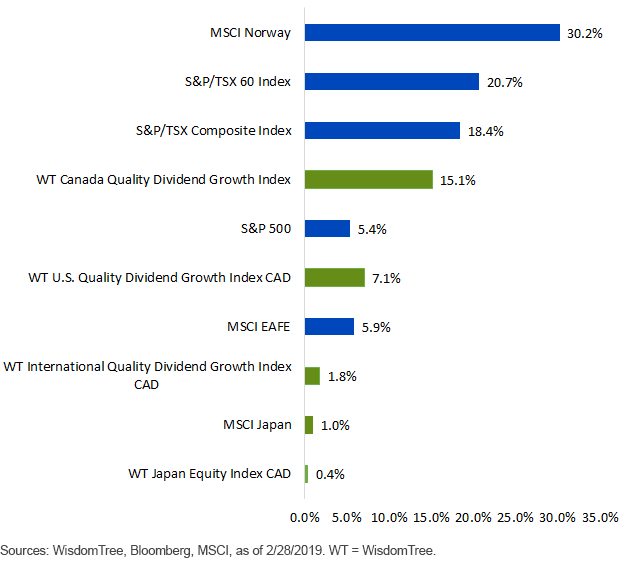
As Oslo goes, so goes Ottawa? Norway’s sector trap is particularly acute, so it forges the path (figure 1). Canadian asset allocators, get your compass: Norway is drawing the map.
Figure 1: Index Energy Weight
Jeff Weniger, CFA serves as Asset Allocation Strategist at WisdomTree. Jeff has a background in fundamental, economic and behavioral analysis for strategic and tactical asset allocation. Prior to joining WisdomTree, he was Director, Senior Strategist with BMO from 2006 to 2017, serving on the Asset Allocation Committee and co-managing the firm’s ETF model portfolios. Jeff has a B.S. in Finance from the University of Florida and an MBA from Notre Dame. He is a CFA charter holder and an active member of the CFA Society of Chicago and the CFA Institute since 2006. He has appeared in various financial publications such as Barron’s and the Wall Street Journal and makes regular appearances on Canada’s Business News Network (BNN) and Wharton Business Radio.
Important Risks Related to this Article
Commissions, management fees and expenses all may be associated with investing in WisdomTree ETFs. Please read the relevant prospectus before investing. WisdomTree ETFs are not guaranteed, their values change frequently and past performance may not be repeated. Past performance is not indicative of future results. This material contains the opinions of the author, which are subject to change, and should not to be considered or interpreted as a recommendation to participate in any particular trading strategy, or deemed to be an offer or sale of any investment product and it should not be relied on as such. There is no guarantee that any strategies discussed will work under all market conditions. This material represents an assessment of the market environment at a specific time and is not intended to be a forecast of future events or a guarantee of future results. This material should not be relied upon as research or investment advice regarding any security in particular. The user of this information assumes the entire risk of any use made of the information provided herein. Neither WisdomTree nor its affiliates provide tax or legal advice. Investors seeking tax or legal advice should consult their tax or legal advisor. Unless expressly stated otherwise the opinions, interpretations or findings expressed herein do not necessarily represent the views of WisdomTree or any of its affiliates.
While indexing giant Vanguard Group and its Canadian unit are best known for their pioneering work in passive investing, both through index mutual funds and ETFs, they are also significant players in active fund management.
On Monday, it educated Canadian financial advisors at its 2019 Investment Symposium in Toronto, with the focus on two of the four actively managed mutual funds it first announced last summer.
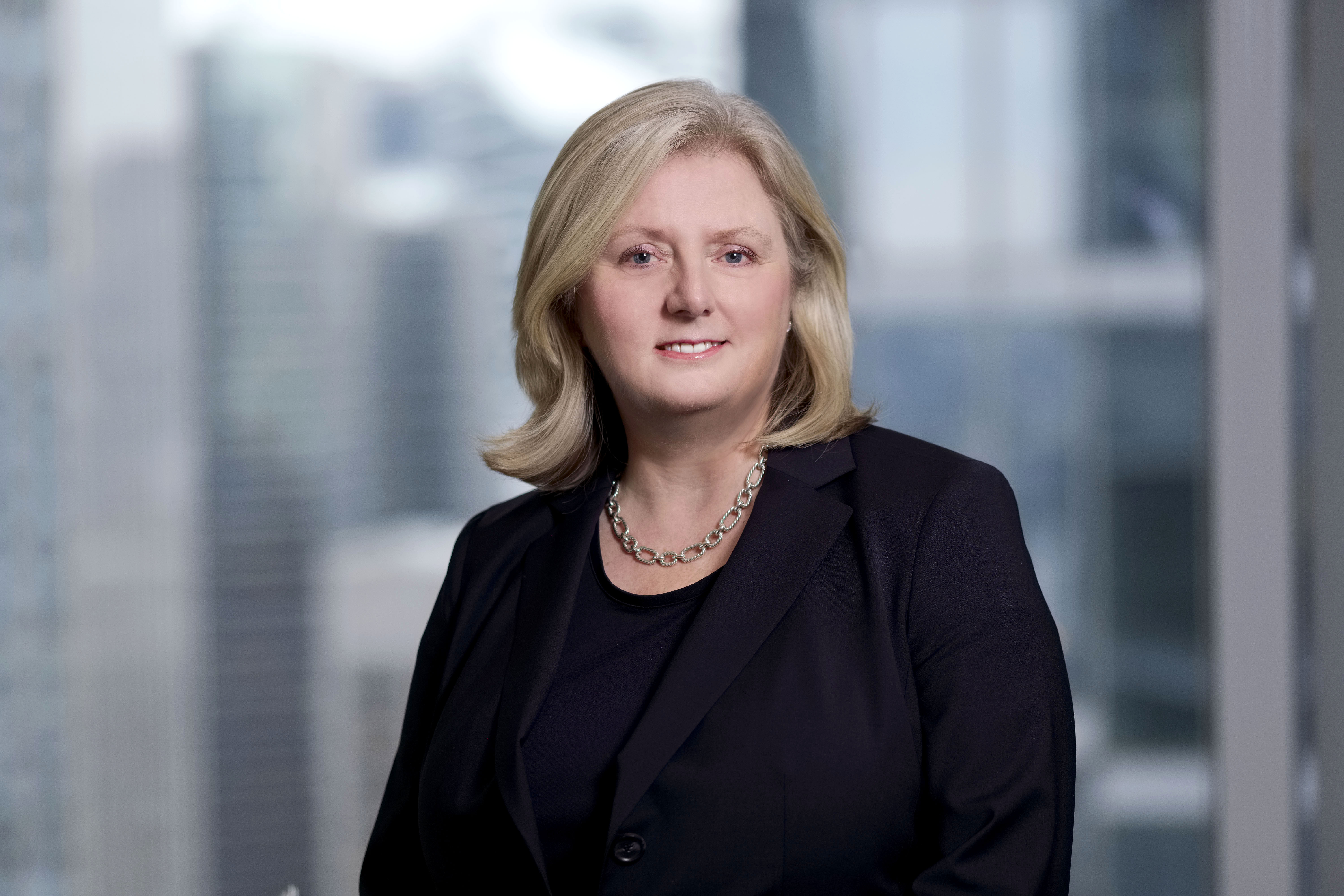
Vanguard Investments Canada Inc. head Kathy Bock, who took over the position on January 1st, reminded the (mostly fee-based) financial advisors in attendance that Vanguard actually started life as an active manager over 40 years ago, and the firm now actively manages more than US$1.6 trillion globally, which is about a quarter of the firm’s total assets under management of more than US$5.3 trillion. That makes Vanguard the third largest active fund manager in the world. See also this Hub blog on this from last September: Vanguard, the Hidden $1.3 Trillion player in active management. (As you can see, the figure has risen with the markets since then).
Vanguard Canada head Kathy Bock
These mutual funds do not pay advisors trailer commissions: they are F series funds, which means fee-based advisors are free to set whatever additional fee they negotiate with their clients, just as they do with ETFs. They can also be purchased at some, but not yet all, discount brokerages
The management fees on these actively managed mutual funds are a maximum 0.5%; but in the first year, the fee ranged from 0.34% to 0.4%, which makes them only marginally more costly than Vanguard’s popular asset allocation ETFs that were unveiled just over a year ago (and which spawned several imitators). This is partly achieved through a management fee waiver that can apply, depending on manager performance, as explained at the bottom of this blog.
These mutual funds are managed for Canadians, although the actively managed subadvisors are global active giants, as outlined below. Because they are new funds, they have not disclosed the Management Expense Ratios (MERs).
True, at least one advisor in the question period seemed ambivalent about how fee-based advisors can reconcile such an approach to the indexing gospel that Vanguard has so thoroughly dispensed over the years. The answer, according to one of the sub advisors featured, is that the two approaches can complement each other, potentially reducing overall volatility. Buying exclusively ETFs means that over the coming ten years you’re “dooming yourself to a lot of failing businesses,” said Nick Thomas, partner with Baillie Gifford, one of two sub advisors to the Vanguard International Growth Fund, together with Schroder Investment Management North America Inc.
The advisor who posed the question was understandably perplexed by the many studies indexing proponents often cite about how most actively managed funds fail to beat the indexes net of their own additional costs. But the Vanguard managers replied that there are cases where active management can outperform, at least outside the highly liquid U.S. market. Portfolios will be more concentrated than the broad indexes and if an investing thesis pans out, there is an opportunity to “pick” winners at the outset of major trends like A.I. and the cloud, and avoid losers. Presumably managers with skills in combination with good financial advisors can add the kind of “Advisor’s Alpha” to client returns that Vanguard has pioneered.
And if active management makes a good complement to equity portfolios, that should also go for balanced mandates. Indeed, the other highlighted fund was Vanguard Global Balanced Fund, with a 65%/35% equity/fixed-income split managed by Wellington Management Canada ULC, headquartered in Boston. The proportion can move to 60/40 or 70/30, depending on market view. It was launched with the other three mutual funds on June 20, 2018.
China tech big focus of Vanguard International Growth Fund
Baillie Gifford’s Nick Thomas
Most of the discussion centered on the Chinese holdings of Vanguard International Growth Fund: China accounts for 20% of the fund’s geographic allocation. The top ten holdings include three Chinese web giants: Alibaba Group Holding Ltd., Tencent Holdings Ltd and Baidu Inc. It also holds Amazon.com Inc. and MercadoLibre Inc. among its top holdings.
Schroders manager John Chisholm is slightly underweight Emerging Markets and market weight China. Baillie Gifford’s Thomas is slightly more enthusiastic, being overweight both Emerging Markets and China. But both see promising long-term growth prospects for the major Chinese web giants. Asked about the current Trump trade war and accusations of theft of American intellectual property, the managers downplayed this as a U.S. interpretation of the facts. Thomas said he views both Tencent and Alibaba as “superior to Facebook or Amazon.”
A TD survey finds many would-be do-it-yourself investors are intimidated by online investing
By Tony Ierullo
Special to the Financial Independence Hub
We live in a digital world, but according to a recent TD survey, many Canadians are reluctant to engage in online, do-it-yourself (DIY) investing. Only one in 10 people feel very comfortable investing on their own, and just one fifth of Canadians are currently DIY investors, even though half said they would like to be able to do it themselves online.
The survey also found that many Canadians feel a high level of anxiety about investing, saying the idea makes them nervous, overwhelmed and intimidated. There is also a widespread lack of knowledge about how to invest or trade online, or where to find educational resources to help them.
Most people have financial goals and are interested in investing, but very few seem to have a high degree of confidence in their ability to do so. The research found that almost 40 per cent of people who don’t feel confident have never sought out resources to learn about personal finance or investing.
Goal setting is an important first step for individuals to gain the confidence needed to invest online. It ties financial success to real-life personal and lifestyle aspirations, and guides clients to adjust their investment approach so that they can reach the goals they’re trying to achieve. Many investors lack this clarity, and therefore feel uncertain about their financial future.
In order to help Canadians establish a more confident approach to saving and investing, TD Direct Investing created GoalAssist™: a free, online, interactive financial planning tool. The tool is embedded within WebBroker, and helps clients build financial confidence by providing a goal setting and tracking option, alongside other relevant, educational tools.
Direct Investing GoalAssist’s innovative design is highly accessible and easy to use, and it can help investors of all levels to become more confident when managing finances and planning for the future. Plus, it’s a tool that allows them to evolve their plan over time, as their financial situation and needs change.
Regardless of your financial knowledge, TD offers the following tips to help you become a more confident investor:
1.) Set goals
Investing makes sense for a variety of reasons, either short-term (such as a vacation, furniture for your home or a new car) or long-term (such as for education and training, starting a business or a comfortable retirement). As your finances and needs change, your goals may change, too.
2.) Choose your timeline
Set this along with your goals. If you think about when you’d like to use the money you’ve invested, it will help you establish a plan for how much to invest, and what types of investments you’ll need to get you there. Continue Reading…


 Posted By



 Posted By