

Building Wealth

For the first 30 or so years of working, saving and investing, you’ll be first in the mode of getting out of the hole (paying down debt), and then building your net worth (that’s wealth accumulation.). But don’t forget, wealth accumulation isn’t the ultimate goal. Decumulation is! (a separate category here at the Hub).

Challenging conventional investment wisdom

By Noah Solomon

Special to the Financial Independence Hub

Many investment professionals tell their clients:

  • That markets tend to rise over the long-term.
  • To “hang in there” and “sit tight” during bear markets because they will eventually recover their losses.

While we agree with the first assertion, we wholeheartedly disagree that investors should sit idly through bear markets based on the notion that they will eventually live to see a better day. Rather, we strongly believe that a dynamic approach that adjusts to changing markets can provide superior long-term results.

The table below illustrates this by showing what happens to $1M invested in two different portfolios:

Portfolio A Portfolio B
Year 1 -30% -5%
Year 2 +30% +5%
Year 3 -30% -5%
Year 4 +30% +5%
Sum of returns 0% 0%
Value at end of year 4 $828,100 $995,006


Since the returns over four years add up to 0% for both portfolios, many people assume that the final value of each portfolio at the end of year 4 should be $1 million. However, as the last line in the table indicates, this is far from true.

Portfolio A, which is more volatile, declines in value by $171,900, while portfolio B, which is less volatile, suffers a decline of only $4,994.

The observation that two portfolios can have the same sum of returns over 4 years yet have significantly different values at the end of the period can be explained by the mechanics of compounding. After experiencing a 30% loss, a $1 million portfolio is worth only $700,000. Unfortunately, a subsequent 30% gain will only bring the value of the portfolio back to $910,000, which is still $90,000 less that its starting value. However, when a $1 million portfolio experiences a 5% loss, its value is $950,000, and a subsequent gain of 5% will bring its value up to $997,500, which is only $2,500 less than its starting point. Continue Reading…

An Investor’s playbook for Bitcoin’s resurgence

By Mauricio Di Bartolomeo

Special to the Financial Independence Hub

Bitcoin’s price has more than doubled over the last four months: from approximately USD $3,400 in February to a current price of USD $10,700 at the time of writing. While it is unreasonable to attribute the recent price increase to any particular news or headline, there are growing narratives and investment thesis that support making an investment in Bitcoin as a digital and apolitical store of value.

As some of us in the industry have come to expect, the runup in price has unsurprisingly led to renewed media coverage which, in turn, leads to thousands of new people looking to learn about Bitcoin and a desire to participate in the market.

For those currently invested in Bitcoin, or those interested in getting involved, here are five tips on navigating the “Bitcoin craze” with ease:

1.) Know where to buy your Bitcoin

When making your first Bitcoin purchase, make sure you use a trusted and compliant exchange. Avoid using exchanges registered in foreign jurisdictions or exchanges that don’t comply with your local jurisdiction. Bitcoin prices can differ between exchanges, they can also have different fee structures. Exchanges like Bull Bitcoin provide simple and fast platforms to buy Bitcoin. They are a non-custodial exchange so you will need to have your own wallet or a savings account to send the bitcoins to once you make the purchase. The next tip will guide you on how to get one.

2.) Know how to store your Bitcoin

In the past, some exchanges have been the target of hack and theft due to the need to keep Bitcoin ‘online’ for trading purposes.  After purchasing your Bitcoin, make sure you know how to keep it safe. You can use a hardware device such as a Ledger or Trezor that you can manage yourself: be sure to read the instructions carefully when setting up your device. If you want a simpler approach to keeping your bitcoin safe, you can use a third party custodian like BitGo that keeps your bitcoin safe through insured custody, or deposit your bitcoins in a savings account to earn interest. More on that below.

3.) Do more with your Bitcoin

The best way to make more out of your Bitcoin is to use a Bitcoin Savings account that pays interest on your Bitcoin deposits. Earning interest helps you grow your bitcoin position:  which can appreciate in dollar terms over time. There are only a few compliant companies worldwide offering this type of service: when searching for options, look for the compliant companies offering these services in your jurisdiction. Continue Reading…

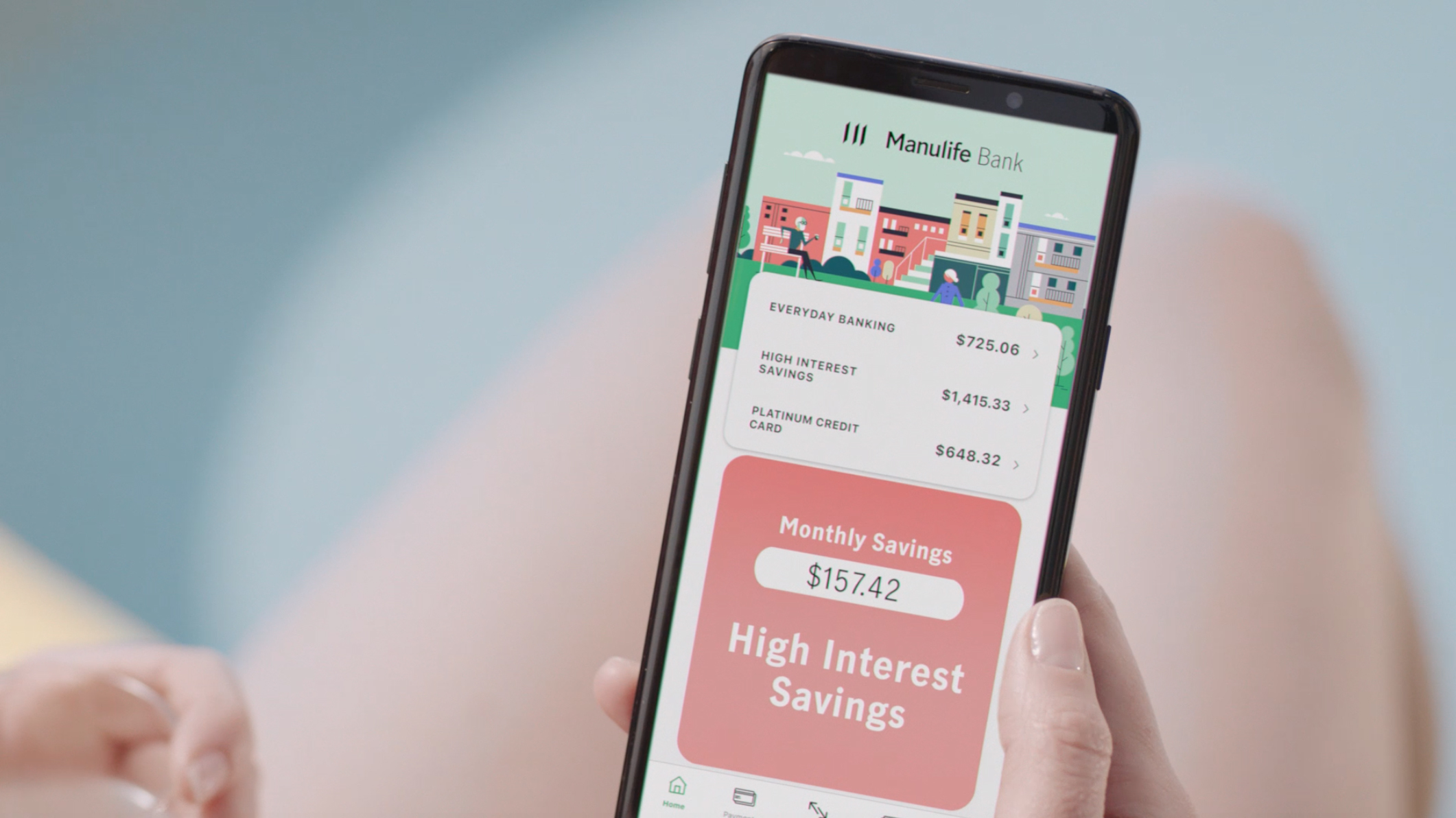
Banking shouldn’t be complicated

By Rick Lunny, Manulife Bank

Special to the Financial Independence Hub

 As a father of five with two 20-something daughters who recently moved out, I often hear how the sheer amount of information in this digital age overwhelms those who are entering the workforce and starting their adult lives. Somehow by default, I have become an unofficial mentor for both my kids, and their broad circle of friends, as they regularly seek my advice when facing important financial and career decisions that will shape their future.

They frequently comment how there’s always new, conflicting advice on how best to live life. Especially when it comes to money and how to make the most of it: save more, live for the moment, pay down debt, and yes, even plan for retirement at age 24.

It’s a struggle to find time to break through the noise and choose the best financial options that truly fits their needs.

And it’s not just the younger generation who struggle to make decisions and take control of their finances.

As the head of Manulife Bank, a subsidiary of Manulife which serves seven million Canadians, I know customers of all ages are looking to develop better financial habits and improve their financial wellbeing.

Canadians are looking for clarity, simplicity and value from their bank. This applies equally to technology interfaces. They expect – and deserve – from initial application to ongoing experience, products that have a human-centric design, with intuitive and easy to use interfaces.

That’s what I love about Manulife Bank. I joined five years ago because it was different from other Canadian banks. It had an entrepreneurial reputation for going beyond the status quo with innovative banking products designed in the best interest of Canadians.   Continue Reading…

Q&A: Understanding Liquid Alternatives

By Brooks Ritchey

(Sponsor Content)

Alternative investment funds are an exciting new strategy class that were previously unavailable to retail investors in Canada. Since they are new to the scene, many advisors and investors are interested, but don’t quite know where to begin. Since I have worked in the alternative investment space for years, I thought I could help explain how investors could benefit from these hedging strategies.

Demystifying Liquid Alternatives for investors

Some advisors feel that these strategies are too volatile or complicated to explain to their clients. We spend a lot of our time trying to explain that these are not complicated mysterious investments. The irony is that many alternative investments, liquid alternatives, especially with regulatory oversight, are about the same risk level as fixed-income products.

Others also worry about the fees on hedge funds, but they have come down a lot. Since I’ve been involved in the hedge fund industry, fees have come down from 2% management and 20% performance fees to 75 basis points management fees and no performance fees for some products.

How would you explain Liquid Alternatives to investors?

It’s an investment that has different characteristics than traditional equity and fixed income. Equity markets depend on the trend in economic growth and bonds depend on a different set of macroeconomic factors, but they’re both dependent on a trend. If you’re trying to find a strategy that’s looking for winners in the equity or in the bond market when the trends aren’t positive, you want to consider liquid alternatives. Continue Reading…

How much does it cost to Retire?

By Steve Lowrie, CFA

I’ll start with one good question posed, because it probably crosses everyone’s mind with increased frequency over time:  How much money do I need to retire?

Since I’ve been a financial professional now for more than two decades, I feel well qualified to answer that question.  The answer is:  It depends.

Okay, I realize that isn’t a very helpful answer, even if it’s the truth.  Let’s dig a little deeper.

From a purely quantitative perspective, there are several rules of thumb in common use.  For example, some say if you’ve got 20 or 25 times your annual income in reserve that should do it. Others suggest you’re ready to retire if you can withdraw no more than 4% of your investment portfolio each year.  So, if you have $1 million in your investment accounts, you should plan to withdraw no more than $40,000 annually in a “successful” retirement.

These and similar guidelines offer a decent starting point.  But bad luck happens.  Even if you’ve diligently saved up 20 times your income, if you happened to retire on the eve of a bear market or if you encounter large unexpected expenses, your handy rule of thumb could end up poking you in the eye. Continue Reading…

Powered by the Financial Independence Hub.
© 2013-2026 All Rights Reserved.
Financial Independence Hub Logo

Sign up for our Daily Digest E-Mail!

Get daily updates from the FindependenceHub.com straight to your inbox.