Building Wealth

For the first 30 or so years of working, saving and investing, you’ll be first in the mode of getting out of the hole (paying down debt), and then building your net worth (that’s wealth accumulation.). But don’t forget, wealth accumulation isn’t the ultimate goal. Decumulation is! (a separate category here at the Hub).

Positive if muted returns for most major asset classes in 2019, Franklin Templeton forecasts

Despite Tuesday’s 3% plunge in US stock markets, Franklin Templeton money managers are optimistic most major asset classes will deliver positive if muted returns in 2019.

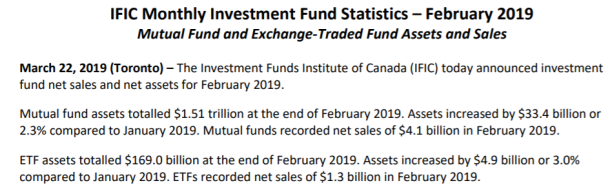
At the 2019 Global Market Outlook event in Toronto, William Yun, New York-based executive vice president for Franklin Templeton Multi-Asset Solutions, projected 7-year annualized returns for Canadian equities of 5.7%, compared to a 7.5% average the last 20 years [as shown in above chart]; 5.7% for U.S. equities (versus 7.4% historically), 6% for international equities (versus 5.5%), and 7.2 versus 9.4% for Emerging Markets. On the fixed income side, he is projecting 2.3% annualized 7-year returns for Government of Canada bonds (versus 4.7% historically the last 20 years), and 3.2% for investment grade corporate bonds (versus 5.2%).

All this is in an environment of continued desyncronized global growth (of 3%) and moderate inflation expectations. Long term, Yun is particularly optimistic about the long term growth of Emerging Markets equities, which at 5% is two-and-a-half times the 2% growth expectation for developed market equities. This optimism is based on positive population growth and labor productivity in Emerging Markets. Globally, inflation “remains muted” and “we don’t see many excesses in the global economy generally.” There are however, some excesses in the U.S. labor market.

More normalized interest rate environment

William Yun, Franklin Templeton Multi-Asset Solutions

Capital spending growth patterns are supportive and trending upwards since the 2016 US election, with the transition from very low interest rates post the financial crisis to a “more normalized interest rate environment.” The opportunity is to reinvest capital to more productive assets, as opposed to allocating to corporate share buybacks.

With respect to central bank balance sheets, markets are normalizing around the world, transitioning from excessive Quantitative Easing to Quantitative Tightening and shrinking balance sheets. Assets quadrupled at the Fed between US$1 trillion in 2008 to $4 trillion today as the Fed committed to buying bonds, with liquidity tapering off. He has similar expectations for the ECB, which has announced the ending of its QE programs, and it’s the same with Japan and China. “Central bankers are pulling back on Quantitative Easing.” There is a “restart of normalization in interest rate policy.”

Rising volatility 

Even as the Dow Jones Industrial Average was in the process of tanking almost 800 points Tuesday, Yun predicted rising volatility after a period of relative calm. In that environment, “investing passively [in index products] has been the way to go but we anticipate volatility returning.” With higher interest rates and more volatility, it may be a time for active management, Yun said, acknowledging his own firm’s expertise in active security management.

Emerging Markets gross domestic product (GDP) continues to rise relative to the rest of the world, from 40% in 1990 to 60% in 2017, and Yun expects that percentage to move higher still. The trend is driven by rising consumption growth for the middle class, which benefits industries like consumer staples and consumer discretionary stocks, technology and even investment management.

Emerging Markets are showing reduced reliance on developed markets, which are slowing. Whereas in 2007 eight of the top trade markets were with the United States, in 2017-2018 China has supplanted the US, with 8 of the top 14 destinations.

In short, Yun sees  a supportive global market for risk assets but lower returns: positive growth and moderate inflation, with increased volatility.

Ian Riach, Fiduciary Trust Canada

Ian Riach, Chief Investment Officer for Fiduciary Trust Canada and a senior vice president of Franklin Templeton Multi-Asset Solutions,  says it makes sense in this environment to make some “dynamic” (i.e. tactical) shifts to long-term Strategic Asset Allocation. Currently, the firm is underweight Canadian equities and Canadian bonds, because the loonie has been getting weaker and Canada is facing a number of challenges ranging from trade to energy to a shrinking manufacturing base, all of which “affects growth going forward.” In the short term, Riach expects short-term interest rates in the United States will be higher than in Canada, “given that they are growing more quickly than us.”

Flat yield curve

Even after the recent rate back-up, “we think Government of Canada bonds are expensive, Continue Reading…

Is Renting throwing away money?

Most people tackle the rent vs. buy problem incorrectly by framing it as the cost of monthly rent versus the cost of a monthly mortgage payment. The argument goes something like, “if your monthly rent costs as much as a mortgage payment on the same or similar property, then it’s a no-brainer to buy the home and build equity rather than flushing your rent money down the drain.”

Others argue that a better comparison looks at the true cost of home ownership, which not only includes the mortgage payment but also things like property taxes, insurance, and maintenance.

However, as PWL Capital’s Ben Felix pointed out in the latest Rational Reminder podcast, neither argument paints a truly fair comparison of rent vs. buy. What you need to look at, he explains, is the total unrecoverable costsin each scenario.

For example, a monthly rent payment is a total unrecoverable cost: an expense that does nothing to improve the renter’s net worth. A mortgage payment, on the other hand, only has partial unrecoverable costs: the interest paid on the mortgage. The other portion reduces your mortgage amount and therefore increases your net worth.

A winning point for home ownership, right? Not so fast.

We need to add up all of those additional costs that a home owner bears (property taxes, insurance, maintenance), plus any upfront money spent on a down payment, land transfer tax, title insurance, home inspection, etc. to close on the home.

There’s also an opportunity cost on the down payment and other closing costs. That money could have been invested instead of put towards buying a home.

Rent vs. Buy: Let’s Do The Math

Let’s look at an example of a renter in Toronto who’s paying $2,000 a month to rent a 575-square foot condo. The same condo is listed for $449,000.

To purchase the condo our renter would need to put down 5 per cent, or $23,450, plus add another $17,062 to the mortgage due to CMHC insurance (required on all mortgages with down payments of less than 20 percent), for a total mortgage amount of $443,612.

Our upfront costs are not done, however, as we need to add in land transfer taxes of $10,910, lawyers fees of $1,000, title insurance of $449, plus a home inspection for $500.

Total upfront costs = $36,309. The opportunity cost of this amount in 25 years at 6 per cent a year = $155,834.

Now let’s look at the unrecoverable monthly costs. The mortgage is amortized over 25 years and has an interest rate of 3.50 per cent. The monthly mortgage payment is $2,215. Of that payment, $1,200 goes towards interest and $1,015 goes towards paying down the mortgage principal.

Then we have property taxes coming in at $375 per month, and we’ll also add the difference between home insurance and tenant insurance, which is $40 per month. We also need to add expected maintenance costs, which we’ll estimate at 1 per cent of the property value per year, or $375 per month.

Total unrecoverable monthly costs (interest, plus property tax, plus insurance, plus maintenance) = $1,990

The unrecoverable costs for the renter and homeowner are nearly identical. The total monthly payment for the homeowner, including property taxes, insurance, and maintenance, is $3,005. Just $1,015 of that is building equity in the home. So, back to the rent vs. buy argument.

Rent and Invest the Difference

We have to assume our renter has an extra $1,015 available in their cash flow each month to invest. What are the expected returns for a 60/40 balanced investment portfolio over 25 years: maybe 6 per cent? Continue Reading…

Using bonds for retirement will hurt your retirement income

Senior couple trying to figure out tax declaration

As some investors near retirement, their advisors recommend switching to bonds and other fixed-income investments for their retirement investments instead of holding stocks or ETFs.

To some extent, this is an understandable retirement investing strategy, since bonds can provide steady income and a guarantee to repay their principal at maturity.

Bonds will lower the long-term returns that are key to successful retirement investing

Unfortunately, using bonds for retirement may not be the best strategy. Bond prices will likely fall over the next few years because interest rates are likely to rise. Bond prices and interest rates are inversely linked. When interest rates go up, bond prices go down, when interest rates go down, bond prices for up.

Bonds have been in a period of rising prices (a bull market) more or less since 1981. That year, long-term interest rates reached an historic turning point when long-term U.S. Treasury bond yields peaked near 15%. Ever since, interest rates have gone through wide fluctuations, but they have essentially headed downward.

Today, interest rates just don’t have that much further to fall. But under certain conditions, interest rates could go substantially higher. Remember, as mentioned, when interest rates go up, bond prices drop.

Even so, brokers continue to sell bonds to their clients. That’s partly because most of today’s brokers had not yet entered the investment business when the bull market in bonds began in 1980. All they know is that bonds do tend to reduce the volatility of your portfolio, since they tend to rise when stock prices fall. Of course, bonds also generate more commission fees and income for the broker, compared to stocks, especially if you buy them via bond funds and other investment products.

That’s why we continue to recommend that you invest only a small part of your portfolio—if any—in bonds and fixed-income investments. Instead, you should aim for a diversified portfolio of well-established companies with long histories of dividends, or ETFs that hold these stocks. We recommend a number of stocks and ETFs appropriate for retirement investing in our Canadian Wealth Advisornewsletter.

We recommend this retirement investing strategy because equities are bound to be more profitable than bonds for retirement over long periods. That’s because equity returns are related to business profits, while returns on fixed-return investments are related to business interest costs.

Bonds and other fixed-return investments can add stability

Returns on your stocks are sure to be more volatile than what you earn on fixed-return investments (that includes short-term bonds). That’s because returns on stocks are related to the part of gross profit that’s left over after a company pays its interest costs. Continue Reading…

Abenomics & Japan focus: Positive Earnings Power


By Jesper Koll

Special to the Financial Independence Hub

Japan is not a value trap. Against a backdrop of very attractive equity valuations — at 13.7x, the TOPIX price-to-earnings (P/E) multiple has dropped back to the lowest 5% level reported over the past decade  — the trigger for upside performance must come from positive earnings surprises. Our analysis suggests the probability of a sharp positive inflection in earnings visibility is about to be delivered in Japan, possibly as early as the upcoming fiscal half-year results season, which was about to get going by the end of October (FANUC reports October 25; Toyota, November 7; Mizuho Bank, November 13).

All said, we maintain our forecast for TOPIX earnings growth of 20%, against consensus expectations of 2.5% (according to Bloomberg).

Why?

Corporate guidance and consensus estimates are based on, in our view, extremely cautious baseline assumptions. Most important, top-line sales growth is forecast to drop from 6.7% last year to a mere 3.7% in the current FY 3/2019. Now, we know that sales growth has a high correlation with nominal gross domestic product (GDP) growth; and here in Japan as well as in Japan’s major export markets — America, China and Asia — nominal GDP growth is actually accelerating. Given the high operational gearing of Japanese companies, the sensitivity of earnings to sales growth is very high. Basically, a 1% difference in baseline sales adds (or subtracts) as much as 10% to the bottom line of listed companies in Japan.

The exchange rate assumptions are the second factor making positive earnings surprises likely. Corporate guidance and consensus estimates are still based on an average of ¥105 to the U.S. dollar for the fiscal year ending March 31, 2019. Now, the fiscal-year-to-date has averaged ¥110.6 to the dollar (April 1 to September 27). That difference alone should add approximately 5% to earnings.

To be sure, Japanese corporate managers may have been wise to operate on very cautious baseline assumptions this year. At the start of the year, the threat of tariffs and other geopolitical risks were very high indeed. Personally, I doubt that managers will go all-out bullish and abandon their instinctive conservatism quite yet. However, the reality of better-than-expected top-line sales growth and a more favorable exchange rate are likely to compound into fact-driven positive earnings revisions momentum. Against the backdrop of attractive valuations, this should very much help create more positive equity market momentum in the coming months. Continue Reading…

Money never sleeps, even when you’re retired

By Billy Kaderli

Special to the Financial Independence Hub

Just because you retire, your money doesn’t have to.

In the words of Gordon Gecko from the 1987 movie Wall Street, “money never sleeps.” And your money definitely won’t once you leave your job.

Many people are shocked to learn that since we left the conventional work force almost thirty years ago our net worth has actually increased, significantly out-pacing inflation and spending. Reading financial articles about what if retirees run out of money, I get the impression that the authors do not understand that once retired, your money can – and should – continue to work for you.

Working smart, not hard

Once you clock out or walk out of the office for the last time, that doesn’t mean your investments are frozen at that point. The stock market is still functioning and now your “job” is to become your own personal financial manager. Actually, you should have been doing this all along, but if not, start now.

You need to get control of your expenses by tracking your spending daily, as well as annually. This is so easy — only taking minutes a day — and this will open your eyes as to where your money is going. Not only that, but it will give you great confidence to manage your financial future. Every business tracks expenses and you need to do the same. You are the Chief Financial Officer of your retirement.

Income is important, but …

Many people structure their investments for income knowing they need $3,000 or more per month to cover their lifestyle. Which is fine, but inflation will be eating away at those numbers and most likely taxes will do the same. Over time your expenses will rise and your purchasing power will drop. You need protection to cover the increases.

Stocks provide that protection and there is an added bonus; when you sell, capital gains are taxed at a lower rate than ordinary income. Therefore, tilting your investments for growth as compared to income will help protect yourself against future inflation. Plus, it will minimize your tax liability.

The day we retired the S&P 500 index closed at 312.49. Today, this equates to a better than 10% annual return including dividends.

That’s pretty good for sitting on the beach working on my tan.

Making 10% on our portfolio annually while spending less than 4% of our net worth has allowed our finances to grow out-pacing inflation, while we continue to run around the globe searching for unique and unusual places.

The key is to start as young as you can with as much as you can and let the markets work in your favor. Time is the greatest asset with investing and younger people can utilize this to their advantage.

But what if you’re fifty?
Continue Reading…