Building Wealth

For the first 30 or so years of working, saving and investing, you’ll be first in the mode of getting out of the hole (paying down debt), and then building your net worth (that’s wealth accumulation.). But don’t forget, wealth accumulation isn’t the ultimate goal. Decumulation is! (a separate category here at the Hub).

How to make money online for your business marketing

By Kristen Pearson

(Sponsored Content) 

When you think of something like business marketing, it’s important to consider that it’s not just limited to making people attracted to certain aspects of your business. Given the scope and kinds of business marketing you can pull off, you are actually more than capable of utilizing your business appeal and tap into your potential audience to make means to earn more money for your business outside your products and services. When you read the article below, consider trying to apply these methods to your overall business strategy, and you might find out some new way of creating passive income for your various needs.

It’s important to understand, however, that while there are a lot of ways you can make passive income — in both through your personal endeavors and through marketing itself — you shouldn’t forget to maintain these income streams’ performance. In fact, some of these passive income ideas can actually boost your marketing efforts as well, making it quite the stone that hits the proverbial two birds. This can be very helpful if you’re stuck in a bind and want to use your resources efficiently, as the methods can not just get you potential sales and boost your marketing, but even earn you additional income.

Tips on making money online

With the above in mind, it may be important to consider as early as now that business marketing does hold a lot of potential to attract people to your business. However, did you know you can make passive income out of it? That’s right, try to review the journalreview.org passive income methods below and see if you can actually apply this to your business:

Make your blog suitable for outreach 

Blogger outreach is one of the most relied-upon methods of gaining traction with your audience, though it can be challenging using this to earn passive income as blogging is really more of an investment. When you make a blog, don’t just focus on your rankings and your keywords, but rather to write content relevant enough for your audience across a long period of time. This not only encourages other bloggers to source you, but you can build yourself a reputation of publishing relevant content in your blog. Give it time, and other blogs will want to guest post in your blog – and that’s when you can start charging them on piggybacking on your rankings. And if this is a competitor or someone in a niche, you’re likely going to get samples and other benefits to review as well.

Maximize content releases by making them on sale

Blogging is free: most of the time, anyway. However, if you want to provide more technical and more precise knowledge to your audiences, you always have an option to make them exclusive content. Provide your more relevant information through ebooks and other releases that your fans will want to buy from you, all the while proving to them you provide relevant content through your blog. You’d be surprised how well ebooks and other exclusive content can sale if you get them out there enough.

Encourage fans and audiences to take up an online course

If you know you and the members of your team are experienced enough in your field, you can actually offer a course to help others jumpstart a career in your niche. You can gather your meeting data and your notes in order to create lectures subscribers and loyal customers can avail for a certain fee. This not only puts you in a position to spread learning, but being able to actually teach what you know puts you in a position of relevance. What better way to establish authority than to do things that make you appear like one? Continue Reading…

This is Easy Street for Canadian investors

By Dale Roberts

Special to the Financial Independence Hub

Investing is simple. We are all familiar with the KISS acronym. Simplicity is the key to successful investing. I have been reading and studying investing and investment strategies for decades and came to the conclusion that for the most part “nobody knows nothing.”

Great. All that research and tens of thousands of hours of study and I came back to the fact that I don’t need to know much at all. What a complete waste of time? No not at all. The thousands of hours of study showed me why I, we, don’t need to know much. We do not need to be experts when it comes to investing. As I like to write: It ain’t rocket surgery. Here’s how you find Easy Street.

What is an investment portfolio? In its basic form we can think of a portfolio as having two components: great companies for greater growth potential and bonds to manage the risk. Those bonds work like shock absorbers on the portfolio to reduce the risk or volatility. The more bonds in the portfolio, the lower the risk level of the portfolio.

A typical portfolio will hold great blue-chip companies (stocks) such as Apple, Google, Microsoft, Facebook, Johnson & Johnson, Berkshire Hathaway (Warren Buffett’s company), Coca-Cola and on and on. On the Canadian side we’ll hold Tim Hortons, the big Canadian banks, the telco companies such as Bell, Rogers and Telus, plus railroad companies such as CN and CP Rail and major energy players such as Suncor and Enbridge and on and on.

The rich are business owners

We know that the richest people on earth are usually business owners. We’re going to join them. We’re going to own a piece of those businesses. When enough of those companies do well, you do well. And certainly not every business is going to do well: that’s why you own a bunch of ’em. And that’s why you’ll own great companies in Canada, US and around the globe. And we don’t have to know how to analyze those companies, we can simply go and buy the ‘entire’ stock market. Here’s What is Index Investing and why it’s simply a superior form of investing. It’s so easy we call it Couch Potato Investing.

And back to risk or volatility. Certainly stock markets mostly go up over time, but they do correct or go down with regularity; it’s a normal and expected part of investing. For the potential of those 9-10% annual returns from stocks we need to accept some risk. Keep in mind that stocks can go down by 50% in major stock market corrections. That’s not everyone’s cup of tea to watch their investment portfolio get cut in half. That’s why many or most investors will need some bonds in the portfolio. Bonds are fixed-income investments and are typically less risky than stocks. A bond pays you a fixed payment on a regular basis and bonds can also go up in value when stocks go down – think teeter totter.

A portfolio with a very generous amount of bonds would have only decreased by about 10%-15% in the last major market correction. For the period of 2008 to end of 2009, here’s a comparison of the US stock market (S&P 500) as Portfolio 1, and a Balanced Portfolio as Portfolio 2.

We see that the all-stock portfolio declined by 50% while the Balanced Portfolio with a 70% bond component declined by just over 15%. By the end of 2009 that conservative Balanced Portfolio is almost back in positive territory while the all-stock portfolio still has more of that hill to climb.

Percentage in Bonds a critical decision

The most important decision that will be made, or the most important question answered will be “What percentage of bonds do you need?” What is your risk tolerance level? What roller coaster do you want to ride? You get to decide. Continue Reading…

The Future is not quite now: A calm perspective on gloomy predictions

Here are a couple of conversations I’ve been involved in recently. Does any of it sound familiar?

Conversation with a retired engineer. He asked, “What do you think about this driver-less cars business? Has anybody even considered how many people this will throw out of work? We have to do something about this! Otherwise, joblessness will go so high that it will cause a depression.”

Conversation with a middle-aged family doctor/real-estate investor. He said, with complete confidence, “I’m cutting back on my medical career and moving into real-estate development. Long before I want to retire, I expect my job to disappear due to competition from AI (artificial intelligence).”

When listening to predictions, especially gloomy ones like these, keep in mind that nobody can consistently predict the future. Also remember that the most widely accepted gloomy predictions are especially prone to fail. That’s because people, as individuals, react to and prepare for predictions of doom. They work on the problem before its predicted arrival time. Sometimes they offset it entirely.

Y2K was the ultimate example

The ultimate example came on the first day of this century, with the non-arrival of the so-called “millennial bug,” or Y2K for short.

In the late 1990s, computer consultants warned that at the stroke of midnight on December 31, 1999, computers around the world would freeze up because of a problem with their data-storage limits. Computers used to use just two digits to designate a year. So they wouldn’t be able to tell what came after 1999; ‘00’ could mean 1900 or 2000. The problem had a simple fix, however. By the last day of 1999, most computer owners had attended to it. Damage from the predicted crisis was negligible.

Today’s predictions — gloomy and hopeful — revolve around the expectation that computer speeds will continue to rise, and computer costs to drop, at much the same rate as they have for the past half century.

This trend has led to exponential growth in the processing power of computer chips, coupled with an exponential drop in their cost. This leads to casual-conversation predictions like the two I mention above: artificial intelligence will soon lead to legions of unemployed taxi, truck and bus drivers; and legions of unemployed family doctors will follow soon after.

The logical flaw here is that exploding computer power at shrinking cost is a technological advance. But there are social, legal and practical limits to how quickly business can translate these technological gains into real-world progress (or problems, depending on how you look at it).

Computer makers don’t need government permission to raise the speed of their chips. In contrast, makers of driverless cars face all sorts of problems, long before they make any money.

The shift to driverless vehicles will happen gradually, over a period of decades. After all, driving in traffic involves far more surprises than a champion Go player faces on the playing board. Drivers have to deal with changing weather, full sunlight and deep shadow, unpredictable human drivers with varying skills, unpredictable pedestrian web surfers, potholes, snow-covered street markings and so on.

The shift from human to AI doctors will occur at an even slower pace — in line with how long it takes to earn a driver’s license on the one hand, and a medical license on the other. AI will replace family doctors some time after it replaces the voice and chat help lines that people use when they have a problem with a computer, a cell phone or a utility bill.

Assume technological process leads to economic progress

People have a long record of guessing wrong about the impact of new technology, and on how long it will take for the new technology to become part of daily life. You’ll guess right much more often if you just assume that technological progress eventually leads to economic progress. Continue Reading…

Retired Money: Should you worry a large TFSA will trigger a CRA audit?

MoneySense/Shutterstock

Should you worry that a large TFSA will trigger a CRA audit? My latest MoneySense Retired Money column looks at a legal debate between the Canada Revenue Agency and taxpayers who have succeeded too well in growing their Tax-free Savings Accounts (TFSAs) with shrewd investing. You can access the full story by clicking on the highlighted headline: Why the CRA is targeting some TFSAs in court. 

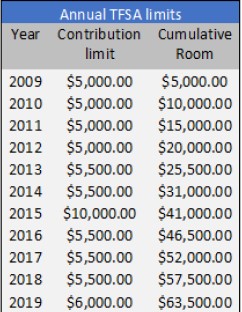
If you’ve contributed regularly to the TFSA since it began in January 2009 you now have $57,500 of cumulative contribution room. With decent growth, it’s easily possible to have accumulated $100,000 in a TFSA by now: in fact, the CRA told me for the article that of the 13.5 million TFSA accounts that existed by 2016, 18,000 have balances of at least $100,000 (a number that includes myself and my own Millennial daughter, thanks to a few good FANG stock picks).

Globe & Mail article last week profiled several ordinary Canadian investors and financial bloggers who have TFSAs of at least $100,000. See How to Grow your TFSA: Tips from Financial Bloggers to Fatten Your Account.

My MoneySense article quotes an unnamed investor who is being audited because his TFSA has grown to $500,000, owing to  timely growth of some private technology companies. He doesn’t think $100,000 is enough to trigger an audit but suggests $250,000 may be. In other words, the CRA may be fine with TFSA doubles but five-baggers will invite scrutiny and ten-baggers most certainly so.

But the real controversy involves TFSAs that are run as de facto securities trading businesses. The Globe highlighted this latest crackdown in an earlier article in July but was merely the latest of a series of TFSA audit scares that have been surfacing virtually since after the first year the program existed.

Shrewd stock-picking is not “aggressive tax planning” 

Some of those earlier audits involved TFSAs that soared because they held private companies but my guess is that, as in my own case or that of my daughter, the vast majority of TFSA holders are neither day traders nor experts in investing in private companies. We only buy exchange-traded funds or blue-chip North American stocks, including the FANG tech giants (Facebook, Amazon, Netflix and Google).

True, depending on when you bought them, it’s quite possible TFSA investors may have experienced 5- or even 10-baggers on stocks like Facebook, Amazon or Netflix. I doubt many investors would make concentrated bets on just one or two of these but if they did, then a $250,000 TFSA would not be inconceivable. That might invite scrutiny from the CRA but I strongly doubt they’d have a case for running a securities business.

Based on the CRA numbers cited in the MoneySense column, Tim Clarke estimates the CRA would have to audit 9,000 TFSAs in order to “recover” the amount of tax specified in the July G&M column that sparked this latest round of TFSA audit worries.

“I love how they say successful traders are conducting ‘aggressive tax planning’ “, Clarke told me in an email, “The purpose of TFSAs was stated in the budget that announced them to be a vehicle to allow taxpayers to save for retirement and other legitimate purposes. How can being successful at that be aggressive tax planning?”


TFSAs remain a critical tax-shelter for retirees

If you’re a retiree or close to it, presumably your TFSA will be invested fairly cautiously, just like an RRSP or RRIF, which means some combination of blue-chip dividend-paying stocks and fixed income. The TFSA is too valuable a tax shelter to get scared by audits of a handful of aggressive investors. Keep in mind that unlike RRSPs, you can still keep adding to your TFSAs well after age 71, to the current tune of $5,500 a year, and perhaps with future inflation adjustments.

There’s no reason that a retiree shouldn’t keep adding to their TFSAs until their late 90s or even beyond: not necessarily with “new” money but from post-tax money liberated from non-registered investments or after tax is paid on forced annual RRIF withdrawals.


The two main types of Financial Independence

By Vicki Peuckert Cook

Special to the Financial Independence Hub

If you are financially savvy and on your way to a secure retirement, you may already know the steps you should take to work toward financial independence. Maybe you’re already there.

But if you are climbing out of debt and just taking control of your money, financial independence (aka “Findependence”) might seem entirely out of reach. If you have kids, focusing on solving your own money problems may be complicated by your concern about their financial future too.

Financial independence means two different things at two different points in life. And they are both significant milestones. You and your adult children may even be working toward them at the same time!

Here are explanations of both kinds of financial independence and actions to consider to make the path to “FI” attainable, no matter where you are starting from.

Becoming Financially Independent from your parents

Adult children who no longer require any monetary support from their parents are financially independent. This doesn’t mean that a parent can’t provide some kind of financial aid if they choose, it means a child can meet their financial obligations without parental help.

With money concerns including five-figure student loans, rising rents, and considerable consumer debt, many young adults face an uphill battle when trying to leave their parents ‘financial’ nest. And parents may also be “sandwiched in” – helping their kids and providing support for aging parents while trying to save for retirement.

For the benefit of everyone involved, parents and adult children have a responsibility to each other to focus on changes and develop a plan to make financial independence a priority.

What can young adults do?

They can learn how to track expenses and make (and stick to) a budget. Making choices like sharing housing with friends and buying used cars or taking public transportation can also help 20-somethings tackle debt.

Over time, increased income from second jobs paired with making frugal choices like cooking at home, can provide the money adult children need to minimize and finally eliminate the need for parents to provide financial support.

What should parents do?

Parents should start setting limits on the assistance they provide their children. And they should work closely with them to create a plan to end all financial support over a set period of time. Parents need to realize they may actually be harming their kids by enabling their kids to make decisions that aren’t always focused on them becoming financially secure.

If a parent always steps in with a solution, their kids may not learn the importance of meeting their needs while putting off wants for the future. And this will only lengthen the time needed to reach financial independence.

Providing advice, emotional support, and helping adult children problem solve money troubles shifts the financial relationship to adults talking, rather than a parent instructing their child on what to do.

Becoming Financially Independent from Work

The other definition of financial independence is one that’s sometimes debated. But there is little argument that it should be a future goal of everyone. In general, reaching financial independence means you have enough income to pay for your living expenses for the rest of your life without having to work. Continue Reading…