Building Wealth

For the first 30 or so years of working, saving and investing, you’ll be first in the mode of getting out of the hole (paying down debt), and then building your net worth (that’s wealth accumulation.). But don’t forget, wealth accumulation isn’t the ultimate goal. Decumulation is! (a separate category here at the Hub).

Trevor Parry’s Open Letter on Liberal Tax Reform retreat

CBC.ca

By Trevor Parry

Special to the Financial Independence Hub

I thought it might be of use to prepare a brief review of where we stand with regards to Bill Morneau’ s infamous July 18, 2017 tax proposals.

As you are aware, attempting a profound degree of subterfuge, Mr. Morneau announced some “minor” tax changes aimed at bringing “fairness” to the taxation of Canadian Controlled Private Corporations (CCPC). What he in fact brought forward was the most fundamental change to corporate taxation since the introduction of the current Income Tax Act in 1972. This was coupled by a paltry 75-day consultation period, most of which coincided with summer vacations and harvest.

Despite his attempted strategic deception, a robust group of stakeholders representing a wide cross section of the Canadian economy mobilized to challenge these proposals and carry the message to Canadians that what was being proposed was fundamentally at odds with any rational conception of fairness, but instead a punitive attack on small business, professionals and family farms.  The government was inundated with over 21,000 submissions.  Last week we saw what I believe will be the first of several stages of government retreat from these proposals.

Few of the proposals will end in legislation

It is my contention that given the profound opposition that these proposals have engendered, both within the Federal Liberal caucus and from many sectors of the Canadian economy that little, if any of the proposals will actually find their way into legislation.  Even the revised proposals create such layers of byzantine complexity that they are largely unworkable, elevate the roll of a CRA auditor well beyond their current capability and increase compliance costs exponentially for most Canadian economic enterprises.

If I may I would like to review the proposals and revised positions:

I) Surplus Stripping

The initial proposals called for an expansion of the ill-conceived section 84.1 of the Act.  This is the infamous section that resulted in it being more advantageous from a tax perspective to sell your business to your next door neighbour rather than to your children.  The proposals had called for restrictions on sale beyond simply spouse or children to include extended family members.  It also placed the power of determination of defining “arm’s length” to a CRA auditor.  The proposals also introduced a new omnibus anti-avoidance measure, section 246(1) that would have eliminated the ability to implement a common post mortem strategy, commonly referred to as “pipeline.”  It would have made redemption strategies the only acceptable means of undertaking post mortem tax planning, threatened retroactivity and potentially exposed business owners (and their estates) to taxation rates in excess of 70%.

Mr. Morneau fully retreated from this proposal on Thursday of last week. There has been guidance provided by the Department of Finance that section 84.1 will now be substantively reformed to remove or reduce impediments to inter-family succession.

Whether this will be restricted to farm and fishing corporations, or be a general provision applying to all CCPC’s remains to be seen.  I am hopeful that the Department of Finance will actually survey the tax planning community for guidance on what is prudent an efficient.

The conclusions regarding the retreat from the earlier proposals are as follows:

  1. The cancellation of s. 246(1) restores traditional planning including “pipeline” and maintains that estate freezes are still relevant and prudent planning option.
  2. Attacks on potential Capital Dividend Account (CDA) credits have been terminated.  The use of corporately owned life insurance is still a preferred planning method.

II) Capital Gains

The proposals, both directly and through the Taxation of Split Income (TOSI) proposed a radical curtailment of the ability to claim the Lifetime Capital Gains Exemption (LCGE). The LCGE would have been restricted to individuals over the age of 18.  It also would have eliminated the ability to claim the LCGE where shares are owned by a trust.  This is of course a common planning technique with both tax and non-tax rationale.  The ability to income split, creditor protect corporately held assets and insurance and multiply the LCGE all require a family trust as a central element of any freeze transaction or other selected reorganization strategies.

Retreat welcomed by tax planners

Continue Reading…

Two notable investment books to build your long-term Wealth

“Books are the bees which carry the quickening pollen from one to another mind.” — James Russell Lowell, poet and author

Last week I highlighted two books that help manage your family’s retirement aspirations. This week I turn my sights onto two books that shape investment success over the long run: all about taking charge of investing in your self-education through quality reading.

I’ve selected two books that provide great insights into stewarding your long-term wealth. The authors are well known in the wealth management profession.

The books emphasise simple, yet fundamental recipes of investing: something for everyone’s investment toolbox when the bulls and bears make their presence known.

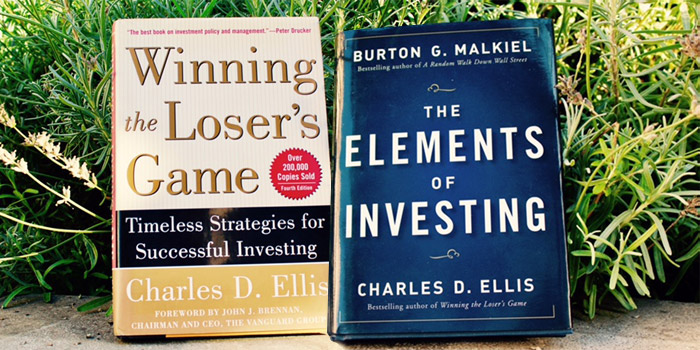
The Elements of Investing

Burton G. Malkeil and Charles D. Ellis


My initial pick is a gem written by two leading, seasoned authors of many books. Both have contributed heavily to the profession of managing wealth. The investing process is condensed into five short chapters, all in layman’s language.

The authors make the point that everything starts with savings. It is their position that each of us can make sound investing decisions. The process does not have to be complicated.

Rather, it is a highly disciplined approach to investing. All the rules you need to know and implement are explained. I visualise the book as a clear, concise and practical guide for the long road ahead.

The easygoing writing style emphasises keeping the approach to investing as simple as possible. My perspective concurs with the view that the book is a prudent, logical road map.

Continue Reading…

Investing so you don’t get lost — or detoured by financial hitchhikers

By Darren Coleman

Special to the Financial Independence Hub

Investing is like driving a car. Every now and then you feel lost, and need to make sure you’re headed in the right direction:  your destination.

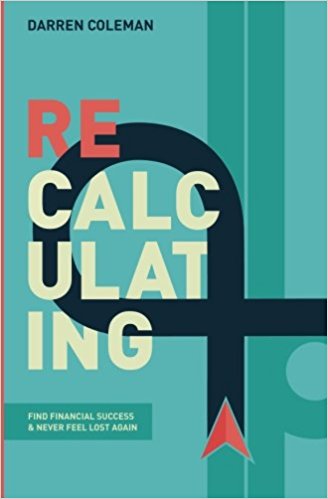
That’s why I wrote the book ‘RECALCULATING – Find Financial Success and Never Feel Lost Again’ which makes use of my years of experience counseling clients about their money and assets.

Indeed, when it comes to directions, a car’s GPS makes things easy if you get lost; it just says ‘recalculating’ and you’re off again, hence the title of the book. So while driving is something we all do, we often encounter obstacles: potholes, detours, flat tires, not to mention unexpected passengers.

Take a couple we’ll call Tim and Janet. They’re nearing 60: he’s a financial executive, and she’s been focused on raising their two children to adulthood; one of them they are helping with a down payment on a house and the other is still in university, and they pay the tuition. What’s more, Janet’s parents are in their mid-80s and their health is starting to fail. So, while this couple is on the cusp of their own retirement, they are still playing Mom and Dad, while also taking care of an elderly Mom and Dad.

And they feel lost.

During my almost 25 years as a professional Financial Advisor and Certified Financial Planner, I often meet people who aren’t where they thought they would be. That’s why they come see me. Some of them are off course and unsure of how to get back. They may be ahead of their plans, behind, or just not sure. Even people who are very successful in their careers are often stressed and much of that comes from a 24/7 financial news cycle that assumes we are more financially savvy than we really are.

Supporting financial hitchhikers

With Tim and Janet, the dilemma concerns ‘financial hitchhikers’ —  passengers they didn’t plan on taking along for the ride on that journey known as financial planning. In this case, their kids aren’t really hitchhikers because they’re already in the car, so let’s call them First Class Passengers and the journey is built around them. Janet’s parents we can call Second Class Passengers who may need temporary assistance.

Continue Reading…

Retired Money: Equities in Retirement — you may need more than you think

Contrary to what some may feel, equities in retirement is not an oxymoron. If you’re retired or almost so, you may be thinking it’s time to lighten up on your equity exposure.

The problem with rules of thumb is that some of them get quite dated and nowhere is this more relevant than in the maxim that a retiree’s fixed income exposure should equal their age. (So, the guideline goes, 60 year olds would be 40% in stocks and 90 year olds only 10% in them).

My latest MoneySense Retired Money column looks at this in some depth, via reviews of two books that tackle both the looming North American retirement crisis and this topic of how much equity retiree portfolios should hold. You can find the full article by clicking at the highlighted text: How to Boost Your Returns in Retirement.

As the piece notes, the single biggest fear retirees face is the prospect of outliving your money. Unfortunately, retiring in this second decade of the 21st century poses challenges for just about any healthy person who lacks an inflation-indexed employer-sponsored Defined Benefit (DB) pension plan. We’re living longer and interest rates are still mired near historic lows after nine long years.

The two books surveyed are Falling Short, by Charles Ellis, and Chris Cook’s Slash Your Retirement Risk. I might add that regular Hub contributor Adrian Mastracci twigged me to the Ellis book when he compared and contrasted it to my own co-authored book, Victory Lap Retirement. See Adrian’s review here: Two notable books to guide your “Retirement” journey. Continue Reading…

Why are boomers slow to embrace DIY online investing?

My latest Financial Post column has just been published, which you can retrieve  by clicking on the highlighted headline: Boomers slow to embrace online investing but, surprise, it’s not a technology thing.

(Added Thursday: The article has also been published in the print edition of Thursday’s paper, on page FP8, under the headline Boomers ‘fearful’ of online investing: advisor. This Hub version of the column elaborates on a few points, adding the important distinction that newer online do-it-yourself [DIY] investors do NOT have to go without human advice or guidance, which they can get through fee-for-service planners, fee-only money coaches or investment coaches.)

According to a TD Bank Group survey titled Too shy to DIY, 79% of Canadian baby boomers use the Internet for banking but only a paltry 16% are DIY online investors.  The poll of 2,000 Canadian adults was conducted late in July.

Since the Boomers have embraced most aspects of the Internet and are just as addicted to smartphones as Millennials and Generation X, it’s clear (as the headline notes) that “it’s not a technology thing.”

Rather, the main reason for low Boomer use of online investing is lack of investment knowledge: TD says 79% of those surveyed don’t manage their money online because they simply don’t know enough about investing, while 22% say they don’t have enough time to invest on their own.

When I asked Jeff Beck, Associate Vice President at TD Direct Investing, why the disparity he replied with this email:

“The gap between Boomers who bank online and those who invest online can be attributed to the fact that many say they are unfamiliar or uncomfortable with online investing tools. There’s a misperception that online investing is a complicated, time-consuming activity. That’s why TD Direct Investing offers a range of educational resources, tools and support to help investors get off to a great start, whether their goal is active trading, long-term investing, or both.”

So too do the other major discount brokerages as far as I’m aware: TD is one of the discount brokerages our family uses and there’s certainly no dearth of information on investing there or indeed most other major financial institutions.

As a boomer myself I was a tad surprised by the findings. Continue Reading…