Tag Archives: bonds

Playing with the Box: Re-reading Nick Murray

I was on a cross country flight recently and I re-read a book called “Simple Wealth, Inevitable Wealth” by Nick Murray, a former rock star speaker who was beloved by the financial advice industry – mostly because he constantly told his advisor audiences that they are great, do important work and are worth every penny they make.  The book was written 20 years ago and, unlike the other books by Murray, was written expressly for investors.  Reading it again provided both a nostalgic stroll down memory lane and an enlightening insight into how much the financial services industry has changed in the past generation.  Some parts of the book have held up well.  Others… not so much.

The risk of outgrowing your capital

I’ll begin with the positive.  The good news is that I still find it refreshing to read Murray’s perspective on the perverse way the media defines risk.  He simply, compellingly and eloquently walks readers through the very real risk of outliving your capital as a result of a reliance on the quaint notion that bonds are “safe”.  Safety, according to Murray, is having a pool of capital that you cannot outlive – and putting a significant portion of your life’s savings can significantly impede that outcome becoming a reality.  I was also heartened by his acknowledgement that there are false dichotomies and that the real decision in the ongoing ‘debate’ between active and passive approaches is really a choice between the more relevant considerations of product cost.  Murray also writes persuasively about the need for specific, measurable, time-bound goals that help to focus the mind and guide in principled decision-making.  Best of all, Murray names and blames what I believe to be the biggest culprit in most peoples’ failure to meet their financial goals: themselves.  More specifically, their own behaviour.

There are also a few things that cause me to shake my head in disbelief, however.  The most obvious of these are the return assumptions that he puts forward as being reasonable.  Granted, the numbers he uses are based on historical data, but he does relatively little to explain that real returns are fairly constant and that a portion of all nominal returns is inflation.  While he doesn’t expressly tell people what inflation rate to expect, he does note that there is historically about a 5% premium for stocks over bonds.  He uses 11% as a proxy for expected stock returns and 6% for bond returns.  To put that in perspective, I currently assume inflation to be 2% with a 5% real return for equities (7% nominal) and a 0% real return (2% nominal) for income.  How times have changed, now that everyone has re-calibrated their expectations toward a low-growth, low-inflation environment for the foreseeable future.

Sustainable withdrawal rates

Then there’s the related question of a sustainable retirement withdrawal rate.  Murray uses 6%.  Many years ago, I remember people talking about the real rate being 5%.  For the past number of years, I’ve been using 4%.  Note that my current withdrawal rates are actually more aggressive/ less forgiving than Murray’s.  You’re much more likely to not run out of money withdrawing 6% from something that’s earning 11% than to withdraw 4% from something earning 7%.  Financial planning is easy when your assumptions are based on a rose-coloured past rather than a murky future.

The thing that struck me the most, however, was his admonition to readers (remember, Murray is writing to ordinary investors here) to focus on first principles.  Everyone knows the old ‘life’s like that’ story about getting a young child an expensive present for Christmas or a birthday only to have that child spend more time playing with the box that the gift came in than with the gift itself.  Continue Reading…

A philosophy to help investors cope in this uncertain time

Katie Moum: Unsplash

By David Miller, CFP, RFP

Special to the Financial Independence Hub

If you are feeling uneasy about your financial situation and your investment portfolio, you are not alone.

Our lives have changed. Right now, most of us are working from our home offices, suddenly teaching Algebra and Social Studies to our kids, and watching more Netflix than we should. Healthy behaviours have hopefully changed for the better, with extra hand washing and social distancing. Shaking hands may be a thing of the past.

The economy, for the most part, is shut down, so does that mean your investment behaviours should change too?

That depends …

  • What kind of Plan have you committed to?

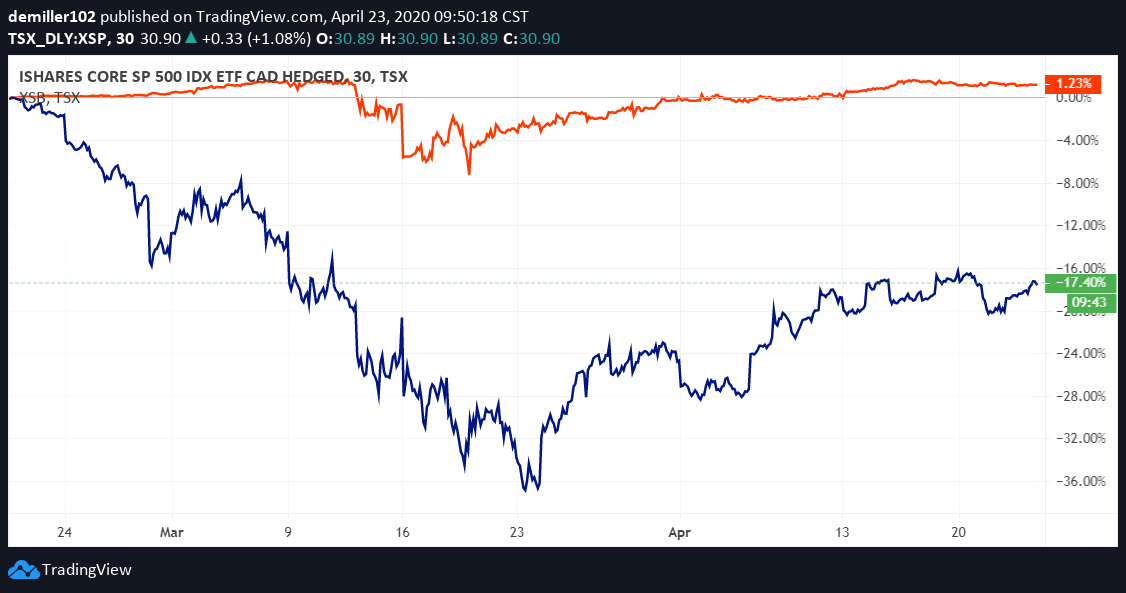
If you have an investment plan that looks to take advantage of the low prices during a downturn and if you have stuck with it during this unprecedented time, kudos to you! The panic selling during March 2020 dropped the S&P 500 (the ‘top’ 500 listed companies in the US) by 36%! Scary stuff that made a lot of people feel stressed out, and it feels like it could get worse. But let us check that feeling with historical facts.

March 3rd, 2009 was the technical bottom of the 2008/09 Financial Crisis, but no one recognized it until much, much later. Here is a quote from CNNMoney.com from that day 11 years ago; note the language:

“I think people are at a loss for answers right now,” said Larry Glazer, managing director at Mayflower Advisors. “Investors are mentally exhausted, and the market at multiyear lows has a psychological impact.”

He said it’s possible that the declines are part of a cycle the market needs to go through to get to healthier footing, but that, regardless of that, it’s very painful for investors in the near term.

“This is a risky market and investors need to ask themselves if the stocks they own are ones they want to own through an extended downturn,” said Robert Loest, portfolio manager at Integrity Funds. “If not, they should be raising cash.”*1

This language seems similar to the sentiment around today’s markets. Today is a much different situation but much of the same fear-based feelings are predicated in the media every day. I’m not saying that we’ve already seen the market bottom of this unprecedented event, but if you had followed the advice of the Portfolio Manager above and picked March 3rd, 2009 to sell your investments and raise cash, you just lost out on the best possible day to invest for the next 11 years. Just as no one could have predicted March 23rd, 2020 would be the day the markets would rebound for 20+ days after, even amid worsening Pandemic numbers and an evolving oil crisis.

Table 1: S&P 500 (CAD Hedged) vs. Canadian Short-Term Bonds

The point is, no one knows where the market will go in the short-term. A lot of the market movement is based on fear and greed, not grounded economic reality and fundamentals. Holding a long-term view and a strategy to buy into these short-term panics is vital to investment success.

As an investment firm, we took a cautious approach that last week of March, dipping our toes into the water, selling only some of the short-term bonds that we hold and buying into the down markets. We did not buy exactly at the bottom, but we were close, buying near a 30% discount from February’s highs. If the equity markets drop down again, we will sell more of the safe assets and buy equity again.

What allows us to buy near the bottom during a panic? For each of our clients, we build a holistic strategy that includes a written commitment in the form of an Investment Policy Statement.

“Writing down your goals means that you can visually see them. This is an important point because when we see something, it affects how we act.”*2

  • The Investment Policy Statement

Simply defined, an Investment Policy Statement (IPS) is our guide to how we invest your money. It lays out, in writing, your long-term goals, risk tolerance, methods to invest, expected long-term rates of return, downside risks, and corresponding asset allocation targets. Continue Reading…

A cure for the headaches of fixed income investing

By Ahmed Farooq, Franklin Templeton Canada

(Sponsor Content)

Many advisors I speak with continue to struggle with the increasing complexities of today’s fixed-income environment and are looking for guidance. The combination of interest rate fluctuations, inflation threats, trade tensions and political upheavals is a challenging environment to make the right call for their clients’ portfolios. There is a real concern that volatility is on the horizon and fixed-income mandates will be needed to provide that cushioning to the overall portfolio.

Active management may be the best way for advisors to navigate this market. For advisors who want an expert’s opinion when it comes to managing future interest rates, credit quality or duration calls in their fixed-income allocation, I like to remind them that this is something that may be best left to a manger who can effectively deal with these factors and risks.

The trend towards active continues

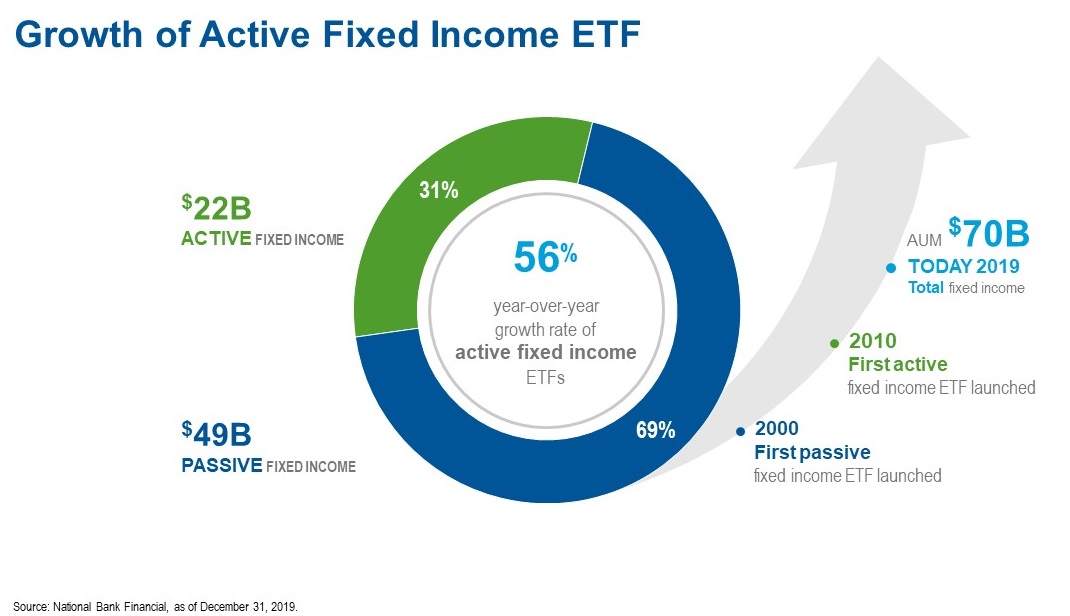
This trend of more advisors switching to actively managed fixed income solutions can be seen in monthly ETF inflow reports over this past year.  Within the world of fixed-income ETFs, actively managed products have seen the biggest area of growth. For example, National Bank of Canada’s January 2020 ETF Research & Strategy Report showed that at the end of January, the total AUM of fixed-income ETFs was $73.4 billion in Canada. Of that $22 billion was put into actively managed funds, which now amounts to nearly a third of all fixed-income ETFs.

Active strategies seek to achieve a specific investment outcome

The goal of passive indexing strategies is to minimize tracking error to the index, maintain index exposure by either fully replicating the index or though a stratified sampling approach; one thing a passive investment cannot do is adjust to any type of market events. This can certainly be a headache for most advisors as the onus on making any changes to their portfolio will be on them. Further, with the vast number of options available, this headache is something that cannot be easily solved. Active managers can adjust to different type of market events, changes to monetary policy and yield curve, adjustment from geopolitical events, and duration management. Outsourcing your fixed income exposure to align with your client’s outcomes will provide relief in this ever-tougher fixed income environment.

Improving client portfolios

As more advisors look at their options within the active fixed income space, I think they will be pleasantly surprised by the pricing of active fixed income funds. Continue Reading…

How do I reduce investment volatility?

Image by Unsplash

By Steve Lowrie, CFA

Special to the Financial Independence Hub

I must admit, the title of today’s post is a bit bogus.  How so?  Not to split hairs, but “volatility” is the variance above and below a long-term trend line. The thing is, nobody has ever asked me whether I can help them reduce their upside volatility.  When equity markets are returning above-average returns, everyone’s happy.

So, I believe the actual question behind the question is how to reduce downside volatility.  There are many kinds of investors, but I’ve never met anyone who enjoys seeing their investments go down, sometimes in a hurry.

From the behavioural side of things, it’s best to treat periods of downside volatility as bumps in the road, rather than turning them into permanent losses by bailing out when they occur. In that context, how do you best reduce investment volatility? There are at least two possibilities to explore.

1.)    Reducing volatility through asset allocation

Understanding the role volatility plays in efficient markets circles us back to an investment strategy I’ve suggested all along:  globally diversified asset allocation.

Instead of trying to manage volatility by trying to time markets or by selecting certain types of securities, I would suggest the better tool for the job – in fact the best one – is a healthy exposure to high-quality bonds.  A bond allocation tempers your portfolio’s overall volatility.  Once you have established that, you can then optimize your equity portfolio by tilting toward equity market factors with sources of higher expected returns (such as size, value and profitability).

2.)    Reducing volatility by selecting low-volatility/low-beta stocks 

Certainly, there are those who claim they can capture the returns of the broad equity markets while offering a smoother ride.  The vast majority of these strategies fall into the categories of “low-volatility,” “equity minimum-risk” or “minimum variance.”  They have been around for decades, and their popularity ebbs and flows with the market’s gyrations.

Gut feel would suggest that if you want to lower the volatility of your equities, it might make sense to focus on stocks that have exhibited lower volatility than the overall market (“low-beta stocks” in industry jargon).  Perhaps yes, but the practical questions are whether these strategies (a) actually work, and (b) work better than asset allocation, as described above.

Before diving into the evidence, we’ve known for decades that market risks and expected rewards have been highly correlated around the world.  In other words, lower risk/lower volatility stocks tend to be the same ones that deliver the lowest expected returns.  So, just based on intuition, a “free lunch” of more market returns with less risk may not be so “free” or easy to obtain. It seems more likely lower volatility will simply lead to lower returns.

What the evidence tells us about low-volatility investing

Looking at an abundance of evidence, financial author Larry Swedroe has published several excellent, although highly technical articles about low-volatility/low-beta investing.  In this one, he explains that researchers documented a “low-beta anomaly” decades ago. But he notes: Continue Reading…

Most asset classes should have positive returns in 2020 but investors should lower expectations


‘Tis the season for the annual investment outlook, with a new year and some might argue a new decade ahead of us. While some pundits hold fire on their prognostications until January, a few big-name investment firms have just come out with their 2020 prognostications.

Among the early entrants was Franklin Templeton, which provided its predictions last week in Montreal and again yesterday (Dec. 10th) in Toronto. Also yesterday, Vanguard put out a release headlined Economic and Market Outlook 2020: Lower Growth Expectations in the New Age of Uncertainty.

Franklin Templeton is a well-known manager of actively managed mutual funds, and has now been in Canada for 65 years, going back to Sir John Templeton’s famous Templeton Growth Fund.  Vanguard is best known for its “passive” or indexing approach to investing, both through index mutual funds and ETFs, although it is also an active manager. But their respective outlooks for the next year and decade are not too different, with investment returns projected to stay positive, albeit with cautions to investors not to expect quite as strong returns as they have received in the last decade.

Vanguard said global growth is set to slow in 2020, driven by US and China trade concerns and continued political uncertainty leading to depressed global economic activity.

Vanguard senior investment strategist Todd Schlanger

Todd Schlanger, senior investment strategist at Vanguard Canada, said: “Investors should prepare for a lower-return environment over the next decade, with periods of market volatility in the near-term. We expect uncertainty stemming from geopolitics, policymaking, and trade tensions to undermine global growth over the coming year … For Canada, the picture is slightly rosier, with a resilient labour market and robust wage growth leading to growth levels stronger than most developed economies in 2020, with a slight improvement over 2019.”

Vanguard’s main bullet points were these:

  • It forecasts continued slowdown in global growth but Canada will be a bright spot among developed economies: Canadian growth is forecast at 1.6%, U.S. growth forecast at 1.0%, Eurozone, 1.0%, China at 5.8%
  • Canadian equity market returns are forecast to be  3.5%-5.5%, annualized over the next ten years
  • Canadian fixed income returns are likely to be 1.5%-2.5%, annualized over the next ten years.

Vanguard says global central banks have moved from expected policy tightening heading into 2019 to additional policy stimulus amid weakening growth outlooks and inflation shortfalls this year. It expects the US federal reserve to cut the federal funds rate by 25 to 20 basis points before the end of 2020. However, it expects the Bank of Canada to keep interest rates at current levels throughout 2020. While Canadian growth is stable, rising household debt levels and high exposure to global economic uncertainty “skew the balance of risks to the downside.” Schlanger advises Canadian investors to prepare for volatility over lack of trade clarity and slowing economic growth in the U.S. by maintaining diversified portfolios, keeping investment costs low and focusing on the long term while tuning out the daily noise.

Global stocks still have more performance potential than global bonds

Meanwhile, Franklin Templeton believes global stocks have “greater performance potential than global bonds, supported by continued global growth.” Over the next seven years it forecasts strong return potential for both bonds and equities in Emerging Markets. And with short-term interest rates below historical averages, “we see a lower performance potential for government bonds.”

William Yun, Franklin Templeton Multi-asset Solutions

Franklin Templeton recommends a multi-asset approach to deal with an environment of desyncronized global growth and moderate inflation worldwide.

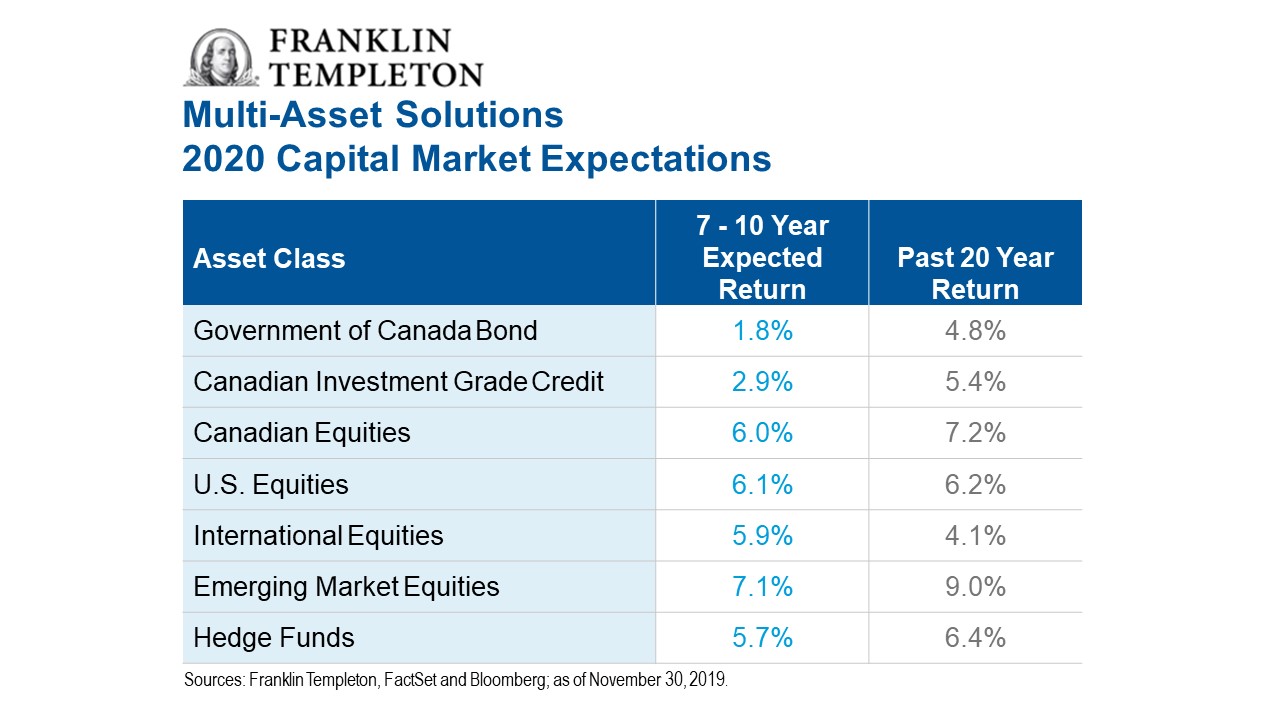
Bill Yun, executive vice president and investment strategist for Franklin Templeton Multi-Asset Solutions (pictured left) said the firm’s 7-year outlook for Canadian bonds the next 7 years is about 1.8% a year, versus 4.8% the past 20 years. Equity return expectations are all positive but reduced from the performance of the prior 20 years: 6% going forward for Canadian equities, versus a historical 7.2%; 6.1% for US equities compared to 6.2% the previous two decades; International equities are projected to return 5.9% versus an historic 4.1%; Emerging Markets 7.1 versus 9% historic, and hedge funds 5.75 compared to 6.4% in the past.

Global central banks have little ammo left

One positive for Canada is that the Bank of Canada has more room to cut rates to cope with an economic slowdown than most central banks in the rest of the world. Canada and the US both have room to cut but Europe does not, Yun said. Some rates are negative in parts of Europe. Continue Reading…

Powered by the Financial Independence Hub.
© 2013-2026 All Rights Reserved.
Financial Independence Hub Logo

Sign up for our Daily Digest E-Mail!

Get daily updates from the FindependenceHub.com straight to your inbox.