Tag Archives: Financial Independence

RIP FIRE

By Bob Lai, Tawcan

Special to the Financial Independence Hub

When I created this blog over seven years ago, the sole purpose was to chronicle our journey for financial independence and joyful life. I wanted to share my knowledge with like-minded people. I could have just focused on writing articles about money and personal finance.

But I didn’t.

Right from the start, I put a strong emphasis on the joyful life aspect, because I realized that having all the money in the world does not automatically make one happy. Happiness needs to come from within and finding this internal happiness is a daily practice. I realized, that writing about money gets old quickly; I wanted to write about more than just the money.

Being the sole income earner of the family (for now), early retirement was never really a goal I had in mind. My focus has always been on financial independence. I want to reach financial independence so Mrs. T and I can have more options in life and have the freedom to work because we want to, rather than working because we have to.

Perhaps the reason that early retirement isn’t on my radar is because I enjoy what I do at work. Having been with the same company for 15 years, over a third of my life, I feel fortunate that I am still working at the same company where I started my engineering career.

To me, early retirement has always been just one of the nice things that we would have in life one day. It does not mean I must retire early in my 30s or 40s to make myself happy. Or that I must hit a specific FI number or hit a specific FI date.

Perhaps I am unique compared to most people, as I grew up in a family where multiple family members either retired in their early 40s or became financially independent but continued to work. Money has never been a taboo subject in my family, which has had a very positive impact on my life.

Another unique thing about our family is that we technically are financially independent, but we choose to prolong our financial independence journey. We wanted more flexibility, so we set the goal to create a dividend portfolio that had enough dividend income to cover our annual expenses. We set a goal of becoming “financially independent” by 2025 or earlier, but we aren’t too worried about whether we hit the goal by 2025 or not.

One of the distinctive benefits of having a dad who retired early and a stay-at-home mom is that my parents were always there when I needed them. Unlike many of my school friends, both my dad and mom could attend many of my school functions, like sports games, band concerts, and field trips.

Now I am a dad of two young kids, I am even more appreciative of what my parents could do for me and my brother when we were growing up. Always available and present at my kids’ important life and school events is something I want to achieve. I am practicing it right now as best as I can with a full-time job.

Growing up, we went on extended road trips because both my parents were free during school summer break. When I was in high school, every summer we would go on road trips that usually lasted over a month.

One year, we flew to Toronto and drove around Eastern Canada and the Eastern United States. Another year we drove from Vancouver to Alaska and back. Another time we drove from Vancouver to New Orleans and back. Then once to Prince Edward Island to drive around the Maritimes and Maine. Throughout high school, we also drove to Banff and Alberta multiple times.

My extensive travels growing up is the exact reason why I want travelling to be part of my family’s life in the future. I want Baby T1.0 and Baby T2.0 to learn invaluable lessons that can only be learned from travelling and seeing the world with their own eyes. There are so many things that you simply cannot learn from reading books or sitting in a classroom. You must see them and experience them yourself.

We have been very fortunate to have travelled quite a bit with both kids already. We went to Denmark multiple times, we visited Japan and Taiwan, and various parts of Canada and the US.

We plan to travel around the world for a year and live abroad for an extended period of time in the near future. We can live off dividends via geo-arbitrage already but building up our portfolio will provide even more possibilities.

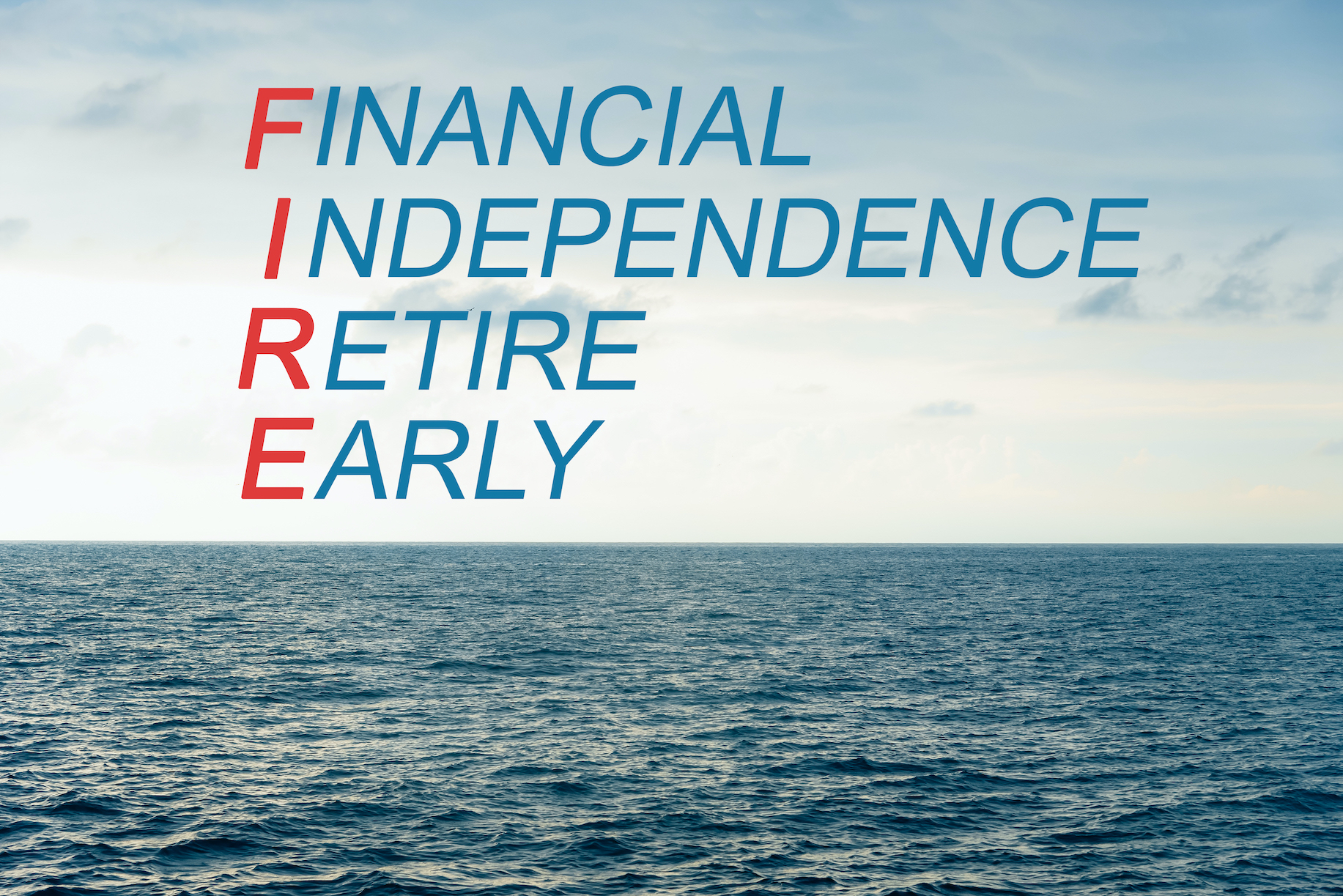
FIRE the end

Although I am involved in the FIRE community, shamefully I didn’t know the acronym until a few years after I started this blog. For a while, I was confused whenever people used this acronym.

For a while, FIRE was the only acronym, then folks started coming up with different acronyms to categorize FIRE. There’s lean FIRE, fat FIRE, barista FIRE, and the list goes on.

FIRE has been getting more and more mainstream coverage lately. Almost every other day I would come across articles on so-on retired at age 38, or someone who retired at age 27 to travel around the world, or someone who retired after saving extremely aggressively for 5 years, or someone who retired by saving up one million dollars in less 5 years.

To me, FIRE is flawed in these articles.

They don’t provide the general public with what FIRE really means.

Almost all of these articles only focus on the early retirement aspect and provide a false image of relaxed and luxurious life in retirement – travelling around the world, leaving the 9-5 rat race, saying FU to the employers, and sipping piña colada on the beach. Early retirement is all fun and games. There are no drawbacks and no negatives to early retirement.

But it is a lie, because no matter where you go, you will always bring yourself. So if you are not in a happy place while pursuing FIRE, you sure won’t be happy once you reach it.

Many of these articles also fail to acknowledge that many of these early retirees are not really “retired” in the traditional sense. In fact, many of these early retirees are still earning money through side hustles or even part-time jobs.

These articles are click baits. They are there to get the average Joes and Janes to click on them, read, and feel more miserable about their lives.

Because most of them cannot fathom the idea of financial independence or early retirement. A small minority even gets so fed up with the idea of early retirement, they become trolls and leave very negative comments on these articles.

The fundamental problem with FIRE

The root of the problem is that too many people hate their jobs.

They despise what they do at work, they don’t like their bosses, they don’t like their co-workers. Through media, these people have been told that owning expensive things will make them happy. Purchasing things will solve all of their problems.

So, they mindlessly spend money on things they don’t need, only to find out that they need to somehow make more money to sustain their expensive-never-ending-purchasing-spree. They work simply because they need the money to pay for the new things that would supposedly make them happier in life.

Therefore, they continue to clock in and clock out every day despite hating their jobs. Due to how they feel about their jobs, they are constantly looking forward to the weekend or their next vacation, because that’s when they can be completely free from their jobs. And so, the Monday blues sets in whenever they are back to work from weekends or their vacations.

To them, FIRE is an escape. The happy ending. The escape route. The finish line.

They tell themselves that they will only be happy once they are retired. Before they get there, they will never be happy. They constantly remind themselves how miserable their life is and how wonderful their life will be once they are free from their 9-5 job. So, they constantly look forward to that retirement day so they can give their employers the middle finger and tell their coworkers to get lost.

This video is a perfect example of this endless vicious cycle of going nowhere and believing that buying things will lead to happiness.

Connecting life problems to not having money, financial independence, or retire early is simply incorrect and fallacious.

Reaching financial independence and retire early does not automatically mean that you have crossed the finish line and that automatically makes you happy. If you are in a bad relationship with your partner or spouse, do you really think everything will be rosy when you have more money? Most divorces are caused by money issues!

If there are marital problems, FIRE certainly won’t solve them. Over the last few years, we have seen some prominent figures in the FIRE community ending their marriages… Continue Reading…

Perfect storm of challenges awaits Canadians this RRSP season, survey finds


Photo credit Wes Tyrell

A “perfect storm” of challenges faces Canadian investors this RRSP season, according to a a national online study conducted on the Angus Reid Forum Panel for Co-operators, released Tuesday. Jan. 25.

After surveying financial professionals across the banking and wealth management sectors, the panel believes this  “perfect storm” can be attributed to the uncertainty of this past year and to DIY [Do It Yourself] investing strategies.

2022 is poised to be a unique RRSP season because of multiple unique market conditions, the study finds: 58 per cent agree that in the face of rising consumer debt, natural disasters (climate change), Omicron, and looming hikes in interest rates, we are approaching a “perfect storm” of challenges, a figure that jumps to 65 per cent in Quebec.

Key findings

  • 80 per cent percent of respondents say that when people experience financial mishaps or losses, many feel overcome with doubt, which leads to indecision and in-action.
  • 76 per cent hypothesize that for many Canadians living in urban centres, home ownership is increasingly feeling out of reach, and because of this, many are looking for DIY investment strategies.
  • 93 per cent say the majority of Canadians have unleveraged opportunities in that they haven’t maximized their RRSP planning and TFSAs.

“By initiating a much-needed national conversation around financial literacy, the hope is that more Canadians will feel empowered to seek counsel from a financial advisor and develop a strategic financial plan to help achieve their goals,” Co-operators said in a press release.

Conducted in January 2021, “Canadian Attitudes on RRSPs” was designed to examine the state of RRSPs, TFSAs and retirement planning strategies that Canadians are using to secure their financial futures – all from the perspective of industry professionals with their ears to the ground across the country.

Consumer confusion appears to be rampant when it comes to understanding the different roles of RRSPs and TFSAs. 90 per cent of financial professionals believe most Canadians” have a lot of confusion” about those two key retirement savings vehicles.

This is reflected in similar confusion about Saving versus Investing: 70 per cent say they see Canadians declining in their ability to differentiate between saving and investing.

The study also sees what it calls “unleveraged opportunities”: 93 per cent think the majority of Canadians haven’t yet maximized their opportunities with RRSP planning, TFSAs, and other programs.

A majority (85%) of  industry pros attribute the influence of today’s “culture of now” as hindering people from seeing retirement planning as a priority.

The venerable Registered Retirement Savings Plan (RRSP) also seems to be suffering from the challenge of an “old school image”: 57 per cent say too many Canadians today see RRSPs as “an investing tool of the past” that is no longer as attractive today.

Adding to the angst is the continuing decline of availability of Defined Pension [DB] plans offered by employers: 85 per cent think defined benefit pension plans are going extinct. They too are viewed as a thing of the past: something Canadians don’t expect to have when they retire.

No surprise then that Early Retirement is largely regarded as a myth:  92 per cent of advisors believe that because most Canadians aren’t saving enough for retirement, concepts like “early retirement” are becoming more elusive.

What’s holding Canadians back

When it comes to identifying the causes for Canadians holding back on retirement saving, the survey found financial losses generally contribute to indecision: 80 per cent of advisors say when Canadians experience financial mishaps or losses, many become overcome with doubt, which then leads to indecision and in-action. In addition, 73 per cent see a stigma of shame among many Canadians around financial mishaps or losses.

Just the fact they feel they are not saving added to their stress: 80 per cent see many Canadians feeling paralyzed from the stress of not having enough savings to meet their long-term needs. And many also feel pressure to be perceived as  “financially in-the-know.” 65 per cent think there is social pressure among Canadians to appear “financially savvy.” Continue Reading…

A Q&A on FIRE and Geo-Arbitrage between FindependenceHub.com & RetireEarlyLifestyle.com

Global early retirees Billy and Akaisha Kaderli

Almost since the Hub’s inception in 2014, the principals behind the popular RetireEarlyLifestyle.com have provided in-depth coverage of global travel and the tips to achieve early Financial Independence they used themselves to “retire” in their early 30s.

The following email interview was between myself and Billy and Akaisha Kaderli.  Our intention is to publish it on both sites. Here’s the link to their version, which ran Dec. 14th. 

So without further ado:

JC Q1: Akaisha and Billy, you are about the same age as myself and my wife Ruth and apart from being American and Canadian, we appear to have several things in common: we both run sites focused on Financial Independence, have written some books on same, and continue to be working at least on our own terms even though we have achieved Findependence years ago: more than 30 in your case, seven in ours. One difference is you travel a lot more, while we are content to stay in our Toronto home near Lake Ontario and take just a few weeks abroad, preferably if it’s a business expense. So let me start with the provocative statement that I think travel is expensive and over-rated. I have no doubt you can rebut that!

A&B: First, let us clarify that the time we spend on our website is what we consider to be our volunteer time. Yes, there are products that we sell, but 99% of our information is free because we are passionate about teaching financial literacy to those who want to learn.

In regards to your comment about travel being expensive and over-rated, it depends.

We think that there are differing styles of travel. There are tourists, visitors and travelers. There is no one-right-way to journey around, and we love it that people get out and about, expanding their minds.

Tourists tend to go on vacation for a week or two, spending a good deal of money on lodging, transport, entertainment and meals. Every day must be “perfect” and if the weather doesn’t cooperate or if service is not great, then there is this sense of disappointment. They tend to go to resorts or even exotic locations, but the lodging and amenities have a sense of Disneyland unreality, and are often over-priced.

Sure, there might be a water buffalo in some rice fields, with “workers” wearing a “traditional clothing uniform” but the real locals are miles away. Tourists will pay $10 or more for a beer that the residents of the area would purchase for about a buck.

Also, Tourists might like the idea of a vacation or might not. Mostly, they like the comfort and routine of home, and a vacation is an interruption in their experience of the familiar. Many times, it borders on the feeling that “this is a waste of time. I’d rather be home.” They don’t know any local phrases in a foreign language except maybe Yes, No, Thank you, Bathroom and Beer. Tourists have more of a passive approach to their excursion and want to be entertained. Then they rate their experience with their friends when they return home.

In order to go on this vacation, they stop their mail, perhaps have a house sitter or family member/friend water their plants or watch their pet. They have probably cleaned out their refrigerator and have to stock up once again when they return home. And it all seems to be a hassle. “Would have been easier to just stay at home in the first place. Plus, now we have this credit card bill and all these souvenirs to give to friends.”

Visitors on the other hand stay in a location for a bit longer – maybe even a month or so. They know some survival phrases in the local language and choose lodging that is more middle range than a resort option. About half the time, they will eat outside of big chain restaurants with well-known names and take a chance on a local restaurant.

They are a bit more self-guided in their entertainment choices, perhaps utilizing Google maps or a local tour of the area to become familiar with their surroundings. They may select local transportation or hire a driver to go from archaeological ruins and museums or they might take a self-directed walking tour.

Using a daypack, they bring their own drinking water and perhaps some snacks to munch on as they go from place to place in their day.

Traveling for them is not necessarily a “vacation” but more of an experience, or a sabbatical. They could take cooking classes, language classes, painting courses and the like and they interact with the local people.

After their time away from home, their lives have altered in some way, perhaps expanding their perspectives or dropping an outworn routine. They look forward to their next adventure.

Then you have Travelers.

Billy and Akaisha at Chacala Beach, Nayarit, Mexico

These are the people who go from place-to-place with no itinerary other than their own style of meandering. They usually buy only one-way tickets, figuring out how to return – if they do –  at another time. They communicate with the native inhabitants in their own language, purchase food, clothing and travel equipment from markets in the area and will often eat street food or dine in local restaurants.

These people travel for months, sometimes years at a time and rent apart-hotels, AirBnBs, house sit or bargain for a hotel room for a monthly rate. They may or may not have a home base for when they return from their wandering.

Travelers are more flexible mentally and are willing to have their routines interrupted. If the weather pattern is not to their liking, they might move on, or hunker down till the cold, heat, or rain stops. They do not live their traveling life as in “Today is Tuesday so it must be Belgium.” They speak with other travelers to get insight into their possible next stop.

Travelers employ digital equipment and apps to communicate with family and friends. They utilize email, sending digital photos or videos taken of their experiences, and they travel lightly. They throw their daypacks onto a bus or carry them on an affordable inter-country flight. Getting their cash in the currency of the country they are living in, they work the ATMs with a debit card that pays the withdrawal fee back.

They manage their lives online and have been receiving paperless mail for a long time. Photos are placed up in the cloud and they take care of business via Skype, WhatsApp or Signal, benefitting from medical tourism for their health care.

Travel does not cost them “more.” In fact, if they were spending their time “at home” they would still have a baseline of expenses – lodging, food, transport, entertainment for instance. But now they have incorporated these same expenses along with globe-trotting which creates memories for a lifetime and stories to share.

In general, travel has broadened their minds, giving them a unique perspective of the world and a confidence and self-reliance that pervades daily living.

We think it’s important to know one’s traveling style and enjoy who you are. There is not a one-size-fits-all, and we recognize that travel isn’t for everyone.

Someone has to stay home, attend the roses and mow the lawn!

Hub CFO Jonathan Chevreau

How does extensive travel differ from short vacations from full-time employment?

JC Q2: To clarify, we enjoy travel too; was just playing devil’s advocate. Before we switch to Findependence, do you think there’s a big difference between the expensive two-week vacations many salaried employees take, and actually renting a house or suite abroad for 3 or 4 months at a time in Semi-retirement?

A&B: Yes, there is a big difference, actually.

When one is still working, vacations are stress busters. Work hard, play hard.

These holidays tend to be results of pent up demand for luxury; things we have denied ourselves during our working life like splurging on fine meals out, visiting an exotic place far from home, a ski vacation, or a safari. Continue Reading…

Even successful Business Executives face this threat to their Financial Independence

By Holly Klamer

Special to the Financial Independence Hub

While most business executives are and should be approaching Financial Independence, there is a little-known threat to their financial well-being: addiction/substance abuse.

In fact, according to the SAMHSA [Substance Abuse and Mental Health Services Administration], around 11.4% of management employees (example business executives and managers) are diagnosed with a Substance Use Disorder every year.

If the addiction is not managed in a timely fashion, abrupt dismissal could torpedo any long-term goals for financial freedom.

As an aspiring business executive or someone who is serious about their financial education, it’s good to be aware of addiction and its possible ramifications.

So in this post, we look at why business execs should take addictions seriously. We also discuss different treatment options available for business executives to overcome SUD.

Help is Available

Anyone can suffer from drug addiction, including those in white-collar, executive positions who juggle a lot of responsibilities. In fact, it could be more difficult for them as they may be tempted to avoid/delay treatment so their career or work doesn’t suffer due to the required time off.

That’s where executive addiction-related treatment centers come in. These treatment centers are equipped with high-end tools, services, and necessary amenities so that patients can maintain active personal and professional lives while also achieving sobriety.

Often the main highlight of these programs is the luxury setting and amenities given to the professionals and a distraction-free comfortable environment.

Addiction Treatments available for Business Executives

Medical Detox

Often the first phase of most recovery programs; medical detox aims at the cessation of drug usage. In the absence of medical aid, the patient may experience myriad unpleasant withdrawal symptoms.

Executive treatment facilities, such as detox centers in California, deploy safe and medical procedures to make the detox process as comfortable and less painful as possible.

Psychotherapy

Often the therapeutic phase of the program begins right after the detox is successfully over. Inpatient rehab centers in Los Angeles for example, use it in individual and group settings. Psychotherapy mainly aims to recognize the psychological reasons that are causing or triggering the drug usage.

After that, it teaches several relapse prevention mechanisms and coping techniques to deal with tough situations without resorting to drugs. Continue Reading…

How the new MoneySense ETF Finder Tool combines with the MoneySense ETF All-stars

I will be giving a half-hour virtual presentation on Dec 2, 2021 on how the annual MoneySense ETF All-stars package can help retirees and near-retirees build their nest eggs and then draw income from them. (i.e. Accumulation and Decumulation).]

There will also be some new content on the new MoneySense ETF Finder Tool, which you can find here at the MoneySense site.

Below I describe how the new tool combines with the annual ETF All-star feature to help retail investors craft effective low-cost portfolios of ETFs.

The Canada Virtual Expo talk is on Nov 30 to Dec 2.  Registration is free. For more information, see this link posted at MoneySense.ca. Below is an ad that ran last week in the Globe & Mail: one of the event’s media sponsors:


Here’s how MoneySense describes the virtual talk it in the following post published Monday (Nov 29): What the right ETFs can do for you.

Jonathan Chevreau will be presenting: The MoneySense ETF All-Stars and Their Role in Establishing Financial Independence and Generating Retirement Income on Thursday, December 2, 2021 at 12:25 p.m. to 12:55 p.m. EST. Now in its ninth year, the ETF All-Stars helps Canadian investors narrow down the field of ETFs from the more than 1,000 currently available to a short list of roughly 50, spanning Canadian equities, US equities, international, fixed income, and one-decision asset allocation ETFs. Chevreau spearheads a panel of eight ETF experts, who also contribute more eclectic individual picks through the popular Desert Island pick feature. This talk will also cover the new MoneySense ETF Finder tool and how it works with the ETF All-Stars, covering core low-cost diversified investments as well as explore specialized theme, sector and regional ETFs.

ETFs have become so popular that there are now more than 1,000 listed on Canadian exchanges alone, with thousands more on US and international stock exchanges. Now in its 9th annual edition, I write up the feature each spring after conferring with an all-star panel of eight investing professionals and specialists. Together, we narrow the field to the very best options across five categories: Canadian, U.S., International, fixed-income and all-in-one asset-allocation funds.

In addition individual panelists provides their unique “Desert-Island Picks” that they are particularly passionate about and that may merit consideration, but don’t achieve the full-consensus vote otherwise required to make the cut.

Personally, ETFs are the “Core” of my personal portfolio now that I’m living in “semi-retirement” — working part-time, on my own terms, while also drawing income from investments. This lifestyle was described in my coauthored book (with Mike Drak): Victory Lap Retirement. Continue Reading…