Tag Archives: Financial Independence

How Group Annuities can help employers protect Defined Benefit pensions

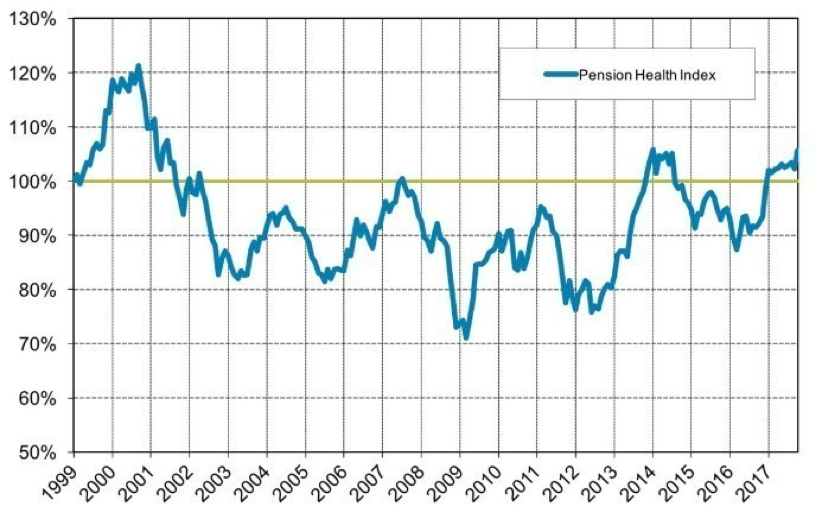
Source: Mercer Pension Health Index published October 2, 2017

By Brent Simmons, Sun Life Financial

Special to the Financial Independence Hub

Recently, employees and retirees of Sears were stunned to learn they may not receive all of their defined benefit (DB) pension when it declared bankruptcy. They learned their pension plan was underfunded and the company had requested that it be allowed to stop making the contributions required by Ontario laws. The plight of Sears employees and retirees has left many Canadians wondering if their DB pension plan is healthy and if their DB pension is safe.

The pension challenge

With a DB pension plan, a company promises their employees a pension for life and is responsible for paying the pension: whatever the cost ends up being. The problem is that low interest rates and choppy equity markets have made the funding level of many pension plans look like a roller roaster ride. This can be seen in the chart at the top of this blog.

Another challenge facing pension plans is that Canadians are living longer, meaning that pensions need to be paid for a longer time. A common rule of thumb is that one year of additional life expectancy at age 65 can increase the cost of the pension plan by 3% to 4%.

In a tough economy, the need to contribute to a pension plan can often come at a time when a company’s core business is also facing financial difficulties. If a company becomes bankrupt, then the company likely won’t be able to pay the contributions owed to the pension plan and employees may indeed face a shortfall in its pensions.

How Group Annuities protect their employees’ pensions 

The good news is that a growing number of Canadian companies are taking steps to protect their employees’ pensions. They are buying group annuities to transfer the financial risk of their pension plans to insurance companies, which are subject to strict regulations and must have funds on hand at all times to pay promised pensions. With a group annuity, an insurer assumes responsibility for providing the pensions to a company’s retirees in exchange for a fee, and the retirees continue to receive their promised pension.

Continue Reading…

How Millennials’ financial priorities differ from previous generations

By Gabby Revel

Special to the Financial Independence Hub

There is some truth and some fiction to the idea that millennials are not responsible with their finances. On the one hand, today’s youth is particularly adept at saving money and meeting their financial responsibilities on a monthly basis. However, millennials appear to have less foresight, as they’re not as interested in planning for their financial future as Generation Xers and Baby Boomers were.

Financial freedom

The most important element of a paycheck for millennials is the financial freedom it offers them. A study by Bank of America and Merrill Edge discovered that this generation is better at saving money compared to other generations, but what they choose to spend this money on differs greatly from older workers.

This same study discovered that 63% of millennials value financial freedom above all, meaning they set aside a certain amount of money to continue living their lifestyle of choice. This means planning for social trips or vacations, eating out at fancy brunch restaurants on Sundays and using Uber as one of their primary forms of transportation.

A survey by BMO Wealth Management found that 26% of millennials  —  ages 18 to 34 — believe “saving more” is their most important priority with finances. A further 25% value reducing and eliminating debt at the top of their list, while 20% want to invest effectively, 17% focus on budgeting and 5% believe in spending on personal needs or goals above all. All in all, millennials are reinventing the wheel in regards to where their finances should go, but they might pay the price moving forward.

Disregard for retirement

 A chunk of today’s youth has yet to begin planning for retirement, as they’re not thinking about what their needs will be in the future. Some believe Social Security (or in Canada CPP/OAS) will get them through their golden years, which only nets the average retiree about $1,300 per month nowadays. Others buy into the carpe diem or YOLO mentality that’s been instilled within millennials.

Continue Reading…

Mobile Personal Finance apps for Millennials seeking Financial Independence

By Reviews Bee

Special to the Financial Independence Hub

Smartphones and apps have enormously affected our daily life and financial management. And despite the fact the elder generation may still have some doubts about tracking incomes and expenses,  millennials are more likely to connect their financial independence with these apps.

The fact is many mobile apps nowadays enable quickly entering data on incomes and expenses, and to find information about completed operations, make changes, export the database or restore it from a backup, and track your expenses and income. They give you some perspective on major and minor decisions in life so it becomes much easier to make  right decisions on the flow of your personal money.

When choosing a program, it’s important to consider not only functionality and convenience of interface but also safety. To be sure the financial apps will not let you down, we have considered  functional peculiarities and user reviews of many similar mobile apps, on the basis of which we present some of the best ones:

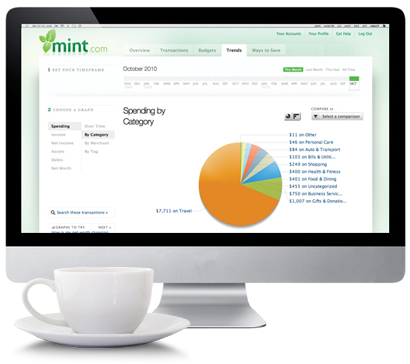
Mint

The Mint application helps to form a budget, track expenses and achieve financial goals. Costs and savings can be easily tracked in a special list, where different types of financial transactions are marked with different colors, as well as in the tables and charts that the application forms.

Users can also track movements on their bank accounts and credit-card balances in real time, monitor investments and even break their expenses into categories.

In addition, you can set up alerts if it’s time to pay bills, or if users have exceeded their budgets. Another convenient feature: a weekly consolidated report of the movement of your funds is available.

Wally

Continue Reading…

Why are boomers slow to embrace DIY online investing?

My latest Financial Post column has just been published, which you can retrieve  by clicking on the highlighted headline: Boomers slow to embrace online investing but, surprise, it’s not a technology thing.

(Added Thursday: The article has also been published in the print edition of Thursday’s paper, on page FP8, under the headline Boomers ‘fearful’ of online investing: advisor. This Hub version of the column elaborates on a few points, adding the important distinction that newer online do-it-yourself [DIY] investors do NOT have to go without human advice or guidance, which they can get through fee-for-service planners, fee-only money coaches or investment coaches.)

According to a TD Bank Group survey titled Too shy to DIY, 79% of Canadian baby boomers use the Internet for banking but only a paltry 16% are DIY online investors.  The poll of 2,000 Canadian adults was conducted late in July.

Since the Boomers have embraced most aspects of the Internet and are just as addicted to smartphones as Millennials and Generation X, it’s clear (as the headline notes) that “it’s not a technology thing.”

Rather, the main reason for low Boomer use of online investing is lack of investment knowledge: TD says 79% of those surveyed don’t manage their money online because they simply don’t know enough about investing, while 22% say they don’t have enough time to invest on their own.

When I asked Jeff Beck, Associate Vice President at TD Direct Investing, why the disparity he replied with this email:

“The gap between Boomers who bank online and those who invest online can be attributed to the fact that many say they are unfamiliar or uncomfortable with online investing tools. There’s a misperception that online investing is a complicated, time-consuming activity. That’s why TD Direct Investing offers a range of educational resources, tools and support to help investors get off to a great start, whether their goal is active trading, long-term investing, or both.”

So too do the other major discount brokerages as far as I’m aware: TD is one of the discount brokerages our family uses and there’s certainly no dearth of information on investing there or indeed most other major financial institutions.

As a boomer myself I was a tad surprised by the findings. Continue Reading…

Always show up for a free lunch!

By Heather Compton

Special to the Financial Independence Hub

Always show up for a free lunch!

That’s the tongue-in-cheek advice I give all “soon to retire” folks but, frankly, taking advantage of free lunches is key for every investor.

I use the term “free lunches” for all manner of benefits and it’s alarming to me how many people pass them by. Many employers offer employees matching contributions to Retirement Savings accounts that require the employees to pull out their own wallet too.

One major corporation I worked with gave all employees a contribution of 6% of their salary to the Defined Contribution Pension Plan.  The employer would contribute a further 4%, contingent upon the employee also contributing 4%. That’s a great free lunch! A shocking number of employees felt they couldn’t afford to participate:  they said they couldn’t meet all their other financial obligations without that 4% of salary. Actually, by making the 4% RRSP contribution they also earned a tax deduction, so the after-tax, out-of-pocket expense was even less.

Don’t overlook the daily Special

Many companies offer employees the convenience of group savings programs, even where there are no company-funded contributions. That too has value; the investment choices available in these plans often have significantly below market rate MERs (management expense ratios) and no account fees or cost to buy or sell. One company with which I am familiar has a savings plan offering a solid range of investment funds with MERs ranging from a low of 0.10% to a high of 0.58%.

Only a knowledgeable investor, capable of building a low cost ETF (exchange traded fund) portfolio, could match this low-cost option. If the contributions are made to a group RRSP, the employer can also add the convenience of reducing the tax paid at source. Since the contributions and investments are made regularly, often monthly, we can add the benefit of dollar cost averaging to the mix.

What other free lunches are often overlooked?

Continue Reading…