Tag Archives: Financial Independence

What to expect when applying for CPP

What should you expect when applying for CPP (Canada Pension Plan) benefits? As my latest Retired Money column for MoneySense explains, age 64 is not just the age the Beatles ask the question “Will you still need me, will you still feed me?”

It’s also the age when Service Canada can be expected to reach out to you with a letter to your home address, giving you details of how the Government of Canada will feed you with CPP benefits once you turn 65 (or as early as 60 should you choose reduced early benefits).

But fear not, Ottawa will also  still need you, in the form of taxable revenue: like Old Age Security, CPP benefits are fully taxable.

The full piece can be accessed by clicking on the highlighted headline: CPP application: Here’s what to expect during the process.

The piece’s focus is on the actual application process but does touch on the age-old topic of the optimal age to start receiving benefits: which can be anywhere between age 60 and 70. The Hub has tackled this several times in its almost three years of existence. Use the search engine to the right and enter CPP, or click here.

Try the Canadian Retirement Income Calculator

The piece also links to a useful web tool provided by Service Canada: the Canadian Retirement Income Calculator, which you can access by clicking on the highlighted text.

Continue Reading…

Can you retire on a million dollars?

In your 20s and 30s, retirement is so far away that you can barely see it on the horizon. The best way to get there is to save what you can afford – say 10 per cent of your income – and then readjust your financial compass as you get closer and have more information.

You might start the journey with the idea that you need a million dollars or more once you reach your destination. To get to one million by age 65, a 30-year-old would need to save $8,500 per year for 35 years, assuming a 6 per cent annual return.

Saving for Retirement

It’s not easy to save $700+ per month in your thirties. Competing priorities like a mortgage, car payments, and raising children often means that retirement savings are put on hold.  Put off saving until you reach 40 and you’re now faced with the daunting task of saving more than $1,400 per month for the next 25 years to reach that million dollar mark.

Some might feel it’s prudent to pay off the mortgage and max out children’s RESPs before ramping up their own retirement savings. By age 50, most of those obligations should be taken care of which should now free up significant cash flow to save for retirement. It’ll need to be significant to reach a million. With only 15 years to go now, compound interest is not on your side, and so you’ll need to save nearly $3,400 per month – or $40,000 per year – to get to your retirement goal.

A tempting alternative at this point is to adjust your expected rate of return. After all, with an 8 per cent return you’d only need to save $2,800 per month, and at 10 per cent you’d need to put away less than $2,400 per month.

But the more realistic approach would be to adjust your expected retirement age and then figure out if a million dollars is really the amount you need to enjoy a comfortable retirement. You’d be surprised to learn you can live off much less.

Related: Have you considered a permanent retirement overseas? Read this:

Continue Reading…

Millennial Money: How Daydreaming can help you Budget

“If you can dream it, you can achieve it” is a saying more often seen on an inspirational Instagram account than in a financial blog. While I am loath to agree with the sentiment of a mere bumper sticker, dreaming really can be an excellent tool for those struggling to get their financial futures in order.

I began to think about the value of dreams in achieving financial freedom a few months ago. From there I decided to do some research on the subject. What is it about having defined dreams that can help solidify steps needed to achieve goals? When, if ever, is dreaming going to hurt instead of help?

I came across this blog post from ‘The Lady in the Black’ site, which includes a variety of guest bloggers all chiming in with that they consider the true value of using our daydreams to achieve our financial goals.

It’s safe to say we all love a good daydream once in a while. It can be an excellent way to escape the day-to-day uncertainty in our lives. More importantly, however, daydreaming can be an opportunity to really discover what is most important to your future financial wellbeing, and can even help you plan a concrete goal for that future.

Continue Reading…

How to set your Retirement savings target

How much to save for retirement depends on the type of lifestyle you’re   aiming for

How much to save for retirement varies for each investor. A fulfilling retirement is not simply a matter of accumulating sufficient wealth to give you peace of mind. It is equally a matter of knowing what you will do — in effect, ensuring that you will be as active and productive with your time as you were during your working days.

These days, more investors suffer from what you might call “pre-retirement financial stress syndrome.” That’s the malady that strikes when it dawns on you that you don’t have enough money saved to be able to earn the retirement income stream you were banking on.

To alleviate this worry, we recommend that you base your retirement planning on a sound financial plan. Here are the four key variables that your plan should address to ensure you have sufficient retirement income:

  • How much you expect to save prior to retirement;
  • The return you expect on your savings;
  • How much of that return you’ll have left after taxes;
  • How much retirement income you’ll need once you’ve left the workforce.

Consider taxes when determining how much to save for retirement

As for the tax structure, it keeps changing. But it’s safe to assume that you’ll pay a lower rate of tax on dividends and capital gains than on interest, and that you’ll generally pay taxes on capital gains only when you sell.

As for the return you expect, it’s best to aim low. If you invest in bonds, assume you will earn the current yield; don’t assume you can make money trading in bonds. For stocks, the market returned 10% or so yearly on average over the past 80 or so years. Aim lower — 8% a year, say — to allow for unforeseeable problems and setbacks.

Continue Reading…

5 Steps to a Victorious Retirement

Who doesn’t want a Victorious Retirement?

Just in time for the long weekend and Canada’s 150th birthday, MoneySense.ca has just published a 5-part series on retirement, going from deciding what you want to working longer, the Ages & Stages by decade, being a snowbird, and finally what to do once you finally reached the hallowed land of Retirement/Findependence/Victory Lap.

Here’s a summary of each piece (all written by Yours Truly), and links to the full articles:

1.) The first step: What do you really want?

Take a custom approach to retirement planning. There’s no point fretting too much about retirement and how much to save if you haven’t first determined what you want to DO once you’re retired. For starters, how are you going to fill those 2,000 hours a year you use to spend in the office and commuting? Click here for full article.

 

2.) We live longer. Why not work longer?

Ask questions about a retirement plan that’s right for you. Life expectancies are on the rise: more and more Baby Boomers can expect to become centenarians and that probably goes double for their children, the Millennials. Makes sense to consider working a little longer, if only part-time. Or if you really dislike your chosen profession, go back to school or retrain and find something you’d really enjoy doing in your golden years: preferably something that pays! Click here for full article.


3.) Snowbird? Learn the “substantial presence” test

Learn the tax pitfalls of retiring to the sun in the U.S. It all depends on how long you plan to stay down south each year: the formula isn’t simple. If you don’t relish the thought of paying tax to two countries, you may want to make sure you’re not considered to have a “substantial presence” in the U.S.  Click here for full article.

4.) Your retirement plan has a life cycle

Retirement planning strategies for every age. Every decade from your 20s to your 70s and beyond should take you a little further along the journey to financial independence/Retirement. Just like we all share the same fate in our human life cycle, so it is with the financial life cycle. Click here for full article.


5.) Retirement planning —after you retire

The plan doesn’t stop when you stop working.
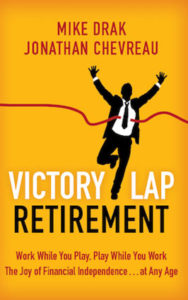
My co-authored book Victory Lap Retirement features on its cover what appears to be a sprinter breaking through the finish line of a long marathon. But that doesn’t mean we’re saying Retirement is a literal finish line and with it the end of striving and purpose. In fact, we’re saying a “Victory Lap” really only begins when you reach the “finish line” of financial independence, or Findependence.

There will still be a big adjustment as you move from Wealth Accumulation to the De-accumulation or “Decumulation” phase: less earned income and more passive sources of income. And you’ll need to master the tax aspects because Tax may be one of the biggest expenses in Retirement. Click here for full article.