They say one example is an aberration, but two is a trend. If so, this week’s posts here at the Hub and sister site Findependence Day indicate a growing pattern: the millennial generation is picking up on the “Findependence” meme and taking steps to establish early Financial Independence.
They don’t talk about classical “Retirement” decades hence but instead have set their sights on financial independence in their 30s. For both of them, real estate is an early ingredient. And both give credit to the book, Findependence Day, for being inspired to do this. (One of the central tenets of the book and new e-books is that the foundation of Financial Independence is a paid-for home.)
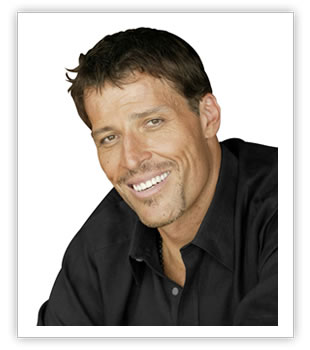
And today, Friday, another millennial — Saxon Funk, pictured above — describes how he too plans to parlay frugal living and real estate into early Financial Independence. Saxon even noted that at 28, he is the same age as when Findependence Day protagonist Jamie began his 22-year journey to Financial Independence.
There must be many more millennials out there who have similar aspirations. We’d love to hear from you and join our community. Please come over to the Hub, register, and email us at jonathan@findependenceday.com to tell us your story. Hopefully, you can help to inspire your less financially literate peers.
Yesterday we ran a guest posting from financial planner Jenya Rose, who argued there’s no need to seek early Financial Independence (Findependence) as long as you eventually find a line of work that allows you to generate “Happy Money.”
This started as an exchange on Twitter, and I said initially only that I didn’t think the two concepts are far apart. After letting Jenya speak for herself, I also said I’d respond more fully today. This is my response.
I’ve always said Findependence is all about working because you want to, not because you have to. (financially speaking). And I’m fully supportive of career changes where you find a more fulfilling line of work, even if you have to take a pay cut. I did precisely that in 1993, when I took a $25,000 pay cut to leave public relations and return to journalism at age 40.
To me, Findependence facilitates Happy Income
I don’t know if I’d go so far as to call P.R. “unhappy income” but I didn’t feel it was my true calling. Certainly my first job (in computer sales) in my early 20s DID qualify as “Unhappy Money” but fortunately I took the advice of my yoga teacher then and quit after six months. Making cold calls and asking for the order just wasn’t my thing.
By contrast, writing, journalism, creative writing (which is what the book Findependence Daywas an attempt to engage in), blogging, web videos and even public speaking could in my view all be categorized as “Happy Income.”
I don’t see Findependence as Retirement. That’s the whole point of the Financial Independence Hub. Personally, financially speaking, I could “retire” tomorrow in the classical sense of the word. But I’m nowhere near ready to settle down to playing golf and watching daytime television.
For me, doing what I’m doing now — including freelance writing for MoneySense and various other media outlets, running a web site or three, writing and publishing e-books, and doing a little public speaking — IS happy money! I totally agree with Jenya. Before this year, I had to do many of those “Happy Income” projects on the side while my day job generated what Jenya terms “Unhappy Money.”
Once I left salaried employment in May of this year (aka Findependence Day), I felt able to spend not just nights and weekends on “Happy Money” endeavours but the precious Monday-to-Friday nine-to-five time. That was always a goal but to do all these projects required, at least for me, some degree of Financial Independence.
Retirement Redux
Findependence doesn’t necessarily have to occur decades or years before traditional retirement. If classical full-stop retirement occurs at age 65 or 67, I fully anticipate “working” long past that age. To me, Findependence is exactly equivalent to Happy Money: I’ll be happy to write full-length books (perhaps one every two or three years), to do the odd speaking engagement and probably keep websites like this running and I’ll likely keep doing all these things between 65 and 75, health and the good Lord permitting. (I’m 61 right now)
My friend Sheryl Smolkin views the world in similar terms. She’s been working on various writing projects and web entrepreneurship for almost a decade since she first “retired.” You can read about her adventures at her Retirement Redux site. Sheryl hopes to write a guest blog for us here at the Hub in the next few weeks.
Extreme Early Retirement is really Early Findependence
A millennial inspired by Findependence
As for millennials achieving “Findependence” in their early 30s, I say wonderful. Read Sean Cooper’s article on how he plans to do just that by age 31, right here at the Hub. Sean (pictured on the right) doesn’t call it retirement, nor should he. I can’t believe all those Early Retirement Extreme authors and bloggers actually “retire” at age 30. If nothing else, they’re still “working” by writing books and blogging about how they “retired” so young. It’s not retirement at all — they’ve achieved financial independence, as defined here. One of my columns in MoneySense this fall was on this exact topic.
Thanks for starting this dialogue, Jenya and for reminding me that on Twitter references to Findependence should be preceded with a hashtag, like this: #Findependence. Who knows, if one day this trends on social media, we might actually effect some positive change.
Plan for Longevity, not Retirement
This site has a section on Longevity and Aging because I believe we’re all going to live a lot longer than we may have thought when we were in our 20s and 30s. (I’m addressing fellow Baby Boomers here). I wrote elsewhere that 35 years is a long time to go without a paycheque, if you “retired” at 60 and lived to 95. That goes double for those who think they’re going to retire at 30. 65 years is a helluva long time to go without a paycheque.
One of the bloggers in that section to which we’ve devoted space is Mark Venning of ChangeRangers.com. He’s about my age and believes we should be planning NOT for retirement, but for longevity. This is also the subject of my current column in MoneySense.
He’s right. So is Jenya.
Call it Happy Money if you want, call it Freedom 55, Second Age or whatever you like. I think Jenya and I almost totally are on the same page: we’re just using different terms for the same concept. For me, however, it’s probably too late to call this the Happy Income Hub. So I’m sticking with the term Findependence!
In any case, I welcome the exchange and hopefully we can have more back-and-forth once our forums are up and running. That’s the plan anyway.
As we say in the ad at the top of Findependence.TV, it costs only US$2.99/C$3.37, takes a minute to download and maybe an hour to read … but it could literally change your life.
If anyone pre-ordered the e-book, it should now be on your Kindle or Kindle app on other devices. If you like it, or even if you didn’t, please share your feedback with a short review at Amazon.ca or Amazon.com.
One last thing, the five discussion forums should be up and running. We’ve seeded each with a starter thread to stimulate dialogue.
Below is an essay by long-time investment adviser and tax preparer Jenya Rose (@jenyarose on Twitter). Here’s what she tweeted shortly after last Friday’s launch of The Hub.
My reaction to the #findependence movement. Love ya @JonChevreau but I had to add a less traveled path to the convo. http://tinyurl.com/nngyrze
By all means click on the link in red and read. With her permission, I’ve reproduced her essay below, untouched. For now, I’ll say what I tweeted back today: I don’t think Findependence and Happy Income are at all odds. I’ll provide my full response on this site tomorrow and give Jenya permission to run it on her blog as well. For now, we’ll let Jenya speak for herself:
The Financial Independence Alternative: Happy Income
By Jenya Rose
Don’t get me wrong; I love Jonathan Chevreau’s information. I greatly respect the path he is sharing with us to become “findependent” long before retirement. As an investment advisor at the beginning of my career, I’ve been surrounded by charts and graphs showing how starting investing in your 20’s is the best way to use compounding interest to create a massive nest egg. And how every year that you wait your chances of amassing anything decent wane.
This fills me with dread and regret. Dread and regret! Looking at these charts does more harm than good to me. And I know I’m not alone. We are a very self-involved culture; and when we learn new information we immediately relate it to our own life. How do these graphs relate to me? They tell me, “You screwed up bigtime.”
I’m forty-something and had a very privileged childhood. From private school to boarding school to college I never thought about money or what anything cost. I spent my summers traveling, never had a summer job, and by 21 I had been to every continent except Antarctica and Australia. I felt jaded. All I did was shop and party. I remember saying, “I’ve done it all.” I feared that the rest of my life held nothing but a monotonous rich girl’s Groundhog Day. That was far from the truth.
An inheritance carried me through the rest of my 20’s while I flipped houses and worked on a few half masters degrees. I met my fabulous husband, who was in the same boat mentally at the time. We floated along adding more degrees and certifications to our higher learning (nothing particularly business or money-driven; we studied acupuncture, meditation, yoga, archetypal psychotherapy, art).
We flipped a house in Austin and moved to California and this time we did things differently: we didn’t by another house. Instead we decided to put the money into a business – a yoga studio – how could we go wrong? Famous last words. Knowing nothing about business, taxes, accounting, marketing – we have been under a mountain of debt for a decade now and have learned more lessons the hard way than we ever thought possible.
After that sustained level of suffering I decided to take a tax course to see what all the hoopla was about. Fascinating stuff! I’ve been a tax preparer ever since. I started my own tax business 2 years ago, am still hanging by a thread financially, still with a mountain of debt, but I’m thrilled to go to work in the morning! Retire? I think not. I’ve just now figured it out. The thought that I would only do this for the next 25 years and retire at 65 is a nightmare. I want to be chatting with clients and enjoying the puzzle of tax returns until I can’t lift my body out of bed in the morning.
So I got a late start. And I think a lot of other people are in the same boat. I’m not convinced that it is a generation X experience. I believe there are many people that are “middle-aged” (if we’re still calling it that) who are just getting a late start to living a passionate work life. Maybe they had a job in their past life and they quit that job to follow a dream (with or without adequate savings). And now they are bombarded with age-based charts of how much money they need for this old-timey “retirement” thing and they are filled with dread. Wake up people! You are in a different class, you are the happy income people!
I call it happy income. Income derived from something you are passionate about and that you can see yourself doing until you can’t do anything anymore. Most people have unhappy income. They hate their job, the people they work with; or they’re just bored to tears. You can tell who the unhappy income people are: they are the ones with #TGIF all over their social media, and an “I hate Mondays” sign in their office with the image of Garfield or another cat looking disgruntled. This is not us!
We are the happy income people. We may not have much of a financial portfolio, but we have a “life portfolio” that we are currently enjoying the crap out of. 70 is the new 30 – just ask my mom. She is 78 and spends her days running around like a chicken with her head cut off looking for things to do. She started a career in acting at 55 and, if you know any actors, they have a lot of free time in between auditions. The “retirement” concept of yesteryear is outdated and needs to be put to sleep.
If you are long in the tooth and feel like you’re just starting out financially don’t stress. When you read articles on millennials who are already financially independent, just know that you are in a class of people that has taken a different path. Yes, debt sucks. Yes, watching the bull market and knowing you could have made a bunch of money sucks. Yes, looking at your classmates/former colleagues facebook pics of extravagant vacations and new summer homes sucks. But if you could take a pic of your “sustainable happy income situation” I believe they would look at that pic longingly (in secret of course).
If you’re keeping your head above water and building something that you care about you are in an enviable position. Because happy income is forever.
* This was my first post, but there is more to come re: the less traveled path of happy income. Hopefully each of our unique journeys can help us to tread uncommon financial paths with less worry that we’ve fallen behind. :)
The dean of personal finance writers in the United States, if not the world, is the Wall Street Journal’s Jason Zweig. In a recent instalment of his personal blog, Zweig presents many of the financial books that have influenced him and that he recommends. They include both financial books and non-financial books, which is quite consistent with the philosophy underlying this site (the Financial Independence Hub).
Several of the titles, but not all, are also in my own library. Below I list some of Zweig’s picks. All titles in red are live links to their respective listings at Amazon.com:
By the way, my own recently published Kindle e-book, A Novel Approach to Financial Independence (U.S. edition), contains a long list of many of the books in my own library. At the end is a bibliography called A Peek into Theo’s Kindle (Theo is one of the financial advisor characters in the novel). It lists roughly 75 books I recommend, ranging from Inspirational to Investing, Retirement and Entrepreneurship. As above, most of the titles include live links to the actual Kindle titles at Amazon.