All posts by Jonathan Chevreau

Video: should you invest in collectibles or “emotional” equity?

Screen Shot 2015-11-09 at 12.12.34 PM
Professor Elroy Dimson

The latest FWB TV video is now up at FWB Securities Inc. and Findependence.TV.

Or click on the enigmatically titled “Millions of dollars lost in bike spokes as children.” That’s a reference to children using baseball or hockey cards a noise-makers on their bicycle wheels, oblivious to the possible future value of their Wayne Gretzky or Mickey Mantle rookie cards.

This video, featuring  Emeritus Professor of Finance Elroy Dimson of the London Business School, is a little more off the beaten track than the earlier ones focused on stocks and bonds. It looks at how “emotional assets” or “collectibles” (like art or stamp collecting)can generate some “psychic income” from the sheer pleasure of enjoying art on your walls or fine wines.

But surprisingly, historically the investment returns from collectives have also been more than decent. Going back between 1900 and 2012, collectibles have generated nominal annual returns of 6.4% and real (net of inflation) returns of 2.4%. That means they’ve actually beaten treasury bills and even such alleged inflation hedges as gold, silver or diamonds. However, they have not performed as well as equities.

The conclusion? If you enjoy the “psychic income” and pleasure of collectibles, that should be return enough but if you also make money from collecting things you’re interested, that should be considered a bonus.

Inflation-linked bonds: not as worry-free as portrayed?

51E59XgLcGL._SX335_BO1,204,203,200_My latest ETF column in the Financial Post carries the descriptive headline, Real-return bond funds are worry-free funds, right? Hardly. As you can see by clicking through on the link, the worry-free label refers to a book by Zvi Bodie entitled Worry-Free Investing.

The book touts the benefits of (in the U.S.) Treasury Inflation Protected Securities (or TIPS) and by extension their equivalents in Canada: Real Return Bonds (RRBs), whether sold individually by the federal government or some provinces, or whether packaged up in mutual funds or ETFs (the latter being the focus of this particular column).

To be sure, this is an asset class that I think deserves to be a subset of most investors’ fixed-income portfolios. But as you can see in the column, when I asked investment advisors and ETF experts about whether now is the time to start building positions in RRB or TIPS ETFs, they were decidedly on the cautious side.

The book, shown above, has been in my personal library since it was originally published, and when I was I reviewed it positively. Curious about whether the author, Zvi Bodie, has updated his views, I tried to reach him for this column but did not hear back. If he does read this, the Hub would be delighted to run a guest blog by him on the topic.

In the meantime, it would seem that inflation-linked bonds and fixed-income funds holding them or any longer-duration products, won’t be as worry-free (relative to stocks) as they once seemed. That’s especially the case if, as now seems to be the case, the Federal Reserve starts to come off zero (interest rates) as early as this December.


MoneySense “Biggest mistakes” week-long series on personal finance starts today

Man holding blackboard in hands and pointing the word I AM WISE BECAUSE I LEARN FROM MY MISTAKES

Starting Monday and running every day this week, MoneySense.ca will be running a daily blog written by me on the biggest mistakes we make in various facets of personal finance.

The first instalment, just published, is titled Biggest mistakes you make with your savings: the worst thing you could do is not save at all.

Weekly Wrap: Hub’s 1st birthday; new Finance Minister wrote a Retirement book, and a book about NOT retiring

Victory Lap RetirementApparently, the handover of power from the Conservatives to the Liberals was deemed as more newsworthy this week but we at the Hub did note via a Tweet that our first-year birthday came and went on Wednesday, Nov. 4th. Happy birthday to us!

Starting with Mike Drak’s Halloween blog last Saturday, we have revealed that the title of the “Life After Findependence” book we’ve co-authored will be Victory Lap Retirement. The book is now with the editor and should be out in the new year.

There was a “sneak peek” of sorts on Monday on Larry Berman’s Berman’s Call segment on BNN, which you can find at Findependence.TV or clicking on Saving for Retirement in a low-return world. Gee, there’s that word retirement again!

Also, I’ll be providing a more in-depth peek at the book in three presentations entitled From Findependence to Victory Lap Retirement, the first of which is scheduled this Sunday in Vancouver. We go to Calgary on Nov. 22 and Toronto Nov. 29th, all Sunday engagements. You can find details and register for these, as well as other cities and dates, here.

We plan to send out pre-release PDFs of the book next, in order to improve accuracy and  possibly generate a few testimonials. If you’re a “media influencer,” feel free to ask for one by emailing me at jonathan@findependencehub.com

By the way, this theme of the Boomers not being ready to stop working in Retirement is also being explored this weekend by the Globe & Mail. See I don’t believe in Retirement: 5 Boomers on why they’re not ready to quit.

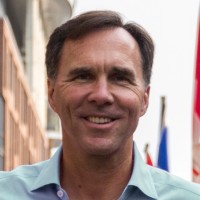
New Finance Minister Bill Morneau wrote the book on Retirement

Continue Reading…

Video: Buyer Beware — Don’t Be Fooled By Style Drift

Screen Shot 2015-11-02 at 9.58.21 AM
Allan Miller

The latest in FWB TV’s Evidence-based Investing series of videos is now available to view.  You can find it here at FWB TV or at Findependence.TV, where we house all videos.

Just under four minutes, this instalment features Alan Miller of the UK’s True and Fair Campaign and the phenomenon of style drift, which often afflicts actively managed funds.

Style Drift refers to a fund manager moving away from their stated objectives and can make fund returns misleading. Examples cited in the video are value funds buying growth stocks or vice versa, or even equity funds that buy bonds (the most notorious example of the latter being a former manager of the Fidelity Magellan Fund).

The video spends a good amount of time on the relative outperformance of small-cap stocks relative to large-caps. But even then it concludes that index funds will provide partial exposure to the small-cap return premium, without subjecting investors to undue risk.