Victory Lap

Once you achieve Financial Independence, you may choose to leave salaried employment but with decades of vibrant life ahead, it’s too soon to do nothing. The new stage of life between traditional employment and Full Retirement we call Victory Lap, or Victory Lap Retirement (also the title of a new book to be published in August 2016. You can pre-order now at VictoryLapRetirement.com). You may choose to start a business, go back to school or launch an Encore Act or Legacy Career. Perhaps you become a free agent, consultant, freelance writer or to change careers and re-enter the corporate world or government.

Variable Percentage Withdrawal: Garbage In, Garbage Out

By Michael J. Wiener
Special to the Financial Independence Hub


The concept of Variable Percentage Withdrawal (VPW) for retirement spending is simple enough: you look up your age in a table that shows what percentage of your portfolio you can spend during the year.

The tricky part is calculating the percentages in the table.  Fortunately, a group of Bogleheads did the work for us.  Unfortunately, the assumptions built into their calculations make little sense.

If we knew our future portfolio returns and knew how long we’ll live, then calculating portfolio withdrawals would be as simple as calculating mortgage payments.  For example, if your returns will beat inflation by exactly 3% each year, and your $500,000 portfolio has to last 40 more years, the PMT function in a spreadsheet tells us that you can spend $21,000 per year (rising with inflation).

Instead of expressing the withdrawals in dollars, we could say to withdraw 4.2% of the portfolio in the first year.  If the remaining $479,000 in your portfolio really does earn 3% above inflation in the first year, then the next year’s inflation-adjusted $21,000 withdrawal would be 4.26% of your portfolio.  Working this way, we can build a table of withdrawal percentages each year.

Of course, market returns aren’t predictable.  Inevitably, your return will be something other than 3% above inflation.  You’ll have to decide whether to stick to the inflation-adjusted $21,000 or use the withdrawal percentages.  If you choose the percentages, then you have to be prepared for the possibility of having to cut spending.  If markets crash during your first year of retirement, and your portfolio drops 25%, your second year of spending will be only $15,300 (plus inflation), a painful cut.

A big advantage of using the percentages is that you can’t fully deplete your portfolio early.  If instead you just blindly spend $21,000 rising with inflation each year, disappointing market returns could cause you to run out of money early.

Choosing Withdrawal Percentages

One candidate for a set of retirement withdrawal percentages is the RRIF mandatory withdrawals.  These RRIF withdrawal percentages were designed to give payments that rise with inflation as long as your portfolio returns are 3% over inflation.

Unfortunately, the RRIF percentages would have a 65-year old spending only $20,000 out of a $500,000 portfolio.  Some retirees chafe at being forced to make RRIF withdrawals, but when it comes to the most we can safely spend in a year, most retirees want higher percentages.

A group of Bogleheads calculated portfolio withdrawal percentages for portfolios with different mixes of stocks and bonds.  Most people will just use the percentages they calculated, but they do provide a spreadsheet (with 16 tabs!) that shows how they came up with the percentages.

It turns out that they just assume a particular portfolio return and choose percentages that give annual retirement spending that rises exactly with inflation.  You may wonder why this takes such a large spreadsheet.  Most of the spreadsheet is for simulating their retirement plan using historical market returns.

The main assumptions behind the VPW tables are that you’ll live to 100, stocks will beat inflation by 5%, and bonds will beat inflation by 1.9%.  These figures are average global returns from 1900 to 2018 taken from the 2019 Credit Suisse Global Investment Returns Yearbook.

So, as long as future stock and bond returns match historical averages, you’d be fine following the VPW percentages.  Of course, about half the time, returns were below these averages.  So, if you could jump randomly into the past to start your retirement, the odds that you’d face spending cuts over time is high.

For anyone with the misfortune to jump back to 1966, portfolio spending would have dropped by half over the first 14 years of retirement.  More likely, this retiree wouldn’t have cut spending this much and would have seriously depleted the portfolio while markets were down.

The VPW percentages have no safety margin except for your presumed ability to spend far less if it becomes necessary.

Looking to the Future

But we don’t get to leap into the past to start our retirements.  We have to plan based on unknown future market returns.  How likely are returns in the next few decades to look like the average returns from the past? Continue Reading…

Q&A with MyOwnAdvisor’s Mark Seed on speculating near Retirement

Mark Seed’s MyOwnAdvisor website has just published a Q&A with Yours Truly. The Hub often republishes Mark’s blogs here (with his permission of course) and this Q&A covers topics like dividend investing, asset allocation ETFs, hybrid strategies using both and even crypocurrencies.

You can find the original blog by clicking here, or you can read the republished version below:

MyOwnAdvisor’s Mark Seed

Mark Seed: “Fun money” is an apt term for monies you can afford to lose. I mean, nobody wants to lose money on purpose of course but there is always an undeniable trade-off when it comes to investing.

Risk and return and related.

Higher risks can signal a higher potential return. Higher risks taken can also signal flat-out failure.

I was curious to hear about how some retirees or semi-retirees invest and keep speculation in their portfolio.

So, I reached out to author, blogger and columnist Jon Chevreau for his thoughts including how much he speculates in his own portfolio, at age 67.

Jon has already contributed to My Own Advisor a few times.

Jon, welcome back to the site to discuss this interesting topic!

Jon Chevreau: Glad to be back Mark.

Mark: In our last post Jon, we talked about low-cost ETF investing, investing in stocks and more in your Victory Lap Retirement book.  

Let’s back up a bit…

What should Canadians consider before Do-It-Yourself (DIY) investing? I mean, it’s not for everyone including those in retirement right?

Hub CFO Jonathan Chevreau

Jon: No, DIY investing is probably not for everyone: some need good advice and like most things in life, you get what you pay for.

If you need a full-service advisor or a fee-based advisor that can add value not just on investments but on tax strategies, estate planning, retirement income, insurance and the like, then paying on the order of 1% a year of assets is not unreasonable. On the other hand, with interest rates so low, the more you can save on the fixed-income portion of a portfolio the better. That applies doubly to retirees, who should have a good percentage of their investments in fixed-income (say 40 to 60% depending on objectives and risk tolerance.) I often tell retired readers that if all they use is a discount brokerage in order to hold a Vanguard or iShares asset allocation ETF, that can be a good compromise: you get the equivalent of near professional stock-picking prowess via indexing, asset allocation and rebalancing all for a very good price; and you could then hire a fee-only financial planner for specific guidance outside that pure investing realm.

(Mark: you can find many of those asset allocation all-in-one ETFs here.)

Mark: Seems wise Jon.

So, given some aspiring retirees might not want to invest entirely alone, what good options might be available to help them out (beyond blogs like yours and mine of course)!? Ha!

Jon: I often direct new or aspiring retirees who are worried about the shift from wealth accumulation to generating regular retirement income to the books by good Canadian authors like Moshe Milevsky, Daryl Diamond and Fred Vettese. Sites like yours and mine probably have reviewed these. There are also several retirement planning software packages that are worth considering; ViviPlan, Cascades and Retirement Navigator, to name three I once reviewed in a Globe & Mail article.

(Mark: you can find many references to those authors and their books below.)

Daryl Diamond – Your Retirement Income Blueprint

Fred Vettese – Retirement Income for Life

Fred Vettese – The Essential Retirement Guide

Retired Money: What can retirees do about GIC reinvestment sticker shock?

My latest MoneySense Retired Money column looks at the vexing problem retirees and near-retirees face when their GICs have matured in recent months. Click on the highlighted text for the full column: Recovering from GIC sticker shock.

If before you were getting 2 to 3% on 2, 3, 4 or 5-year GICs, you may be shocked to discover you’ll be lucky to get 1% and only then by declining to take the first suggested GIC your brokerage has on offer. Going out 5 years may only gain you 0.5% or so, depending on provider.

Nor will matters improve any time soon. The Federal Reserve, Bank of Canada and other central banks have suggested interest rates will stay “lower for longer.” The Fed in particular has indicated rates are unlikely to rise for at least three years.

The piece passes on the views of financial advisors Adrian Mastracci and Matthew Ardrey on what to do about it. It amounts to grinning and bearing it and settling for lower guaranteed returns, or biting the bullet and taking a bit more risk with equities or alternative investments.

But what if you insist on what our family has done historically: leaving half your fixed-income allocation in GICs? Personally, I aim for roughly a 50/50 asset allocation and for the fixed-income portion historically have split it between laddered GICs and bond ETFs, or asset allocation ETFs with a healthy dose of bonds.

Odds are if you use the major discount brokerages of the big banks, you may need to leave them to find more generous GICs available from independent places like Oaken Financial, which has a 1-year registered GIC paying 1.4% and a 5-year GIC currently paying 2% through Home Trust and Home Equity Bank.

Personally, I have reinvested some GIC cash in 2- or 3-year maturities, on the hope rates start to rise three years from now. While 1% or so is pathetic at least it’s a positive number (ignoring inflation): with so many mentions of negative interest rates in Europe and sometimes floated by central bankers in North America, any positive return at is not to be sneezed at.

Conservative Asset Allocation ETFs are one possible alternative

Among the gambits I’ve tried is to raise risk slightly by moving some of this cash to ETFs like Vanguard’s Conservative Income ETF Portfolio [VCIP/TSX], which is 80% fixed income but provides a modest 20% equity kicker. Those who don’t wish to mess with their pre-existing asset allocation might consider the Vanguard Global Bond ETF [VGAB], roughly split between US and global bonds, all hedged back into the Canadian dollar. Continue Reading…

Top 10 tips on becoming Financially Independent (or “Findependent”)

Financial independence is something for which everyone strives. But most of us never get to a stage of financial independence by choice and we reach this stage when we are very old and can no longer work anymore. And although it is not easy to achieve financial independence (aka “Findependence,”) it can be done if you know how to manage your money effectively.

1.) Develop a budget

The first thing that you need to do when you are trying to save money is to develop a budget. To develop a budget, you need to start by figuring out how much money you need to live on each month and then giving yourself an appropriate amount of money to use over the course of the month.

2.) Get a financial planner

If you have had trouble managing your finances in the past, you should consult a financial planner so that you can get the most out of your money. He or she can help you to plan out what you need to spend, so you will be able to figure out how much money you need to save in order to get where you want to be financially.

3.) Create financial goals

Setting financial goals ensures success, because it helps you to get a sense of what you want to achieve and where you want to go on your financial journey. Giving yourself short term and long term goals is usually the most effective way to achieve financial goals, because it allows you to plan and amend your plans as you go.

4.) Pay off your debts

If you have a lot of debt looming over your head, you should make sure that you pay it off before you start actively trying to save. Start by paying off your smaller debts that have the highest interest rate first, so that you won’t have to pay so much later on when the debt has increased.

5.) Get rid of student loans

When most people think of paying off their debts, they forget about paying off their student loans because they are a different kind of debt to your standard credit card debt or loan repayment. There are a few different options when it comes to repaying your student loan, from paying a fixed amount each week, to contributing a percentage of your average income every pay-day. Continue Reading…

How to think about Retirement Planning

We all need to think about retirement planning at some point in our lives. Relying on rules of thumb like saving 10% of your income or withdrawing 4% of your savings can get you part way there. But it’s also important to think about what retirement will look like for you. When will you retire? How much will you spend? Do you want to leave an estate? Die broke?

Here are some ideas to help you think about retirement planning, no matter what age and stage you’re at today.

Understand your Spending

Much of retirement planning is driven by your spending needs and so it’s crucial to have a good grasp of your monthly and annual spending – your true cost of living.

Of course, any plan that looks beyond one or two years is really more of a guess. What is your life going to look like in five, 10, or 20 years? How long are you going to live, and are you going to stay healthy throughout your lifetime?

We don’t know and so we use assumptions and rules of thumb to guide us. First, think of when you want to retire – is it the standard age of 65, or are you looking at retiring earlier or later? Then, it’s helpful to know that while life expectancy in Canada is around 82 years, there’s a significant chance that you’ll live much longer than that – so perhaps planning to live until age 90 or 95 would be more appropriate.

We’ve heard all types of rules of thumb on retirement spending, but the consensus seems to be that you’ll spend much less in retirement than you did during your final working years. You’re no longer saving for retirement, the mortgage is paid off, and kids have moved out.

In my experience, most people want to maintain their standard of living as they transition to retirement and so you might want to use your actual after-tax spending as a baseline for your retirement planning. Note, this does not include savings contributions or debt repayments, but your true cost of living that will carry with you from year to year.

Now you know your expected retirement date, your annual spending, and a life expectancy target: three key variables in developing your retirement plan.

How much do you need to save?

I remember using an online retirement calculator when I was younger and feeling depressed when it told me I needed to save thousands of dollars a month to reach my retirement goals.

The fact is, you do need to save for retirement and the best way to start is by setting up an automatic contribution to come out of your bank account every time you get paid. You’re establishing the habit of saving regularly rather than focusing on a “too-large-to-imagine” end result.

Treat retirement savings like paying a bill to your future self. You need to pay your bill every month or else “future you” won’t be happy.

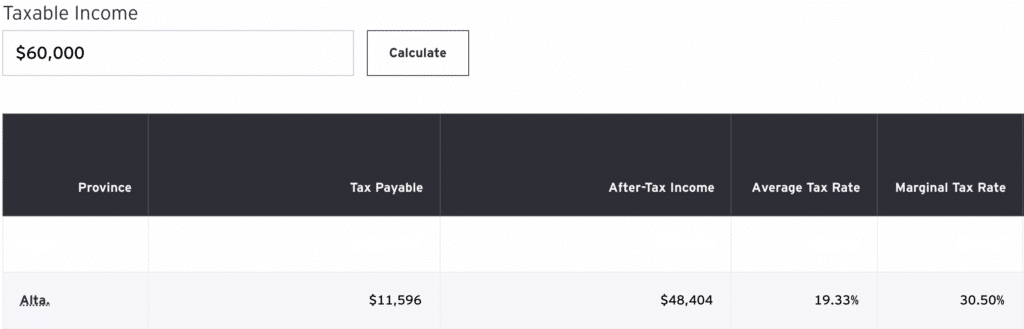
There’s great research around automating contributions and also around increasing your contributions whenever you get a raise, bonus, or promotion. Remember, if you contribute 10% of your paycheque when you earn $60,000 per year but then get a raise to $70,000 per year, if you’re still saving $6,000 per year that’s now just 8.5% of your salary – not 10%.

Give “future you” a raise too.

It’s also important to remember that life doesn’t work in a straight line: we don’t just contribute a set amount and earn a consistent rate of return every single year. Our savings contributions could be put on hold for a period of time while we pay off debt, raise kids, or focus on other priorities. You could get a large bonus one year, but then no bonus for the next three years. Investment returns are also widely distributed and so instead of earning 6-7% per year you might get 12% one year, 5% another year, or lose 10% one year.

Don’t get discouraged if you don’t meet your savings targets one year because of some unforeseen expense. Life happens.

Forget about Age-based savings goals

Estimating retirement spending in your 20s or 30s is a pretty useless exercise. Again, we don’t know what our life will look like five, 10, 20 years down the road.

Here are the four areas that young people should focus on in their accumulation years:

  1. Understand how much you spend and where all of your money goes.
  2. Focus on spending less than you earn (or earning more than you spend).
  3. Establish both short- and long-term financial goals. It makes no sense to pour all of your extra cash flow into an RRSP, for example, if you plan on buying a car or getting married in 1-3 years.
  4. Set up automatic contributions into a long-term investing vehicle: a percentage of your paycheque that you can reasonably afford while still meeting all of your current expenses and short-term goals. This doesn’t have to be 10% but strive to increase the amount each year.

Many young investors want to know how they’re doing compared to their peers. I don’t think it’s useful to use any age-based savings goals as a benchmark or guideline. We all come out of the starting gate at different ages and with different circumstances.

Focus on being intentional with your money and establishing a savings habit early. Remember, this is about you and your retirement planning.

That said, once you get into the retirement readiness zone (say 3-5 years away from retirement) you should have a good grasp of your expenses and also the type of lifestyle you want to live in retirement. Your spending will drive your retirement planning and projections, so this is a critical piece to nail down.

Investing in Retirement

Investing has been solved in a sense that the best outcomes will come from staying invested in a risk appropriate, low-cost, broadly diversified portfolio of index funds or ETFs.

It’s never been easier to invest this way. Self-directed investors can open a discount brokerage account and buy a single asset allocation ETF. Hands-off investors can open a robo-advisor account. Even clients who choose to remain at their bank can insist on a portfolio of index funds.

That’s great in the accumulation stage, but what about investing in retirement? Besides potentially taking some risk off the table by changing your asset mix, not much needs to change.

Self-directed ETF investors can simply sell off units as needed to generate retirement income, or switch to an income producing ETF like Vanguard’s VRIF. Robo-advised clients can work with their portfolio manager on a retirement income withdrawal strategy.

The biggest difference might be a preference to hold a cash buffer of one-to-three years’ worth of spending (the gap between your guaranteed income sources like a workplace pension, CPP, and OAS, and your actual spending needs).

What about unplanned or one-time Expenses?

An emergency fund can be useful in retirement to pay for unplanned expenses. But, for routine maintenance and one-time expenses that come up every year, these should be built into your annual spending plan and budgeted for accordingly.

Your cash flows change in retirement as you move from getting one paycheque from your employer to receiving multiple sources of income, like from CPP and OAS (steady monthly income), maybe a workplace pension, and then topped-up by withdrawals from your personal savings. You may find that you need a large cash balance in the early stages of retirement while you adjust to your new reality.

Large expenses like a home renovation or new car should be planned for in advance and identified in your retirement plan so that appropriate funding is in place ahead of time.

Major unplanned expenses may require a change on the fly – and so using a home equity line of credit or dipping into your TFSA (tax free income) could help deal with these items in retirement. Many retirees quickly realize that their TFSA is an incredibly useful and flexible tool for both saving and spending.

Victory Lap Retirement?

Jonathan Chevreau and Mike Drak coined the phrase Victory Lap Retirement (read their book of the same name) with the idea that a full-stop retirement – in other words, going from 100% work mode to 100% leisure mode – was neither sustainable nor desirable. Continue Reading…