Victory Lap

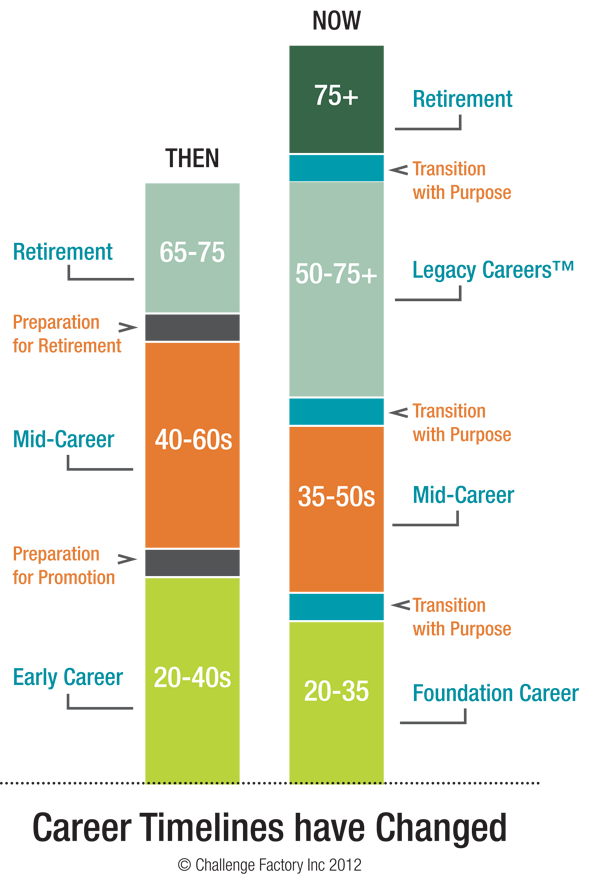
Once you achieve Financial Independence, you may choose to leave salaried employment but with decades of vibrant life ahead, it’s too soon to do nothing. The new stage of life between traditional employment and Full Retirement we call Victory Lap, or Victory Lap Retirement (also the title of a new book to be published in August 2016. You can pre-order now at VictoryLapRetirement.com). You may choose to start a business, go back to school or launch an Encore Act or Legacy Career. Perhaps you become a free agent, consultant, freelance writer or to change careers and re-enter the corporate world or government.

The 1,000 buck-a-month rule: You can retire sooner than you think

wesmoss
wesmoss.com

By Jonathan Chevreau

Here’s a blog I wrote for MoneySense.ca before the Hub launched, housed in what it now terms the MoneySense Findependence Archives. It seemed to resonate so I’ve repurposed it here, adding the cover shot of the book from which it’s drawn: You Can Retire Sooner Than You Think.

It deals with an interesting rule of thumb that most retirees and would-be retirees would do well to adopt. Developed by U.S. financial planner Wes Moss, it’s called the 1,000-Bucks-a-Month Rule. It means that for every thousand dollars in monthly income you want in retirement, you need to have saved $240,000. Continue Reading…

A salon for would-be Boomerpreneurs & business owners seeing exit strategies

Dining room
Brainstorming over a dining table like this one.

The other evening ten 60-ish baby boomers got together in a private home in mid Toronto to discuss Boomer retirement and related matters. There were two main groups: most were business owners who have been self-employed for 30 or more years. A handful (including myself and the hostess) had spent most of our careers working as employees in large organizations.

Long-time business owners looking for exit

In both cases, the great question before us was “What do I do with the rest of my life?” The business owners were concerned about exit strategies to monetize their years of sweat equity, which could include outright sale or passing the reins to younger family members.

Long-time employees looking to find a transition business

The other group is considering becoming business owners or entrepreneurs even at this late stage of life, or what I term “Boomerpreneurs.” We may or may not have left the workforce voluntarily but suddenly had some leisure and money to contemplate our next move.

In almost all cases, this was a high-achieving group and while one younger attendee (in his mid 50s) had spent a “mini retirement” of several months in Central America, most of us agreed we were in no way ready for endless days of daytime TV, golf or bridge. Some were conscious of the extended Life Expectancy theme underlying this website’s “Longevity & Aging” section, but others were acutely aware that we all entering the final few laps of the great race of life. The long-time business owners in particular seemed ready for a change, but were aware the transition or exit could well require four or five more years of continued effort.

Actually, this was the second time the group had met. I would have love to have attended the first one in October but had already committed to a three-week trip to Turkey. The focus of the first one was that many baby boomers can expect another 10,000 days of life on the planet, so what’s your plan on how you’re going to spend that time? As the facilitator, Alan Kay (more on him below) put it, it’s all about “repurposing yourself, not a blank canvas.”

Acquiring new skills — at 60

Interestingly, the hostess (one of only two women in the second meeting; the rest were obviously men) experienced almost the same events as I have in 2014. Both of us had quite independently chosen to attend Toastmasters weekly, to hone our public speaking and leadership skills (neither of which suggests sitting before a fire in your rocking chair). She is also attending a Rotman course that prepares you to assume positions on corporate boards. As if that weren’t enough, this high achiever is also taking acting lessons.

Does Business Ownership run in the family?

Her husband, and our host, has long been a business owner. In fact, long ago when I worked on a computer newspaper, I had naively written a piece about him extolling the fact that he was a “27 year old president” of his own computer company. At the salon, he said his own father was a business owner so it seemed a natural step for him at the time. I replied that my father was a high school teacher with security and a Defined Benefit pension plan, which may have explained why I tended to stick with salaried employment within other people’s businesses.

Regrets of the dying

We discussed life purpose, why we are even on the planet, and the five regrets of the dying, a piece published recently in the Globe & Mail. Some felt that one of the advantages of building something even at this stage of life would be to employ the generations following us, including our children.

There was a feeling it’s time to simplify, perhaps to slow down a tad but few seemed to seek a traditional “full-stop” retirement. Call it semi-retirement or phased retirement, depending on circumstances. I didn’t get the impression anyone was suffering financially, so the continued interest in remaining active was more about community, giving back and the like.

Naps in the home office

Some of us work from home, some still go to an office, even if they own the building in which it’s housed. Among the “work-from-home” crowd, which included our host and myself, we confessed there was the advantage of the occasional afternoon nap.

As for the session and what’s next, it’s all rather fluid although the hosts did facilitate an exchange of emails with the intent of connecting on Linked In.  Certainly, this web site will happily describe further developments and facilitate communications between members and would-be members. There are, for example, our so-far-dormant discussion forums, which could be used to continue the dialogue in cyberspace.  It was just such a salon that spawned the Huffington Post.

alankay
Alan Kay, The Glasgow Group

Pending permission from the other participants, I’ve erred here on the side of protecting actual identities but may update this blog or post new ones with actual names and coordinates as they arise. I can say the session was moderated by Alan Kay, who is happy to be identified as “a fully recovered ad guy, facilitating change through tools like stakeholder consultations and roundtables using his Solution Focus expertise.”

And yes, this often means sitting around a kitchen table like the one illustrated above; you can find him via his website here. Or contact me at jonathan@findependenceday.com.

When a Business Owner gets cancer

josh-patrick
Josh Patrick

Good piece in the New York Times today about what happens when the owner of a small business gets cancer. It’s written by the business owner himself: Josh Patrick runs a small wealth management and consulting business and like many personal services business that sell time rather than product, it pretty much depends on the owner for revenue.

He learned he had non-Hodgkin’s lymphoma, in 2008. (He is now 62).

Mr. Patrick struggled first with the decision about whether or not he should share the knowledge of his cancer with clients. He did and despite his fears to the contrary, none of his clients left as a result of this disclosure. One client even pre-paid, although Mr. Patrick still had to downsize his operation. He had a few employees: one of whom volunteered to leave while another agreed there would be no raise for a year.

Importance of providing clear instructions to spouse

Once it was clear he would be undergoing a (dangerous) stem-cell transplant, he made sure his wife had the paperwork on the life insurance, names of clients and where they could go for alternative service, and how to wind down the business if it came to that. All business owners should have a such letter for their spouse, he says.

After the nine months of treatment, he realized his hopes to immediately resume operating the business at full speed were a tad optimistic. Suddenly, health had become a priority over the business and he realized it would take a few years before his energy levels returned to the point he could work as hard on the business as he had before the cancer revealed itself.

Not coincidentally (given the wide publicity that comes with a story in the Times), his business — Stage 2 Planning Partners — focuses on retirement planning for business owners.  I dare say he’s now busier than ever.

Get ready for the shift: the Future of Work

TheShiftA big aspect of planning for retirement is health and longevity. Back in the summer, I devoted a blog at the Hub’s sister site to Mark Venning of ChangeRangers.com. Venning helps clients prepare for two things: making the shift from employment to entrepreneurship, and also to help prepare for a future of extended longevity and life expectancy. That’s “why the word ‘Retirement’ doesn’t work for me. It’s about longevity planning,” he told me, “My core message is plan for your longevity, not for retirement.”

That’s one reason the Financial Independence Hub includes sections both on Entrepreneurship and Aging & Longevity. But we’re not just a site for the Boomers: we take an “Ages & Stages” approach to financial independence, starting with material for Millennials and their focus on debt reduction, family formation and home ownership. Then by the time we reach those in mid-life (call them Gen X if you will), the focus is on Wealth Accumulation.

One of several book recommendations from Venning to his students — many of them terminated from full-time employment — is a book by Lynda Gratton called The Shift: The future of work is already here. It’s not brand new: my copy was published by Harper Collins in 2011. But it’s still relevant, especially to the generation of baby boomers, myself and Venning included, who are grappling with the issues of retirement planning.

Gratton, who is a business school professor, identifies five forces that are shaping the world of work, plus three “shifts.” They’re all worth summarizing here.

The 5 forces shaping our future

1.) Technology
2.) Globalization
3.) Demography and Longevity
4.) Society
5.) Energy Resources

The 3 shifts

1.) From shallow generalist to serial master
2.) From isolated competitor to innovative connector
3.) From voracious consumer to impassioned producer

For baby boomers and others who are nearing retirement, or moving into semi-retirement or self-employment, almost all of these forces and shifts need to be taken into consideration. In earlier blogs like this one — Never Work Again — we looked at the revolution in Internet marketing, which is based on both the Technology force and Globalization. When you can run a web-based business from anywhere in the world merely with a laptop computer and a smartphone, you know you’re embracing these forces.

Gratton’s points on demography and longevity seem particularly apt: this was the topic that most fascinated the team of researchers she tapped into for the book. “We quickly understood that technology is changing everything and will continue to do so, and that natural resources are depleted and carbon footprints must be reduced,” she writes. But demography and longevity “is intimately about us, our friends and our children … It’s about how many people are working, and for how long.”

 
The dark side: some boomers will grow old poor

In 2010, when Gratton was writing the book, there were four distinct generations in the workforce: the Boomers’ parents, the Boomers, Gen X (born between 1969 and 1979) and Gen Y (1980 to 1995). And coming up is Gen Z, born after 1995. Gen Y will be ascendent in the workplace by 2025 but increasing longevity means the Boomers and Gen X will still be hanging around, wanting to work and contribute in some capacity well into their 60s, if not beyond. Gratton also warns that “some baby boomers will grow old poor,” particularly if they don’t respond to the gift of extended longevity by embracing the forces and shifts that are confronting them.

laptop-millionaireBecause of globalization and technology, the privilege of being born in North America may no longer be sufficient advantage for those who don’t embrace The Shift. Books like The Laptop Millionaire describe how those with wealth can take advantage of outsourcing: for example, hiring English-speaking Filipinos as full-time virtual assistants for something like $250 or $300/month.

There is a dark side to these shifts: those not equipped to embrace change increasingly will have to compete for jobs or contracts with people half a world away who are technologically sophisticated and willing and able to work for much less than North Americans.

Gratton devotes big chunks of the book to fictional scenarios of the near future of work, some of them pessimistic, some of them optimistic. All in all, it’s well worth reading. It reinforced my own belief that “If you’re not sure whether you should retire or can afford to do so, then just keep working, preferably in a congenial line of work you can continue to practice well into your 70s.”

My road to Findependence: Guest Blog by Sheryl Smolkin

sherylholdingrufus.
Sheryl Smolkin and Rufus

By Sheryl Smolkin

Special to The Financial Independence Hub 

Almost 10 years ago, at age 54, I took early retirement from my job as a pension lawyer and Canadian research director of an international benefits consulting company. I locked the door of my downtown office for the last time on a Friday; on the following Monday I started my new career as editor-in-chief of an industry magazine.

My new job paid only about one third of what I earned before, but I left with a defined benefit pension (albeit reduced by about 30%) and retiree health benefits so I was prepared to take the risk in order to try something new.

With the benefit of hindsight, I can say it was a totally audacious move. I knew how to write peer-reviewed, factual client publications but didn’t have a clue about the economics of running a trade magazine or how to turn a bunch of disparate articles into a cohesive product.

Hard work but fun, and I learned fast Continue Reading…