Victory Lap

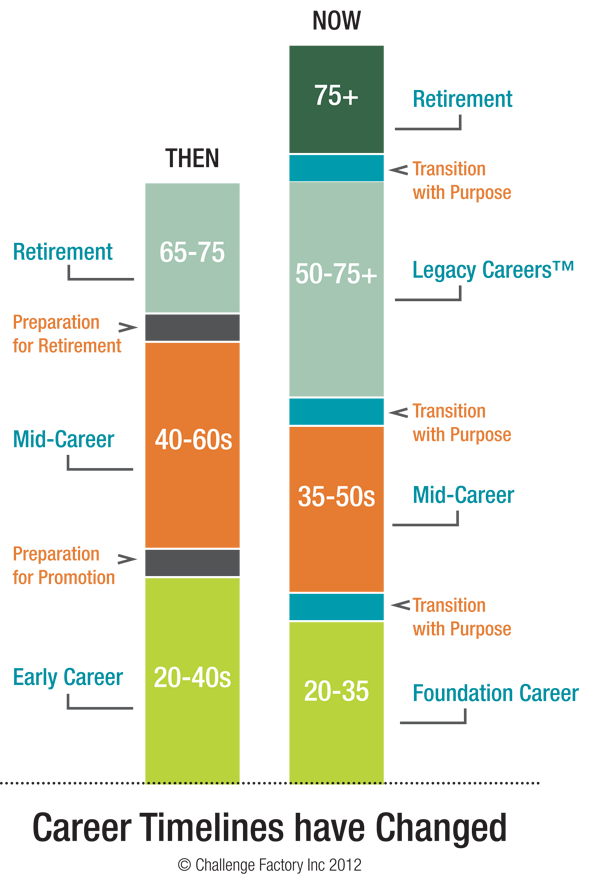
Once you achieve Financial Independence, you may choose to leave salaried employment but with decades of vibrant life ahead, it’s too soon to do nothing. The new stage of life between traditional employment and Full Retirement we call Victory Lap, or Victory Lap Retirement (also the title of a new book to be published in August 2016. You can pre-order now at VictoryLapRetirement.com). You may choose to start a business, go back to school or launch an Encore Act or Legacy Career. Perhaps you become a free agent, consultant, freelance writer or to change careers and re-enter the corporate world or government.

A Millennial’s Take on Defined Benefit pensions

headshot-new
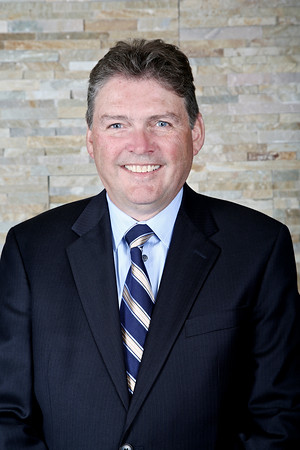
Sean Cooper

By Sean Cooper,

Special to the Financial Independence Hub

Many consider defined benefit pension plans the gold standard of retirement plans. Through the ups and downs of the markets, defined benefit (DB) pension plans remain the one thing that employees can count on in their golden years. DB plans offer employees some much-needed stability in retirement. For those without the luxury of an employer-provided pension plan, the alternative is RRSPs. With RRSPs, you contribute throughout your career and hope that your investments perform well enough so you can enjoy a comfortable lifestyle in retirement.

Defined Benefit Plans Disappearing

While workplace DB plans used to be widespread in the private sector, they’ve been disappearing at an alarming rate over the last couple of decades. Now only a third of employees have any kind of pension plan at work, let alone a DB pension plan. The dot com bubble in 2001 and the financial crisis in 2007 only sped up the pace at which employers are looking to “de-risk.” De-risking comes in many forms, but the most prevalent is switching from a DB plan to a defined contribution (DC) plan or group RRSP.

Defined Benefits vs. Defined Contribution

With a DB plan the employer bears most of the investment risk. If investments underperform, it’s up to the employer to make up any shortfall. However, with a DC plan or group RRSP, employees bear the brunt of the risk. If their investments don’t pan out, they’ll have to make tough decisions like scaling back their lifestyle in retirement or working longer (if they’re physically able to).

Having worked as a pension analyst at a global pension and benefits consulting firm for nearly five years, I have a unique perspective on what’s been unfolding in the realm of pensions. I’ve watched as pension plans on which I work have closed DB pension plans to new entrants, forcing new hires to enroll in DC plans. Although I still have a DB plan at work, even my own plan has been scaled back in recent years.

How do DB Plans Fit into My Findependence?

That brings me to the main point of this article: are DB plans part of my own Findependent plans, or I am so much into self-employment and Internet businesses that I feel they’re okay for really conservative members of my generation, but perhaps not for myself? Despite working as a financial journalist to supplement my income, I still see DB plans as an integral part of my Findependent plans.

Even though I don’t plan to retire until at least age 55, it’s still nice to know I have a guaranteed DB plan waiting for me when I do decide to call it a career. A DB plan will provide a large chunk of my money in retirement. Because of that, I’ve been able to invest more heavily in equities in my RRSPs.

I’m a big fan of the Canadian Couch Potato investment philosophy. I chose the TD e-Series funds because of their great track record and low fees. I’m invested heavily in equities – I have 30%  invested evenly in Canadian, U.S. and International equities, with only 10% in bonds. I wouldn’t have been able to take this position without a rock-solid DB plan waiting for me.

What About Everyone Else?

If you’re a younger worker in an industry where you plan to change jobs every few years, a DB plan probably doesn’t make much sense. But if you’re someone like me who’s willing to spend their entire career at a company once they find a job they love, a DB plan can be a great way to build up your retirement income as a reward for your years of service.

Some people refer to DB pension plans as pyramid schemes without getting the facts straight. For the most part your company pension plan is safe. Workers in Ontario have added protection – up to $1,000 of your monthly protection is guaranteed by the government.

Would I ever consider trading in my DB plan? Not a chance. I see my DB plan as an important part of my journey towards Findependence. I know I can count on it when it matters most.

Sean Cooper is a Personal Finance Expert and Financial Journalist. He is a first-time homebuyer and landlord who aspires to reach findependence by age 31. Follow him on Twitter @SeanCooperWrite and read his blogs and request his writing services on his website: http://www.seancooperwriter.com/


Retirement Refugees

Successful older entrepreneurs in the office
Does this look like a “failed” retiree?

Interesting piece in the New York Times this weekend about high achievers who give retirement a try, only to go back and try something else work-related. This is of course a major theme of this website and the books and e-books associated with it.

I’ve dubbed those on the vanguard of this phenomenon (as of today) “retirement refugees,” because as you’ll see from the Times’ piece, these people may have given traditional retirement a shot, only to suffer from boredom within a few months of experiencing the supposedly blissful leisure pursuits of golf, bridge, daytime TV and reading whatever you want for hours on end. And yes, one person quoted by the Times even found Travel boring: see our Friday piece on this trend: Is Travel Overrated?

Just in the last week here at the Hub we’ve had several pieces touching on this theme. Friday before last, for instance, we ran the blog on the “Boomertirement Salon,” in which baby boomers who had long been salaried employees were looking to start all over as “Boomerpreneurs” in their early 60s (including Yours Truly.)

Also here at the Hub a few weeks earlier, we ran Sheryl Smolkin’s blog on her early retirement at 54, since followed up with another decade of writing, blogging and lately the launch of her Retirement Redux site.

In categorizing this blog, I found it difficult to narrow it down to one of the categories we’ve selected for the Hub. I’ve included it in Longevity & Aging because the two concepts go hand in hand: if you’re going to live longer and more healthily than generations did in the past, it stands to reason that you’ll want to keep your mind active and your social skills honed. Both can be accomplished by staying in the working world at least on a part-time basis, perhaps supplemented by charitable or philanthropic work or volunteering of one’s time or expertise.

I’ve also categorized this under Business Ownership rather than Decumulation, although in the transition from employee to business owner, you may need to draw down on your financial resources to make up any income shortfall: you can’t always invoice your sweat equity.

Driven achievers “fail” at traditional full-stop retirement

The NYT piece  begins by focusing on Suzy Boerhoom, a registered nurse who retired “for the first time” after 35 years in health care, during which she owned some Curves exercise locations. Upon retirement, she spent five years helping her three daughters raise their own children. She’s now 66 but after getting bored being a full-time grandma in 2009 started Welcyon, Fitness After 50. She is quoted as saying she had “failed” at retirement, being one of those “driven achievers” who work because they love it, not necessarily because they need the money. (another major theme of this website).

Those inclined may want to download two short studies mentioned in the Times article: the AARP Work and Career Study and another study by Age Wave and Merrill Lynch on Work in Retirement.

If you do and feel moved to write a blog of your own on these themes, we would be delighted to run it here at the Hub. Let me know by emailing me at Jonathan@FindependenceDay.com.

Is Travel over-rated?

65travelBy Jonathan Chevreau

The other day I ordered online a library book published in 2013, which I thought was entitled 65 Things to do When You Retire. But once it arrived and I started to leaf through the pages, I realized with some disappointment that this particular edition of what was evidently a series was dedicated solely to travel, as you can see in the prominently featured word in red on the cover image to the right.

Now I know travel is regarded as one of the bedrock activities of retirement, if not the holy grail itself — provided you’re physically and mentally healthy, financially equipped to bear the costs, and young enough to enjoy it.

A curmudgeon’s view: Travel is expensive and over-rated

Continue Reading…

My unplanned retirement at 52: “It’s better to have a plan!”

By Del Chatterson

Special to the Financial Independence Hub

Del Chatterson

My unplanned retirement at 52 seems to have been successful, if I look back over the last 15 years, but I could have done it better and suggest that you can too, if you have a plan.

Here is my story and the lessons I have learned. I am sharing them on the assumption it’s never too late for you or me to do it better. At age 52, I quit my day job and headed into the unknown. At that time I certainly did not call it “retirement.” It was more “seeking new opportunities,” time for a change of career plans” and other appropriate clichés.

How did I get to that point? Well, I was just another engineer/MBA with a career in corporate positions and management consulting, followed by twelve years in my own business. My computer products distribution enterprise grew quickly and did very well during the booming PC revolution of the ‘80s. Then in the ‘90s the PC market rapidly changed and smaller players were squeezed out by the few surviving big manufacturers, distributors, and retailers. So the business become less fun and less rewarding as I went through the challenges of a merger, wind-up, re-start and finally an exit. My decision to leave was based simply on the lack of personal satisfaction. The stimulating challenges and my motivation had evaporated. It was time to move on.

Inspired by The Wealthy Barber

During most of the 25 years after my MBA, I had earned good compensation and was apparently smart enough to manage a sound savings and investment plan (encouraged by the wise and practical advice of Jonathan Chevreau, the Wealthy Barber and many others.) The biggest bump in compensation and savings happened, of course, during the good years in my own business when sales and profits were booming. But when I quit working and starting searching for new opportunities there were two things missing: I did not know what I really wanted and I didn’t have a plan.

Financially, I was able to carry on without income and live off my investments. My savings and investment plans, starting in my early 30s, were based on reasonable risk and return assumptions in a well diversified portfolio. I started with a brokerage account and a commission-based broker. But after some poor advice and a couple of big losses, I switched to another broker for a few years, then finally decided to go 100% self-directed. I learned my choices were as good as those of the big brokerage research advisors and I now had the luxury of boasting about the winners and keeping quiet about my mistakes.

I remained cautious on 85% of the portfolio, although it was 95% in equities, as I could never justify the low returns of fixed income and was willing to be patient through the downturns. I often explain (usually to aggressive wealth management sales people) that my decision to continue to manage my own investments is not for the better returns, but for the education and entertainment value. Admittedly, sometimes an expensive education and sometimes more horror story than action-adventure.

Over the years, however, I had achieved acceptable average returns and at age 52 I could quit working and earning income. I could “retire.”

The Rule of 15

How did I know that? Being an engineer and MBA, I did have spreadsheets to run through various scenarios that showed I could live well and still leave an inheritance behind whenever I checked out. I even developed a simple “Rule of 15” that saves you all the trouble of preparing those spreadsheets. If you have fifteen times your annual spending invested, then you are good to retire. That’s it: if you need $50,000 a year to live on, you can retire on $750,000. That amount will take thirty years to decline to zero if you can earn at least 5% a year return on it.

The experts of course, will tell you it’s more complicated than that and you need to consider inflation and volatility of returns, housing, health and family issues. However, they are not predictable anyway and you have some room for error and the ability to manage within the 5% return and the 30-year time frame assumptions. Don’t make it complicated and suffer paralysis by analysis. The Rule of 15 is a simple reality check on your retirement plans.

But financial independence — findependence as Jonathan Chevreau calls it — is not enough. You may know how you are going to spend your money during your retirement, but how are you going to spend your time? That turns out to be even more important to your long-term health and well being.

Voluntourism

In my case, I meandered aimlessly into my unplanned retirement and tried to keep it interesting by dabbling in everything from Internet start-ups to building a consulting business; from running marathons to running for MP, playing golf to playing guitar. I dealt with some family issues, separated and divorced and did some voluntourism by helping entrepreneurs in developing economies and aboriginal communities.

After fifteen years of wandering between consulting, semi-retirement and self-unemployment, I recognized this approach was not giving me much satisfaction. I needed more passion and purpose in my life.

Since my own process clearly was not working, I started soliciting input and advice from professional resources to help figure out what I really needed for personal fulfillment. It began with a personal assessment of who I was and what I wanted. Better knowledge of myself helped me focus on what I should be spending my time on to achieve the goals of personal fulfillment. Clarity helps.

Here are the most important lessons that I learned in my unplanned retirement:


  1. Do not make decisions by neglecting them until events decide for you.


  1. Have a plan that recognizes your personal needs, goals, resources, limitations and timetable.


Assess who you are and where you are now; decide where you want to be and when; then start acting according to your plan. Hope for a little luck along the way, but don’t count on it.

About the Author:

DEL CHATTERSON is your Uncle Ralph.

He is dedicated to helping entrepreneurs to be better and do better.

 Del is an experienced and successful entrepreneur, executive and consultant. As an entrepreneur, he grew his computer products distribution business from zero to $20 million per year in just eight years. His consulting company, DirectTech Solutions, provides strategic advice to business owners at all stages: from start-up through the challenges of managing growth and profitability to the exit strategies for management transition and business succession.

9781496932259_COVER.inddDel is an Engineer and MBA and has lectured on entrepreneurship and business management at both Concordia and McGill Universities in Montreal. He continues to share his experience and offers ideas, information and inspiration for entrepreneurs worldwide under the persona of “Uncle Ralph.’

He has recently published two books for entrepreneurs:“Don’t Do It the Hard Way” and “The Complete Do-It-Yourself Guide to Business Plans.”

Learn more here.


Extreme Early Retirement? I call it Extreme Early Findependence!

Savings Thermometer Measuring Money Nestegg IncreaseBy Jonathan Chevreau

MoneySense.ca today is running my column on Extreme Early Retirement from the November issue. It looks at the phenomenon championed by super-frugal savers like Mr. Money Moustache and Jacob Lund Fisker of so-called Extreme Early Retirement.

The idea is to be self-sufficient, do without, live in a small home, eliminate frivolous purchases like cars or furniture and save like crazy for five or ten years: and we’re not talking the typical savings rates of 10 or 15% of a paycheque: more like 50% or more.

Frugality to a Fault?

Continue Reading…