Decumulate & Downsize

Most of your investing life you and your adviser (if you have one) are focused on wealth accumulation. But, we tend to forget, eventually the whole idea of this long process of delayed gratification is to actually spend this money! That’s decumulation as opposed to wealth accumulation. This stage may also involve downsizing from larger homes to smaller ones or condos, moving to the country or otherwise simplifying your life and jettisoning possessions that may tie you down.

How should you Plan for your Spending to Change throughout Retirement?

Special to Financial Independence Hub


It’s challenging enough to figure out how much you’ll want to spend at the start of retirement.  Even more challenging is deciding how your spending will change as you age.  These choices make a big difference in how much money you’ll need to retire.  They also shape the spending options you’ll have available throughout retirement.  Here I explore the good and bad parts of common wisdom on retirement spending to arrive at my own spending plan for retirement.

Spoiler alert: the “go-go, slow-go, no-go” narrative is good marketing, but it has cracks.

Two extremes

Some people focus on the early part of their retirement.  They want as much money as possible available early on while they’re still young enough to enjoy it.  They seem to think of their older selves as a different person who they care less about than their current selves.

Others focus on their older selves and worry about running out of money at some point.  These people usually spend far less than their portfolios allow, and they tend to be resistant to spreadsheet evidence that they’d be fine spending more.  Some make frugality part of their value system, and others are genuinely fearful.

A rational retirement spending plan is somewhere between these two extremes.  But where?

The default

Before retirement spending research over the past decade or so, the default was to assume that retiree spending would rise with inflation each year.  In real (inflation-adjusted) terms, we assumed that retiree consumption would be flat over time.

This doesn’t mean that consumption would be flat in the transition from working to retirement, though.  Many expenses go away in the typical retirement.  Average retirees pay less income tax, have paid off their mortgages, spend less on children, and no longer have many work-related expenses like commuting and clothing.  On the other hand, retirees often spend more on hobbies.  Some retirees are exceptions, but retirement experts say typical retirees need 45-70% of their working income to have the same standard of living.  But after retirement starts, we used to assume flat consumption over the years.

It’s tempting to think that having retirees’ spending rising with inflation would have them matching the spending increases of their younger neighbours.  However, this isn’t true.  Human progress causes our consumption to rise faster than inflation over the long term.  Compared to a century ago, workers are far more efficient today, and they have a wide array of products and services available that people in the 1920s never dreamed of.  Progress will continue, and with each passing decade, more amazing products will become available.

If you want to fully participate in our progressing economy, you would need to plan for annual retirement spending increases of about inflation+1%.  It may be rational to decide you won’t need the latest iPhone or whatever amazing new product that will come along, but it’s important to realize that planning for flat consumption is already a compromise.  If you were keeping up with your neighbours at the start of retirement, you would be falling behind a decade or so later.

Go-go, slow-go, no-go

Amazon.com

The idea that we should plan to spend less each year through most of retirement has some of the best marketing around.  In his book, The Prosperous Retirement, Michael Stein referred to three general phases of retirement:

  • Go-go years: From 60-65 to 70-75.  High activity and spending.
  • Slow-go years: From 70-75 to 80-85.  Activity and spending decline.
  • No-go years: From 80-85 on.  Minimal activity with healthcare and long-term care costs.

This framework is easy to embrace for anyone who is still a long way from the slow-go age.  We’ve all seen old-timers who seem unable to do much, and more importantly, they seem very different from us.  However, if you ask someone in their early 70s if they’re into their slow-go years, don’t expect a polite response.

Already, most descriptions of the three phases have the go-go years ending at 75 instead of 70-75.  With so many baby boomers now in their 70s, it’s not surprising that they don’t like to see themselves as slow-go.

Setting these self-image issues aside, are these older boomers spending less than they did in their 60s?  If they are spending less, some will be doing so by choice and some by necessity because they have limited savings.  How significant is this group who overspent early?  Do you really want to model your own retirement in part on this overspending group?

In the end this vivid narrative paints a compelling picture of someone (but not you!) slowing down and eventually stopping altogether, but it doesn’t prove anything about how you should plan your retirement.

The research

One of the early papers researching retirement spending patterns is David Blanchett’s 2014 paper Exploring the Retirement Consumption Puzzle.  This paper along with many subsequent papers have established without a doubt that the average retiree’s inflation-adjusted spending declines in early retirement and increases late in retirement as health care and long-term care costs rise.

That seems to settle it, right?  We should follow the research and plan for declining consumption through early retirement, and possibly plan for health spending and long-term care costs late in retirement.  But there’s a disconnect.  We know what average retirees do, but is this what they should have done?

The average Canadian smokes about two cigarettes per day.  Does this mean we should all plan to smoke two cigarettes each day?  Of course not.  This average is brought up by the minority of Canadians who smoke.  If we take the smokers, whose behaviour we don’t want to emulate, out of the data, the average drops to zero.  In reality, the best plan is to not smoke at all.

Carrying this thinking over to retirement spending, we need to know how many retirees overspent early in retirement and now regret it.  You don’t want to emulate these people.  If we could remove these people from the data, the average spending from the remaining retirees might give a better picture of what you should do.  In addition, we might want to remove retirees from the data if they badly underspent.

The retirement spending smile

The Blanchett paper refers to a “retirement spending smile” that is widely misunderstood.  If we draw a chart of average retiree spending over time, it starts high, falls for a decade or two, and then rises again at the end of life.  People refer to this chart shape as a smile.  However, in Blanchett’s 2014 paper, the smile actually referred to a chart of changes in retiree spending.

So, Blanchett observed that retiree spending changes little in early retirement, then starts to decline and this decline grows in mid-retirement, then the decline slows or even reverses to spending increases late in life.

Here is a chart of Blanchett’s annual spending change data:

Notice that the points don’t really look much like a smile.  The measure of how well a curve fits some data is called R-squared.  Blanchett reports that his spending smile curve has about a 33% R-squared match with the data.  This is a rather weak match, and is a sign that he didn’t have enough data.  Another sign of too little data is the big changes over a short time.  There is no obvious reason why the spending drop should be so much more at 80 than it was at 78.

What is important but unclear is how much of this data comes from overspenders and underspenders who you don’t want to emulate.  Blanchett considers the question of whether retirees spend less “by choice or by need,” and admits that “it is impossible to entirely disentangle this effect.”  To explore this question he divides the retiree spending data into four groups based on whether their spending is high or low and whether their net worth is high or low.  He then studied each group separately. Continue Reading…

2025 Investment Year in Review and 2026 Outlook

Markets rewarded Discipline in 2025: Here’s what that Means for 2026


Canva Custom Creation: Lowrie Financial

By Steve Lowrie, CFA

Special to Financial Independence Hub

As we closed out 2025, investors found themselves in the kind of environment we all hope for but rarely experience. Global Equity markets delivered exceptionally strong results. Fixed income did exactly what fixed income is supposed to do: specifically, preserve capital and reduce volatility.

From a long-term planning perspective, this is ideal. Strong returns spread across diversified portfolios create exactly the type of environment disciplined investors are positioned to benefit from.

Periods like this also highlight an important truth about investing. Strong markets reveal whether your philosophy is sound. Weak markets reveal whether you truly believe it.

This is a good time to revisit the principles that carried disciplined investors to a successful 2025.

1. What 2025 Reinforced about Sound Investing

Every year brings events that are impossible to predict. Yet the long-term evidence continues to point in the same direction.

A globally diversified portfolio remains one of the most reliable ways to build and preserve wealth.

Market leadership shifts. This year (2025) both Canadian and International equities outperformed U.S. equities.

Maintaining a rebalancing discipline once again created value by doing the opposite of what you want to do: selling what has recently done really well and buying what has lagged.

None of these outcomes required prediction. All of them required discipline.

Discipline is what keeps investors positioned to benefit when markets move higher, which is exactly what happened in 2025.

2. A Year near All-time Highs: What that means and what it does not mean

At the time of writing, many global stock markets indices are at all-time highs. This often triggers two opposite emotions.

Some investors feel relief that their plan is working. Others feel anxiety that a pullback must be around the corner.

The reality is more straightforward. Markets spend a surprising amount of time at or near all-time highs. That is what you should expect from an asset class with a positive long-term expected return.

New highs do not forecast a crash or pullback. For example, looking back at U.S. stock returns (S&P 500) for the past almost 100 years, the return 3 and 5 years after reaching an all-time was pretty much the same as all other periods. All-time highs simply confirm that staying invested has continued to work.

The right question is not “How long will this last?”
The right question is “Is my portfolio still aligned with my goals?”

If the answer is yes, the appropriate action is usually to stay the course.

3. One Thing that stood out in 2025: The Private Investment Push

Each year, one trend tends to reach a volume that’s hard to ignore. In 2025, that trend was the surge in private investments being marketed to individual investors: private equity, private credit, real estate, liquid alternatives, and farmland structures all positioned as retail-access solutions.

None of this is new. What’s new is the scale and intensity of the sales activity behind it.

This raises a straightforward question: if private investments have historically been most beneficial for large institutions, why the sudden urgency to market them to individual investors?

A few likely factors: individual investors typically accept higher fees than institutions negotiate, private structures need steady capital inflows, and strong historical performance always attracts aggressive sales, or more commonly called “distribution” using industry jargon.

Private investments aren’t inherently problematic. They can serve a purpose for the right investor under the right conditions.

However, the current surge appears driven more by sales momentum than investor need, which is usually a signal to proceed with caution.

4. What Investors should do with this Information

Experience suggests a few simple guidelines: Continue Reading…

How do you intend to retire?

By Mark Seed, myownadvisor

Special to Financial Independence Hub

Unless you go back in time, retirement no longer means stopping all forms of work from the factory job: Retirement means different things to different people.

While there remains a formal definition of retirement (in that there is the action of leaving one’s job or ceasing to work) retirement has many flavours these days. The traditional definition has evolved and no longer fits what people are doing and seeking.

As I approach retirement from my own career at the end of March 2026, I wondered how you intend to retire.

How do you intend to retire?

The rise of standardized work during the 20th century coupled with an abundance of industrialized or corporate jobs gave rise to pension plans as a key employee attraction and retention benefit. So, you worked hard for 30-35 years and then you retired with your pension as part of the long-term total compensation model: a model that remains in place to today.

Defined benefit (DB) pensions give retirees fixed lifelong monthly payments based on salary and a years of service formula. Some DB plans even offer a degree of indexing to fight inflation. But all DB plans represent a premium form of dependable retirement income that is not subject to financial market drama: since the financial risk is on the employer and not on the employee or retiree.

But times are a changing …

The long retreat of DB employee benefits has been well documented, shifts have occurred in the employer-employee dynamic involving unions along with shifts in the job market to industries where a DB pension is simply just not offered.

Canada’s retirement income system is often described as having three pillars, although variations exist.

The first pillar provides benefits based on age and years of residence in Canada: so it includes the Old Age Security (OAS) pension, the Guaranteed Income Supplement ((GIS), if that applies to you for lower-income folks), the Allowance and the Age Credit. This first pillar is funded largely through general tax revenues.

The second pillar consists of mandatory earnings‑related programs so you can put the Canada Pension Plan (CPP) and, in Quebec, the Quebec Pension Plan (QPP) in that bucket. These are public pensions, funded by mandatory contributions from workers and employers, as well as income from investments made with these contributions.

And finally the third pillar is composed of the aforementioned workplace pension or as the workplace employee compensation model continues to shift, it could be a Group RRSP or another form of employee compensation as well. “Private” retirement income planning may also include your own assets: RRSPs, TFSAs, LIRAs and any non-registered investments.

Weekend Reading - Your retirement income sources

Source: Government of Canada.

I share this information for context when it comes to the following types of retirement you might pursue: how you intend to retire. Your path to retirement could be one or more of these types below.

1. Traditional Retirement

I define this as follows: you work for decades on end uninterrupted and you stop working for good. During this period of time, you might have contributed to a DB or Defined Contribution (DC) pension plan or not at all.

If you had a pension, the automatic savings nature of any workplace pension would be very good for most people — this “forced savings approach” is a huge benefit unto itself – pay yourself first as per The Wealthy Barber.

If you had a pension (the golden handcuffs idea) and depending on the type of pension you have, pension income gets paid out in different ways at retirement. Some plans cannot start before a certain age while others can be accessed earlier. Depending on your retirement-income goals this flexibility (or lack of flexibility) is an important consideration in your financial plan: one I’ve struggled with myself.

There are many benefits to traditional retirement by remaining with one key employer for decades on end (i.e., work stability; the guaranteed pension income for life; don’t have to take too much personal investment risk; could be other workplace retirement benefits like health benefits, travel benefits or life insurance benefits) but traditional retirement also seems to come at a personal cost of trading your life energy for employer time for many decades.

The traditional path to retirement may not work for many people these days. It did not work for me.

2. Semi-Retirement

I define this as follows: you want to pursue some form of life-work balance.

This was in fact something important for my wife and I to try out in 2024 and 2025:  so we did.

My wife toggled back and forth between full-time and part-time work up until her retirement in October 2025.

I continue to enjoy my part-time role at work (until the end of March 2026): I wanted to remain with my employer for a bit, still contribute, just in a reduced capacity.

After I retire from my current career, I might still work (gasp!) but only a few days per week or a few days per month. We shall see.

I will continue to blog here for another year or so too and this site doesn’t make minimum wage: I enjoy running it.

Semi-retirement is not about income but it may include some small financial compensation for doing something you really enjoy/want to pursue: trading your time or energy for some income.

This path and related definition of retirement has always appealed to me and much more so than just early retirement and not working again.

3. Early Retirement

Some bloggers or FinFluencers might express this is a “better way” to retire but when you really think about it: nobody in their 30s or 40s really retires early and never works again. I haven’t met one of them yet.

They continue to work for some income and many do so on their passion projects. Nothing wrong with that of course, being an entrepreneur, you just need to be honest with folks vs. selling some dream as you hustle a book or a podcast or something else to support your lifestyle.

In Your Money or Your Life, author Vicki Robin equates ample savings (and investments) with freedom. This means you have the freedom “to leave your job if the boss is intolerable or the benefits have just been yanked.”  With sufficient savings (and investments) you have the opportunity to transform your life, including achieving Financial Independence if you want to.

Robin likens financially independent thinking to cartography: you need to create your own map. Your map will depict the delta between your life today and the one you want to lead. The results of financially independent thinking will allow you to step back from your assumptions and emotions about money and observe them objectively.

The concepts related to early retirement are not new but certainly lots of modern social media marketing have propelled this thinking into a new discussions and forums.

I’m a big fan of financial independence, just not any Retire-early part of FIRE marketing.

4. Mini-Retirements

Popularized by Tim Ferriss’ 2007 bestseller, The 4-Hour Workweek, Ferriss proposes you redistribute your retirement over many decades. Other books and articles have suggested the same over the years.

In this form of retirement you work in bursts or stints. For example, you might work for a few years and then take a few years off work only to work yet again.

When it comes to mini-retirements, I’ve considered this approach but quickly dismissed it since I was always more focused on my crossover point and becoming financially independent vs. needing to work to fund periodic time off only to work again …

Crossover Point

We realized our crossover point in 2024.

In doing so, that allowed us to start shifting both of our workplace schedules to part-time as part of a transition to retirement sooner than most.

How do you intend to retire?

The answer to this question is very personal and quite subjective.

Which type of retirement is right for you?

“It depends” is the common personal finance answer to pretty much everything but it’s so true.

Traditional retirement never appealed to me nor did any sort of mini-retirement either. So, I guess I’ve opted for the semi-retirement path and if you want to suggest that I’m an early retiree well that’s probably somewhat correct too.

Your financial planning and retirement income planning will depend on many personal factors but the ingredients to any retirement or some form of financial independence are pretty generic:

  1. Spend less than you make and invest the difference: This obvious expert advice really never goes out of style. A high, consistent savings rate is a get wealthy eventually path to retirement.
  2. Kill all high-interest debt and remove all debt from you life when you can: Debt management comes in the form of removing ongoing credit card debt, killing off high interest loans, and managing any other consumer debt well. If you are always paying other people first it will be hard to get ahead in life.
  3. Educate yourself / gain financial literacy over time: Another obvious truth but it’s critical to educate yourself so you develop a better understanding of not only how to manage your finances but also the motivations of others around you. Otherwise, you will pay other people lots of money to do your financial thinking for you.

Whether you are in the early days of your financial journey, preparing for retirement, or successfully in retirement, I would be happy to learn what is working for you. How do you intend to retire? How did you retire?

Leave a comment below. I look forward to your engagement.

Yours in happy planning and celebrations for what lies ahead in 2026.

Happy New Year!

Mark

Weekend Reading - Expenses that may disappear edition

Source: Carl Richards, Behavior Gap.

Mark Seed is a passionate DIY investor who lives in Ottawa.  He invests in Canadian and U.S. dividend paying stocks and low-cost Exchange Traded Funds on his quest to own a $1 million portfolio for an early retirement. You can follow Mark’s insights and perspectives on investing, and much more, by visiting My Own Advisor. This blog originally appeared on his site on Dec. 31, 2025 and is republished on Findependence Hub with his permission.

How to Decide which Canadian Bank Stocks are Best for You

Canadian bank stocks are true blue chip stocks and have long been a top choice for growth and income. Today’s economic uncertainty doesn’t change that

Image courtesy TSInetwork.ca

We’ve long recommended that all Canadian investors own two or more of the Big Five Canadian bank stocks — Bank of Nova Scotia, Bank of Montreal, CIBC, TD Bank and Royal Bank. That’s mainly because of the importance of these institutions, and their blue chip stocks, to Canada’s economy. That hasn’t changed despite lingering economic uncertainty about high inflation. Investing in bank stocks remains a popular strategy for many Canadians.

Canadian bank stocks – unlike Canadian penny stocks – remain key lower-risk investments. As well, the Big Five Canadian bank stocks all have long histories of annual dividend increases. That makes the Big Five the best bank stocks that the country has to offer. It also makes them top blue chip stocks for income investors.

Picking the best bank stock between two of Canada’s big banks is a lot harder choice than choosing between a bank stock and a Canadian penny stock. Still, if you’ve decided to start by investing in bank stocks with just one Canadian bank, one key question remains: which Canadian bank is the best bank stock for you? How can you tell which bank will give you the best long-term performance? There are a few performance clues you can look out for.

Performance clues to look for

When deciding on the best bank stock to buy, you want to start with the same criteria you would use for any investment in blue chip stocks (as well as with a Canadian penny stock):

We believe Canadian bank stocks are still well-positioned to weather downturns in the Canadian economy, despite their significant increases in loan-loss provisions over the last couple years because of COVID, the inflation that followed, and its impact on the economy. All five stocks trade at attractive multiples to earnings and are well positioned for any economic fallout from continuing high interest rates. Investing in bank stocks remains a popular strategy for many Canadians.

Canadian bank stocks have always been some of the best bank stocks globally. They’re also among the best income-producing securities: true blue chip stocks. Below are 3 tips for using dividends as barometer for picking Canadian bank stocks when investing in bank stocks.

1.) Dividends are a sign of investment quality. It’s why so few Canadian penny stocks offer them. While some good banks reinvest a major part of their profits instead of paying dividends, failing banks hardly ever pay dividends. So if you only buy stocks that pay dividends, you’ll automatically stay out of almost all the market’s worst banks.

2.) Dividends can grow. Stock prices rise and fall, so capital losses often follow capital gains, at least temporarily. Interest on a bond or GIC holds steady, at best. But the best banks like to ratchet their dividends upward: hold them steady in a bad year, raise them in a good one. That also gives you a hedge against inflation.

For a true measure of stability when hunting for the best bank stocks, focus on banks that have maintained or raised their dividends during economic and stock market downturns. These banks leave themselves enough room to handle periods of earnings volatility. By continually rewarding investors, and retaining enough cash to finance their businesses, they provide an attractive mix of safety, income and growth. Canadian banks stocks are well known for their financial stability in the face of economic downturns.

3.) Look for Canadian bank stocks with consistent dividends. One of the best ways of picking a quality stock is to look for banks that have been paying dividends for at least 5 to 10 years. Dividends are cash outlays that an unsuccessful bank could never produce. A history of dividend payments is one trait that all the best dividend stocks have.

Don’t limit your investing to bank stocks

Simply put, a well-constructed stock portfolio will make your life easier and maximize your gains.

Early in their investing careers, many investors have only a vague idea of the value of a planned portfolio when investing in the stock market. Continue Reading…

What if you run out of life? Save-Spend balance

Mrs. T and I went on an Alaska cruise years ago, before kids and had a great time.

By Bob Lai, Tawcan

Special to Financial Independence Hub

Let’s be honest here, inflation is real. Very real! Despite being as frugal and careful with our expenses as possible, we are seeing an increase in our living expenses; arguably, just like everyone else.

Unfortunately, many of these expenses are completely outside of our control …

  • We were just informed by the city that our property tax increased by 11.5% this year
  • Our monthly equalized Fortis-BC payment increased by 20% due to natural gas rate adjustments
  • Gas prices recently hit over $2 per litre
  • Groceries cost way more now. I mean, a bag of Hardbite chips is over $5, and avocado costs $2 at regular price? What is this, highway robbery?

Let’s not forget the rising interest rates, leading to higher mortgage payments.

And those are just core expenses. Now if we consider discretionary expenses as well …

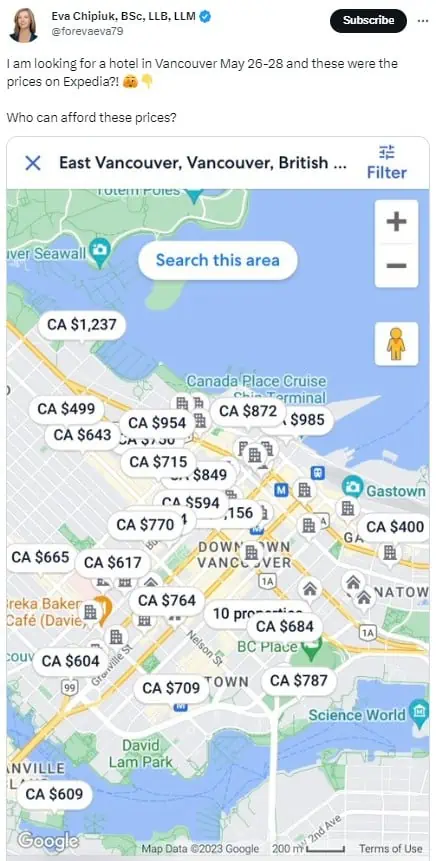
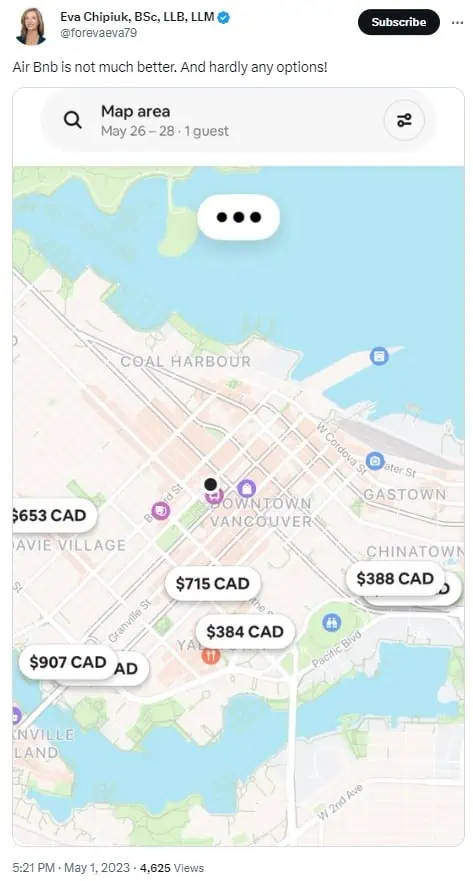
  • It’s not unusual to see hotels at over $250 per night, or even over $300 and even $400! In fact, recently a lawyer complained about the hotel prices in Vancouver. And is not alone!
Tweet 1
  • Staying at an Airbnb is just as costly and sometimes it costs even more than staying at a regular hoteltweet 2
  • Airfares are far more expensive than pre-COVID. Good luck finding tickets to Europe for under $1,000 per person.
  • Dining out is more expensive. A bowl of ramen costs close to $20 with taxes and tips added. We spent over $120 for the four of us dining out at a local White Spot last month, and we only had burgers, a couple of milkshakes, and a dessert to share.

You get the picture. At this point, I wouldn’t be surprised that our 2023 annual expenses will be considerably higher than the previous years.

Feeling frustrated with our expenses

The other day I was looking at our budget/expense tracking spreadsheet. To my horror, I noticed that we have been overspending in our Play account by a significant margin. To be more specific, we have dined out far more so far in 2023 than in other years. We have had three months where we spent over $1,000 on dining out! (On average, we usually spend around $350 on dining out per month)

While I know we’ve spent big money on a few occasions, like Kid T2.0’s birthday dinner with 15 people, a big dim sum lunch with 9 people, dinners a few times in Whistler with Mrs. T’s family, Mrs. T’s birthday lunch with 11 people, and celebrating our wedding anniversary, I was surprised to see that we spent over $1,000 on dining out for May.

Sure, we ate out multiple times during our recent 4-day trip in Calgary, but that was around $500 in total. I couldn’t explain how we spent the other $500.

I was frustrated and bummed out about spending so much money dining out yet again. For the life of me, I couldn’t figure out how we spent the other $500. I did recall having takeout sushi for about $120 but I couldn’t think of other dining-out occasions.

After going through the credit-card statements and spreadsheet, I realized we have had many smaller dining out expenses. $20 here and there, $30 here and there, and the amount quickly added up.

During this frustrated & annoyed state, the only thing I could think of was that we needed to take some extreme action.

“No dining out or take-outs for June!” I declared to Mrs. T.

“And what do you plan to spend our money on?” Mrs. T asked.

I couldn’t answer her question at all. All I could think of is that we need to reduce our spending, so we can save more. I think deep inside I was worried that we’d run out of money because of the increase in our overall expenses.

Even with me writing about having a save-spend balance (i.e. spending money to enjoy the present moment and saving money for the future), all I could think of are…

Save! Save! SAVE!

Unfortunately, my save, save, save, and save some more mentality was creeping in very quickly.

What the heck is going on here? Continue Reading…