General

Fidelity adds Bitcoin to Balanced ETF Portfolios


By Dale Roberts, Cutthecrapinvesting

Special to the Financial Independence Hub

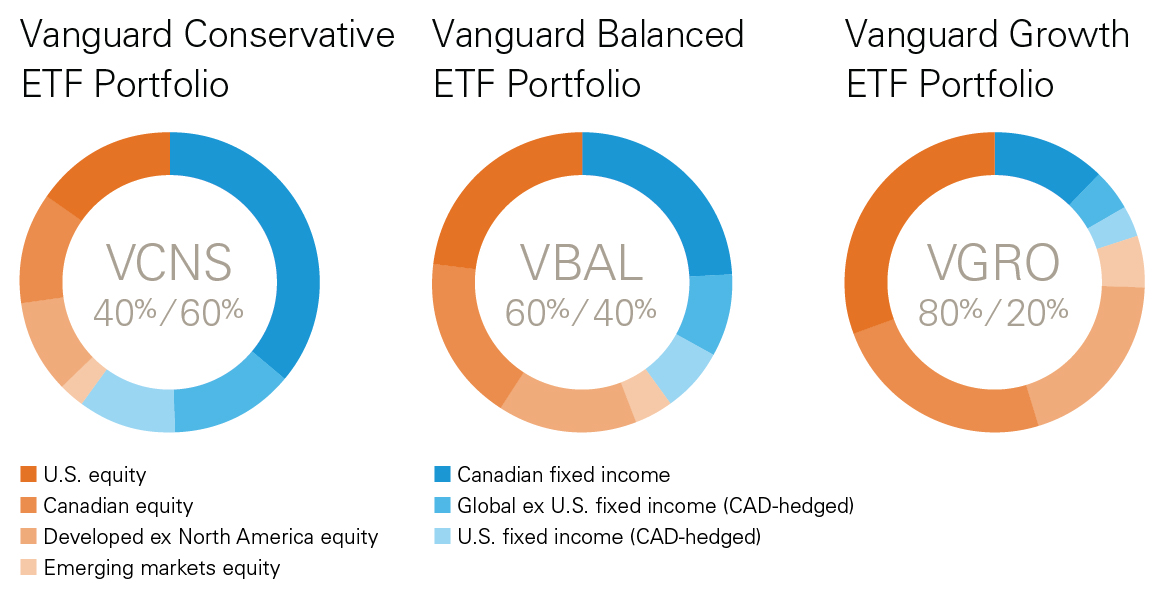
Bitcoin continues on the path to greater mainstream acceptance as a core portfolio asset. Last week, Fidelity added modest bitcoin exposure to their all-in-one asset allocation ETFs. The bitcoin weighting is at 1%, 2% or 3% depending on the portfolio risk level. These ETFs might be a way to dip your toe into some bitcoin exposure. You will see the effect over time. Historically it did not take much for bitcoin to have a very positive effect on balanced portfolios. And of course, bitcoin is highly volatile and rebalancing is key. Fidelity is adding bitcoin to balanced portfolios on the Sunday Reads.

Here’s a post that outlines the bitcoin exposure.

Chris Pepper, vice-president of corporate affairs at Fidelity, said that, subject to regulatory approval, the all-in-one balanced fund will have an allocation of approximately 2% to the Bitcoin fund, while the growth fund’s Bitcoin allocation will be around 3%. Fidelity is filing prospectus amendments in the next 10 days, he said.

And here is the link to the Fidelity ETFs.

Readers will know that I am investing in bitcoin at a 5% portfolio weighting.

Here’s a post that demonstrates the historical effect of bitcoin on a balanced portfolio.

Of course, this is not advice. Do your own research and decide if you want an allocation to bitcoin. I’m in for the long haul. That said, on Twitter I suggested …

My MoneySense weekly column

In Making Sense of the Markets for the past week we have the earnings season halftime report, inflation is up, up and away, and we’re also building a more recession-resistant portfolio.

On this site, this week, I had a simple solution if stock markets have you spooked.


Dale Roberts is the Chief Disruptor at cutthecrapinvesting.com. A former ad guy and investment advisor, Dale now helps Canadians say goodbye to paying some of the highest investment fees in the world. This blog originally appeared on Dale’s site on Feb. 13, 2022 and is republished on the Hub with his permission.

Balance: How to Invest and Spend for Happiness, Health, and Wealth

AndrewHallam.com

By Michael J. Wiener

Special to the Financial Independence Hub

Andrew Hallam’s new personal finance book Balance is unlike any other financial book I’ve read.  He uses research to show us how to spend and invest in ways that create a happy and fulfilling life.

He uses vivid stories to illustrate his points that make the book a pleasure to read.  There’s a lot more to life satisfaction than just amassing personal wealth and owning fancy toys.

The book opens with the “four quadrants to a successful life”: “Having enough money,” “Maintaining strong relationships,” “Maximizing your physical and mental health,” and “Living with a sense of purpose.”

“I’ve met plenty of conventionally successful people (measured by money and career) who appeared less satisfied than, say, a family of Argentinians traveling through Mexico in a motorhome.”

I’ve had a similar experience seeing many executives with highly successful careers who are divorced and work so much that they do little at home other than eat, slump in front of a television, and sleep.

Stuff vs. Experiences

“What do you value more, your stuff or your life?”  This question has meaning for me having grown up with a parent who was a hoarder.  However, even non-hoarders often prioritize buying stuff over relationships and avoiding debt.  “If we want to live the best lives we can, we shouldn’t normalize credit card debts or auto loans.”  “Cars are the greatest personal wealth destroyer.”  Research shows that rich people often don’t drive fancy cars; when you see an expensive car, there’s a good chance its owner is in debt.

“Material things rarely boost life satisfaction.”  “Spend less money on stuff and more on memorable experiences.”  Experiences remain memorable for decades, but the stuff we buy is often quickly forgotten.   Some of the worst purchases are the ones we make solely to impress others.  “Before purchasing something, … Ask yourself, ‘Would I still buy this if nobody else could see it?’”

The things that affect happiness

Research shows that “we tend to be happier when we earn more than our neighbors.”  This leads to the advice to move to a neighbourhood where you have above-average income.  Unfortunately, that makes your new neighbours less happy.  It would be better if we could all be above such comparisons, but that’s easier said than done.

“Close relationships — far more than money — are the single greatest influence on a happy life.”  This resonates with me.  When I plan to travel somewhere warm for the winter months, my biggest concern is who I’m traveling with and what social activities we can get involved in.  For short trips, it’s good to go somewhere interesting, but for long trips, company trumps location.

“Research suggests we also narrow our social circles as we age.”  Focusing on those “we’ve formed deep connections with” works well for a time, but I think it’s a problem when these people start to pass away.  I wonder if this is part of the reason why we see so many desperately lonely older people living alone in a big house.

Hallam’s command of research on happiness and life satisfaction and his ability to use it to steer a good path in life are impressive.  The broad strokes of his lessons appear solid, but I wonder if some of the specific studies will fall to the widespread reproducibility crisis.  For example, there are “several large studies confirming that caring for others helps us live longer.”  Isn’t it necessarily the case that healthy people care for the weak?  It seems plausible that the causation is in the other direction: healthier people live longer and are more able to care for others.  Perhaps the studies’ authors found some way to prove that causation goes both ways to some degree.

Big purchases and budgeting

On the subject of stretching to buy a home, Hallam makes an excellent suggestion: “Ask yourself if you could still afford the mortgage if the interest rate doubled or you were out of work for six months.”  I’d change the “or” to an “and.” Too many people sign up for a decade or more of stress when they stretch to buy a house.  Renting is not synonymous with failure.  It’s possible to rent a nice place and get on with your life’s plans.

“To me, budgets are like diets.  Sometimes they work … but they usually don’t.”  Hallam advocates tracking your spending with a handy app, but he finds trying to set limits in advance on spending in various categories ineffective.  Just knowing how much you spend in each category will drive any needed change.

Investing

“Contrary to what many talking heads on YouTube, On TV, or in financial magazines may lead you to believe, you don’t need to follow the economy or know how to choose the best stocks to buy.”  “Banks, insurance companies, and investment firms … are filled with legally sanctioned crooks (and sometimes kind, naïve people).”

Hallam tells an interesting story to illustrate how savings accounts fail over the long- term because of inflation.  Many people pine for the days when savings accounts paid higher interest, but the story shows that the same inflation problem existed back in 1980.  One illuminating table shows how often U.S. savings accounts beat inflation over 5-year rolling periods from 1972-2020.  The answer: none!  The best place for long-term savings is stocks and bonds.

“Index funds are part of financial literacy.”  “If you learn to invest effectively, you could enjoy your chosen career instead of selling your soul for a higher-paying position you hate.”

Advisors and their Anti-Index Battle Plan

One of my favourite sections is “Financial Advisors and Their Anti-Index Battle Plan.”  It shreds the many practiced arguments the pushers of expensive mutual funds use to persuade people to avoid indexing.  The funny thing is that financial advisors seem to believe the things they are trained to say by their organizations.  In their own portfolios, “researchers found that they performed almost as badly as their clients.  When comparing their performances to an equal-risk-adjusted portfolio of index funds or ETFs, the advisors underperformed by about 3 per cent per year.”

The best plan is to choose some index funds or ETFs, and set some automatic contributions.  “The less you think about your investments, the more money you’ll likely make.”

Hallam lays out three choices for index investing: financial advisor, robo-advisor, or do-it-yourself (DIY).  Which you choose depends on your skills and interests.  He goes on to explain in detail how investors in different countries can succeed with index investing using each of the three approaches.

I enjoyed a story that began with “Do you believe in ghosts?” It explained why new investors should probably choose a slightly more conservative asset allocation than they think they can handle.  While I think it’s possible to learn to take market volatility in stride, if you haven’t had a chance to develop this equanimity, Hallam’s advice makes sense.

Social Responsibility

“Buy less of everything.  This should improve your happiness, your financial bottom line, and your children’s and grandchildren’s future.”  Buying less stuff isn’t just about saving the world; you’ll likely be happier as well. Continue Reading…

Your Retirement Readiness checklist

A good portion of my financial planning clients are in what I’d call the retirement readiness zone, meaning they are 1-5 years away from retirement. They want a check-up on their financial situation and answers to big burning questions like, when can I retire, how much money can I spend, how long will my money last, and how to withdraw from my savings and investments to create the retirement income I need.

Here is a checklist of things to consider when you find yourself in the retirement readiness zone:

How much do I spend?

I get that many people are turned off by budgeting and tracking expenses, but it’s important to understand what it costs to live your life.

Instead of relying on rules of thumb, like you’ll spend 70% of your final salary in retirement, I find that most of my clients want to maintain their current standard of living, if not enhance it with additional spending on travel and hobbies.

Determine your true after-tax spending, including items like property taxes and home & auto insurance that will be with you for life. Add in your desired annual spending on travel and hobbies, and build in a buffer for small unplanned expenses such as replacing an appliance or doing modest home improvements or repairs.

This spending amount is what will drive the decisions around how much to withdraw from your investments, when to take CPP & OAS, and how long your money will last at that spending rate.

Plan your one-time expenses

Besides your regular after-tax spending, you should also factor one-time expenses into your plan. In my experience, the majority of these expenses will include vehicle replacement, travel beyond the ordinary (ex. bucket list trip to Europe), home renovations, and monetary gifts to adult children or grandchildren.

It’s not practical to assume your spending will stay static every single year. Build these one-time expenses into your plan over the next 10-20 years so you have a better and more realistic understanding of what you can afford and how to access these funds.

What you’ll find is that instead of static spending of, say, $65,000 per year, you’ll have several years of spending $75,000 to $85,000 (or more) to cover these one-time costs.

Estate planning

Make sure to update your will and estate planning documents, including the beneficiaries on your insurance and investment accounts.

Consider giving with a warm hand (otherwise known as give while you live) to your children or favourite charity. What I mean is rather than leaving hundreds of thousands, or even millions, in your estate at 90 years old, consider making smaller gifts to your beneficiaries throughout your lifetime.

Some examples include a gift towards a downpayment, help funding the grandkids’ RESPs, and footing the bill for a family vacation with adult kids and grandkids.

In case I die file

It’s common for one spouse to take the lead on financial matters for the household. But this can be problematic if something happens to the chief financial officer of the house – if they predecease their spouse or become cognitively impaired and can no longer manage the finances or investments. Continue Reading…

Canadians more optimistic about money than their love lives this Valentines


Despite Valentines Day being right around the corner, Canadians appear to be more optimistic about their financial futures than their love lives, according to a survey released Wednesday. Here is the press release.

TD’s second annual Love and Money survey gauged the financial behaviours of more than 1,700 Canadians who were married, in a relationship, or divorced in 2021.

It found that 60% of respondents claimed it’s harder to find true love than financial success, up from 51% in 2020’s report.

  • For those in committed relationships, 51% said they’re experiencing barriers to meeting their financial goals and are delaying milestones like planning a wedding.
  • 74%  of divorced Canadians feel their financial status is the same or better than when married: 54% said it is easier to manage their finances post-divorce.

The survey also explored millennials’ unique approach to love and money, including their intolerance for financial ‘red flags’ that would cause them to leave their partner:

  • They never offered to pay for anything (86%)
  • They were secretive about their finances (81%)
  • They didn’t seek professional financial advice (77%)

 As for life post-divorce, 52% said they learned a new financial skill like tracking their spending (28%), making bill payments (24%) and saving for retirement (23%). 57% said they are spending less after divorce while 45% consider themselves financially better off. 54% said it’s easier to manage their finances post-divorce.

TD says the survey also reveals the downside of not talking about finances in relationships. Divorced couples were less likely to have regularly discussed money during their marriage, with only 29% of divorced respondents saying they talked about money weekly with their former partner, compared to 50% of married couples who say they have the talk weekly.

Millennials, Love and Money

Millennials are more likely than other demographic cohorts to keep their money separate from their partners, with 49% of respondents saying they have no common accounts or shared credit cards. Millennials are also less tolerant of ‘red flag’ financial behaviours: they say they would leave their partner if they never offered to pay for anything (86%); if they were secretive about their finances (81%); or if they didn’t seek professional financial advice (77%).

Financial challenges of committed couples

The survey also shines a light on the financial challenges of committed couples. It found 28%  are keeping a financial secret from their partner, up from 8% from the 2020 report. Of those keeping a secret, 64% don’t plan to ever tell their partner. The survey also shows that a secret purchase is the most kept (42%), followed by a secret bank account (29%). Continue Reading…

I fought the Fed

https://advisor.wellington-altus.ca/standupadvisors/

By John De Goey, CFP, CIM

Special to the Financial Independence Hub

The fed won.  I admit defeat. My point is that what just transpired was merely the most recent bout.  Circumstances were extenuating. I demand a rematch.  As soon as things begin to normalize, I absolutely believe I will win.  To provide a bit of context for how I feel now, here’s a groovy little two-minute ditty from the Bobby Fuller Four to help channel the vibe…

https://www.youtube.com/watch?v=OgtQj8O92eI

One of the oldest adages in finance is “Don’t fight the fed.”  In Canada, that translates into “Don’t fight the Bank of Canada.” That, in a nutshell is what I did.  I brought a knife to a gun fight and I lost.  Here’s why I lost that figh t… and why I absolutely expect to win the next one:

I took the position that markets (and especially the U.S. market) were expensive in early 2020.  Sure enough, markets tumbled a month or two later – not because of fundamentals or valuations, but because of a global pandemic that no one saw coming.  For five weeks starting in February, it looked very much like I had been vindicated.  I suppose I could have taken credit for being prescient, but in fact, I was merely at the right place and the right time.  By mid-March 2020, I was feeling pretty good about my call.

Then it happened.  Central banks mercifully came riding to the rescue.  It was the right thing to do when viewed through many lenses, including public health, economic stability, and small business viability.  They did so with such fury and determination that no one had ever seen anything like it before.  Interest rates were slashed to effectively zero.  Governments of all political stripes around the western world took advantage of their newfound monetary cover and started sending cheques to what seemed like anyone who could fog a mirror.  Before the end of March, markets hit a bottom and began an upward march.  A massive bull market was unleashed.

I don’t honestly think anyone could have foreseen what ensued.  There was certainly no precedent for markets dropping violently and then recovering equally quickly.  To have expected that outcome would be to have expected something that had no antecedent in all of history anywhere on earth.

For nearly 23 months now, interest rates have remained at effectively zero.  Pretty much everyone expects that to change in March.  If lowering rates is like giving Popeye can of spinach, raising them is like giving Superman a bag full of kryptonite.  Forgive many the pop culture references in this post, but I find it helps to make things accessible and vivid.  Basically, the artificial party that has gone on for nearly two years and has given almost everyone a false sense of confidence is going to end.  Soon.  Badly.  I’ll eat my hat if I’m wrong. Continue Reading…