Inflation

Inflation

Time to go on a Financial Media Diet

LowrieFinancial.com: Canva custom creation

By Steve Lowrie, CFA

Special to the Financial Independence Hub

In my recent mid-year letter to clients, I decided we’d best just call a spade a spade, so I began as follows:

“Let’s not sugarcoat this: 2022 has challenged investors on nearly every financial front imaginable so far this year.”

Stock and bond markets plummeting in tandem, the war in the Ukrainerises in interest ratesthreats of a looming recession … You’re probably already well aware of the volume of news wearing us down. As I wrote to my clients:

“the financial press has gone on a feeding frenzy in response, serving up heaping helpings of negativity upon negativity.”

Everyone loves a Perma-Bear

Whether by traditional channels or social media streams, amplifying extreme news is in large part what the popular financial press does.

They’re not entirely to blame; we consumers tend to gobble it up with a spoon. That’s thanks to a behavioural bias known as loss aversion, which causes the average investor to dislike losing money approximately twice as much as they enjoy gaining it. Our “fight or flight” instincts basically prime us remain on constant high-alert when it comes to protecting our life’s savings.

Media outlets know that, and routinely round up a stable of talking heads to scratch that behavioural itch. Their “regulars” even earn catchy nicknames:

Perma-bear

Back in 2012, economist David Rosenberg put together a presentation called 51 Signs the Economy Is a Total Disaster. (What, only 51?) We know that reality begged to differ. He tried again in 2019, when he declared: “We’re going into a recession … I think it will be this coming year.” It didn’t happen.

Dr. Doom

Whenever the press needs a fresh Armageddon forecast, they know they can call on “Dr. Doom” economist Nouriel Roubini. It doesn’t seem to matter that he’s been mostly wrong far more often than not. As recently as early July, Roubini was predicting a 50% freefall in the stock market. So far, not so much (thankfully).

Recession Man

As reported in ‘Recession Man’: Burry’s Tweets Resonate With Traders Worried About A Downturnhedge fund manager Michael Burry built his fame from correctly calling the 2007 U.S. subprime mortgage crash. Lately, he’s been posting cryptic tweets to his nearly 1 million followers that “reflect increasing fears of an economic downturn.” As academic Peter Atwater explains of Burry’s popularity:

“The tweets that get shared and liked the most are the ones that fit with how we feel the most … Twitter is an enormous mirror.”

If you look closer, you might spot a card hiding up these soothsayers’ sleeves: with a large, random group of “experts” loudly predicting doom and gloom nearly all the time, basic statistics informs us: a few of them are going to be right every so often, with seemingly uncanny accuracy. Their fortuitous timing makes them look super smart, which earns them even more fame. The cycle continues.

Going on a Financial Media Diet

On many fronts, times are indeed disheartening, and we’re as worn out as you are by the weight of the world. That said, there are already way too many outlets cramming worst-case scenarios down our throats and crushing investment resolve. To offset a bitter pill overdose, following are a few more nutritious news sources to reinforce why we remain confident that capital markets will continue to prevail over time, and that long-term investors should just stick to their plan.

Stock Markets Grow

The following chart is one of our favorites, as it shows at a glance that which the bad news bears routinely disregard: Stock markets have gone up nicely, and far more frequently than they’ve gone down. We have no reason to believe current trends are going to alter this uplifting, nearly century-long reality.¹ Continue Reading…

Canadians fret about meeting day-to-day expenses and inflation’s impact on Saving

With rising inflation driving up the costs of goods and services, a Scotiabank survey released Monday reveals over half [53%] of Canadians are worried about their ability to pay for day-to-day expenses. The majority (78%)of expect to be spending more on basic necessities like groceries and food, or gas (71%), and 53% expect to spend more on utilities (53%). 47% say these issues are impacting their ability to save for longer-term financial goals and 37% feel it’s impacting their current standard of living. Scotia Economics expects inflation to peak later this summer before starting a slow descent to 3.6% in 2023 and back to target by 2024.

“Canadians are feeling heightened levels of anxiety as a result of inflation: especially younger people and women who were also hardest hit by the pandemic,” said D’Arcy McDonald, Senior Vice President of Retail Payments and Unsecured Lending at Scotiabank via a press release. “The cost of everything is on the rise and Canadians are worried about their ability to afford the essentials such as food and gas. At the same time, there have never been so many jobs in the Canadian economy, wages are picking up, and inflation will come down over time.”

Financial stress hits differently across the country

Where Canadians live dictates how much they believe rising costs will impact their finances and ability to pay their bills. 49% of residents in the Atlantic think inflation is having a major impact on their ability to set and stick to a budget, compared to 36% of residents of British Columbia and Quebec. 

When it comes to feeling financial anxiety, 57% of Quebecers are least likely to be concerned about their ability to pay for day-to-day expenses, compared to residents of Alberta (45%), Manitoba/Saskatchewan (44%), Ontario (43%), and the Atlantic (39%).

The young are most impacted and most concerned

Women, younger Canadians, and those with lower household incomes are significantly more concerned about their financial situation over the next few months. Women (44%) are more likely than men (35%) to say inflation and the rising costs of goods and services is having a major impact on their ability to set and stick to a budget.

Canadians between the ages of 18-34 (45%) and 35-54 (46%) say inflation and the rising costs of goods and services is having a major impact on their ability to set and stick to a budget, compared to Canadians 55+ (30%). Continue Reading…

How Inflation-fighting ETFs have fared


By Dale Roberts, cutthecrapinvesting

Special to the Financial Independence Hub

Last Summer, Rob Carrick at the Globe and Mail asked a few major ETF providers to offer up some inflation protection. In a recent post Rob delivered the inflation-fighting ETF scorecard. There are a couple of obvious winners and a few head-scratching ETFs offered up as inflation-fighters. Here’s the inflation-fighting scorecard, plus the Sunday Reads.

Here’s the post (paywall) on the Globe & Mail.

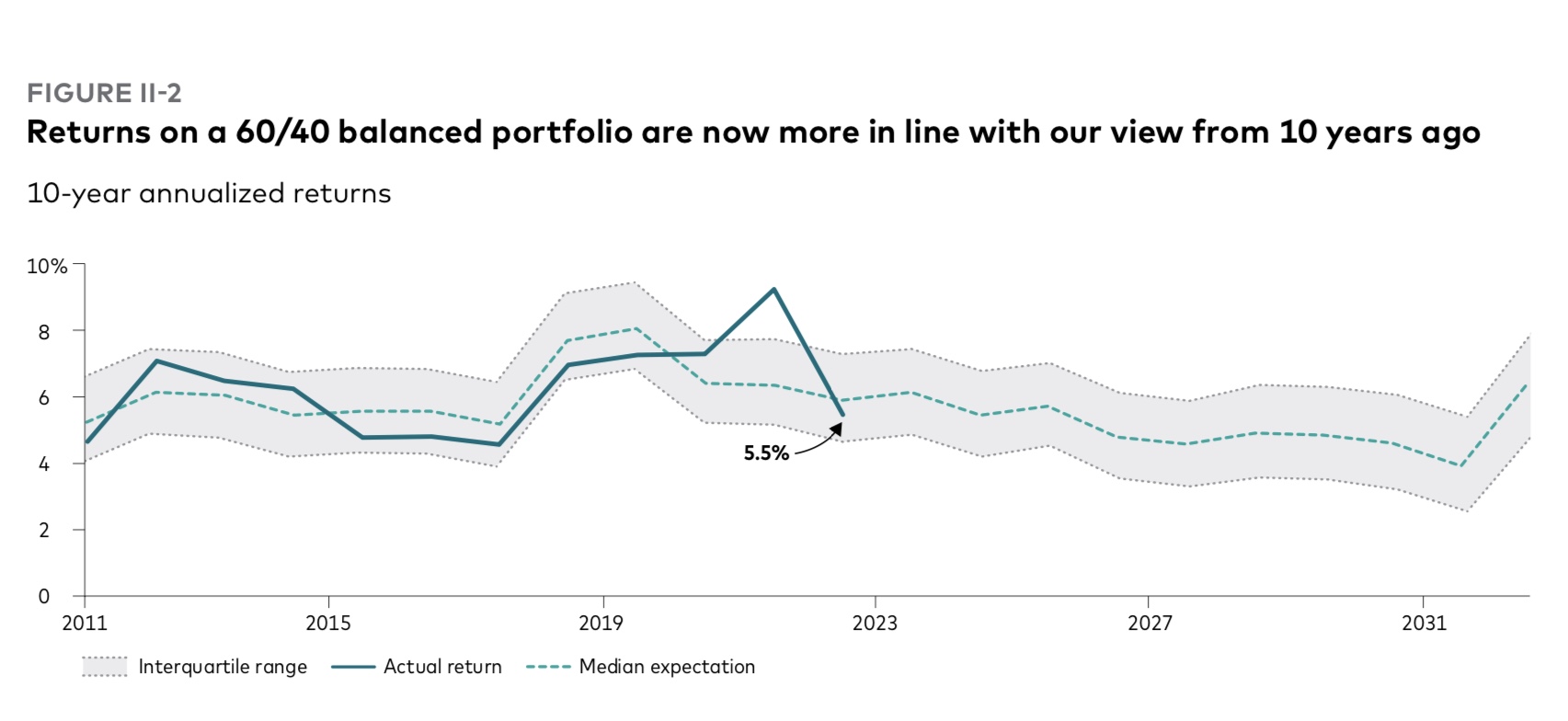
And let’s get straight to the goods. It is no suprise that oil and gas stocks led the way. That is the only sector that provides consistent inflation coverage. Also, base metals are doing their thing. Gold is solid. Vanguard offered up a balanced portfolio (insert WTF emoji face) as an inflation fighter. And they do that after ignoring their own research on inflation and assets.

Drum roll … and the results Continue Reading…

Identifying Opportunities through Infrastructure

Image Franklin Templeton/iStock

By Shane Hurst

Managing Director, Portfolio Manager,

ClearBridge Investments, part of Franklin Templeton

(Sponsor Content)

Last month, I wrote in Financial Independence Hub about infrastructure as an asset class and the opportunities it can provide for both retail and institutional investors.

I would like to follow up on this by explaining the process we use at ClearBridge Investments, and specifically the approach we take with the Franklin ClearBridge Sustainable Global Infrastructure Income strategy.

Our Global Infrastructure Income team is based In Sydney, Australia and manages funds in the U.S., U.K, Australia, Europe and Canada. Having launched in 2010, the strategy has built assets under management of US$4 billion.1

With inflation at multi-decade highs, war in Ukraine, not to mention the ongoing pandemic, risk management is front of mind for many investors. Adding infrastructure to a balanced portfolio of global equities and fixed income is designed to increase returns while decreasing risk.

Expertise in Infrastructure

Years of experience in the infrastructure space has allowed the ClearBridge team to develop the expertise required to select companies that are best placed to prosper over the long run.

With backgrounds in M&A and unlisted infrastructure, debt and equity financing, buy and sell trading, as well as government and regulation, the team constructs a portfolio of 30–60 listed companies where excess return, yield quality and risk assessment drive position sizing. Given that this is a sustainable fund, ESG integration is another crucial element, as it is for the firm overall: ClearBridge Investments was an early signatory to the UN Principles for Responsible Investment back in 2008.

Companies positioned to Succeed

In building the portfolio, the investment team scans the globe for high-quality, listed companies that are positioned to meet the strategy’s income and growth goals. Nextera Energy is one such firm. The largest renewable energy producer in the U.S., Nextera is made up of the parent company Nextera Inc., which owns a regulated utilities company in Florida, as well as Nextera Energy Partners, a yield-oriented renewables vehicle.

The firm’s renewables deployment is expected to increase by more than 50% over the next three years, so it is well placed to benefit from the move towards net-zero carbon emissions across the global economy. Nextera’s strong market position also provides competitive advantages that are driving equity returns that are well above the cost of capital, while its long-term contracts are supporting attractive dividend yield and dividend growth. As a leader in renewable energy, it’s not surprising that the company scores highly in the ‘E’ part of ESG, but it also excels in social and governance metrics too, with strong employee safety standards and excellent management and succession planning. Continue Reading…

Zoomer Magazine: my column on investing in Crypto


Zoomer Magazine has just published a column by me on investing in cryptocurrencies. Contained in the June/July 2022 issue, the headline is The Crypto Conundrum.

There is an online version but it is not yet available: when it is, I will update with a clickable link. Alternatively, you can subscribe to the print edition and/or the digital edition, by clicking here.

As the adjacent artwork shows, “this notoriously volatile investment is not for the faint of heart” and I therefore “advise caution.”

As Murphy’s Law would have it, between the time the article was written and edited, crypto crashed, with Bitcoin plunging below US$30,000. In fact, this weekend was a brutal correction for crypto in general: see this Reuters report on Bitcoin touching an 18-month low of US$23,476 over the weekend.

The article does of course stress the volatility of this asset class and it goes without saying that if you’re a long-term believer in crypto — a so-called HODLer (for Hold On for Dear Life) — then you’re much better off investing in Bitcoin closer to $30,000 than the near $60,000 it reached late in 2021.

The article arose when a Zoomer editor was intrigued by a MoneySense column I wrote early in 2021 about my own personal experience with investing in Cryptos. You can find it by clicking on this highlighted headline: How to invest in Cryptocurrencies(without losing your shirt.

The gist of both articles is that I suggest investors restrict themselves initially to just Bitcoin and Ethereum, which I regard as the “Big 2” of crypto. I also suggest using ETFs in registered portfolios, and taking profits if and when they materialize: by selling half on any double, you can do what Mad Money’s Jim Cramer calls “playing with the house’s money.”

The other guideline I offer is to restrict total crypto investments to 1 or 2% of your total wealth: a range recommended by billionaires like Paul Tudor Jones or Stanley Druckenmiller. 

Start small and try to play with the house’s money as soon as you can

 If you find you lucked out and the 1% becomes 3% or the 2% becomes 5%, then sell about half so that you’re back to your original target.

The article notes that as reported here, as of January 2022, Fidelity has 2% in its balanced and 3% in its more aggressive asset allocation ETFs. FBAL has 59% stocks, 39% bonds, and 2% crypto while its growthier FGRO is 82% stocks, 15% bonds and 3% crypto. These seem to me prudent allocations for investors wanting a sliver of crypto. Continue Reading…