
Building Wealth

For the first 30 or so years of working, saving and investing, you’ll be first in the mode of getting out of the hole (paying down debt), and then building your net worth (that’s wealth accumulation.). But don’t forget, wealth accumulation isn’t the ultimate goal. Decumulation is! (a separate category here at the Hub).

The six phases of financial independence [Revisited]


By Mark Seed, myownadvisor

Special to the Financial Independence Hub

I’ve recently updated this post to include more links to related content. I hope you enjoy it. 

The term “financial independence” has many meanings to many people.

To some, it means not working at all.

To others, financial independence covers all needs and many wants.

To others still, it means the ability to work on your own terms.

Where do I stand on this subject?

This post will tell you in my six phases to financial independence.

Retirement should not be the goal, financial independence should be

Is retirement your goal?

To stop working altogether?

While I think that’s fine I feel the traditional model of retirement is outdated and quite frankly, not very useful.

As humans, even our lizard brains are smart enough to know we need a sense of purpose to feel fulfilled.  Working for decades, saving money for decades, only to come to an abrupt end of any working career might work for some people but it’s not something I aspire to do.

With people living longer, and more diverse needs of our society expanding, the opportunities to contribute and give back are growing as well. To that end, I never really aspire to fully “retire” – cease to work.

Benefits of financial independence (FI)

In the coming years, I hope to realize my desired level of financial independence.

We believe the realization of FI will bring about some key benefits:

  1. The opportunity to regain more control of our most valuable commodity: time.
  2. Enhanced opportunities to learn and grow.
  3. Spend extra money on things that add value to your life, like experiences or entrepreneurship.

Whether it’s establishing a three-day work week, spending more time as a painter, snowboarder, or photographer, or whatever you desire – financial independence delivers a dose of freedom that’s hard to come by otherwise.

More succinctly: financial independence funds time for passions.

FI concepts explained elsewhere

There are many takes on what FI means to others.

There is no right or wrong folks – only models and various assumptions at play.

For kicks, here are some select examples I found from authors and bloggers I follow.

  • JL Collins, author of The Simple Path to Wealth, popularized the concept of “F-you money”. This is not necessarily financially independent large sums of money but rather, enough money to buy a modest level of time and freedom for something else. I suspect that money threshold varies for everyone.
  • Various bloggers subscribe to a “4% rule”* whereby you might be able to live off your investments for ~ 30 years, increasing your portfolio withdraws with the rate of inflation.

Recall the rule:

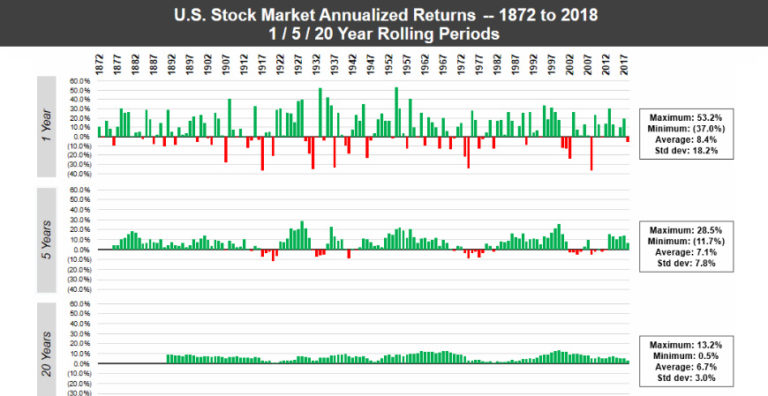
*Based on research conducted by certified financial planner William Bengen who looked at various stock market returns and investment scenarios over many decades. The “rule” states that if you begin by withdrawing 4% of your nest egg’s value during your first year of retirement, assuming a 50/50 equity/bond asset mix, and then adjust subsequent withdrawals for inflation, you’ll avoid running out of money for 30 years. Bengen’s math noted you can always withdraw more than 4% of your portfolio in your retirement years however doing so dramatically increases your chances of exhausting your capital sooner than later.

In some ways, the 4% rule remains a decent rule of thumb.

Are there levels of FI?

For some bloggers, the answer is “yes”:

  • Half FI – saved up 50% of your end goal (e.g., $500,000 of $1M).
  • Lean FI – saved up >50% of your end goal; income that pays for life’s essentials like food, shelter and clothing (but nothing else is covered).
  • Flex FI – saved up closer to 80% of your end goal (e.g., $800,000 of $1M). This provides financial flexibility to cover most retirement spending including some discretionary expenses.
  • Financial Independence (FI) – saved up 100% of your end goal, you have ~ 25 times your annual expenses saved up whereby you could withdraw 4% (or more in good markets) for 30+ years (i.e., the 4% rule).
  • Fat FI – saved up at or > 120% of your end goal (in this case $1.2M for this example), such that your annual withdrawal rate could be closer to 3% (vs. 4%) therefore making your retirement spending plan almost bulletproof.

There is this concept about “Slow FI” that I like from The Fioneers. The concept of “Slow FI” arose because, using the Fioneers’ wording while “there were many positive things that could come with a decision to pursue FIRE, but I still felt that some aspects of it were at odds with my desire to live my best life now (YOLO).

They went on to state, because “our physical health is not guaranteed, and we could irreparably damage our mental health if we don’t attend to it.

Well said.

My six phases of financial independence

With a similar line of thinking related to Slow FI, since we all have only one life to live, we should try and embrace happiness in everything we do today and not wait until “retirement” to find it.

After reviewing these ideas above, among others, I thought it would be good to share what I believe are the six key phases of any FI journey – including my own.

Phase 1 – FI awakening. This is where there is an awareness or at least an initial desire to achieve FI even if you don’t know exactly how or when you might get there.

FI awakening might consider self-reflection questions or thoughts like the following:

  • I would love to retire early or retire eventually…
  • I can never seem to get off this credit card treadmill…
  • I wish I had some extra money to travel…
  • Wouldn’t it be nice to buy X guilt-free?

(I had my awakening just before I decided to become My Own Advisor, triggered by the financial crisis of 2008-2009.)

Phase 2 – FI understanding. This is the phase where people are getting themselves organized; they start to diligently educate themselves on what their personal FI journey might be.

In this phase, they might set goals or get a better handle on what goes into their financial plan. Even if your plan is not perfect, it’s a start.

They might start asking some deeper questions like:

  • Why is money important to me?
  • What is my money for?
  • How do I know I’m doing it right?

I would say it took me until my mid-30s to get my financial life in order through more financial education and improved financial literacy. It was a process that took a couple of years although I’m always continuously learning and improving. I don’t pretend to know it all.) Continue Reading…

How much is your Home Country Bias costing you?


By Dale Roberts, cutthecrapinvesting

Special to the Financial Independence Hub

Investors around the globe are known to invest ‘too much’ of their portfolio in their home country. It is called a home bias. Canadian investors are guilty of that home bias. Many estimates suggest that Canadians hold about 60% of their portfolio assets in Canada.

Meanwhile Canadian stock markets represent only about 3% of the global total. That home bias increases portfolio concentration risk (in one country and in just a few sectors). There has also been a cost; lower returns due to the underperformance of the Canadian market vs the U.S. market and at times the International developed markets. It is an important consideration. What is the cost or your Canadian home bias?

As a backgrounder, in 2019 I suggested that you say goodbye to your Canadian home bias.

I recently posed the question on Twitter:

Please feel free to jump on that tweet as well and offer your home bias. Don’t be shy, we are all guilty, for the most part. If you read through that thread you’ll see that investors offered that they were largely overweight Canada. Most are holding 50% to 70% Canadian stocks.

From the table in that tweet, you can see the drastic underperformance of Canadian stocks vs U.S. stocks over the last 3-, 5-, 10-years or more.

Canadian vs U.S. stocks

And here’s the returns comparison in chart form. The charts and tables are courtesy of Portfolio Visualizer.


And the returns over various time frames, in table format.

For the above comparison, we use the TSX 60 ETF, ticker XIU that you’ll find suggested for core Canadian stocks on the ETF Model Portfolio page.

It appears that there may have been no home bias opportunity cost if you had been invested from the year 2000. Keep in mind that is a static start date measuring the investments (with dividend reinvestment) from the year 2000. The picture will change when we start adding monies ($1,000 per month) on a regular basis.

There is then a meaningful outperformance for the U.S. stocks.

Incredibly, the U.S. stock portfolio generated 46% more money to create retirement income. The TWRR stands for time weighted returns. MWRR refers to the money weighted returns, taking into account the effect of the regular contributions.

The above chart simply shows the outperformance of U.S. stocks vs Canadian stocks. That’s not to suggest that an investor should go all-in on U.S. stocks — though U.S. investors are also known to suffer from an extreme case of investor home bias.

We should not forget the lost decade for U.S. stocks. That was a period when U.S. stocks delivered no real return (inflation adjusted) for a decade or more. And that period begins at the start date for our above charts.

The home bias is of consideration for Canadians, Americans and investors around the globe.

What’s the right mix?

I don’t think you have to be perfect in this regard. And perhaps there is no perfect geographic allocation. But we certainly want a nice mix of Canadian, U.S. and International stocks. We’ll usually add bonds as well when we enter the retirement risk zone, and also in retirement.

U.S. markets certainly fill the holes of the Canadian stock market. And the U.S. multi-nationals that dominate the S&P 500 do offer significant international exposure. That said, an investor should seek greater diversification by way of international developed and developing nations outside of North America.

In the Advanced Spud (couch potato portfolio) section for MoneySense, I offered that investors might seek equal representation from developed and developing markets. There are favourable growth patterns and favourable demographics within the developing markets. As they say: demographics is destiny.

As always, this is not advice, but ideas for consideration.

Global stocks vs U.S. stocks

Here’s global stocks (the rest of the developed world) vs the U.S. market from 1996.

We see global stocks outperforming towards the end of the financial crisis (2008-2009) and then the U.S. market takes over.

We can also see the drastic difference in returns with regular investments. The U.S. stock market and U. S. companies continue to be global leaders with incredible growth prospects. You can’t blame investors for wanting to overweight the U.S. market.

The global cap weighted index

Many portfolio managers would suggest that the most passive investment approach would be to follow the global cap weighting index. That simply takes into account the value of each stock market relative to the total global markets. The stock markets with greater value receive a greater weight.

Here’s the current weighting by way of Vanguard’s (U.S. dollar) Global ETF – VT.

Within that global mix Canada is less than 3%

The U.S. market dominates the global markets. It has largely earned that position by way of earnings and revenue growth, but keep in mind that the global cap weighting method will reward momentum (and hence emotion and unbridled enthusiasm). That momentum ‘got it wrong’ in the late 1990s for U.S. stocks. Is the enthusiasm for U.S. stocks misplaced in 2021? Perhaps partially ‘wrong’? Continue Reading…

Wealth and Happiness, Part 1: The importance of managing and using your money wisely

By Warren MacKenzie, for Canadian Moneysaver

Special to the Financial Independence Hub

Retirees should remember that money only has value to the extent that it can be used to increase happiness. Unfortunately, some retirees who already have sufficient wealth may miss an opportunity because they mistakenly believe that greater wealth leads to greater happiness. In this three part series we discuss the relationship between money and happiness.

In his book, The Art of Happiness, the Dalai Lama says, “The purpose of life is Happiness” Aristotle has said, “Happiness is the meaning and the purpose of life, the whole aim and end of human existence.”

Wealthy individuals have absolutely no reason to feel guilty for using their wealth to maximize
their happiness. Whether rich or poor, going to a job we hate, or to the fridge for a snack, the reason we do something is always the same: we do what we do because we believe we’ll be happier by doing it. In this regard, rich and poor people are alike.

… one big difference between a poor person and a rich person is that the poor person believes that his or her problems will disappear with more money. Wealthy people know that this is untrue.

The Importance of both Managing and using your money wisely

The main focus of the financial services industry is to increase the size of investment portfolios. However, in many cases investors would be happier if, in addition to having a larger investment portfolio, they also had a better understanding of the relationship between wealth and happiness so they get to enjoy the pleasure that comes from using their money wisely.

Don’t mistake joyful events for a Happy Life

We all want a happy life so it’s important to understand the difference between a joyful event and true happiness. Examples of joyful events include buying your first new car, weddings, purchase of one’s first home, or a spectacular vacation. But we’re lucky if we experience a few joyful occasions each year. For a happy life we also have to be able to experience happiness as we participate in the routine activities that take up most of our days.

Regardless of our level of wealth, we all spend most of our days doing routine activities such as watching the news, checking emails, or speaking to family and friends. For a happy life we need to find happiness during these routine activities. The secret is to live in the present moment, to focus intently on our activities, and by so doing we may find happiness as we do the things we need to do each day.

Unconditional happiness is when you’re so absorbed in what you’re doing that you temporarily forget about who you are or how the time is passing by. You’re not thinking about yourself and instead you’re 100% focused on what you’re doing. You may be working or watching your favorite TV program, or you’re focused on a friend or spouse. And since you’re not thinking about yourself you have no wants or unfulfilled desires, financial or otherwise, which are the only source of unhappiness.

Unconditional happiness is also known as ‘living in the moment’ or being ‘in the zone’ or a ‘flow state’. As an example, imagine you’re watching your favorite TV comedy show and it’s the funniest show you’ve ever seen. You’re laughing almost hysterically and you’re thinking of nothing except the TV show and you’re unaware of the time passing. Now you’re living in the moment! Now you’re experiencing unconditional happiness.

In the next moment, your mind kicks into gear and you start thinking, and wishing your friend was here to enjoy the show. Now the spell is broken and you’ve lost the moment of unconditional happiness. You have an idea of yourself as a friend and you wish your best friend was there to share this experience. Now you’re no longer living in the moment, instead you’re conscious of yourself and your unfulfilled desire for your friend to be with you.

We all have the same opportunity for moments of unconditional happiness and our experience is the same regardless of the size of our income or investment portfolio.

Conditional happiness is when we’re happy because of something that you’ve acquired, or some experience you’ve enjoyed. These external events might include receiving an unexpected income tax refund, enjoying a new home, when our investment portfolio increases in value, or as our candidate wins the election.

When it comes to conditional happiness, wealthy individuals have the potential to acquire more material goods and experience more travel and adventures. Therefore, in this area, they have an advantage over less wealthy people.

It’s also interesting to note that happiness research shows that, in terms of conditional happiness, there is greater long term enjoyment when we spend money on experiences such as a cruise or climbing a mountain than spending the same amount on new toys or material goods.

Recognizing opportunities for Happiness by knowing when it’s as good as it gets

Regardless of one’s wealth, similar activities usually give about the same amount of pleasure. For example, if you enjoy a cup of coffee in the morning, you should know that no amount of wealth will increase the enjoyment of your morning coffee. Continue Reading…

XEQT Review: An iShares All-Equity ETF Analysis

By Bob Lai, Tawcan

Special to the Financial Independence Hub

A while ago, I wrote a VEQT review where I performed a thorough and deep analysis of the Vanguard All-Equity ETF. While I really like VEQT, we ended up buying XEQT for our kids’ RESPs due to a few key reasons. The beauty of a one-fund solution ETF such as the iShares All-Equity ETF (XEQT) means there’s no need to re-balance regularly. This makes it a very straightforward and simple investment approach. More importantly, the all-in-one ETFs provide instant asset class diversification and geographical diversification, all for a very low management fee.

Vanguard and iShares are two of the most well established and most trusted ETF companies in the world. Both companies offer similar all-equity ETFs – VEQT and XEQT, respectively. Lately, when I’m coaching clients new to investing, I’d typically recommend XEQT to them because of the lower MER fee compared to VEQT.

Although XEQT is great for beginner investors, this all-equity ETF is just as good for experienced investors. This ETF definitely has a place in most investors’ portfolios.

Having written a VEQT review, I figured I needed to write a similar review for XEQT so readers can compare the two side-by-side.

iShares All-Equity ETF – XEQT

The iShares All-Equity ETF Portfolio, XEQT, holds 100% in equity. This means that the ETF holds no bonds. iShares have several all-in-one ETFs and XEQT falls in the more volatile, riskier spectrum of all the all-in-one ETFs because XEQT holds 100% in stocks.

XEQT seeks to provide long-term capital growth by investing primarily in one or more exchange-traded funds managed by BlackRock Canada, or an affiliate that provides exposure to equity securities. Just like its counterpart all-in-one ETFs, iShare All-Equity ETF trades on the Toronto Stock Exchange under the ticker name “XEQT” and is traded in Canadian dollars.

XEQT is a relatively new ETF. It was created in Aug 2019. Some key facts of XEQT:

  • Inception Date: Aug 7, 2019
  • Eligibility: RRSP, RRIF, RESP, TFSA, DPSP, RDSP, taxable
  • Dividend Schedule: Quarterly
  • Management Fee: 0.18%
  • MER: 0.20%
  • Listing Currency: CAD
  • Exchange: Toronto Stock Exchange
  • Net Asset: $595.48M
  • Number of holdings: 4
  • The number of stocks: 9,444

XEQT Fees

XEQT has a management expense ratio (MER) of 0.20%, which is 0.05% lower than VEQT. While 0.05% may not seem a lot, if your portfolio value is $250,000, it means $125 in fees each year. While it’s not an enormous amount of money when your portfolio is that big, it adds up eventually.

One thing to note is that the all-in-one and all-equity ETFs that Vanguard, iShares, and other ETF companies all have very low management fees. These management fees are typically much, much lower than the MER on the typical mutual funds available to Canadians. The low MER is one of the key reasons why index ETFs are excellent investment options for Canadians.

If you use a discount broker like Questrade, you can buy ETFs commission free. This would reduce your overall transaction cost significantly. If you use Wealthsimple, you can also buy ETFs commission free.

Check out my Questrade vs. Wealthsimple Trade review to see which discount broker is best for you.

XEQT Underlying Holdings

Like other iShares all-in-one ETFs, XEQT holds four iShares ETFs which means that XEQT holds 9,033 stocks. The underlying holdings are:

  • iShares Core S&P Total US Stock (ITOT) – 48.02%
  • iShares MSCI EAFE IMI Index (XEF) – 24.39%
  • iShares S&P/TSX Capped Composite (XIC) – 22.71%
  • iShares Core MSCI Emerging Markets (IMEG) – 4.64%

The rest of the portfolio holds USD and CAD cash and/or derivatives.

XEQT Top 10 Market Allocation

Here is XEQT’s top 10 market allocation.

  • US: 47.13%
  • Canada: 23.79%
  • Japan: 5.37%
  • UK: 3.08%
  • Switzerland: 2.25%
  • France: 2.23%
  • Germany: 1.92%
  • Australia: 1.84%
  • China: 1.74%
  • Netherlands: 1.27%

The exposure to each country will vary month over month but the variations are typically in the fractions of a percentage. XEQT has a much higher exposure to the US market compared to VEQT. While XEQT has 8.89% exposure to other markets, iShares did not provide such information on the website. Continue Reading…

Retirement Planning for Baby Boomers: Getting ready to Retire comfortably

Lowrie Financial/Unsplash

By Steve Lowrie, CFA

Special to the Financial Independence Hub

Are you a baby boomer with retirement planning on your mind? If you’re among the surge of citizens born in a large urban center like Toronto and across North America during the 20ish years after World War II, you may be noticing a different sort of booming sound lately. Can you hear it? It’s the drum beat of your retirement, fast approaching … or arrived.

Search the Internet for “Retirement Planning Toronto” and you’re likely to see a lot of fear out there, along with plenty of headline-grabbing stats on how ill-prepared many boomers are to retire. Before you let consumer-wide stats consume you, remember: Numbers don’t necessarily lie, but they can deceive.

As a personal financial advisor, I help families successfully prepare for retirement and other life transitions by emphasizing the planning part of retirement planning. Following are some of the most frequent topics of conversation I’ve found key to achieving your short- and long-term financial goals in retirement.

Family Retirement Planning: What Will It Really Cost?

If you’re like most folks getting serious about retirement planning, it may feel like a huge, angry gorilla is standing between you and your ideal lifestyle over the next 20–30+ years. One way to take on a hairy obstacle is to state the obvious about it, and consider your options from there:

Steve’s Retirement Planning Observations

Before you retire: In a perfect world, you’ve been earning an amazing income, spending well within your means, and maxing out your registered investment accounts your entire life. But let’s get real. Most of us have earned some income, avoided most debt, and accumulated some assets along the way.

After you retire: You no longer have a salary to draw on. Even if you continue to tinker part-time, any earned income is likely to be greatly reduced (and should probably be positioned to avoid unpleasant OAS clawbacks).

Time travel: No matter what you’ve accomplished so far, there’s no going back to seize any past, passed-up opportunities.

Peace of Mind Planning

So, what can we do about your personal retirement realities? Robust retirement planning helps you quantify what you’re facing and qualify how we’re going to address it. In this sense, retirement planning may be better described as peace of mind planning. At least half the battle is getting your mind wrapped around the nature of the beast, so you can make informed decisions about how to tame it.

A financial needs analysis quantifies what your retirement might look like:

Income expectations: How much can you expect to receive from which outside sources? Possibilities include government or corporate pensions and benefits, proceeds from selling your business, a spouse’s continued salary, part-time employment, etc.

Spending goals: How much do you expect to spend in retirement? Estimate numbers for early retirement, when you may still be more active and independent, as well as for once you may be slowing down and requiring more care. Organize your expenses by needs and then wants.

The gap: Usually, you’ll discover a gap between your income and spending expectations. As long as it’s a manageable amount, you’ll bridge it by taking a “salary” from your taxable and registered investment accounts. After all, that’s what they’re there for. The goal is to draw a tax-efficient income stream from your total portfolio, while leaving the rest to grow as planned for funding future needs. (Hint: A personal financial advisor can add a lot of value here.)

Balancing Spending/Earning Trade-Offs

Has your initial financial needs analysis revealed ample accumulated wealth to bridge any savings/spending gap? Congratulations, you’re retirement-ready! You may even be able to add more “wants” to your spending plans.

But what if the financial needs analysis has demonstrated that your gap is too wide to leap? We can usually help families identify a combination of trade-offs they can mix and match to shore up their retirement funding. While belt-tightening is never fun — and, alas, there is no magic money wand to wave around — these no-nonsense steps can pack a lot more power than you might think:

Working more: You may be able to transition out of the workforce more gradually than planned, seek a higher-paying position, or consider a second source of income such as consulting or participating in the gig economy.

Spending less: Can you vacation closer to home, dine out less lavishly, or downsize to more modest quarters? Maybe you wouldn’t mind selling that cottage you rarely visit, ditching that second car, or canceling a languishing membership or two. If you’ve not yet got a household budget, create one; take a month or so to watch your spending: all of it. This will help you identify excess expenses you may not even miss once they’re gone.

Digging out of debt: If you’ve been spending beyond your means, you may have accumulated high-interest debt over the years, or you may be considering doing so to bridge that widening gap. Unfortunately, this form of “bad” debt only aggravates the issue. If you’re carrying heavy debt, work with a reputable personal financial advisor or debt counselor to lighten the load.

Saving/investing more: Even as you approach or enter retirement, the more money you can direct into your investment accounts, the more leverage you’ll have over time. Depending on your time horizon, you may also be able to restructure your investment portfolio to take on more market risk in pursuit of higher expected long-term returns. Or you might consider converting a portion of your wealth into the equivalent of a personalized pension plan to reliably fund your retirement lifestyle. (An important trade-off here is you’re likely leaving less legacy for your heirs. Perhaps you could offset this by considering long-term care coverage, to minimize the chance you’ll be a financial burden as you age.)

What About Real Estate?

With today’s red-hot real estate market (especially in Toronto and other major hubs in Canada), most retirement planning ends up including a conversation about housing. So, let’s talk about that before we wrap. Continue Reading…