Building Wealth

For the first 30 or so years of working, saving and investing, you’ll be first in the mode of getting out of the hole (paying down debt), and then building your net worth (that’s wealth accumulation.). But don’t forget, wealth accumulation isn’t the ultimate goal. Decumulation is! (a separate category here at the Hub).

Short and Steady wins the race: The case for Short-term bonds

Franklin Templeton/Getty Images

By Adrienne Young, CFA

Portfolio Manager, Director of Credit Research, Franklin Bissett Investment Management

(Sponsor Content)

The phrase “hunt for yield” is by now a well-worn cliché among fixed income investors. Persistently low yields have led many investors to take on additional risk, and some have considered abandoning fixed income altogether.

We think this is a mistake. Even amid fluctuating yields, inflation jitters and pandemic-driven economic upheaval, fixed income can help maintain stability and preserve capital: if you know where to look.

Why Short-term now

For increasing numbers of investors, the short end of the yield curve is the place to be in the current environment. Short-term rates reflect central bank policy actions. Since the pandemic first took hold early in 2020, central banks have taken extraordinary measures to keep liquidity pumping into the marketplace, all without raising rates. Both the Bank of Canada and the U.S. Federal Reserve have so far left their overnight lending rates unchanged and have indicated their intent to continue along this path well into next year, and possibly longer. This predictability has stabilized, or anchored, short-term rates. In contrast, longer maturities have been prone to volatility as the stop-and-go nature of the pandemic has influenced economic reopening, inflation expectations and financial markets.

Franklin Bissett Short Duration Bond Fund is active in short-term maturities, with an average duration of 2-3 years. About 30% of the portfolio is held in federal and provincial bonds; most of the remaining 70% is invested in investment-grade corporate bonds.

Beyond stability, investments need to make money for investors. In this fund, duration and corporate credit are important sources for generating returns. Historically, the fund has provided investors with better returns than the FTSE Canada Short Term Bond Index1  or money market funds, and with comparatively little volatility.

In It for the Duration

Duration is a measure of a bond’s sensitivity to interest rate movements. Imagine the yield curve as a diving board, with the front end of the curve, where short-term rates reside, anchored to the platform. Like a diver’s body weight, pandemic-driven economic forces have placed increasing pressure further out along the curve. The greatest movement ― expressed as volatility ― has been at the long end, especially in 30-year government bonds. Currently, the fund has no exposure to these bonds.

Cushioned by Corporates

Corporate debt provides a cushion against interest rate volatility, and a portfolio that includes carefully selected corporate securities as well as government debt can therefore be a bit more protective. In addition, the spread between corporate and government bonds can provide excess returns.

We believe it is not unreasonable to anticipate stronger Canadian economic and corporate fundamentals in 2021 and 2022, as well as continued demand for bonds from yield-hungry international investors. These conditions support a continuation of the current trend of a slow grind tighter in spreads, with higher-risk (BBB-rated) credits outperforming safer (A and AA-rated) credits.

Credit Quality is Fundamental

In keeping with Franklin Bissett’s active management style, in-house fundamental credit analysis is a key element of our investment process for the fund. Unless we are amply compensated for both credit and liquidity risk (particularly in the growing BBB space), at this stage of the economic cycle we prefer higher-quality credit. We look for strong balance sheets, good management teams, excellent liquidity, clear business strategy and larger, more liquid issues. Continue Reading…

JP Morgan, RBC on post-Covid Retirement trends

A couple of recent surveys from J.P. Morgan Asset Management and RBC shed a fair bit of light into recent Retirement trends in North America in the wake of the ongoing Covid-19 pandemic. Summarized in the October 2021 issue of Gordon Wiebe’s The Capital Partner newsletter, here are the highlights:

First up was J.P. Morgan on August 19 in a study focused on de-risking for investors approaching retirement and about to draw down on Retirement accounts.

The study was quite comprehensive, drawing on a data base of 23 million 401(k) and IRA accounts and 31,000 Americans. 401(k)s and IRAs are similar to Canada’s RRSPs and RRIFs.

De-risking is quite common, with 75% of retirees reducing equity exposure after “rolling over” their assets from a 401(k) to an IRA. These retirees also relied in the mandatory minimum withdrawal amounts.

Of those studied, 30% received either pension or annuity income, and the median value of Retirement accounts was US$110,000. The median investable assets were roughly US$300,000 to US$350,000, with the difference coming from holdings in non-registered accounts.

Not surprisingly, the most common retirement age was between 65 and 70 and the most common age for commencing the receipt of Social Security benefits was 66. (Coincidentally, the same age Yours Truly started receiving CPP in Canada.)

The report warns that retirees who wait until the rollover date to “de-risk” or rebalance portfolios needlessly expose themselves to market volatility and potential losses: they should consider rebalancing well before the obligatory withdrawal at age 71.

The newsletter observes that 61-year-olds represent the peak year of baby boomers in Canada and cautions that if they all retire and de-risk en masse, “Canadian equity markets will likely undergo increased downward pressure and volatility. Retirees should consider re-balancing or ‘annualizing’ while markets are fully valued and prior to an increase in capital gains or interest rates.”

The report includes several interesting graphs, which you can find by clicking to the link above. The graph below is one example, which shows average spending (dotted pink line) versus average retirement income (solid green line.) RMD stands for Required Minimum Distributions for IRAs, which is the equivalent of Canada’s minimum annual RRIF withdrawals after age 71.

EXHIBIT 4: AVERAGE RETIREMENT INCOME AND SPENDING BY AGES Source: “In Data There Is Truth: Understanding How Households Actually Support Spending in Retirement,” Employee Benefit Research Institute & J.P. Morgan Asset Management.

RBC poll on pandemic impacts on Retirement and timing

Meanwhile in late August, RBC released a poll titled Retirement: Myths & Realities. The survey sampled Canadians 50 or over and found that the Covid-19 pandemic has caused some Canadians to “hit the pause button on their retirement date.” 18% say they expect to retire later than expected, especially Albertans, where 33% expect to delay it.

They are also more worried about outliving their money, with 21% of those with at least C$100,000 in investible assets expecting to outlive their savings by 10 years. That’s the most in a decade: the percentage was just 16% in 2010.

Sadly, 50% do not yet have a financial plan and only 20% have created a final plan with an advisor or financial planner.

Those near retirement are also resetting their retirement goals. Those with at least $100,000 in investable assets now estimate they will need to save $1 million on average, or $50,000 more than in 2019. 75% are falling short of their goal by almost $300,000 on average.

Those with less than $100,000 have lowered their retirement savings goal to $533,153 from $574,354 in 2019, and the savings gap is a hefty $472,994.

To bridge the shortfall, 37% of those with more than $100K plan stay in their current home and live more frugally, compared to 36% of those with under $100K. 31% and 36% respectively plan to return to paid work, 31% and 23% plan to downsize or move, and 3 and 5% respectively intend to ask a family member for financial assistance.


Security Selection is a nebulous Value proposition

Image courtesy https://advisor.wellington-altus.ca/standupadvisors/

By John De Goey, CFP, CIM

Special to the Financial Independence Hub

By now, you will have almost certainly heard a few stories about the folly of stock picking as a viable way to beat the market.  The problem that high net worth (HNW) investors are disproportionately saddled with is they are bombarded with people who purport to be able to add value by doing things that, in aggregate, cannot possibly be true.

There are three basic equity building blocks investors might use to mix and match in their portfolio construction: individual securities, ETFs and / or mutual funds.  Very few HNW investors use funds, but I will mention them for the sake of completeness and comparison.  Mostly, funds are used as an example of what NOT to do.

To provide structure and consistency to this discussion, I should add there are a couple industry terms you might be somewhat familiar with that nonetheless need to be defined. They are:

Alpha – The pursuit of reliable, consistent and superior risk-adjusted returns; and:

Closet Indexing – The practice of masquerading as an active manager while holding a portfolio basket that nearly replicates the index it tracks.

No matter what vehicles are used, these two concepts need to be considered when assessing options.

Dreams versus Reality

There’s a simple way to think of them.  They are, respectively, the dream and the reality of how most traditional mutual funds are managed.

Everyone wants Alpha at a micro (personal) level, but Alpha does not even exist on a macro (aggregate) level.  A metaphor many use is that no matter how high anyone’s mark is, if everyone else in the class has a high mark, the class will have a high average, but it will be difficult to beat the average.  This was simply explained by a Nobel prize winner named William F. Sharpe of Stanford, who wrote a paper about 30 years ago called “The Arithmetic of Active Management.”

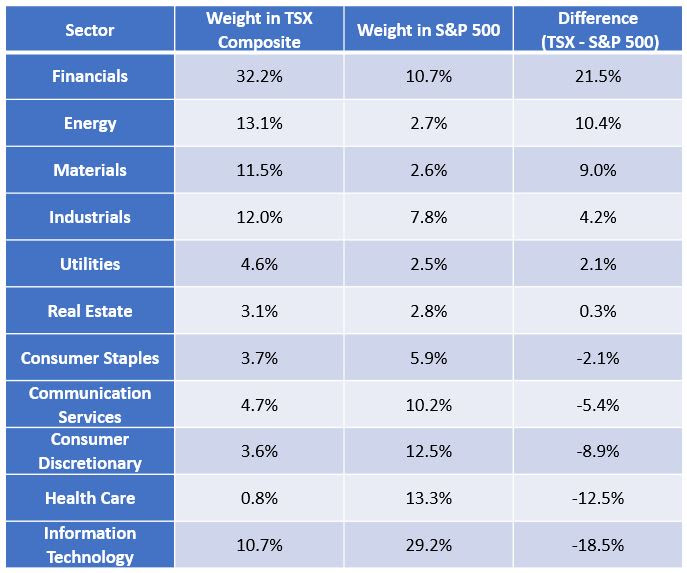
In it, he showed the self-evident logic that any market is made up of active managers (traders) and passive managers (benchmark replicators).  Any benchmark (such as the TSX) is merely the sum of all active and passive participants.  Seeing as the passive people merely replicate the benchmark, their returns will equal the return of the benchmark minus their fees. It follows that the average return of all active managers will also equal the total benchmark minus fees.  Since average active fees exceed average passive fees, it logically follows that the average passively managed dollar must outperform the average actively managed dollar.  Continue Reading…

Helping entrepreneurs thrive as pandemic-driven small business trends stay for the long haul

Image RBC/iStock

By Don Ludlow, Vice President, Small Business, Strategy & Partnerships and Business Financial Services, RBC

(Sponsor content)

While the COVID-19 pandemic brought significant challenges and uncertainty to small businesses across Canada, it also became a catalyst for many new business practices.

In many ways, it also accelerated the need for small business owners to adapt to other trends and consumer expectations that were steadily on the rise over the last several years.

To help us better understand these trends, RBC recently conducted research to gauge the types of experiences and expectations Canadians have when interacting with small businesses in the coming year as we continue to navigate the ongoing pandemic and journey toward economic recovery.

The survey revealed three important trends that will continue to impact small businesses in the year ahead:

  1. First, we’ll see a growing demand for digital payment and engagement options, whether customers are connecting with small businesses in person or online.

While eCommerce and digital solutions were already on the rise pre-pandemic, they became pandemic necessities as businesses adapted to health and safety measures.

Now, more Canadians are expecting this to be the new way of doing business, with two-thirds (64%) of Canadians saying that partnering with digital platforms to make products and services more accessible will be important post-pandemic, especially among millennials (72%).

Meanwhile, four in five Canadians polled say that they would like to continue to shop online at small businesses, even after the economy is fully reopened, and 72% say that increased social media presence helped them become more aware of what small and local businesses had to offer.

  1. Small businesses that focus on prioritizing employee wellness and overall customer health & safety will be greatly valued by Canadians.

The majority of Canadian respondents in our poll said providing more wellness and mental health benefits and resources to employees will be important going forward (87%).

They also expect heightened hygiene standards to continue post-pandemic (99%) and would like businesses to continue offering flexible curbside pickup and delivery services (78%).

As a result, offering employee benefits, resources and safety protocols that meet these expectations will be critical differentiators for small businesses looking to attract and retain talent and customers.  

  1. We’ll continue to see a rise in socially and locally conscious consumers – especially among millennials and Gen Z.

Supporting small, local, and diversity-focused businesses is here to stay post-pandemic. According to our research, the majority of Canadians (77%) polled plan to spend more at small, local retail stores, restaurants and businesses to support their recovery than they did before the pandemic.

Many respondents also said they are actively seeking out and supporting 2SLGBTQ+* (52%) and BIPOC **(61%)-owned businesses, products and services. These numbers are greater among Millennials and Gen Z, indicating the next generation of consumers will increasingly purchase through a diversity-focused lens.

Being aware of these trends, and adapting business strategies and operational practices to address evolving consumer expectations will be important to the success of small business owners in the next year.

In light of these insights, we have three tips for entrepreneurs to consider as part of their 2022 playbook for success. Continue Reading…

Checking in on the balanced asset allocation ETFs


By Dale Roberts, cutthecrapinvesting

Special to the Financial Independence Hub

If you are not yet familiar with the all-in-one asset allocation ETFs, do yourself a favour and get up to speed. These are game changers for Canadian investors. You might also hear them referred to as one ticket ETFs. TD calls their offerings ‘one click’. And one click explains it quite nicely. With one click on your laptop or smartphone you can purchase a very well-diversified global investment portfolio, with total fees in the range of 0.20%-0.28%. These ETF portfolios are then managed for you. What’s not to love? And you can access the level of risk that’s right for your investment goals and time horizon. Today, we’ll look at the year-to-date performance for the balanced asset allocation ETFs.

Vanguard gets much of the credit for bringing the asset allocation ETFs to Canada. It was actually iShares who were first, but no worries on that front.

Here’s a post on the Vanguard one ticket asset allocation ETFs. That post is entitled ‘which of the Vanguard asset allocation portfolios should you invest in?’ That will help you select the right ETF at the right level of risk.

I recently helped MoneySense refresh and rewrite the Canadian Couch Potato section on their site. In the core couch potato section you’ll also find a table that categorizes and frames the risk levels, while offering the suite of ETFs in each category.

What’s in a one ticket ETF?

You’ll own the majority of publicly-listed stocks in North America and around the globe. Of course the bonds are there to manage the risks. Think of them as portfolio shock absorbers. You’ll usually find Canadian and U.S. bond ETFs in the one ticker offerings.

At one-tenth the cost of a typical Canadian mutual fund, it is a no-brainer.

Yup, you can open up your Questrade account right here and get on with it. That is the top-rated brokerage in many places, including on MoneySense. Who doesn’t want to retire with 30%, 40% or 50% more?

Here’s an example of the ETFs held, using Vanguard’s VBAL.

The portfolios offer a simple but wonderful mix. It’s an easy way to do that couch potato thing. It is also very easy to leave your advisor or bank that might have you invested in high fee mutual funds. I suggest you give that some serious consideration.

The balanced asset allocation ETF returns

And if you want to look back, here’s the performance of the asset allocation ETFs for 2020. You’ll see that Horizons led the charge, followed by BMO, iShares and Vanguard, who were all quite similar in returns offered across the levels of risk. Continue Reading…