Building Wealth

For the first 30 or so years of working, saving and investing, you’ll be first in the mode of getting out of the hole (paying down debt), and then building your net worth (that’s wealth accumulation.). But don’t forget, wealth accumulation isn’t the ultimate goal. Decumulation is! (a separate category here at the Hub).

Taxes and your ETFs: Don’t let withholding taxes drive the bus


By Dale Roberts, CuttheCrapInvesting

Special to the Financial Independence Hub

Should you pay attention to withholding taxes on dividends? What about about capital gains vs dividend income? Should tax considerations trump asset allocation and your risk tolerance level? I get many questions with respect to taxes and ETFs. I will suggest that you do not let taxation and withholding taxes on US and International dividends drive the bus.

Keep in mind that I am not a tax expert. When in doubt have a chat with your accountant or Certified Financial Planner. I form my opinion based on the study of asset allocation models. And I’ll also largely base the opinion after reading what the qualified experts have to say. I also make it a hobby to pester several portfolio managers and investment firms on a regular basis.

Should we worry about what goes where?

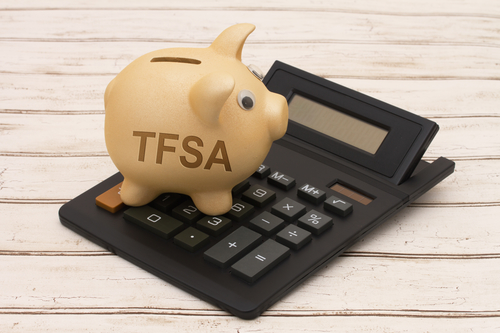
Taxes and ETFs and that TFSA question. A reader and friend recently asked if he should build the TFSA in the most tax-efficient manner? After all, in a TFSA we lose the withholding taxes on US and International dividends. There is often more dividend tax efficiency in taxable accounts thanks to tax credits. The most efficient account type for US stocks and US ETFs in a US dollar RRSP account.

Image by Gerd Altmann from Pixabay

Does that mean we should only hold our US equities in our RRSP account?

Justin Bender of the Canadian Portfolio Manager blog constructed a wonderful post on the most tax efficient ETF Portfolio. Here’s how that tax efficient portfolio looked in the end.

Of course this is ridiculous as Justin would point out. Perhaps even shading the portfolio to any great degree does not make sense as well.

Don’t let taxation drive the asset allocation bus

In the above example the tax considerations determine the asset allocation. That in turn will determine the risk level and the ‘expected’ returns for each account type. You might get tax efficiency but no total returns in your taxable account. US stocks might tank and you get negative returns for an extended period in your RRSP account. That TFSA account has a Canadian home bias that so many advisors and financial planners would deplore. We still need those Canadian and US and International equities to ‘protect’ each other.

Of course the above portfolio example does not take into account the more important retirement funding scheme. aka the financial plan. We may need the TFSA account to work just as hard as the RRSP account. On the flip side, the financial plan may call for a quicker draw down of RRSP assets so that the retiree can delay CPP and OAS. That would require an RRSP portfolio at a lower risk level. Those are greater considerations.

It’s tax free after paying withholding taxes

And after tax returns in ETFs can get tricky. Here’s a great article in Advisor’s Edge. Continue Reading…

How to fail at Early Retirement

OPEN to your opportunities

By Billy and Akaisha Kaderli, RetireEarlyLifestyle.com

Special to the Financial Independence Hub

First, let me say Billy and I don’t really use the word “fail.”

We believe every situation offers learning opportunities and calling that experience a failure just doesn’t jibe with who we are. In our lives, we want to move forward with the knowledge and wisdom we’ve gained : not benchmark it emotionally by calling it a failure.

We read Financial Samurai’s Sam Dogen’s  piece on how he claims to have failed at early retirement.

We have great respect for anyone who puts their personal life out there to the public as a source of education and benefit for others, and Sam has done that.

Sam retired at age 34 with 3 million dollars (US$): six times more than we had, 30 years ago. Now, at age 42, he claims that he “failed” at early retirement (even with $250k passive annual income: 5 times what the average retiree has, for the following reasons:

They had a child (with all the costs involved including education at kindergarten level at $2k month)

He underestimated how low interest rates would go (he’s invested in bonds, real estate and dividend-producing stocks)

Rising health insurance premiums for his healthy family (which continue to rise in order to subsidize those who are less healthy)

The bliss of early retirement didn’t last as long as he thought it would, or in other words, he now wants to do more than play tennis and sleep in. (This statement is bewildering to us.)

Options, Choices, Opportunities

We at Retire Early Lifestyle have always focused on providing our readers with options. There is no one-size-fits-all for anything, so why try to fit into a limited description of your retirement?

We don’t believe Sam has “failed” at early retirement; we think he is locked into his own personal version of “limited thinking.”

Eliminate your Stinkin’ Thinkin’

For the continuing education of our readers, let’s look at his reasons one at a time. Continue Reading…

American, Delta and United: Which airlines will survive?

By Ian Duncan MacDonald   

Special to the Financial Independence Hub

An investor asked If he should invest in American Airlines, Delta Airlines and United Airlines.  He had noticed that the share prices of these industry leaders had reached new lows.

Is investing in airline stock currently a risky speculative play?  Just how much of a gamble would it be?

A quick Google search discloses that Warren Buffett recently sold all his airline stocks (4 billion dollars worth); air travel has dropped to 5% of its pre-pandemic level; airline employees are being offered early retirement; airline executives have taken pay cuts; capital expenditure projects have been shelved and  billions of dollars in emergency loans from the government have been taken out.  The daily cash burn rate of the airlines is reported to be over US$100,000,000 a day

The US government’s passing of a 50 billion dollars in aid for the airline industry was contingent on the airlines not furloughing employees or cutting their pay. This seems to have ignored the reality that hundreds of thousands of the 750,000 employees in that industry are now redundant.

Historically commercial risk dictates that when there are too many suppliers to serve a market, the weakest supplier must disappear through merger or insolvency.  The survivors then become stronger with the acquisition of the departed’s market share.

Which of the three airlines in the following chart seems weakest? Which seems to be in the best financial condition?  Does it surprise you that analysts are still recommending buying all 3 of these stocks or does it indicate that these businesses are deteriorating faster than financial information can be provided to make accurate projections?

Try to identify each of the airlines in the chart

While the Information in the chart is for the 3 major airline stocks (AAL, DAL and UAL) I have deliberately not identified them by name. Who do you think is in the number one, two and three columns? By going to Yahoo finance and entering in these three stock symbols you can quickly find information that identifies which they are. You will also see, if you have never done it before,  just how easy it is to gather facts to help you evaluate a potential stock purchase.

The IDM Stock Scoring software on the bottom line of the chart is a measuring/summary tool that was developed to grade stocks by their potential.  A score cuts through pages of data available on every common stock.  It helps investors quickly and easily determine if a  stock is a desirable purchase or not.  This score is compiled from the 9 factual items itemized in the chart. The “best” score seen, reported so far, was a Canadian bank with a score of 78.  The “worst” or lowest score was an 8 for a company that soon became defunct.  Purchasing stocks scoring less than 50 is thought to be too speculative.

Dividends are paid from the Operating Margin.  Does it surprise you that the airline in the chart with the highest operating margin and highest dividend also has the highest score and the highest number of analysts recommending it as a buy?

A reliable score enables investors to add stocks to their portfolios without the need to rely on the questionable advice of investment advisors.  Periodic rescoring of stocks in a portfolio allows investors to react to positive and negative changes easily and quickly.  Scoring puts a stop to making stock purchases blindly based on questionable rumours or recommendations.

Being aware that stocks can be easily and accurately graded makes many investors reluctant to invest in mutual funds and Exchange Traded Funds.  They quickly realize they have no certainty as to what these bundled investments are putting their money into.  Continue Reading…

Vanguard reduces fees on three passive Canadian Bond ETFs

With interest rates falling ever closer to zero, the mantra that costs matter in investment funds is truer than ever.

So it’s good news that on Tuesday Vanguard Canada cut fees on three passively managed Canadian bond ETFs, the sixth fee reduction in its Canadian operation in the last seven years. With the latest fee cuts, Vanguard says its average Management Expense Ratios on its ETFs are 57% lower than the industry average.

As the graphic to the left shows, the management fee will now be 0.15% on the Vanguard Canadian Long-Term Bond Index ETF (VLB/TSX), the Vanguard Canadian Government Bond Index ETF (VGV) and the Vanguard Canadian Corporate Bond Index ETF (VCB). Previously the fee on VLB was 0.17%, VGV’s was 0.25% and VCB’s was 0.23%.

Vanguard Canadian Long-Term Bond Index ETF seeks to track the Bloomberg Barclays Global Aggregate Canadian 10+ Year Float Adjusted Bond Index, investing primarily in public, investment-grade fixed income securities issued in Canada. Vanguard Canadian Government Bond Index ETF seeks to track seeks to track the Bloomberg Barclays Global Aggregate Canadian Government Float Adjusted Bond Index, and invests primarily in public, investment-grade government fixed income securities issued in Canada. Vanguard Canadian Corporate Bond Index ETF  seeks to track the Bloomberg Barclays Global Aggregate Canadian Credit Float Adjusted Bond Index  and invests primarily in public, investment-grade non-government fixed income securities issued in Canada.

Kathy Bock, Managing Director and Head of Vanguard Investments Canada Inc.

“For us, low costs are not a pricing strategy. We are built to pass on the benefits of our size and scale to investors in helping them achieve investment success,” said Kathy Bock, Managing Director and Head of Vanguard Investments Canada Inc. in a press release, “This is even more important in the current market climate, where low returns mean that costs erode an even larger share of returns than they would normally.”

The extreme volatility of the last few months has challenged both individual investors and financial advisors and in such an environment “high-quality bond ETFs can play a key role as a stabilizing force in a portfolio,” said Scott Johnston, Vanguard Canada’s Head of Product, “We are pleased to support investors with these fee reductions to help them keep more of their returns.”

Low fees and the “Vanguard Effect” in Canada

Including fee reductions from 2013 to 2015, and in 2018 and 2019, Vanguard estimates the cumulative reductions have saved Canadians more than $10 million.

As competitors adjust fees down in response, industry investment fees have come down significantly over the last several years, typically after Vanguard enters a particular geographic market. This “Vanguard Effect” phenomenon has occurred in the United States, the United Kingdom and Australia as well as Canada.

For more information on Vanguard’s broad pricing impact on the ETF market, see this infographic.


The MoneySense ETF All-Stars 2020

After a slight delay because of the Coronavirus and the bear market, MoneySense.ca has just published the 2020 edition of its annual feature, the ETF All-Stars. You can find the full report by clicking on the highlighted headline: Best ETFs for Canada 2020.

There you’ll find an overview of the changes this year as well as how our 8-person panel of ETF experts view the bear market. You can click on each tab (example Canadian equities, fixed income, etc.) to find the chart of the updated All-stars list. Each of the subheadings below contain hyperlinks to the underlying MoneySense content.

While our expert panel added a number of new ETFs this year – some in global fixed income, several low-volatility ETFs and two new families in the One-Decision Asset Allocation category – virtually all our last year’s picks returned, most unanimously. The only 2019 pick that was removed for the 2020 edition is ZPR, as preferred shares had another year of disappointing performance.

This seems to vindicate our long-term approach. Our list now consists of an elite 42 “All-Star” picks: a big jump up from 25 last year, plus 8 more individual “Desert Island” picks. So in total, we have 50 recommended ETFs, which should be a good start for readers in narrowing down the wealth of possible choices in this growing cornucopia of choice.

Canadian Equities

All four Canadian equity ETFs return: VCN, XIC, HXT and ZCN (See accompanying chart for full ETF names) plus we added BMO’s low-volatility Canadian equity ETF,  ZLB. See discussion on Low-vol ETFs further down. Remember that Canadian stocks are also amply represented in the One-Decision Asset Allocation ETFs discussed below.

US equities

The panel opted to retain all four of our 2019 US equity ETF picks, while adding three low-volatility ETFs. Returning picks are the U.S. Total US Market XUU from iShares, and three low-cost plays on the S&P500 index: VFV and VSP from Vanguard, and BMO’s ZSP. Readers should also check the latest crop of desert island picks: several panelists went with specialty US equity ETFs, such as HXQ.U from Mark Yamada and, — new this year — Yves Rebetez selected NXTG as a 5G (fifth generation wireless) Nasdaq play. The PWL team of Felix and Passmore picked a US small-cap value play: Avantis U.S. Small Cap ETF (AVUV/NYSE Arca).  And Dale Roberts chose the Vanguard Dividend Appreciation ETF (VIG/NYSE Arca).

International and Global equities

The panel retained our five international or global ETF All-stars from 2019: two from iShares (XAW and XEF) and three from Vanguard (VXC, VEE and VIU). But we also added the three low-volatility ETFs: ZLI, RWW/B and XMW. See the extended discussion of all these new low-volatility ETFs in the relevant section below. Continue Reading…