For the first 30 or so years of working, saving and investing, you’ll be first in the mode of getting out of the hole (paying down debt), and then building your net worth (that’s wealth accumulation.). But don’t forget, wealth accumulation isn’t the ultimate goal. Decumulation is! (a separate category here at the Hub).
If you’ve been playing Lingo Bingo during this Great Disruption, then the word “Pivot” must occupy the centre square on everyone’s playing card. It is simply the business word of 2020 and it means a fixed point on which things oscillate or rotate. It’s a term commonly used in sports like basketball or football when a player stops rapidly and then moves in a different direction. And we use it because in order to keep moving our businesses forward right now we have to do precisely that.
For me the first few weeks of the pandemic felt like some kind of weird reverse camping trip. Why? We had to make due with limited supplies, were in familiar yet oddly strange surroundings, and likely didn’t have enough toilet paper. Fortunately, family and friends were safe, everyone was home, and we mostly had to contend with a series of inconveniences rather than anything really serious. I appreciate this has not been the case for a great many.
Back to business. Or rather, back to trying to figure out how we’re going to keep doing business because so much has changed. My staff and I were working from home, trying to create new processes and procedures, making sure our remote systems were 100%, and trying to source everything from new computer headsets to home office chairs and other items so we could remain productive. My focus, as leader of a large and successful wealth-management team, was to keep everyone functioning at a high level and ensure clients were engaged since they too were going through a unique and challenging experience.
In short, we had to pivot.
Walking with Charlie: a video blog
One of the best things I did throughout all this was walk my dog. Everyone needs to take a break when working at home, so I would take my dog Charlie for walks. One day I decided to bring my GoPro with me. I would use the great trick of YouTube (which is to create what I call “mass intimacy” and talk to many even though it feels like I’m talking only to you). It would allow me to share my thoughts and comments with our clients and professional network.
This video blog was intended to be a bit of fun, and a way to stay in touch with clients quickly and efficiently. What with COVID I wanted to lighten the mood and also provide a philosophical framework for how we are thinking nowadays, and how we are processing the changes all around us.
In my first video, I encouraged viewers to find positive changes they can make while in lockdown. Instead of binge-watching Netflix, perhaps they could attend to those chores they’ve been avoiding or take up projects they’ve been putting off. Maybe organize the photo albums or learn to play the piano, for example. The point was to keep people moving in a positive direction to counter all the negative news flow we are experiencing.
It’s my belief that this pandemic is a health crisis for some: and a financial challenge for many more. In later videos, I discussed a variety of topics, such as how to be a better consumer of news, and how to handle the financial hitchhikers we encounter in life. I also provided some education as a way to increase financial literacy by sharing cash-flow budgeting techniques, along with key questions you should ask of your professional advisors. Continue Reading…
Money is a consistent focus in the life of an individual. This makes sense, because nothing comes for free, so one needs money in order to get by. Therefore, working for a living is an essential part of participating in society. However, there are means by which one may accrue wealth, and it is wise to invest early and often in order to maximize prosperity later on in life. Proper investment now means an increase in overall financial security. Here are a few ways you can reap the long term benefits of long term savings.
Stocks and Investments
Investing is a tried and true strategy of increasing wealth, but it’s not without its own potentially more substantial risks. Stock trading involves making value judgements and predictions, as the buying and selling of stocks depends on a company’s net worth at the time of a given transaction. This means that there is an inherent risk in buying stocks, as the value may actually decrease and is likely to fluctuate in general.
A keen eye for business trends is an essential part of trading stocks successfully. Likewise, investing directly into a business requires good business sense. Investing in a business has a steeper upfront cost, but this is countered with a more substantial payout. Investments are how many businesses get up and running to begin with, as it provides an alternative to paying that tremendous cost out of pocket. The upshot for investors is that any return on that invest is coupled with interest, though the return itself is never guaranteed.
Retirement Fund
A retirement fund is another form of long-term savings that is focused on end of life security, but the intended purpose is that of providing ample income for retirees so that they can live without financial worries once they have left the workforce. Without a retirement fund, retirement benefits are often insufficient, meaning that one may need to wait much longer to retire safely or come out of retirement in order to make ends meet.
My latest MoneySense Retired Money column is a mini review of roughly a dozen personal finance or Retirement books I’ve been reading of late, or intending to finish. You can find the full column by clicking on the highlighted headline here: 12 Top Personal Finance books to read this summer.
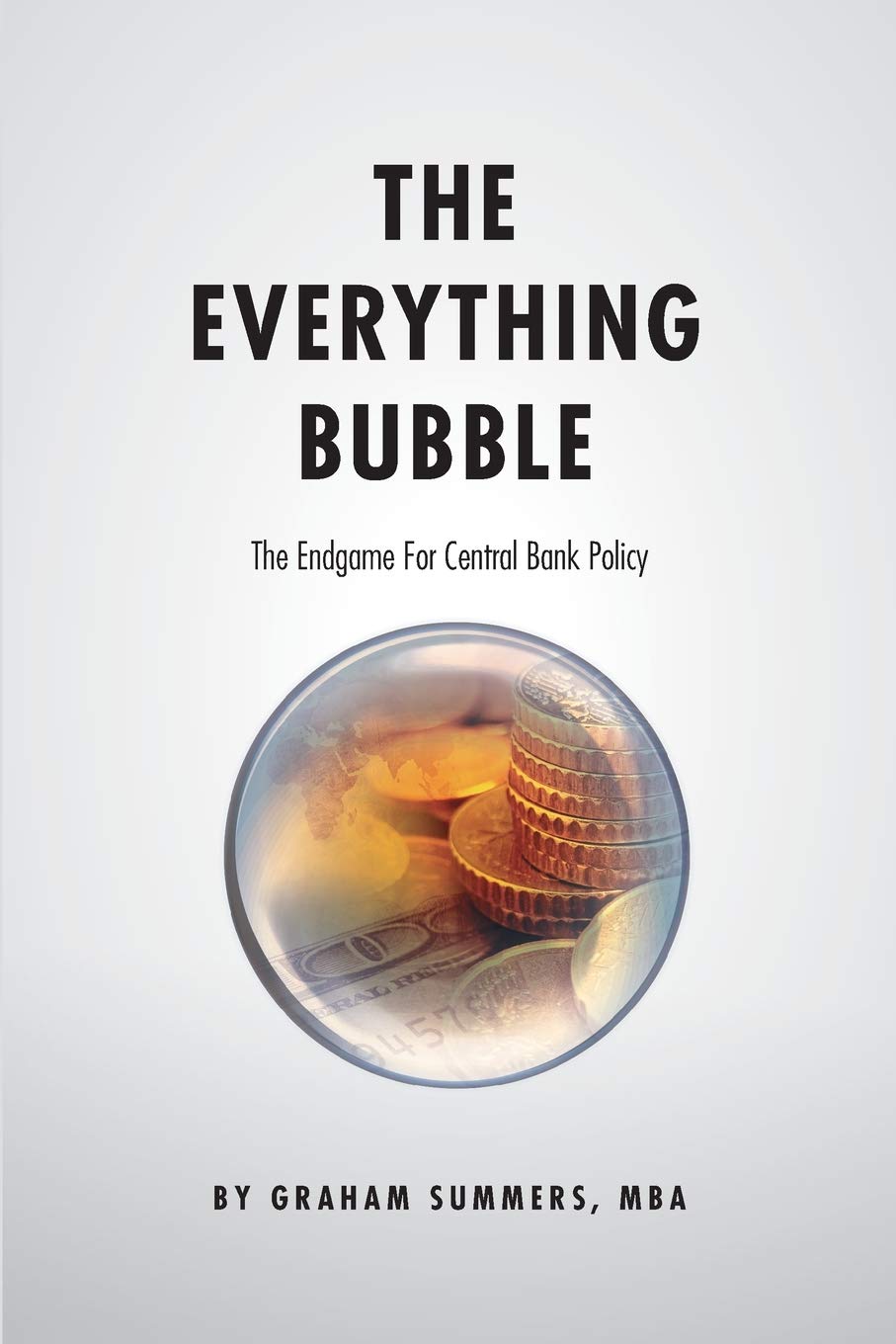
First up are a couple of macroeconomics books: Graham Summers’ The Everything Bubble: The Endgame for Central Bank Policy, first published in 2017. It describes what the author calls “serial bubbles” – not just stocks but virtually every asset class, including fixed income and real estate. The book also tackles the two sources of financial repression for retirees hoping to live on interest income: ZIRP and NIRP, which stand respectively for Zero Interest Rate Policy and Negative Interest Rate Policy.
Like it or not, the November 2020 U.S. election is likely to have an impact on investors and would-be retirees, no matter how it works out. Two years ago, my MoneySense column reviewed several other Trump books in an attempt to understand the investment implications of his presidency.
Have we reached Peak Trump?
Amazon
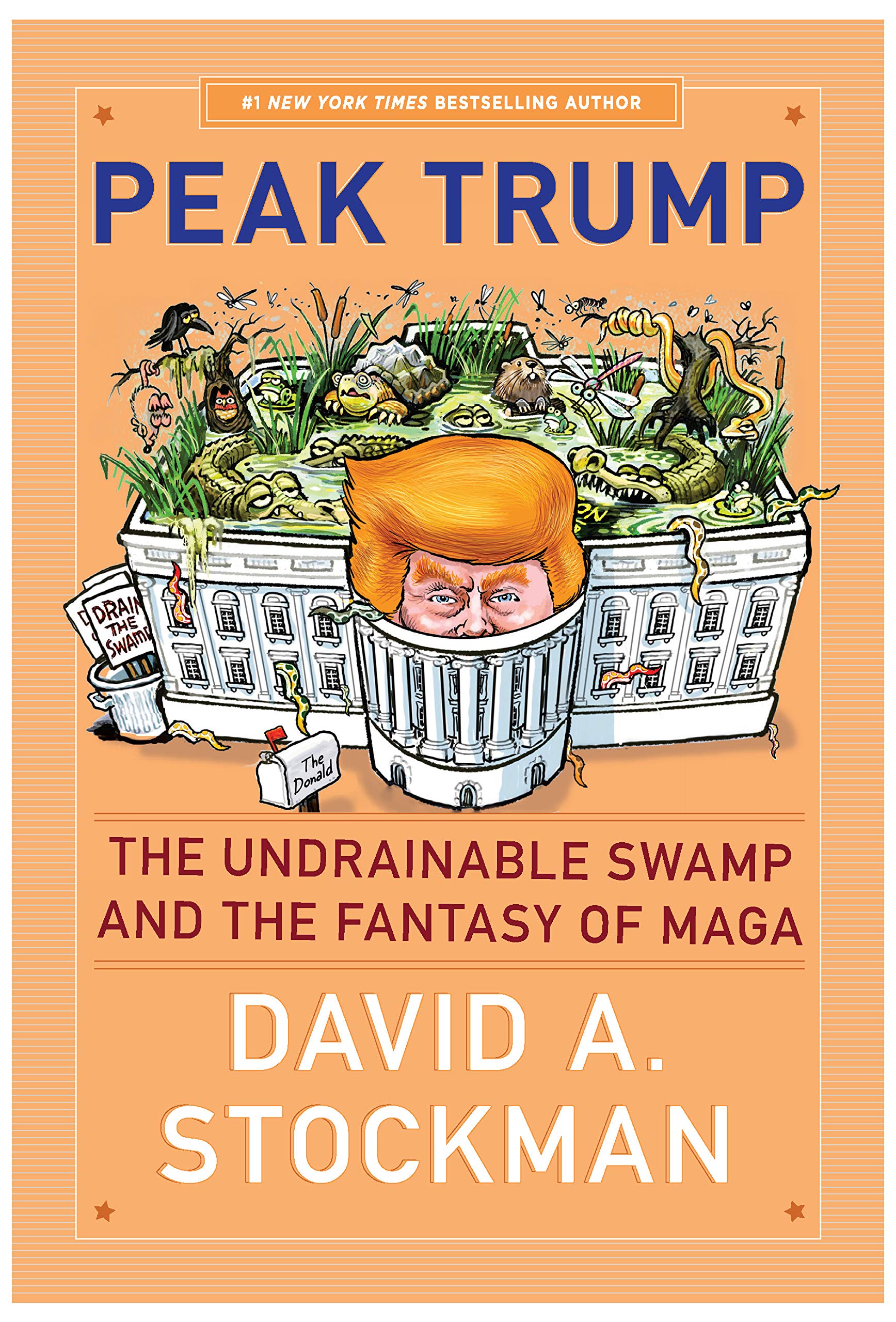
Since then, I’ve also read Peak Trump: The Undrainable Swamp and the Fantasy of MAGA, by David Stockman, published in 2019. Peak Trump includes a chapter also titled The Everything Bubble. Stockman believes the Trump boom – aided by the Federal Reserve’s “rotten regime of Bubble Finance” — has been a mirage and is fated to fade away. Presidential incumbents usually win re-election if the economy and stock market stay strong, but that’s hardly a slam dunk after the depression-level unemployment and social unrest that has come about in the wake of Covid-19.
Dual citizen and political pundit David Frum has just released his second Trump book: Trumpocalypse: Restoring American Democracy, a followup to his earlier Trumpocracy, which was mentioned in the link above. The blizzard of online and media reviews seem to suggest Frum believes Trump has lost the plot and may be vulnerable in the upcoming election.
With all this talk of asset bubbles and negative interest rates, it seems everyone is fated to worry about money and not just near-retirees. Worry-Free Money, by financial planner Shannon Lee Simmons, was published in 2017, and will primarily interest younger investors with a long time horizon. Simmons declares “everyone is worried about money” and says social media has only aggravated the situation. But if you’re worried she will nag you about things like budgeting, fear not: she gives reasons why “you need to stop budgeting.” Rather, you have to control your spending, living within your “hard limit” and say “No” to unhappy spending.
The Joy of Being Retired
For those closer to Retirement The Joy of Being Retired, by the prolific Edmonton-based international self-publishing master Ernie J. Zelinski, is a light read, with 365 reasons (and cartoons) on why Retirement Rocks “and Work Sucks.” Continue Reading…
The economic downturn caused by the global COVID-19 pandemic is accelerating major themes in digital transformation as businesses and workers adjust to new ways of providing goods and services. This acceleration of trends is creating opportunities for investors in the equities of U.S. companies in sectors such as technology, health care and pharmaceuticals.
There are pockets of opportunity now in U.S. equities for selective investors and if you can look through the near-term uncertainty, you can buy great long-term companies at good prices.
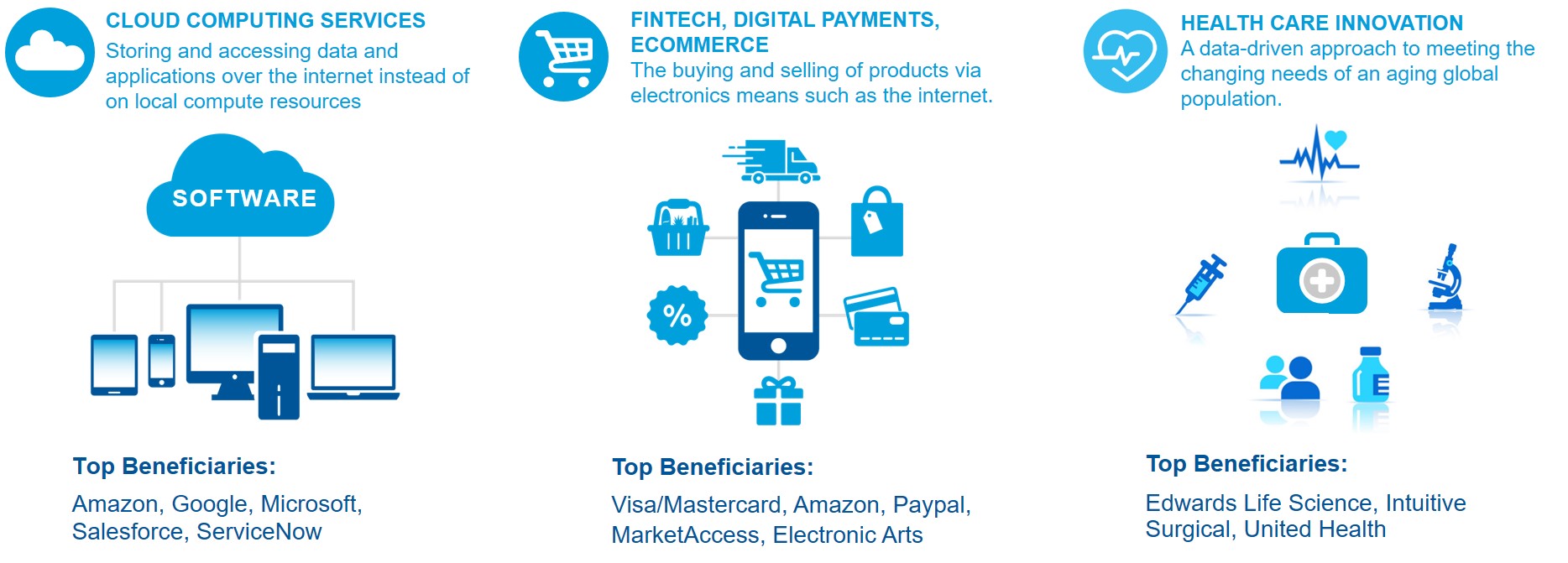
The technology sector has benefitted during the shift to a “work from home” environment: especially products and services related to cloud computing, remote access, digital payments, and online security. This technology is in higher demand as individuals, companies and organizations rely on technology to work, communicate with clients and staff, and perform transactions in a virtual platform during pandemic restrictions. The COVID-19 crisis is also highlighting the powerful combination of technology and health care in areas like gene sequencing and data analytics, which will benefit pharmaceutical and biotech firms in the future.
Outlook for U.S. economy
Overall, the U.S. economy likely will remain affected by weakness driven by the pandemic for some time, but the economy should begin to show improvement in the fourth quarter, accelerating into 2021. Decisive stimulus actions taken by the U.S. Federal Reserve will likely help bridge the downturn for many businesses and consumers.
If progress is made on developing a medical treatment for the coronavirus — including a vaccine — then there could be a fairly rapid “healing of the U.S. economy” and a rebound of pent-up consumer demand when restrictions are loosened.
A health care crisis needs a health care solution: there is a massive research effort under way to develop an effective medical treatment of the coronavirus.
Positioned for opportunities in trend acceleration
As the digital technology transformation advances, companies in some of the most innovative sectors of the U.S. economy are positioned for growth during the downturn. For example, we see opportunities in the wireless tower space as part of the wider shift to 5G wireless technology and the increased focus on data usage and mobility for individuals and businesses. Providers of software for back-office business processes, which are essential for workers at home during the crisis, are another opportunity. Continue Reading…
Pursuing a post-secondary degree marks a significant chapter in one’s life: and it’s being dramatically rewritten for millions of students across Canada in the wake of COVID-19. Campuses on lockdown, classes gone digital, and increasingly gloomy job prospects are just some of the new realities students face.
But while these times pose new challenges, there’s some silver lining as many schools have made moves to ease grading criteria and the federal government has stepped in a big way to launch new financial aid programs. If you’re a post-secondary student who’s looking to better manage your money during COVID-19 but aren’t sure where to start, you’ve come to the right place.
Below is a list of what I consider to be the key first steps students should take to get a better grip on their finances during COVID-19:
1.) Apply for CESB
Whether you’re a freshman whose paid summer internship was abruptly cancelled or a recent grad struggling to land a position due to the very real impact COVID-19 has had on the job market, you can seek financial support from the federal government by applying for CESB.
CESB – which is short for Canada Emergency Student Benefit – is a form of unemployment insurance and is the single-most impactful form of financial support you can receive as a student during COVID-19.
Here are some things you need to know:
How much support can you get?
If you qualify for CESB, you can receive one of the following amounts for a set four-week period:
$1,250 either because you’re: 1. unable to work due to COVID-19, 2. actively on the job hunt but can’t successfully land a position, or 3. currently employed but only earn a monthly income of under $1,000 before taxes
Up to $2,000 if you tick off any of the three boxes above and you also have a disability or you’re a parent with a child under the age of 12.
Who does (and doesn’t) qualify for CESB?
While CESB is mostly geared towards students currently enrolled in a post-secondary institution, you can also receive support even if you’re not technically in college or university right now. For instance, you can receive CESB if you’re a recent post-secondary grad and completed your education in December 2019 or later. Additionally, if you’re in high school and applied for a post-secondary program set to start by February 2021, you also may qualify.
You must also be a Canadian citizen, permanent resident, registered Indian, or in very rare cases, recognized as a person in need of protection by the Refugee Board of Canada.
Unfortunately, that rules out international students.
The type of program and institution you’re enrolled in matters too. You’ll need to be in (or applying to join) a program that’s at least 12 weeks long, working towards a certificate or degree, and a student in one of the post-secondary institutions recognized by the government (the good news here is the list of designated schools is long and widely encompassing).
Aside from just being an eligible student and ticking all of the boxes above, you must also be actively looking for a job and unable to find employment due to COVID-19. You’re not eligible to get any CESB payments if you aren’t actively looking for work, have a job that earns over $1,000 per month before taxes, or already receiving support from the Canada Emergency Relief Benefit.
How to apply
CESB is available for up to a maximum of 16 weeks; however, you’re not guaranteed to get payments for that entire length of time and must apply for CESB every 4 weeks. The idea being you can keep reapplying and receiving support until you no longer need it.
The 4-week application periods aren’t arbitrary and follow a strict schedule based on the following dates:
May 10 to June 6, 2020 (no longer available)
June 7 to July 4, 2020
July 5 to August 1, 2020
August 2 to August 29, 2020
As long as your SIN is registered on the CRA website and you’ve filed your 2018 tax return, you should be able to apply online straight from CRA’s My Account. If you don’t, you can call 1-800-959-2019 or 1-800-959-2041. Phone lines are open seven days a week between 6 am to 3 am. You’ll also want to set up direct deposit on your CRA My Account so your CESB payments can be sent straight to your bank account digitally.
Remember, CESB isn’t intended as a free subsidy for all students but is temporary financial support for those who are actively looking for a job and can’t get one. The Government of Canada may even require you to submit proof you’ve been searching for a job, so be sure to keep records of your emails and other communications with potential employers.
2.) Set a budget and cut discretionary spending
A well-maintained budget can help you save hundreds of dollars every month – and in an unprecedented time like this – every dollar counts.
The first step of creating a budget is to start tracking how much you spend in the first place.
List out every purchase you make by amount and by type. And yes, I’m talking about every purchase. Spent $10 on
Lunch? Track it. Bought $50 worth of groceries? Track it. Use your smartphone or scribble down in a small notebook, it’s up to you, just track it.
While you can use apps to automate the process, I recommend noting down every purchase manually since it’s the best way to put your spending habits under the microscope, spot your biggest money wasters, and discover how even small nondescript purchases can add up. Nothing can get you more motivated to start meal prepping at home than seeing exactly how much you spend on takeout.
Once you have a grasp of your spending habits, start separating needs from wants and cutting out any discretionary purchases. Next, set strict spending caps for every category (i.e. no more than $100 on groceries per week) to ensure your monthly income can cover those essentials.
If you’ve got any money left over at the end of the month, don’t splurge and instead set aside the money in a high-interest savings account to gradually build up some cash reserves.
3.) Check if you can receive relief from your biggest bills
If you own a car, reach out to your insurance provider. In the wake of COVID-19, many are offering either rebates, discounts, or deferrals that can help cut down your monthly insurance payments. The same goes for utility bills. For instance, both Toronto Hydro and BC Hydro are offering support to customers who may be under financial pressure with options like payment deferrals or flexible payment plans with no penalties.
Banks are also stepping up in their own way. If you currently owe credit card debt, reach out to your bank and ask to receive payment deferrals and a temporary drop in your card’s interest rates. That can help postpone your minimum payments and ensure more of your money can go towards covering your more immediate essential expenses. Ratehub has provided a breakdown of how credit card minimum payment deferrals work and how terms differ by bank. Continue Reading…


 Posted By

 Posted By