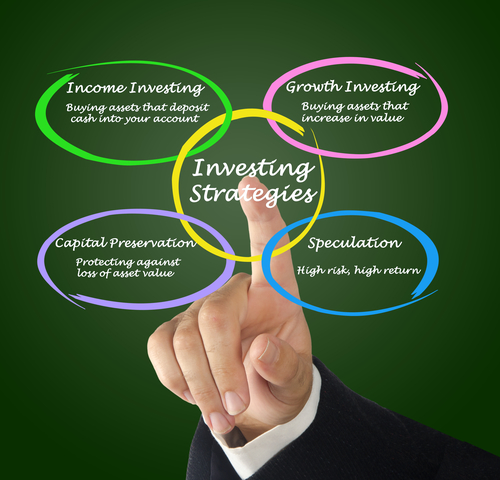
For the first 30 or so years of working, saving and investing, you’ll be first in the mode of getting out of the hole (paying down debt), and then building your net worth (that’s wealth accumulation.). But don’t forget, wealth accumulation isn’t the ultimate goal. Decumulation is! (a separate category here at the Hub).
At Mawer, we spend a great deal of time asking and answering the question: So what? A company’s share price is down 6% … so what? A central bank moved interest rates up … so what? Google re-named itself Alphabet … so what?
It’s not always an easy question to answer and often leads us to ask even more questions in an effort to develop key investment insights.
“So what?” is one of the questions that can lead us to investment action (or inaction) in our process of building well-diversified, resilient portfolios. In an effort to pass on our “so what” learnings, I interviewed our Chief Investment Officer, Jim Hall, with specific questions pertaining to his views on risks in the current environment.
Cameron Webster: Jim, we decided at the conclusion of our slow growth world discussion that we’d address technological disruption. Let’s get into the “so what?” of it. What is technological disruption?
Jim Hall
Jim Hall: It’s many things. It has happened in many industries; rail to auto, telegraph to telephone, typewriter to word processing, CD’s to online music. Of interest to me is where an innovation ends up displacing a whole industry and the ones that support it—and sometimes changes society too.
For example, take e-commerce and the sharing economy. Companies like Uber and Airbnb are changing the economy in significant ways through the application of technology. These companies are growing very fast and they are stealing business from other companies. This may lead to lower growth overall, at least temporarily. That’s the disruption. This dynamic has been around a long time. Clayton Christensen called it “disruptive innovation” and John Maynard Keynes called it “technological unemployment.” Many people have written and talked about the consequences of structural economic disruption over the years—and many are fretting about it now.
You probably first heard this classic joke years ago. Maybe you even laughed at it once or twice:
Patient: “Doctor, doctor, it hurts when I do this.”
Doctor: “Then stop doing it.”
Yes, it’s silly … and yet wise. We’ve all been known to ignore what is painfully obvious, especially as investors.
For example, even though we know it’s a mistake to buy high and sell low, there’s ample evidence that this is exactly what most of us end up doing anyway. In “How Investors Leave Billions on the Table,” Wall Street Journal columnist Jason Zweig shared a litany of analyses on how investors lose available returns through hyperactive trading. Zweig published his post in 2013, but human nature hasn’t changed, so the stats undoubtedly remain relevant: We’re hard-wired to trade at all the wrong times.
I recently had dinner with the owner of a large, successful U.S. family business. Between the main course and dessert he asked me for my thoughts on the U.S. presidential race and economy in the context of family businesses.
When the conversation turned to existing and prospective government debt I asked him if he had ever put “a trillion” in context. He certainly could identify with “a million.” We were having dinner in a house worth at least that. He knew “a billion” was “one thousand millions.” He also knew “a trillion” was “one thousand billions.” But in terms of comparisons that he could identify with, the best he could do was say that “a trillion” was a humongous number.
About the word trillion and its meaning
“Trillion” without context regularly rolls off the tongues and pens of politicians, economists, executives, and lots of others. So I gave my friend the following comparisons to think about. His reaction: one of real shock at just how big a number “a trillion” is. Continue Reading…
There are many pitfalls that can trip up Canadian investors as they try to save and invest sensibly for the long run. High and/or hidden fees, poor diversification, inappropriate investments for a given risk tolerance, under-utilization of tax efficient accounts are a few we see regular, but the one that might just have the largest negative impact is behavioural.
You see, when it comes to investing unfortunately people are psychologically hardwired to do the opposite of what’s good for them. In an October 2008 op-ed piece in the New York Times Warren Buffett advised investors to:
“be fearful when others are greedy, and be greedy when others are fearful.”
Words of wisdom but easier said than done, especially in the grips of the financial crisis.
Investors hurt by emotions
But it doesn’t take a financial crisis to spur fits of fear and greed — in fact, investors are prone to these emotions a lot of the time and it hurts them. The data shows that individual investors who often use mutual funds as their investment vehicle of choice, perform much worse than the funds in which they invest.
This is because they invest more of their money during times of euphoria when markets are at their peak or when certain funds are performing well and they sell more of their investments during market bottoms at times of panic or when certain funds are performing poorly. (You’re supposed to buy low and sell high, not the opposite). Investors get caught in a performance chasing struggle driven by fear of either missing out or losing their shirt.
One of the biggest drivers of this psychological roller coaster for Canadians in the last couple of years has been the Canadian dollar. The following chart from Bloomberg Markets shows the USD/CAD over the last year:
The loonie hits its weakest point in mid-January which was actually the end of a long decline from the last point where the CAD was at par with the USD back in January of 2013. Canadian investors tend to be too overweight Canadian stocks and bonds and this hurt through mid-January. Having exposure to investments denominated in currencies other than Canadian dollars provided a return booster during that period. Unfortunately this is where the poor behaviour kicks into high gear. In December of 2015 investors piled out of Canadian equity and bond funds an into US and global funds. According the Financial Post in January at the very trough of the loonie:
“of the five best selling fund types in December, four were global or US focused. Of the five worst, four were Canadian, reflecting the continued flight from our slumping equity markets and devaluing loonie.”
Timing couldn’t be worse
The timing couldn’t have been worse! The turnaround since then has been steep, at least until the beginning of May this year when the trend seemed to reverse again. You can understand how investors and their advisors can become really frustrated. Performance chasing can be a killer in these circumstances. Rob Carrick chronicled this really well in his Sunday Globe & Mail article “How the rising loonie is costing Canadian investors” capturing the sentiment as follows:
“They made a lot of money when the dollar was falling, but this year’s reversal has cost them. They’re annoyed about this turn of events and wondering who to blame. God help us when the housing market falls. People are going to self-combust.”
The reality unfortunately for many investors is that they didn’t make a lot of money when the dollar was falling because they waited to invest in foreign markets when the dollar had already fallen and are now being punished for chasing performance.
The evidence shows clearly that trying to time the market is extremely difficult and that is especially true of currency markets. Carrick suggests some investors may want to hedge foreign currency exposure to mute this type of volatility. Whether you hedge or keep currency as a source of risk and return in your portfolio, the most important thing is to just set a target allocation to domestic and foreign stocks and bonds that suits your risk profile and trade only when things drift out of balance. That will force you to buy low and sell high and that is good investing behaviour.
Graham Bodel is the founder and director of a new fee-only financial planning and portfolio management firm based in Vancouver, BC., Chalten Fee-Only Advisors Ltd. This blog is republished with permission: the original can be found on Bodel’s blog here.
Young people today, and I’m talking about Millennials and those who just made it into Generation X, think they can do everything on their Smartphones, Handhelds or other mobile devices. But I have news for them. They can’t.
In Germany a pedestrian who was typing on a Handheld walked into a busy intersection, and was promptly killed by a passing car. It wasn’t the motorist’s fault. The person on foot was oblivious to where they were and what they were doing.
Nowadays people are apt to check their precious mobile devices twice a minute. Every thirty seconds. They exist in total crisis mode. This is a huge problem in terms of productivity. Here’s why.
Prioritizing impossible with Handhelds
First, it is impossible to prioritize your day if you live on your Handheld. On the other hand, Microsoft Outlook is an efficient way to do that – but only if you know how. Think of Outlook as a ten-ton truck that can carry ten tons of steel (i.e., a lot of information.) But if that’s a ten-ton truck, then your Handheld is a motorcycle and no motorcycle can carry ten tons of anything. It just doesn’t have the power to put your tasks into any intelligent order or scheme. You will be much more efficient, and productive, if you recognize what your Handheld won’t do.