Tag Archives: Financial Independence

A salon for would-be Boomerpreneurs & business owners seeing exit strategies

Dining room
Brainstorming over a dining table like this one.

The other evening ten 60-ish baby boomers got together in a private home in mid Toronto to discuss Boomer retirement and related matters. There were two main groups: most were business owners who have been self-employed for 30 or more years. A handful (including myself and the hostess) had spent most of our careers working as employees in large organizations.

Long-time business owners looking for exit

In both cases, the great question before us was “What do I do with the rest of my life?” The business owners were concerned about exit strategies to monetize their years of sweat equity, which could include outright sale or passing the reins to younger family members.

Long-time employees looking to find a transition business

The other group is considering becoming business owners or entrepreneurs even at this late stage of life, or what I term “Boomerpreneurs.” We may or may not have left the workforce voluntarily but suddenly had some leisure and money to contemplate our next move.

In almost all cases, this was a high-achieving group and while one younger attendee (in his mid 50s) had spent a “mini retirement” of several months in Central America, most of us agreed we were in no way ready for endless days of daytime TV, golf or bridge. Some were conscious of the extended Life Expectancy theme underlying this website’s “Longevity & Aging” section, but others were acutely aware that we all entering the final few laps of the great race of life. The long-time business owners in particular seemed ready for a change, but were aware the transition or exit could well require four or five more years of continued effort.

Actually, this was the second time the group had met. I would have love to have attended the first one in October but had already committed to a three-week trip to Turkey. The focus of the first one was that many baby boomers can expect another 10,000 days of life on the planet, so what’s your plan on how you’re going to spend that time? As the facilitator, Alan Kay (more on him below) put it, it’s all about “repurposing yourself, not a blank canvas.”

Acquiring new skills — at 60

Interestingly, the hostess (one of only two women in the second meeting; the rest were obviously men) experienced almost the same events as I have in 2014. Both of us had quite independently chosen to attend Toastmasters weekly, to hone our public speaking and leadership skills (neither of which suggests sitting before a fire in your rocking chair). She is also attending a Rotman course that prepares you to assume positions on corporate boards. As if that weren’t enough, this high achiever is also taking acting lessons.

Does Business Ownership run in the family?

Her husband, and our host, has long been a business owner. In fact, long ago when I worked on a computer newspaper, I had naively written a piece about him extolling the fact that he was a “27 year old president” of his own computer company. At the salon, he said his own father was a business owner so it seemed a natural step for him at the time. I replied that my father was a high school teacher with security and a Defined Benefit pension plan, which may have explained why I tended to stick with salaried employment within other people’s businesses.

Regrets of the dying

We discussed life purpose, why we are even on the planet, and the five regrets of the dying, a piece published recently in the Globe & Mail. Some felt that one of the advantages of building something even at this stage of life would be to employ the generations following us, including our children.

There was a feeling it’s time to simplify, perhaps to slow down a tad but few seemed to seek a traditional “full-stop” retirement. Call it semi-retirement or phased retirement, depending on circumstances. I didn’t get the impression anyone was suffering financially, so the continued interest in remaining active was more about community, giving back and the like.

Naps in the home office

Some of us work from home, some still go to an office, even if they own the building in which it’s housed. Among the “work-from-home” crowd, which included our host and myself, we confessed there was the advantage of the occasional afternoon nap.

As for the session and what’s next, it’s all rather fluid although the hosts did facilitate an exchange of emails with the intent of connecting on Linked In.  Certainly, this web site will happily describe further developments and facilitate communications between members and would-be members. There are, for example, our so-far-dormant discussion forums, which could be used to continue the dialogue in cyberspace.  It was just such a salon that spawned the Huffington Post.

alankay
Alan Kay, The Glasgow Group

Pending permission from the other participants, I’ve erred here on the side of protecting actual identities but may update this blog or post new ones with actual names and coordinates as they arise. I can say the session was moderated by Alan Kay, who is happy to be identified as “a fully recovered ad guy, facilitating change through tools like stakeholder consultations and roundtables using his Solution Focus expertise.”

And yes, this often means sitting around a kitchen table like the one illustrated above; you can find him via his website here. Or contact me at jonathan@findependenceday.com.

Destination Early Financial Independence: “Retiree at 43”

rossgrant
Ross Grant, Findependence 43

By Ross Grant

Special to the Financial Independence Hub

I recently connected with Jon Chevreau, who invited me to contribute with a guest blog here on the “Financial Independence Hub”.  I am honoured to participate and hope that sharing my financial independence experience will be of value to you.

At the relatively young age of 43, my wife and I were able to leave the full-time workforce. We were fortunate to have achieved this by establishing a financial plan in our early 20s and then selecting investment strategies that could get us to our goals as quickly as possible.

As fresh university graduates, we had very little in the way of assets. We both started in engineering careers in Toronto. We had your typical expenses with a mortgage, two cars and raising two daughters. How did we save enough in 21 working years to be able to have the choice to not work now? The short answer is that we looked for opportunities to ensure that our savings were as high as comfortably possible and then we focused on ensuring those savings were growing well.

Term Financial Independence was less common 7 years ago

When I left full-time employment, over seven years ago, I told people I was “retiring.” The term financial independence wasn’t as common back then. Unfortunately, there is a negative connotation associated with the term retiring. People seem to picture rocking chairs, watching TV and boredom. I pictured free time, skiing, mountain biking, travelling and all the other things you could do in the world if you weren’t working for 40+ hours per week. I had a great job as an Engineering Manager but really enjoyed my activities in my personal time more than work. I think this is common for most of us.

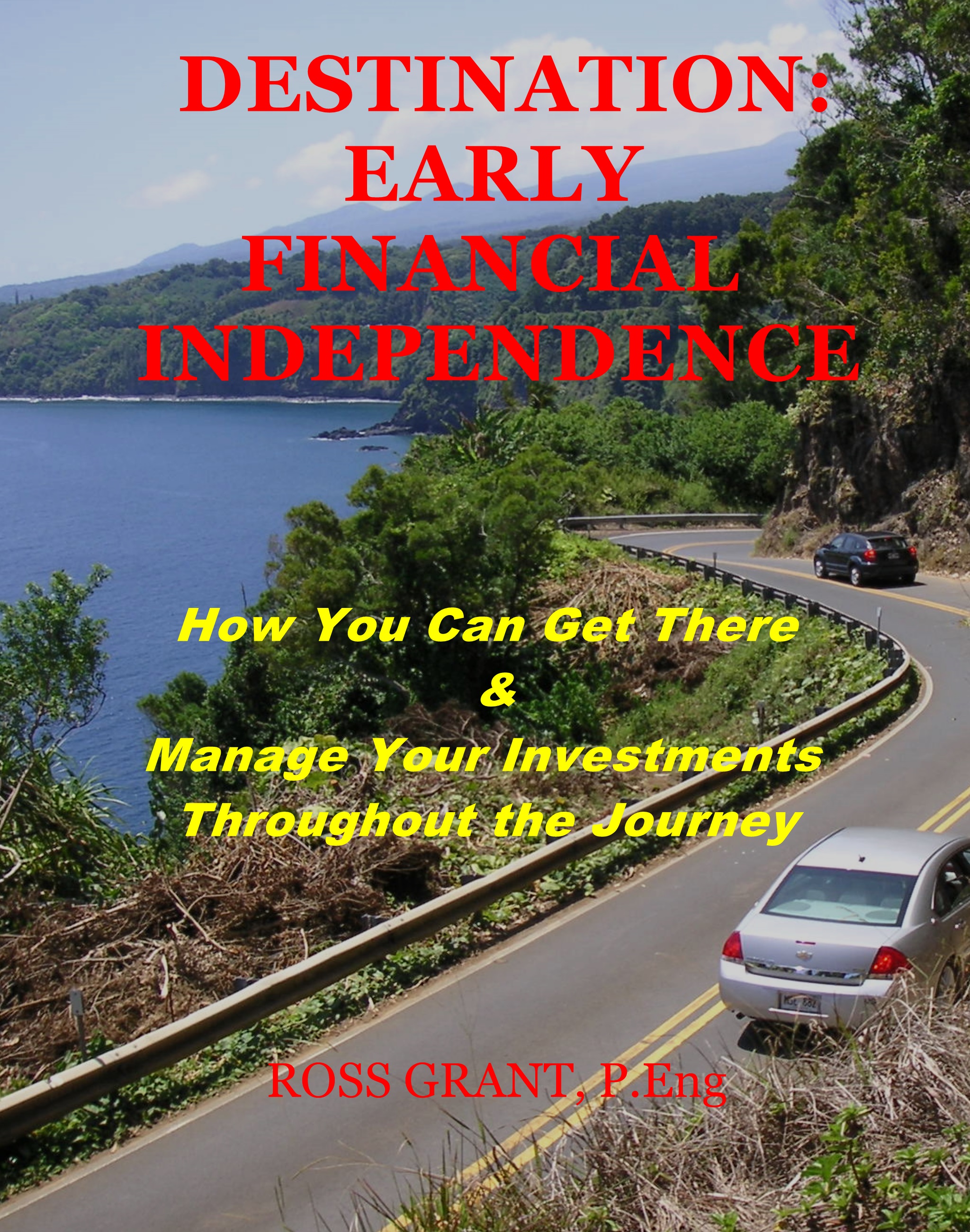
Destination EFI - CoverLast year, my youngest daughter started her first full-time job. I realized that if she could learn from our financial journey, it would be a great benefit to her. By passing on many fundamentals learned on our path to early financial independence, she would have a great jump-start in obtaining her financial goals. I decided to write a step-by-step book, in a series of letters, so our daughters would have a good financial education base to start with. During my writing process, I realized that publishing my letters in an e-book that I titled, Destination: Early Financial Independence, could benefit others. The e-book is for both for people starting to invest and for those who have been managing their portfolios for some time. My wife often reminds me she is so grateful that I have documented this for her learning too.   I share our personal roadmap from our first jobs to where we are today, managing our own portfolio in retirement with minimal time requirements, yet achieving above-average results.

Our steps can be replicated by others

I always believed the steps we took and the investment process we followed were all quite simple and the outcome could be replicated by others, if they only knew it could be done. When we “retired,” I knew a lot of friends and family thought we were crazy. They were all polite about it, but I could tell from their questions that they didn’t expect us to really stay retired. We would either run out of money or just get bored.

My prior work colleagues started a betting pool as to when I would go back to work. I am happy to report that no one ever won the pool. I wish when I started our financial planning, I had a book I could have referenced that said, “No Ross, you aren’t crazy. Your calculations are correct and you are on the right track. You have actually used conservative estimates and don’t need to worry about running out of money. It’s a beautiful Monday morning, go cycling!”

Fortunately, in the last couple of years, I have come across a number of firsthand accounts of people who have left the work force early, so I am now more confident it is a goal that can also be achieved by others. By documenting and sharing our story, including strategies and processes, I hope you will find many tips that will be helpful towards your Financial Independence!

Below, I have attached the details of how to obtain my e-book, if you are interested.

The book can be read with free e-reader software if you do not have a Kindle or Kobo device.  Links to the free e-reader software is at the bottom of this blog.

Destination: Early Financial Independence, By Ross Grant is available for $5.99 + applicable taxes, on Amazon.

It’s available at Kobo too.

Ross is a contributing writer for Canadian MoneySaver. Ross and Shal were featured in a Globe and Mail article, “Freedom 55? Couple couldn’t wait that long for retirement,” Oct 22, 2009.

Email: RossGrantEFI@gmail.com

Free E-reader software

Amazon’s Kindle for PC

Amazon’s Kindle for MAC

Kobo for PC


7 Retirement savings tips to avoid regret

Depositphotos_6339647_xsFrom the Chicago Financial Planner, Roger Wohlner, comes these seven retirement savings tips designed to stave off regret.

Wohlner (@rwohlner on Twitter) cites a recent survey that found 52% of those approaching retirement said they wish they started saving for the future sooner. 47% wished they had saved more of their pay check and 34%  regretted not saving more aggressively. As a result of all this, more than two thirds (68%) of those nearing retirement said they’re not prepared for what’s to come. Therefore, 42% of those between 55 and 64 plan to keep working, at least in a  part-time job.

Here are the 7 tips. Click on the link above for full detail on each tip.

1.) Start early.

2.) Increase your contributions.

3.) Start a self-employed retirement plan.

4.) Contribute to an IRA. [RRSP in Canada.]

5.) Don’t ignore old retirement accounts.

6.) Beware of toxic rollovers.

7.) Avoid high-cost financial products.

Get ready for the shift: the Future of Work

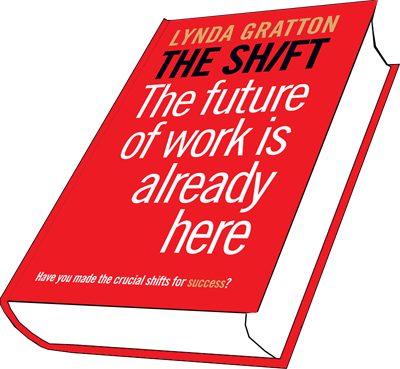
TheShiftA big aspect of planning for retirement is health and longevity. Back in the summer, I devoted a blog at the Hub’s sister site to Mark Venning of ChangeRangers.com. Venning helps clients prepare for two things: making the shift from employment to entrepreneurship, and also to help prepare for a future of extended longevity and life expectancy. That’s “why the word ‘Retirement’ doesn’t work for me. It’s about longevity planning,” he told me, “My core message is plan for your longevity, not for retirement.”

That’s one reason the Financial Independence Hub includes sections both on Entrepreneurship and Aging & Longevity. But we’re not just a site for the Boomers: we take an “Ages & Stages” approach to financial independence, starting with material for Millennials and their focus on debt reduction, family formation and home ownership. Then by the time we reach those in mid-life (call them Gen X if you will), the focus is on Wealth Accumulation.

One of several book recommendations from Venning to his students — many of them terminated from full-time employment — is a book by Lynda Gratton called The Shift: The future of work is already here. It’s not brand new: my copy was published by Harper Collins in 2011. But it’s still relevant, especially to the generation of baby boomers, myself and Venning included, who are grappling with the issues of retirement planning.

Gratton, who is a business school professor, identifies five forces that are shaping the world of work, plus three “shifts.” They’re all worth summarizing here.

The 5 forces shaping our future

1.) Technology
2.) Globalization
3.) Demography and Longevity
4.) Society
5.) Energy Resources

The 3 shifts

1.) From shallow generalist to serial master
2.) From isolated competitor to innovative connector
3.) From voracious consumer to impassioned producer

For baby boomers and others who are nearing retirement, or moving into semi-retirement or self-employment, almost all of these forces and shifts need to be taken into consideration. In earlier blogs like this one — Never Work Again — we looked at the revolution in Internet marketing, which is based on both the Technology force and Globalization. When you can run a web-based business from anywhere in the world merely with a laptop computer and a smartphone, you know you’re embracing these forces.

Gratton’s points on demography and longevity seem particularly apt: this was the topic that most fascinated the team of researchers she tapped into for the book. “We quickly understood that technology is changing everything and will continue to do so, and that natural resources are depleted and carbon footprints must be reduced,” she writes. But demography and longevity “is intimately about us, our friends and our children … It’s about how many people are working, and for how long.”

 
The dark side: some boomers will grow old poor

In 2010, when Gratton was writing the book, there were four distinct generations in the workforce: the Boomers’ parents, the Boomers, Gen X (born between 1969 and 1979) and Gen Y (1980 to 1995). And coming up is Gen Z, born after 1995. Gen Y will be ascendent in the workplace by 2025 but increasing longevity means the Boomers and Gen X will still be hanging around, wanting to work and contribute in some capacity well into their 60s, if not beyond. Gratton also warns that “some baby boomers will grow old poor,” particularly if they don’t respond to the gift of extended longevity by embracing the forces and shifts that are confronting them.

laptop-millionaireBecause of globalization and technology, the privilege of being born in North America may no longer be sufficient advantage for those who don’t embrace The Shift. Books like The Laptop Millionaire describe how those with wealth can take advantage of outsourcing: for example, hiring English-speaking Filipinos as full-time virtual assistants for something like $250 or $300/month.

There is a dark side to these shifts: those not equipped to embrace change increasingly will have to compete for jobs or contracts with people half a world away who are technologically sophisticated and willing and able to work for much less than North Americans.

Gratton devotes big chunks of the book to fictional scenarios of the near future of work, some of them pessimistic, some of them optimistic. All in all, it’s well worth reading. It reinforced my own belief that “If you’re not sure whether you should retire or can afford to do so, then just keep working, preferably in a congenial line of work you can continue to practice well into your 70s.”

How to Survive on $100 a Month of Groceries

Below we’re pleased to publish the second piece here at the Hub from Sean Cooper, a millennial who really “gets it” when it comes to financial independence. His first contribution was on how he plans to become Findependent, or at least debt and mortgage free, by age 31. The key to this is what the book, Findependence Day, calls “guerrilla frugality.” If the term is new to you, see this primer on the term (as well as “frooger”), which is right below Sean’s article here in the Debt & Frugality section of the Hub.

Sean’s piece is a classic example of guerrilla frugality. Because we all have to eat!

headshot-new
Sean Cooper

Over to the maestro of frugality!:

By Sean Cooper

Special to the Financial Independence Hub

Do you find it challenging to keep your grocery spending on budget? You’re not alone. For most of us, groceries are the second-highest expense after putting a roof over our heads. With temptation down every aisle, it’s easy to let grocery spending spiral out of control.

I’m living proof you can spend less and still enjoy your favourite foods for under $100 a month. I’m able to use the extra money I save towards goals like paying down my mortgage. I know not everyone can live on $100 a month worth of groceries, but maybe my strategies can help reduce your grocery spending a little bit. I’ve found the secret comes down to making wise spending choices.

How I Spend Only $100 a Month on Groceries

Spending $100 a month on groceries is about making specific choices. Instead of going shopping every day, I make a shopping list and go only once a week. Not only does this save time, it helps me avoid impulse purchases. I’ll bring the flyers of other grocers so I can price-match. In a typical shopping week I usually buy only the basics: fruits, vegetables, bread and milk. For under $15 I can get everything I need for the coming week. I’ll only splurge and spend more if I’m running low on something and it’s on sale. For example, if spaghetti sauce is on sale for half price I’ll buy 20 jars — enough to last me until the next sale. As for protein, I stock up on peanut butter and almonds when they’re on sale and never pay full price. I also like to cook for every meal, including breakfast. Instead of buying expensive breakfast cereal, I cook oatmeal. It’s a lot less expensive and more nutritious.

I want to tell you the tale of what I did. I’m not expecting you to become vegetarian, but consider taking a look at some of the changes you can make in your own life.

Evaluate Your Budget

How would you like to buy your everyday grocery items for a lot less? Have you ever considered shopping at discount supermarkets? That’s what I do. The savings can really add up. Shaving $20 off your grocery bill each week will add up to yearly savings of over $1,000. I find discounts grocers often have produce and meat that is just as good in terms of quality as the so-called premium stores. I’m not telling you to stop shopping at your local grocer, but by re-evaluating your budget you can find new ways to save.

Make a Shopping List

To avoid overspending, consider making a shopping list and browsing the flyers for deals on products you’re already planning to buy. I save even more money by price-matching, Many discount grocers match the price of rival stores simply by showing a competitor’s weekly flyer. I show a flyer of the rival grocery store to the cashier and I’m given the lower price. You don’t have to price-match, but just by making a list you’re less likely to overspend.

Consider Cutting Back on Meat

Steaks on barbecueNo, that’s not your steak being grilled, it’s your wallet. Sizzling meat prices can really take a bite out of your grocery budget. I’m a vegetarian; instead of eating meat, I get my daily dose of protein from foods like nuts and dairy products. I’m not saying you have to give up strip loin steaks and pork chops, but you might choose to eat meat less often, or buy cuts that are on sale.

Try to Limit Fast Food

I know it can be tempting to pick up fast food on the way home after a long day at the office. We’re all guilty of doing this once in a while. But if you can limit dining out to only once a week, the savings can really add up. By cooking at home instead, you’ll save money and eat healthier, too. Have you ever considered cooking your meals in batches? That’s what I do. I’m not saving you have to give up takeout food, but by eating at home more often you can save a lot.

Consider Buying Items on Sale

If you’re willing to stock up on grocery items you buy every week when they’re on sale, it can add up to big savings. When you see your favourite non-perishable items like canned vegetables and coffee on sale, consider stocking up. By buying enough to tide you over until the next sale you can avoid paying full price. (For some perishables, like meat, and frozen dinners or desserts,  a freezer can come in handy if you stock up when the items are on sale: JC.)

Buy in Season

Buying your favourite fruits and vegetables out of season can cost you a bundle. Have you ever seen the price of cherries in January? Yikes! Consider substituting your favourite fruits and vegetables for produce that’s in season. For example, instead of buying watermelons during the winter, I purchase less costly fruits like apples and oranges. If you’re not ready to give up your favourite fruit, you can still save money buying it less frequently – perhaps only once a month instead of every week.

You don’t have to follow my example to the letter, but if you’re willing to make small changes, they can have a big impact on your monthly budget.

Sean Cooper is a Personal Finance Expert and Financial Journalist. He is a first-time homebuyer and landlord who aspires to reach findependence by age 31. Follow him on Twitter @SeanCooperWrite and read his blogs and request his writing services on his website: http://www.seancooperwriter.com/