Reviews

We review books that deal with everything from financial independence topics to politics, and anything in between. We may sometimes stray into films and music if there is a “Findependence” angle.

With $100 billion in assets, can ETFs catch mutual funds?

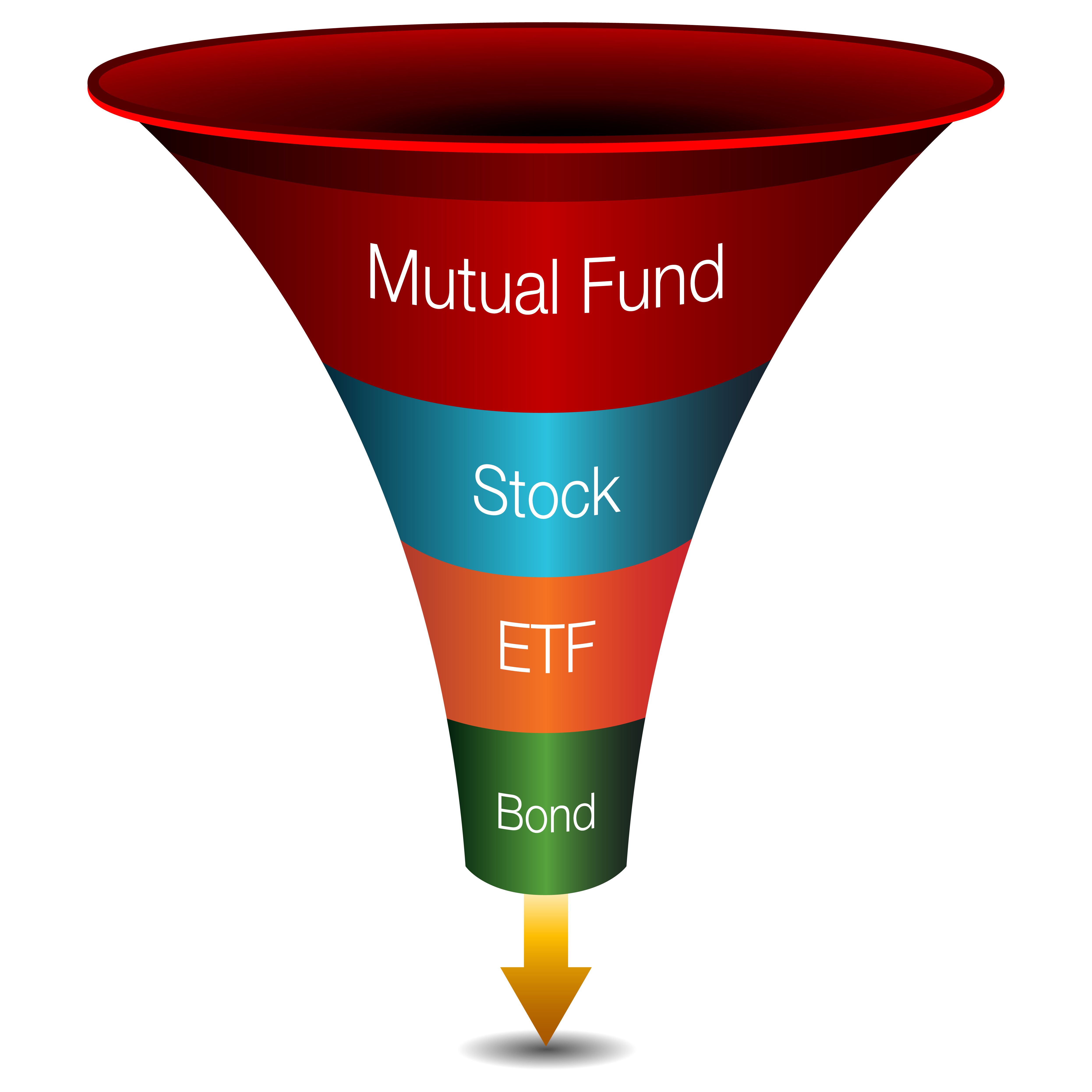
An image of a 3d investment strategies funnel chart.My latest Financial Post column can be found in the print edition of Wednesday’s National Post as well as online right now, under the title The market share battle between ETFs and mutual funds is heating up, as Canadian ETFs pass $100 billion milestone.

As noted earlier here on the Hub, the ETF (Exchange-traded Funds) industry recently passed the significant milestone of $100 billion in assets under management. See ETFs break $100 billion milestone in Canada. That’s “Billion” with a B, but is still less than 10% of the $1.1 Trillion (Trillion with a T) that the entrenched and much older mutual fund industry still enjoys.

As an aside, if you have difficulty grasping how big the number “Trillion” is then read a hub post by Ian Campbell: Can you put the number ‘Trillion’ in context?

The FP column asks the question why the huge disparity in Management Expense Ratios (MERs) of mutual funds (i.e. high at around 2.5% per annum) versus ETFs (typically around 0.55% but in some cases as low as 0.4 or 0.5%) hasn’t resulted in even more incursions by the ETF industry into the mutual fund space.

ETF sign is held by businessman.

Powerful bank distribution network

One reason is the entrenched positions of the Canadian banks, whose powerful distribution network (i.e. bank branches)allows them to sell their own in-house no-load mutual fund families. Of course, BMO, RBC and now TD all sell ETFs as well but I doubt you’ll see many recommended by your local friendly branch rep any time soon.

As the old saying goes, mutual funds are sold, not bought. Continue Reading…

Book Review: Ready to Retire?

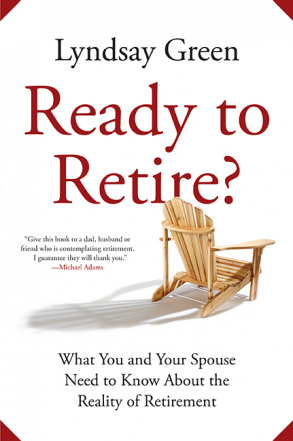
y450-293There’s no shortage of books that focus on financial readiness for retirement. But what about emotional or psychological readiness for retirement? Lyndsay Green’s just-published Ready to Retire? (Harper Collins, Toronto, 2016) puts a microscope on the less-scrutinized emotional and lifestyle issues of retirement. She interviewed 44 Canadian males and 17 of their spouses about common retirement fears (for those still working) versus the reality of retirement once it’s actually achieved.

Generally, these males either planned for retirement or – in the all-too-common case of sudden terminations – found themselves unexpectedly in the land of retirement years or even decades before they expected it.

But whether planned or not, most required a period of adjustment that can take years: not surprisingly, retirement is right up there with divorce, death and job loss in creating a traumatic new stage of life.

Mental Map depicts common emotions about Retirement

The book’s frontispiece conveys the common emotions in a graphic that I think should have been the cover. ( Continue Reading…

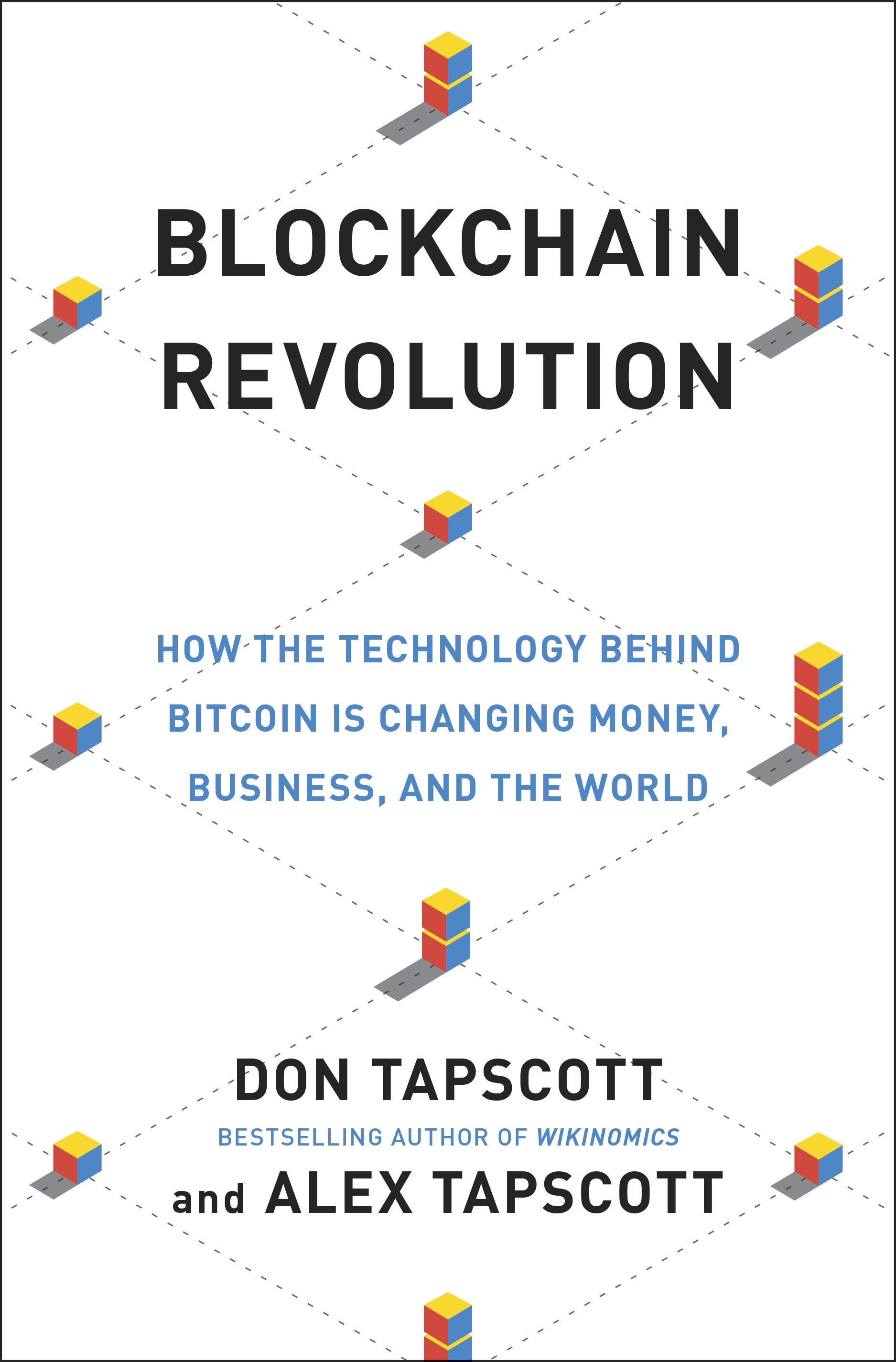
Book Review: Blockchain Revolution

9781101980132_Blockchain_final process.inddTechnology guru Don Tapscott, together with his investment banker son Alex, makes a bold claim on the subtitle of the pair’s just-published book, Blockchain Revolution (Penguin Canada, Toronto). They promise that the “technology behind Bitcoin is changing money, business and the world.”

Certainly Bitcoin and Blockchain technology are something anyone in the financial services industry needs to pay attention to. The first of seven chapters on Transformations is devoted to reinventing the Financial Services Industry, which the authors dub “the world’s second-oldest profession.”

The global financial system supports a global economy worth more than $100 trillion, making it the world’s most powerful industry and foundation of global capitalism, the authors write. And yet, with some of it still running on 1970s mainframe computers, close up the financial system is a “Rube Goldberg contraption of uneven developments and bizarre contradictions.”

If ever an industry were ready for disruption, this one would appear to be it. In an interview at the book launch, Alex Tapscott told me that true “fin tech” (financial technology) is based on the blockchain. And blockchain itself is what The Economist magazine dubbed “The Trust Machine.” Accordingly, the Tapscotts’ book begins with a chapter titled The Trust Protocol.

Distributed Ledger Technology

Continue Reading…

The 2-letter 4-letter Word

Gignac - Headshot - 2013By Robert M. Gignac

Special to the Financial Independence Hub

One of the things I love about my job is that I get to have interesting and passionate conversations with North Americans regarding money, personal finance and fiscal responsibility. We all have a relationship with money – sometimes it is a good relationship – sometimes not.

I spoke at an event in Victoria, B.C. recently and during the Q&A portion a guest asked the following question: “What is the one biggest thing I can do to improve my financial situation?”

Now, I’m a firm believer that there is no single thing we do that makes us financially successful – it’s the repetition of a variety of little things, done over and over and over that make us successful. I could tell from the way the question was phrased and the rather emphatic index finger in the air as they asked the question – they were looking for “one thing.”

Looking for one big answer

While the silence seemed to hang in the air, an audience of 250+ waited for the answer. I took a sip of water from the glass on the table and hoped they were going to be happy with what I had to say: “There is no one “biggest” thing you can do – but – if you’ll humor me for moment – I’ll share with you what I think the one biggest word is? How’s that?” Continue Reading…

Upgrading technology in the Victory Lap

Depositphotos_107159416_s-2015One of the key elements of the post-corporate Victory Lap Retirement lifestyle is self-employment. If this begins in your late 50s or early 60s, you’ll be living on multiple streams of income. Some of it may be passive, such as pension income (I draw from two modest corporate pensions, for example) or non-registered investment income, but a big component is continued earned income.

If you are no longer a salaried employee, it’s probably best to set up a sole proprietorship or even incorporate. I’ve always run a corporation alongside salaried employment and have found that once you’re fulltime in business for yourself, It’s hard to generate as much pre-tax income as a salaried corporate job does. However, there are significant compensations in time and flexibility, plus the net after-tax proceeds of self-employment are relatively more attractive than being a fully-taxed-at-source salaried employee.

One reason is the allowable deductions or “write-offs” for legitimate business expenses, which may include certain computer equipment, software and some services. Obviously you should consult with a tax professional and engage an accountant because you don’t want to trigger an audit from the Canada Revenue Agency. After all, it’s clear the new Liberal government regards self-employment with suspicion: my guideline is to “assume an audit” and act accordingly.

Time to upgrade equipment

I am writing this article on brand new equipment that replaces products that were as old as six years. My fiscal year-end is the end of May and it’s been a decent year revenue-wise, so it seemed like a good time to book some legitimate expenses. Those whose calendar year-end correspond with their fiscal year (i.e. Dec. 31st) would go through this process at the end the calendar year.

241362-apple-macbook-air-13-inchIn my case, apart from the tax considerations of booking valid deductions, it really was time to upgrade the single most important business tool I use, which was an Apple MacBook Air.

After six years the machine had just about used up its storage and processing capacity and I had begun to lose significant chunks of time rebooting and closing applications. Continue Reading…