General

Memo to Liberals: lots of older middle-class Canadians have $10,000 TFSA capital “lying around”

ralph-goodale
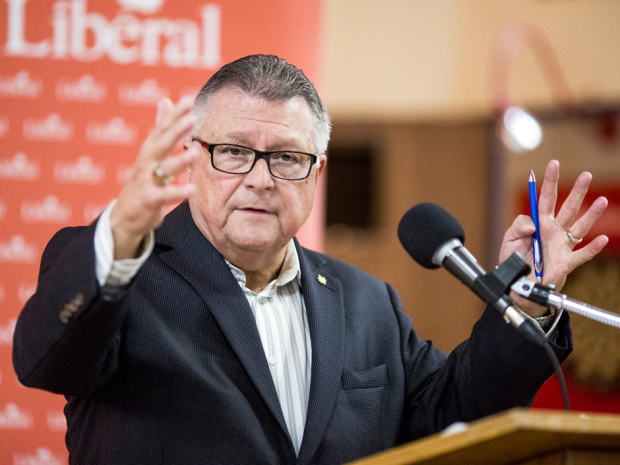
Liberal deputy leader Ralph Goodale (National Post.com)

The Financial Post ran an op-ed written by me today (A10), titled simply How to Max Out your TFSA. We’ve written on this topic before of course, but it specifically addresses an oft-repeated Liberal comment that few middle-class Canadians have “$10,000 lying around” for a TFSA contribution.

On the contrary, I argue, many middle-aged middle-class Canadians have hundreds of thousands of dollars in non-registered or “open” investment accounts, money that is subjected to annual rounds of tax on interest and dividends, and often capital gains, and which would love to find a tax-free home in a Tax Free Savings Account.

Similarly, many seniors already in retirement have large RRSPs or RRIFs that can also be a source of funds for a TFSA, once withdrawals are made and a one-time tax hit is sustained.

In fact, this weekend, I spent time with a 98 year old friend (a woman), who proudly informed me she recently put $10,000 into her TFSA and is saving up from her part-time job to put in another $5,000. Why? She felt she needed a bit of cushion in case some medical problem arises.

As the end of the FP piece notes, there are plenty of other potential sources too, including sale of a principal residence (perhaps in a downsizing situation), severance payments, life insurance proceeds, sale of a business, lottery wins and — this one’s for you, Justin — inheritance.

Gordon Pape on TFSA income investments

In a related column in the Globe & Mail last week, TFSA author Gordon Pape wrote an interesting piece about how TFSAs are now large enough that they can start spinning off tax-free income. His piece looked at ten Canadian dividend-paying stocks like BCE.

Gordon and I will be two of five speakers this Wednesday evening at The Financial Show at the Mississauga Convention Center. Details here.

For continuity and archival purposes, below is the op-ed on TFSAs, with a few subheads added: Continue Reading…
Weekly wrap: Over-taxed rich, starving on bond yields, and the hazards of experts

Tim_on_TV
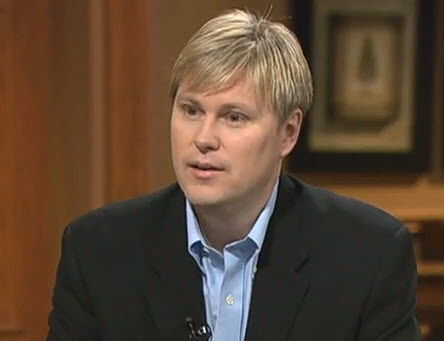
Tim Cestnick (Twitter.com)

A week after his Globe & Mail article, Overtaxing the Rich: A Cautionary Tale, attracted widespread attention, Scotiabank tax guru Tim Cestnick has followed up with Overtaxing the Rich: Canada’s Tax Debate rages on.

In the original piece, Cestnick floated a colourful parable that suggested the rich are more than paying their share, to the benefit of those less fortunate. But if those with the highest incomes are pushed too far beyond the 50% rate, they may be inclined to leave, making the circumstances of those further down the pyramid that much worse.

With 650 comments and counting, it’s no hyperbole in this case to say there’s a true debate that’s raging here. And with an election coming up this fall, it’s safe to say this topic won’t be going away any time soon. The new higher TFSA limits are certainly a major element of this debate. No surprise that we at the Hub favour the new higher limits and I’d be surprised if Tim Cestnick or any of his well-heeled clients feels any differently.

The Bond dilemma

Meanwhile, rich or not and highly taxed or not, it continues to be a struggle finding yield at today’s paltry levels of interest rates, which of course are fully taxed outside registered accounts. This was one of several themes I picked up at a recent ETF and mutual fund conference in Chicago. Here’s my column in Motley Fool Canada on this topic, titled Caution Ahead: Why Bonds May Soon Become Much Harder to Manage.

In a similar vein, The Daily Reckoning’s Bill Bonner warned this week that Bonds are No Longer a Safe Haven. I guess that leaves cash or stocks. Continue Reading…

Invisor.ca launches “goal-based” robo-like service

Invisor (CNW Group/Invisor)
Invisor Logo (CNW Group)

By Jonathan Chevreau

Financial Independence Hub

After the initial wave last year of new robo-advisers washing up on the shores of the Canadian market comes a variation on the theme — a so-called “goal-based” online investment management service called Invisor.ca.

Announced Tuesday, the service claims to offer “personalized online investment management at a fraction of the cost of a traditional financial advisor.” The service is available initially in Ontario and Manitoba and it plans to register in other provinces “in the near future.” The custodian is Credential Securities Inc.

The reference to traditional advisors is evidently to mainstream retail mutual funds, whose fees are high enough that all domestic robo-advisers can undercut them and still make money. In a press release, Invisor notes that many Canadians pay more than 2.5% a year for mutual funds and that “in some cases these costs can be s high as 2.8% to 2.9%.” Continue Reading…

Early days with the Apple Watch: so far so good

Here’s my latest MoneySense blog, which tells the story of my first week with the Apple Watch. I’ve added some photographs below that show the packaging.

IMG_4288

By Jonathan Chevreau

Over the years, I’ve been both an early adopter of technology devices as well as, on occasion, a late adopter. Early with notebook computers and the first Macintosh in 1984, but late with the Blackberry and the iPhone.

As someone who didn’t even wear a traditional watch, the hype over Apple’s new Watch intrigued me. As I wrote a few weeks ago here at MoneySense.ca, I decided I’d become an early adopter of the Apple Watch, preordering it the day after it was permitted. Continue Reading…

Do you have an unclaimed bank account?

MarieEngen
Marie Engen, Boomer & Echo

By Marie Engen, Boomer & Echo

Special to the Financial Independence Hub

Have you ever moved and forgotten about an old bank account? The Bank of Canada holds about $532 million dollars of unclaimed money dating back to 1900.

Where does the money come from?

Bank of Canada unclaimed balances are Canadian dollar deposits or negotiable instruments that were held at a bank or trust company. They include chequing and savings accounts and GICs, as well as uncashed bank drafts, certified cheques and travellers’ cheques.

Related: 350 reasons to switch your banking

Not included are non-Canadian currency accounts, RRSPs, credit union accounts and safety deposit box contents. Continue Reading…