Building Wealth

For the first 30 or so years of working, saving and investing, you’ll be first in the mode of getting out of the hole (paying down debt), and then building your net worth (that’s wealth accumulation.). But don’t forget, wealth accumulation isn’t the ultimate goal. Decumulation is! (a separate category here at the Hub).

A closer look at Inflation

By Alizay Fatema, Associate Portfolio Manager, BMO ETFs

(Sponsor Content)

While inflation was sidelined by several central banks and deemed as “transitory” for the most part during 2021, the tone shifted promptly this year as back-to-back red-hot inflation prints forced most central banks to go on an interest-rate hiking spree. This aggressive action is being taken to tame inflation otherwise known as the rate of change in prices over time, [1], as it’s persistently high and is eroding the purchasing power of households, reducing consumer spending, and the overall economic well-being.

What are the causes of inflation?

Before we discuss whether inflation will slow down or not, let’s take a step back and analyze what’s causing prices to rise globally in the first place. Most economists attribute this uptick in inflation to several different causes such as:

  • Cost-push inflation driven by supply chain crisis

The COVID-19 outbreak led to a series of lockdowns and restrictions across the globe, which caused supply chain disruptions and labour shortages and ultimately induced cost-push inflation [2], resulting in a surge of prices due to an increase in costs of producing and supplying products and services. World economies are still recovering from this effect, and some of these constraints are fading away as global transportation costs plunge and Chinese production ramps up again. However, the Russian invasion of Ukraine is clearly hampering this progress and further stoking inflation.  [3]

  • Demand-pull inflation fueled by savings, fiscal stimulus, and monetary policy

The pandemic had caused an unconventional recession, and to keep economies afloat, several central banks slashed their interest rates, increased their money supply M2 (a measure of the money supply that includes cash, checking deposits, and easily- convertible near money)., gave out government aid, relief, & stimulus payments as part of the fiscal response during 2020 & 2021. As businesses reopen this year after remaining shuttered and reducing their production and services, they could not meet the pent-up demand driven by savings accumulated during the pandemic along with the monetary & fiscal stimulus. Thus, strong consumer demand, fueled by robust growth in employment, has outstripped supply temporarily for several products & services such as air travel, hotels, cars, etc., resulting in demand-pull inflation [4].


A series of interest rate hikes to curb sky-high inflation

The price increases for gasoline, food, and housing caused Canada’s inflation to rise to a 39-year high of 8.1% in June 2022. The markets got some respite in August as headline inflation came down to 7% and further weakened in September to 6.9% from a year ago, as gasoline prices fell. However, the recent data was disappointing as the dramatic increase in food prices was unexpected.

On a similar note, south of the border, the U.S. inflation spiked to 9.1% in June 2022, the highest level since 1981. Although headline U.S. inflation reported for September was up by 8.2% from a year earlier (down from the peak of June 2022), the core U.S. consumer price index (ex. food & energy) rose to a 40-year high, increasing to 6.6% from a year ago, which is a cause of concern as its squeezing households by outpacing the growth in wages.

To dial down the surge in prices, the Federal Reserve engaged in a series of rate hikes not seen since the late 1980s, increasing the front-end interest rate to 3.25% in September. The Bank of Canada followed suit by raising rates through consecutive outsized hikes, bringing its target overnight rate to 3.75% in October. Given inflation is still sky-high in both countries and way above their 2% target, both Fed & Boc are expected to raise their short-term rates again. Both central banks are maintaining their hawkish tones, which means the rates will be further raised to fight against raging inflation. However, they may dial back the pace of their hikes amid recession fears.

When will we see a slowdown in inflation?

Looking at recent CPI prints, the question arises whether the U.S. and Canada have passed peak inflation. The truth is it’s hard to predict what lies ahead. Prices in some sectors, such as gas and used automobiles, have dropped, which is a good sign. However, prices for certain goods & services are “stickier” than others, such as rent, insurance, health care or dining out, meaning that they are likely to stay at their current levels or increase even further, so inflation may stick around for a while. Moreover, higher wages and inflation may continuously feed into each other, resulting in a wage-price spiral [5] which may result in further rate hikes, causing additional damage. Continue Reading…

Retired Money: Are Balanced Funds really dead or destined to rise again?

Is the classic 60/40 balanced fund destined to rise again, like the phoenix?

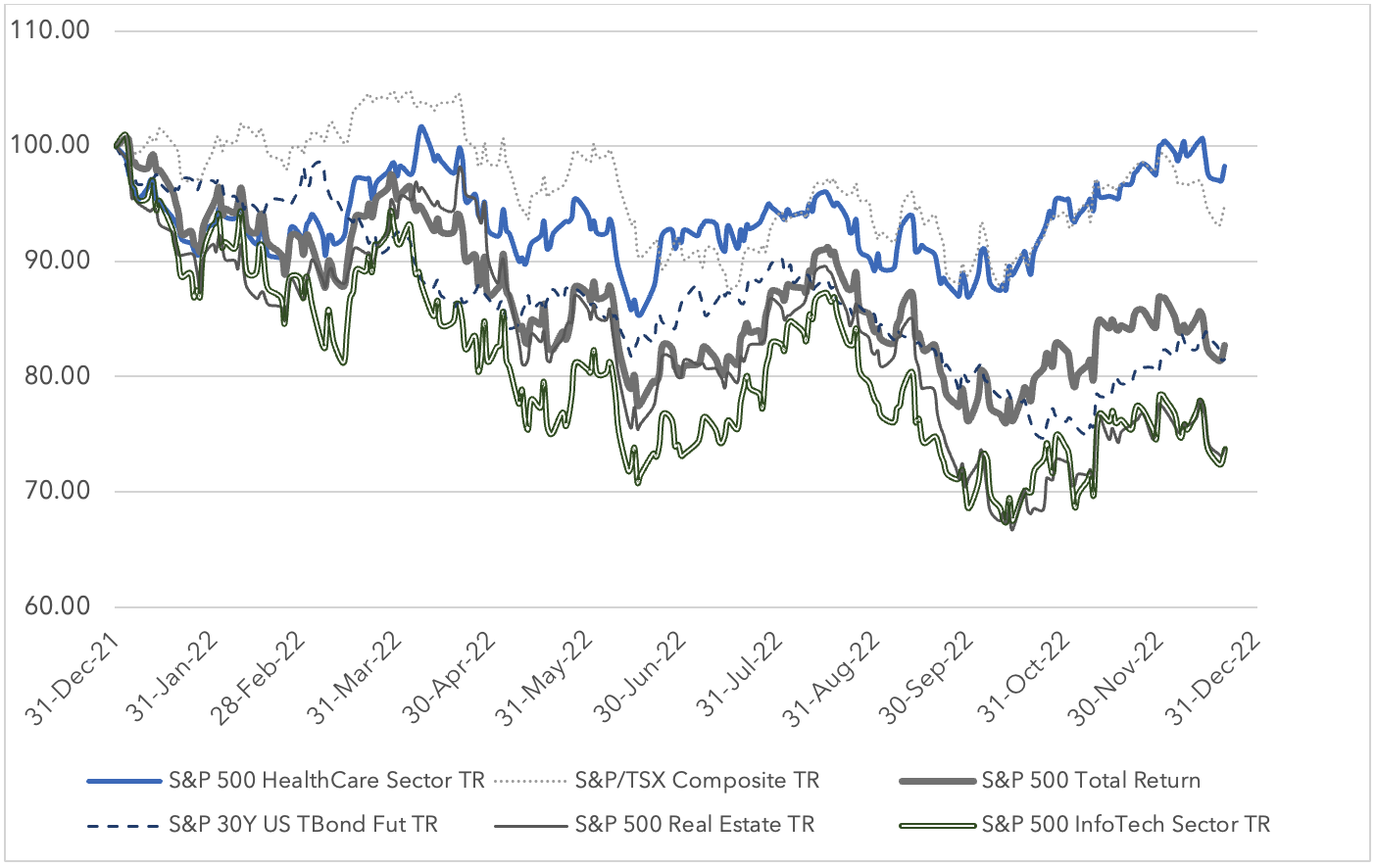
My latest MoneySense Retired Money column addresses the unique phenomenon investors have faced in 2022: for the first times in decades, both the Stock and Bond sides of the classic balanced fund or ETF are down.

Click on the highlighted headline to access the full column: The 60/40 portfolio: A phoenix or a dud for retirees? 

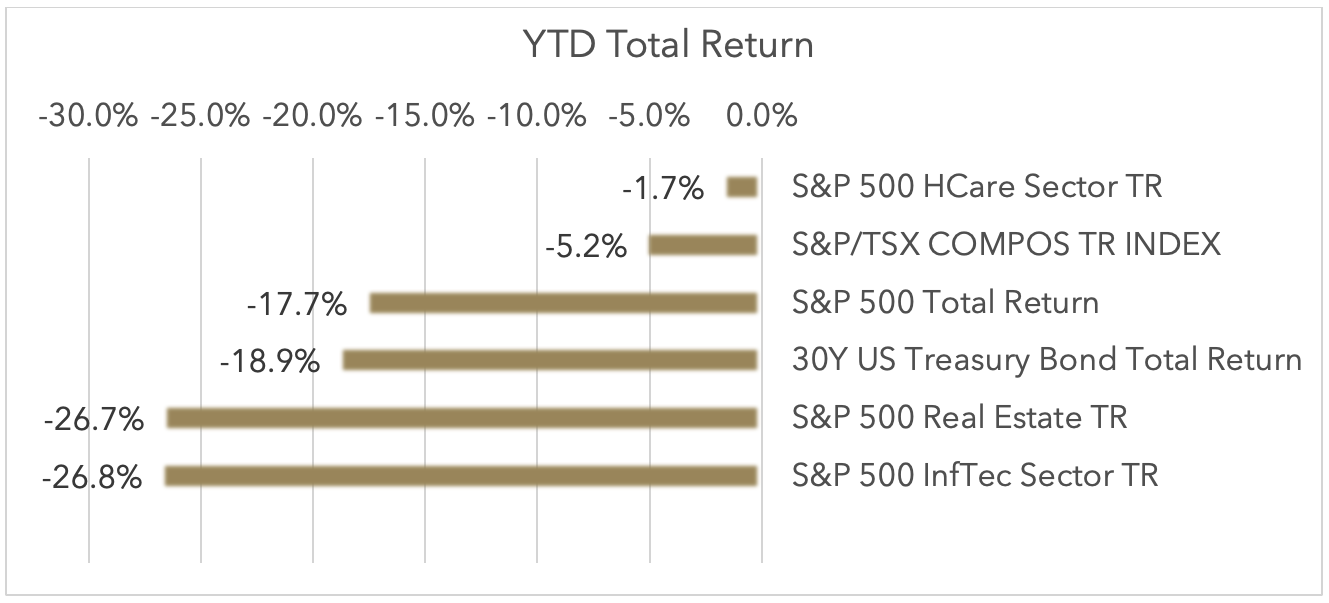
While the column focuses on the Classic 60/40 Balanced Fund or ETF, the insights apply equally to more aggressive mixes of 80% stocks to 20% bonds, or more conservative mixes of 40% bonds to 60% stocks or even 80% bonds to 20% stocks. Most of the major makers of Asset Allocation ETFs provide all these alternatives. Younger investors may gravitate to the 100% stocks option: indeed with most US stocks down 20% or more year to date, it’s an opportune time to load up on equities if you have a long time horizon.

However, we retirees may find the notion of 100% equity ETFs to be far too stressful in environments like these, even if the Bonds complement has thus far let down the tea. As Vanguard says in a backgrounder referenced in the column, the classic 60/40 may yet rise phoenix-like from the ashes of the 2022 doldrums.

“We’ve been here before.”

On July 7th, indexing giant Vanguard released a paper bearing the reassuring headline “Like the phoenix, the 60/40 portfolio will rise again.”  “We’ve been here before,” the paper asserts, “Based on history, balanced portfolios are apt to prove the naysayers wrong, again.” It goes on to say that “brief, simultaneous declines in stocks and bonds are not unusual … Viewed monthly since early 1976, the nominal total returns of both U.S. stocks and investment-grade bonds have been negative nearly 15% of the time. That’s a month of joint declines every seven months or so, on average. Extend the time horizon, however, and joint declines have struck less frequently. Over the last 46 years, investors never encountered a three-year span of losses in both asset classes.”

Vanguard also urges investors to remember that the goal of the 60/40 portfolio is to achieve long-term returns of roughly 7%. “This is meant to be achieved over time and on average, not each and every year. The annualized return of 60% U.S. stock and 40% U.S. bond portfolio from January 1, 1926, through December 31, 2021, was 8.8%. Going forward, the Vanguard Capital Markets Model (VCMM) projects the long-term average return to be around 7% for the 60/40 portfolio.”

It also points out that similar principles apply to balanced funds with different mixes of stocks and bonds: its own VRIF, for example, is a 50/50 mix and its Asset Allocation ETFs vary from 100% stocks to just 20%, with the rest in bonds.

Tweaking the Classic 60/40 portfolio

While very patient investors may choose to wait for the classic 60/40 Fund to rise again, others may choose to tweak around the edges. The column mentions how TriDelta Financial’s Matthew Ardrey started to shift many client bond allocations to shorter-term bonds, thereby lessening the damage inflicted to portfolios by bond funds heavily concentrated in longer-duration bonds. Continue Reading…

Harvest launches 5 new ETFs designed for higher income

The new ETFs invest directly in established equity income ETFs but generate higher income through a specific strategy

By Michael Kovacs, President & CEO of Harvest ETFs

(Sponsor Blog)

Canadian investors — in large numbers — are seeking income from their investments. Some investors are seeking high monthl income to offset the rising cost of living. Others are incorporating the income paid by their investments in total return. Whatever the reason, many of those investors are finding the income they seek in equity income ETFs.

Equity Income ETFs have seen strong inflows in 2022, in a period when traditional equities have struggled. These ETFs — which generate income from a portfolio of stocks and a covered call strategy — offer yields higher than the rate of inflation and higher than most fixed income.

Harvest ETFs has seen over $1 billion in assets flow into its equity income ETFs so far in 2022, as investors seek high income from portfolios of leading equities from a reputable provider. Now, Harvest is launching 5 new ETFs to build on that reputation and demand for higher income.

The appetite for equity income among Canadian investors has grown and grown. We’re pleased to be launching these new enhanced equity income ETFs to help meet that demand and provide Canadians with the high income yields they’re seeking in today’s market.

The ETF strategies getting enhanced

Harvest has launched the following new enhanced equity income ETFs, with initial target yields higher than their underlying ETFs.

Name Ticker Initial Target Yield
Harvest Healthcare Leaders Enhanced Income ETF HHLE 11.0%
Harvest Tech Achievers Enhanced Income ETF HTAE 12.8%
Harvest Brand Leaders Enhanced Income ETF HBFE 9.70%
Harvest Equal Weight Global Utilities Enhanced Income ETF HUTE 10.20%
Harvest Canadian Equity Enhanced Income Leaders ETF HLFE 9.60%

We selected 5 established equity income ETFs to underpin our new enhanced equity income ETFs. They reflect our core investment philosophy, owning the leading businesses in a specific growth industry and generating income with covered calls.

Each enhanced equity income ETF has specific tailwinds from its underlying ETF. HHLE captures the superior good status of the healthcare sector by owning the Harvest Healthcare Leaders Income ETF (HHL:TSX). HTAE accesses a portfolio of established tech leaders in the Harvest Tech Achievers Growth & Income ETF (HTA:TSX). HBFE provides exposure to some of the world’s top brands through the Harvest Brand Leaders Plus Income ETF (HBF:TSX). HUTE captures a defensive global portfolio of utilities providers through the Harvest Equal Weight Global Utilities Income ETF (HUTL:TSX) and HLFE offers access to some of Canada’s leading companies by owning the Harvest Canadian Equity Income Leaders ETF (HLIF:TSX).

How the Enhanced Equity Income ETFs will deliver a higher yield

These new enhanced equity income ETFs use leverage to deliver high income. They apply a leverage component of approximately 25% to an existing Harvest equity income ETF. That leverage raises the annualized yield of the ETF while elevating the risk-return profile and the market growth prospects of the ETF.

The graphic and example below shows how a hypothetical enhanced ETF investment can work: Continue Reading…

4 easy ways to Build Wealth: at any Age

Pexels

By Emily Roberts

For the Financial Independence Hub

Whether you’re just starting out or planning for retirement, there are ways to build wealth at any age. There is no golden age when building wealth; the wealth gap is reducing. If you want to grow your savings and assets, you must take action regardless of your life stage. Here are five easy tips for increasing your assets at any stage of life.

Start Saving early

If you start saving early, you’ll have plenty of time to compound your interest and grow your savings. Even small amounts of money can make a big difference over time. The earlier you start saving, the less you have to save each month from reaching your goal. If you start saving at 25, you’ll have to save $100 each month to have the same amount saved at 65. If you start saving at 35, you’ll have to save $300 each month to reach the same amount saved at 65. While it’s never too late to start, the earlier you start saving, the less you have to save each month from reaching your goal.

Pay off High-interest Debt ASAP

Credit cards can be dangerous because they’re easy to use for small purchases, and you may not notice the interest growing. If you don’t pay off your credit card in full each month, you’ll pay the credit card company more than the original purchase price. You can pay off your debts with a debt consolidation plan, and you can speak with a specialist like Harris & Partners to learn more about how debt consolation works. Debt consolidation helps you achieve a balanced and focused loan payment that is adjusted to your financial situation. In this way, you can free up more funds for investments and get out of debt faster. Continue Reading…

Opportunity Cost Impact of Daily Financial Decisions on Retirement Plans

Via Steve Lowrie, CFA

Special to the Financial Independence Hub

Editor’s Note:

Editor’s Note: The following is a guest blog by Maureen Thorne, a Small Business Owner. It is republished on the Hub with their joint permission.

A Personal Journey on how Today’s Choices can spoil your Retirement (or Early Retirement) Dreams

By Maureen Thorne, Small Business Owner/Guest Author

As my husband and I approached our late 40s/early 50s, we decided it was time to solidify our previous hastily sketched plans for early retirement. We had worked hard for many years and skimped in places (never purchased a brand-new car) and were confident that we had done everything right to retire early and live our best early retirement lives.

However …

When we sat down with the numbers, we realized our dreams of an early retirement with travel and adventure were farther from reach than we thought. We both had well-paying careers and didn’t feel that we had splurged so much that we should be this far behind.

What happened?

And, more importantly …

How do we get back on track?

We read a great article from Lowrie Financial, Retirement Planning for Gen Xers: Build Wealth and Retire Happy, which gave us some great insights and seemed to speak directly to our financial situation. Another topic area that Lowrie Financial introduced us to was behavioural finance / holistic financial planning for savings. We felt these were areas we should explore more to help us achieve our long-term financial goals.

Once panic-mode subsided, we sat down with some spreadsheets to see what had gone awry and figure out how (and if?) we could still retire early and be able to comfortably afford the things we wanted from retirement.

Here’s what we did to right the (sinking?) ship:

Real Talk from an Independent Financial Advisor

We booked a meeting with an independent financial advisor who had lots of questions for us about what we wanted to achieve. We explored behavioural finance which allowed us to really look at the impact on our spending habits and investing history. One of the most helpful tough-love comments from him:

“You make a lot of money. Where is it all going?”

Good question.

This led us to one of the steps we took to financially recover our early retirement plans: Family Spending Forensics.

We also realized we had missed opportunities to pack away excess cash in the past. Every time we stopped shelling out for something, we simply cheered and lived it up to that higher level of cash flow. We finished paying our mortgage, so we took the entire family to Europe. We stopped paying into our kids’ RESP, so we re-renovated the house. This identified another area that was a stumbling block for us to achieve that long-dreamed-of early retirement: Retain (and Make the Most of) “Found Money.”

Our financial advisor also pointed out something we begrudgingly already knew. We had really hurt ourselves with DIY investing. Although there were times we won big, there were many times we lost, both small and big. Although, it was fun for us to see how well we could do on our own and we reveled in keeping up with the financial and investing insights online to help guide us, always seemed to be behind the eight ball and not getting ahead like we should have been. We were driven by emotions. In hindsight, our DIY investment strategy seemed to be: 1 step forward, 2 steps back. There were so many things we didn’t focus on: tax ramifications, behavioural investing, opportunity costs, chasing returns, FOMO (Fear of Missing Out) investing … We knew we needed to: Stop Emotion-Driven DIY Investing.

How we got back on track for our Early Retirement Financial Goals

1. Family Spending Forensics

“You make a lot of money. Where is it all going?”

Our independent financial advisor’s words kept ringing in our heads. So, as advised, we tracked our spending and instituted a realistic budget.

There were areas that immediately jumped out as places we could restrain our big over-spending: clothing, dining out, vacationing, etc. That didn’t mean that we stayed at home wearing rags and eating Kraft Dinner. It simply translated to setting aside a reasonable budget for the year or month for that particular spending category and sticking to it. We still vacationed, we still shopped, we still ate out – but all with the budget in mind.

We also found that we could pull back in multiple smaller areas – putting a budget figure in place helped us shave small amounts in many areas, and it added up.

It’s also important to note that our “scrimping” went virtually unnoticed in our every day lives. We didn’t feel deprived at all.

A great article we discovered, Spending Decisions That End Up Costing a Million Dollars by Andrew Hallam, talks about an often overlooked impact of spending decisions: opportunity costs.

“Those massages also cost far more money than initially meets the eye. ‘Opportunity cost’ is the difference in cost between making one decision over another. An opportunity cost isn’t always financial. But in my case, those massages might have cost us more than $770,000.

Confused? Check this out:

We spent about $150 a week on massages during an 11-year period (2003–2014).

That’s $85,800 over 11 years.

Over that time, our investment portfolio averaged 8.34% per year.

If we had invested the money we spent on massages, we would have had an extra $143,239 in our investment account by 2014.

That’s a lot of money. But I’m not done yet. We left Singapore in 2014 (when I was 44). Assume we let that $143,239 grow in a portfolio that continued to average 8.34% per year. Without adding another penny to it, that money would grow to $770,241 by the time I am 65 years old.

That’s the long-term opportunity cost of spending $150 a week on massages for just 11 years.”

We realized very quickly how much a little restraint in our spending habits impacted our bottom line. Within just 1 year, we could see the light back to our early-retirement goal. Just 2 years later and we are well ahead of plan.

2. Retain (and Make the Most of) “Found Money”

“Found Money” – sounds great! So, what is it. In my mind, it is excess cash flow that was not expected or presents a sudden or continuous influx of cash to the household. This can be: Continue Reading…