Tag Archives: Financial Independence

My Response to Happy Money as an alternative to Findependence

jenya
Jenya Rose

Yesterday we ran a guest posting from financial planner Jenya Rose, who argued there’s no need to seek early Financial Independence (Findependence) as long as you eventually find a line of work that allows you to generate  “Happy Money.”

This started as an exchange on Twitter, and I said initially only that I didn’t think the two concepts are far apart. After letting Jenya speak for herself, I also said I’d respond more fully today. This is my response.

I’ve always said Findependence is all about working because you want to, not because you have to. (financially speaking).  And I’m fully supportive of career changes where you find a more fulfilling line of work, even if you have to take a pay cut. I did precisely that in 1993, when I took a $25,000 pay cut to leave public relations and return to journalism at age 40.

To me, Findependence facilitates Happy Income

I don’t know if I’d go so far as to call P.R. “unhappy income” but I didn’t feel it was my true calling. Certainly my first job (in computer sales) in my early 20s DID qualify as “Unhappy Money” but fortunately I took the advice of my yoga teacher then and quit after six months. Making cold calls and asking for the order just wasn’t my thing.

By contrast, writing, journalism, creative writing (which is what the book Findependence Day was an attempt to engage in), blogging, web videos and even public speaking could in my view all be categorized as “Happy Income.”

I don’t see Findependence as Retirement. That’s the whole point of the Financial Independence Hub. Personally, financially speaking, I could “retire” tomorrow in the classical sense of the word.  But I’m nowhere near ready to settle down to playing golf and watching daytime television.

For me, doing what I’m doing now — including freelance writing for MoneySense and various other media outlets, running a web site or three, writing and publishing e-books, and doing a little public speaking — IS happy money! I totally agree with Jenya. Before this year, I had to do many of those “Happy Income” projects on the side while my day job generated what Jenya terms “Unhappy Money.”

Once I left salaried employment in May of this year (aka Findependence Day), I felt able to spend not just nights and weekends on “Happy Money” endeavours but the precious Monday-to-Friday nine-to-five time. That was always a goal but to do all these projects required, at least for me, some degree of Financial Independence.

Retirement Redux

Findependence doesn’t necessarily have to occur decades or years before traditional retirement. If classical full-stop retirement occurs at age 65 or 67, I fully anticipate “working” long past that age. To me, Findependence is exactly equivalent to Happy Money: I’ll be happy to write full-length books (perhaps one every two or three years), to do the odd speaking engagement and probably keep websites like this running and I’ll likely keep doing all these things between 65 and 75, health and the good Lord permitting. (I’m 61 right now)

My friend Sheryl Smolkin views the world in similar terms. She’s been working on various writing projects and web entrepreneurship for almost a decade since she first “retired.” You can read about her adventures at her Retirement Redux site. Sheryl hopes to write a guest blog for us here at the Hub in the next few weeks.

Extreme Early Retirement is really Early Findependence

headshot-new
A millennial inspired by Findependence

As for millennials achieving “Findependence” in their early 30s, I say wonderful. Read Sean Cooper’s article on how he plans to do just that by age 31, right here at the Hub. Sean (pictured on the right) doesn’t call it retirement, nor should he. I can’t believe all those Early Retirement Extreme authors and bloggers actually “retire” at age 30. If nothing else, they’re still “working” by writing books and blogging about how they “retired” so young. It’s not retirement at all — they’ve achieved financial independence, as defined here. One of my columns in MoneySense this fall was on this exact topic.

Thanks for starting this dialogue, Jenya and for reminding me that on Twitter references to Findependence should be preceded with a hashtag, like this: #Findependence. Who knows, if one day this trends on social media, we might actually effect some positive change.

Plan for Longevity, not Retirement

This site has a section on Longevity and Aging because I believe we’re all going to live a lot longer than we may have thought when we were in our 20s and 30s. (I’m addressing fellow Baby Boomers here). I wrote elsewhere that 35 years is a long time to go without a paycheque, if you “retired” at 60 and lived to 95. That goes double for those who think they’re going to retire at 30. 65 years is a helluva long time to go without a paycheque.

One of the bloggers in that section to which we’ve devoted space is Mark Venning of ChangeRangers.com. He’s about my age and believes we should be planning NOT for retirement, but for longevity. This is also the subject of my current column in MoneySense.

He’s right. So is Jenya.

Call it Happy Money if you want, call it Freedom 55, Second Age or whatever you like. I think Jenya and I almost totally are on the same page: we’re just using different terms for the same concept. For me, however, it’s probably too late to call this the Happy Income Hub. So I’m sticking with the term Findependence!

In any case, I welcome the exchange and hopefully we can have more back-and-forth once our forums are up and running. That’s the plan anyway.

A Novel Approach to Financial Independence (Canadian edition) now available at Amazon

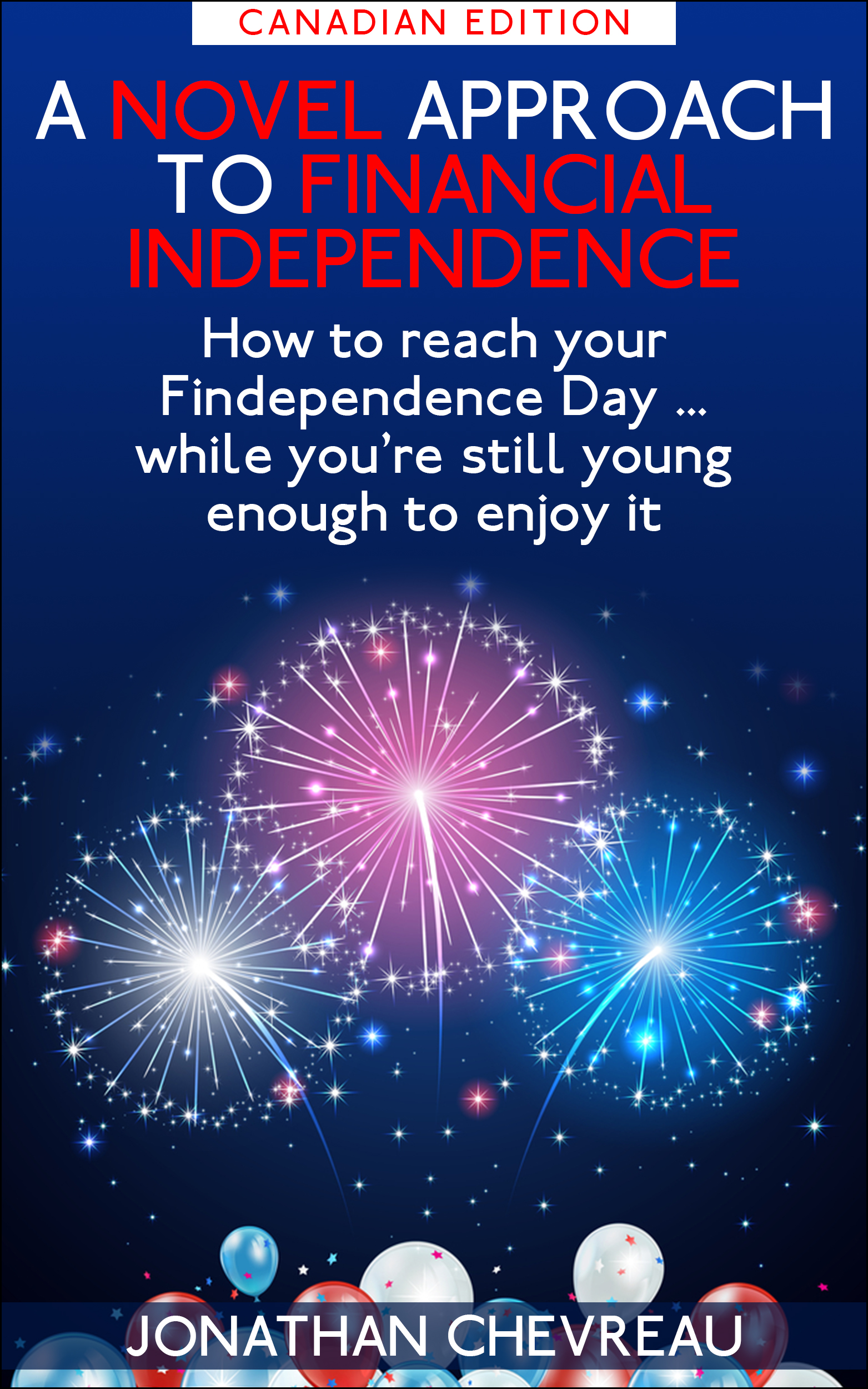
CdnEBookCover2For those who missed the announcement on sister site FindependenceDay.com, here is the  blog on this morning’s launch of the Canadian edition of A Novel Approach to Financial Independence: How to Reach Your Findependence Day …While You’re Still Young Enough to Enjoy it.

As we say in the ad at the top of Findependence.TV, it costs only US$2.99/C$3.37, takes a minute to download and maybe an hour to read … but it could literally change your life.

Don’t believe it? Read elsewhere on this site how the original book inspired one millennial, Sean Cooper, to become mortgage free and independent by age 31.

If anyone pre-ordered the e-book, it should now be on your Kindle or Kindle app on other devices. If you like it, or even if you didn’t, please share your feedback with a short review at Amazon.ca or Amazon.com.

One last thing, the five discussion forums should be up and running. We’ve seeded each with a starter thread to stimulate dialogue.

Songs of Innocence: I still like U2’s iTunes gambit

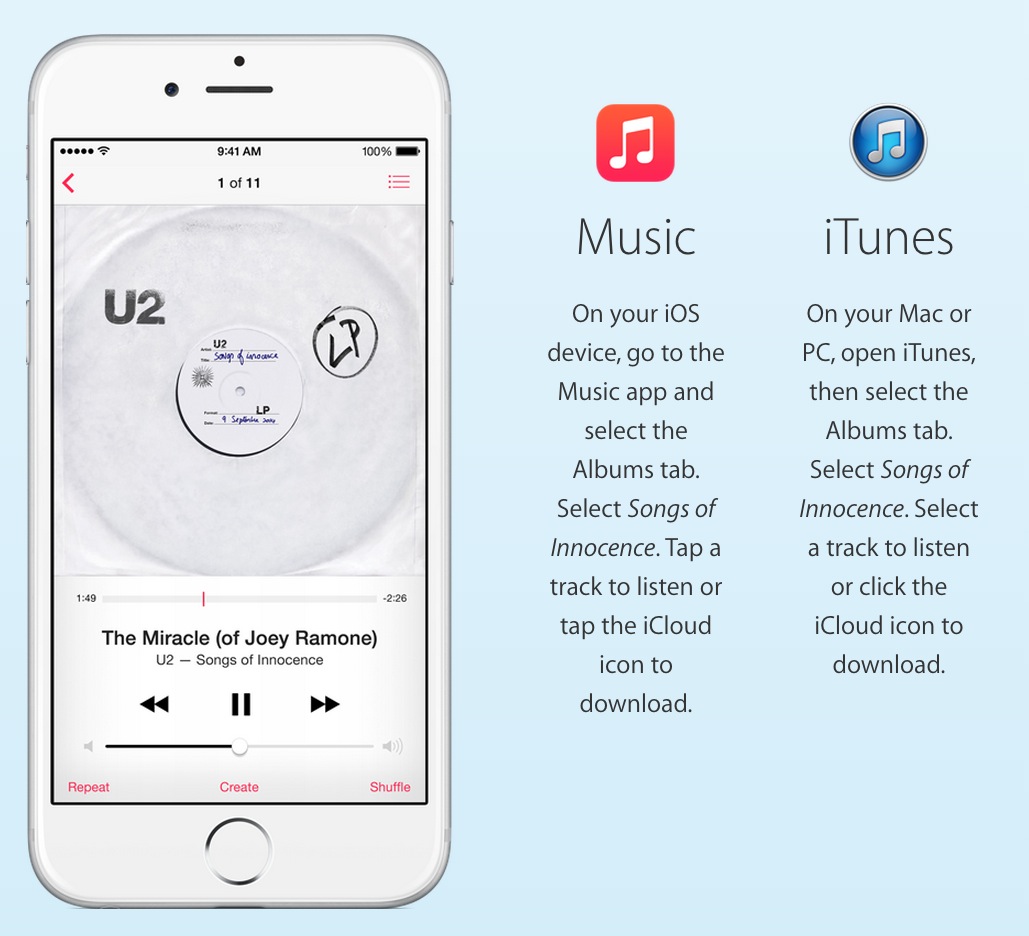
U2iPhoneInteresting followup in the New York Times on the weekend to the September 9th release of U2’s album, Songs of innocence and its controversial decision to download it unasked-for on to the playlists of half a billion iTunes users. Despite the blowback, the paper reports that 100 million people have listened to at least a song or two and 30 million people had listened to the whole album.

Including me. In this blog at our sister site a few weeks ago, I argued that U2 is going to be repaid for its experiment with many more paid downloads of its back catalogue. That’s how I justified the Financial Independence angle in the blog: it was more about U2’s ultimate findependence than that of its listeners. Still, I feel richer for the listening exprience.

In fact, after I wrote the first blog on the old site, I confessed I had bought two more U2 albums each for $5.99. Since I posted that, and as I predicted of myself, I’ve purchased most of the other albums I missed. My 23-year old daughter is already berating me for playing nothing but U2: as I said earlier, when it comes to music, I’m a serial monogamist.

Right now, I like No Line on the Horizon the best of all U2’s albums. I had totally missed it when it came out in 2009, its 12th album. Remember, and as the Times points out, it was almost exactly a decade ago that Steve Jobs and U2 appeared on stage together to introduce “an odd-sounding device called the iPod and a marketplace for music called iTunes.”


Let’s banish the term “Retirement”!

Kitces_Pic__1
Michael Kitces (Twitter.com)

Regular readers won’t be surprised to see an installment  dedicated to the difference between Retirement and my preferred term Financial Independence. However, I’m by no means the only person endeavouring to make this distinction. The other day a prominent American financial planner and influential blogger, Michael Kitces, called for a shift in focus for his profession in this essay published on his blog.

He noted that for most of its history the term “retirement” has been synonymous with “not working.” For all the pleasant imagery of golf, vacations and walking on the beach, the historical context for the term retirement was, Kitces wrote, “a mechanism to ‘force’ people out of jobs they were no longer competent to perform. Programs like Social Security were originally a way to soften the blow for those forced out of the workplace into retirement … and they weren’t expected to live long in that retirement in any case.

Total leisure may not lead to happiness

But research is showing that a total cessation of work in favor of a life of 100% leisure “does not actually create the happiness that we might have expected,” Kitces says, “Leisure as an occasional break from work is appealing, but a full-time life of leisure can become boring once the novelty wears off.”

This is exactly what Financial Post writer Andrew Allentuck once told me: Allentuck himself has passed the traditional retirement age of 65 but he continues to write a weekly Family Finance feature focused on the retirement readiness (or lack thereof) of various couples in their 50s and 60s (usually.) When I asked him about this, Allentuck said simply, “Retirement is boring” and added that self-evident truth that the more you work, the more money you have.

Kitces observes that being productively engaged in work brings about the meaning and purpose in life that fuels positive well-being. The work environment also provides a source of interaction with others to fuel our social well-being. This explains the rise of part-time work in retirement or even entire new “encore” careers on the part of those who, financially speaking, could afford never to work for money again.

The financial industry has held out the state of “not working” as the ultimate goal and reward for decades of career success, yet those that reach the retirement finish line often find themselves “unhappy and unfulfilled” after a few months or years. The words in quotes is Kitces’s phrasing, which he follows by suggesting it may be time to rename retirement.

Findependence more achievable than Retirement

rogerwohlner
Roger Wohlner (from Twitter, @rwohlner)

His suggested alternative? You guessed it: financial independence. My own call to shift the discussion from Retirement to Financial Independence was articulated in a guest blog I wrote more than a year ago for Roger Wohlner, aka The Chicago Financial Planner.

Here’s how Kitces frames the discussion: “Being financially independent is about being independent from the need to work, which then opens the door to more productive conversations about whether we want to work, and what meaningful work might be.” (his emphasis).

I have noted before that for young people for whom retirement is a distant and seemingly impossible prospect, Financial Independence is a much more doable goal. Kitces says as much when he provides a nod to my book, writing that “For many, their ‘Findependence Day’ may be much more achievable than a full-on retirement, in addition to being more personally satisfying and conducive to well-being!”

But he adds that you can’t plan for financial independence until it’s identified in the first place. Addressing other financial planners and their interactions with clients, he closes: “So the next time you’re talking about ‘retirement,’ think about ‘financial independence and see where the conversation goes!”

— Jon Chevreau

Welcome to the Financial Independence Hub!

Welcome to the Hub!

We are a North American portal site dedicated to all things related to Financial Independence: blogs, books, podcasts, discussion forums, web videos and the like. We are not a site about Personal Finance per se. Personal Finance is all about tactics, not long-term strategy. Nor are we strictly a site about Retirement. We believe there is a profound difference between the traditional concept of “Retirement” and the paradigm shift we call Financial Independence. We always refer readers to Wikipedia’s definition of financial independence.

To save syllables speaking about financial independence, we’ve invented the contraction “Findependence.” The state of being financially independent we call “findependent.” Therefore we have also unveiled a mirror site to help save a few keystrokes: www.findependencehub.com. We expect it to get more use as the term “Findependence” gains currency.

Continue Reading…