

All posts by Jonathan Chevreau

Weekly Wrap: “Heightened uncertainties” from the Fed, hedging risk, bear books

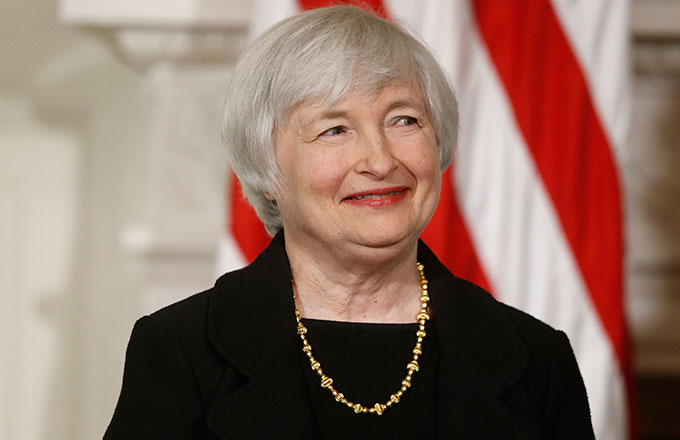
yellen
Janet Yellen

I have just returned from a two-week trip to Hong Kong and Taiwan, just in time for the Federal Reserve’s long-awaited decision to delay the first rate hike since the financial crisis.

The key phrase “Heightened uncertainties abroad,” spoke as loudly as the lack of action, as Fed chairwoman Janet Yellen noted the risks of both China and Emerging Markets in generally spilling over into the United States.

Hedging in the Retirement Risk Zone

For those of us who are in the “Retirement Risk Zone,” — including Yours Truly — the caution behind the Fed’s decision could suggest that for some it may be appropriate to dial down portfolio risks. Since late August, I have followed my personal financial adviser’s recommendation to remain invested but to hedge back one third of US and Canadian equity exposure.

Generally, at whatever age, it makes little sense to take more risk than you need to take and the Fed’s decision (or non-decision) underlines that there are still extensive risks out there, certainly in the equity markets as well as fixed income. Fred Kirby, a fee-for-service planner at Dimensional Investment Planning, says it’s time to be cautious and protect profits. As I quoted him earlier this year, he suggests that those who are averse to market timing can consider the newer “low-volatility” ETFs. For Canadian exposure, he suggests the BMO Low Volatility Canadian Equity ETF (ZLB), which holds 40 stocks deemed to have the lowest risk. For U.S. stocks he likes the BMO Low Volatility US Equity ETF (ZLU), which uses the same methodology and holds 100 companies. For international equities, Kirby likes the iShares MSCI EAFE Minimum Volatility Index ETF (XMI). (There’s also an iShares low-vol ETF for Emerging Markets).

“These ETFs automatically position the cautious investor for any additional future gains without having to make a market-timing re-entry decision,” Kirby says. “This could be just the sort of compromise that lets some investors stick with their investment plans even when they do not want to.”

Actively Managed ETFs

On the same subject (ETFs), my latest Financial Post ETF column ran earlier this week, tackling actively managed ETFs. See Why Fund Investors Should Get Active with their ETFs.

Bear books revisited
Continue Reading…

Bob Cable’s case for seasonal market timing (Review of Inevitable Wealth)

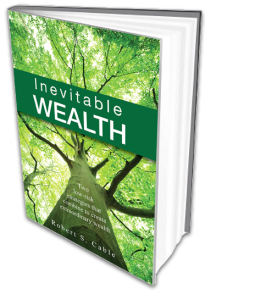
inevitablewealth-266x300While stocks are viewed by most of the financial industry as the main ingredient for creating wealth, it’s well known that the price for higher expected returns is higher risk. The paradox is that in order to increase the odds of creating greater wealth, you have to be willing to lose some wealth at least in the short term.

All of which makes Robert S. Cable’s newly published book (his second) of more than theoretical interest. Inevitable Wealth bears the subtitle Two low-risk strategies that combine to create extraordinary wealth.

We have touched on this book and its belief in the long-term power of equities in a recent review I did at the Financial Post, where I compared Inevitable Wealth to David Trahair’s Enough Bull. You can also find guest blogs by both authors here at the Hub, where the pair make the cases for mostly stocks in the first case, and mostly fixed income (i.e. GICs) in the second.

I had read both books earlier in the summer, well before the extreme market volatility of late August. Ironically, both books would have helped you preserve capital, depending on how you implemented the suggestions: Continue Reading…

Weekly Wrap: The Market’s near-death experience, magazine reverse indicators, the options of frugality

screen shot 2015-08-27 at 9.14.03 amThe 1,000+ point drop in the Dow Jones Industrial Average Monday morning will long be remembered by investors but, unless you sold everything at market prices in a panic that morning, those that just sat it out (or meditated, as we suggested that morning) were fine by week’s end. You can find a nice recap of the market’s near-death experience in this WSJ article, complete with charts:   U.S. stock swings don’t shake investors.

Still, the scary start to the week was enough for one magazine to create the cover shown to the left. In what some bulls interpreted as a “reverse indicator,” the current cover story of  Bloomberg Businessweek features not just one but several bears on its cover.

In a commentary on that phenomenon, Business Insider’s Myles Udland noted that the market often does the opposite of what magazine cover indicators may be suggesting, which would make a bear cover bullish. Remember, Business Week famously proclaimed The Death of Equities in a cover in 1979, triggering a multi-year bull run.

China & other submerging markets

Mid-week rallies aside, one reason for the continued bearishness is China and other Emerging(“Submerging?”) Markets. One of Bloomberg BusinessWeek’s accompanying stories was entitled Will the Next Recession be Made in China? It noted that after Monday morning’s 1,000 point-plus drop, all markets seemed to be correlated: that “the world suddenly seemed like a very small place.” Continue Reading…

Another bad day on markets — try Meditation

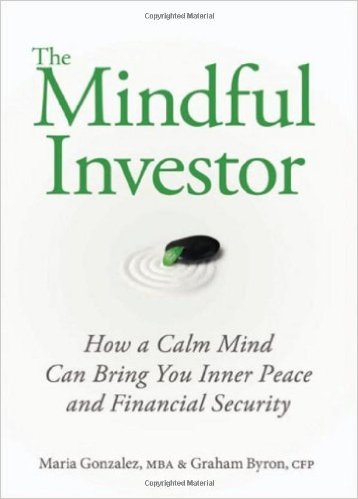
41KxcsypMRL._SX356_BO1,204,203,200_Panicky stock markets in China are spreading to Asia and the rest of the world today. Over the weekend my Twitter feed provided links to various stories arguing the case against panic but clearly there’s extreme anxiety in the air and investors are going to do what they’re going to do.

At the Wall Street Journal, Jason Zweig described five things investors shouldn’t do right now. The New York Times advised Take some deep breaths and don’t do a thing. Here in Canada, the Globe & Mail’s Rob Carrick took a similar stance: Relax, a stock market pullback was overdue.

Deep breaths, relaxing? Sounds a bit like meditation. And that might be as valuable a thing to try right now than a belated attempt to lock the stock market barn after the horse has already escaped.

Here’s a review I did for the FP four years ago of the book illustrated to the left:  The Mindful Investor, Maria Gonzalez. The advice then was that the next time the markets crash, try to calm your mind with meditation. For a video interview I conducted with the author then, click on Mindfulness over Market Matters.

On page 152, the book specifically mentions how to deal with a stock market correction through a relaxation technique. “Once you feel calmer and more stable, you’ll be be better able to listen and make good decisions, ones that aren’t based on panic and fear.”

Of course, the more you watch the carnage through the media and web, the harder this is going to be. You might want to reread Steve Lowrie’s Hub post: Stop reacting to market noise.

Vanguard:  Consider doing nothing at all

Continue Reading…

Weekly Wrap: Dow Theory sell signal?, Electoral goodies for homeowners, will Robos make your dreams come true?

markHulbert_480
Mark Hulbert, Marketwatch.com

Influential investment newsletter ranker and market analyst Mark Hulbert says the Dow Theory just flashed a Sell Signal as Thursday’s swooning stock markets closed.

Two of three conditions for a “sell” signal were already in place before this week’s meltdown: the Dow Jones Industrial Average and the Dow Jones Transportation Average both must experience a significant correction from their joint new highs; then in any significant rally attempt following that correction, one or both  Dow averages must fail to rise above their pre-correction highs. As Hulbert notes, the first two conditions were met earlier this year: after sharp declines in January, the Dow Transports were not able to join the Dow Industrials in rising to new highs.

The third condition is that both averages must then drop below their respective correction lows. Hulbert says the “third and final hurdle of a Dow Theory ‘sell’ signal was generated at Thursday’s close when it broke under the low identified in step 1, which was 17,164.95.”

However, Hulbert says not all followers of the Dow Theory are throwing in the towel just yet, at least until the action in the broader S&P500 index confirms the negative action of the far narrower Dow indexes. Hulbert says Jack Schannep, editor of TheDowTheory.com, “acknowledges the original version of the Dow Theory has indeed emitted a ‘sell’ signal” but Schanne’s modified theory that focuses on the S&P500 as well as the Dow averages won’t generate a “Sell” signal until the S&P 500 closes below its January closing level of 1992.67. Even after Thursday’s carnage, the S&P500 was still 2.2% above its January low. Something to watch in Friday’s action: if that occurs, you can expect some pretty gruesome reading in this weekend’s financial pages.

It’s probably a good time to talk to your financial advisor but before taking drastic action of any nature, you might want to go back and read Steve Lowrie’s Hub posts that began each of the last three weeks, such as Stop reacting to Market Noise or Stop feeding on Junk Media.

The commodities sell-off

About the only thing that wasn’t headed south this week is gold, which has been in the doldrums for ages, along with oil and most other commodities. This week’s The Economist has a good summary of the dire situation of the commodities market: The Sell-off in Commodities: Goodbye to all that. It warns “the latest leg down in crude prices may not yet have run its course.”

Continue Reading…