Starting last week, I’ve again begun blogging on a regular basis for the Financial Post. (Back when I was a staff columnist there, we ran the Wealthy Boomer blog for several years.)
Three significant developments in the ETF and robo-adviser space late this week, the full recap of which can be found in my new Weekly Wrap that may run online Fridays in the Financial Post. You can find the link for the first one here.
Horizons ETFs has rejigged fees on its popular Canadian equity fund, Horizons S&P/TSX 60 Index ETF [ticker HXT,] to just 0.03% or three basis points (plus taxes, down from the previous 0.05%. Previously the low-fee threshold was 0.05%, shared with three other providers.
Meanwhile, Questrade Wealth Management launched two actively managed ETFs, a global equity fund plus a fixed income ETF subadvised by institutional money manager, Jarislowsy, Fraser Ltd. These expand the lineup of six Questrade Smart ETFs launched in March.
On Thursday, the Canadian Securities Administrators (CSA) issued CSA Staff Notice 31-342 directed at portfolio managers providing online advice, popularly known as robo advisers. The CSA says it may conduct compliance reviews of online advisors within one or two years following launch, particularly as operations become more complex than the first generation that had basic ETFs or mutual funds as its underlying investments, and “uncomplicated” asset allocation models.
My latest MoneySense blog features 30-year old millennial and financial writer Sean Cooper, who is having a mortgage-burning party tonight to celebrate his paying off his mortgage in just three years. See Mortgage free by 31.
The book argues in particular that “the foundation of financial independence is a paid-for house.”
Cooper apparently took this message to heart because. He doesn’t even turn 31 for a few more months and has set his next goal to achieve a net worth of $1 million within four years. Well done, Sean, may you serve as an inspiration to your generation!
I have just returned from a two-week trip to Hong Kong and Taiwan, just in time for the Federal Reserve’s long-awaited decision to delay the first rate hike since the financial crisis.
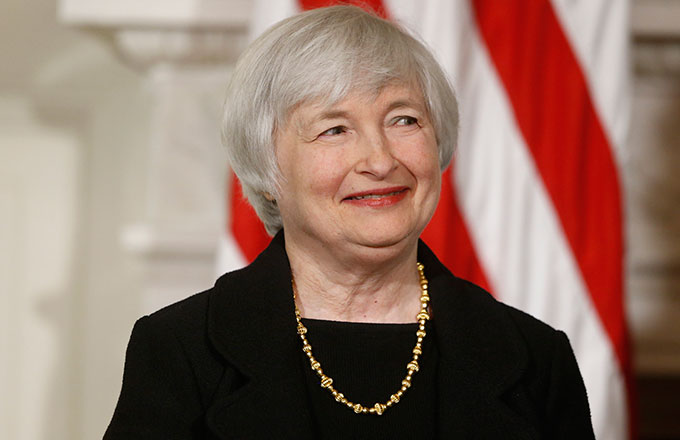
The key phrase “Heightened uncertainties abroad,” spoke as loudly as the lack of action, as Fed chairwoman Janet Yellen noted the risks of both China and Emerging Markets in generally spilling over into the United States.
Hedging in the Retirement Risk Zone
For those of us who are in the “Retirement Risk Zone,” — including Yours Truly — the caution behind the Fed’s decision could suggest that for some it may be appropriate to dial down portfolio risks. Since late August, I have followed my personal financial adviser’s recommendation to remain invested but to hedge back one third of US and Canadian equity exposure.
Generally, at whatever age, it makes little sense to take more risk than you need to take and the Fed’s decision (or non-decision) underlines that there are still extensive risks out there, certainly in the equity markets as well as fixed income. Fred Kirby, a fee-for-service planner at Dimensional Investment Planning, says it’s time to be cautious and protect profits. As I quoted him earlier this year, he suggests that those who are averse to market timing can consider the newer “low-volatility” ETFs. For Canadian exposure, he suggests the BMO Low Volatility Canadian Equity ETF (ZLB), which holds 40 stocks deemed to have the lowest risk. For U.S. stocks he likes the BMO Low Volatility US Equity ETF (ZLU), which uses the same methodology and holds 100 companies. For international equities, Kirby likes the iShares MSCI EAFE Minimum Volatility Index ETF (XMI). (There’s also an iShares low-vol ETF for Emerging Markets).
“These ETFs automatically position the cautious investor for any additional future gains without having to make a market-timing re-entry decision,” Kirby says. “This could be just the sort of compromise that lets some investors stick with their investment plans even when they do not want to.”
While stocks are viewed by most of the financial industry as the main ingredient for creating wealth, it’s well known that the price for higher expected returns is higher risk. The paradox is that in order to increase the odds of creating greater wealth, you have to be willing to lose some wealth at least in the short term.
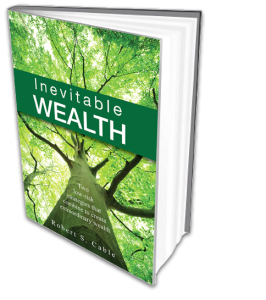
All of which makes Robert S. Cable’s newly published book (his second) of more than theoretical interest. Inevitable Wealth bears the subtitle Two low-risk strategies that combine to create extraordinary wealth.
We have touched on this book and its belief in the long-term power of equities in a recent review I did at the Financial Post, where I compared Inevitable Wealth to David Trahair’s Enough Bull. You can also find guest blogs by both authors here at the Hub, where the pair make the cases for mostly stocks in the first case, and mostly fixed income (i.e. GICs) in the second.
I had read both books earlier in the summer, well before the extreme market volatility of late August. Ironically, both books would have helped you preserve capital, depending on how you implemented the suggestions: Continue Reading…


 Posted By
  Starting last week, I’ve again begun blogging on a regular basis for the Financial Post. (Back when I was a staff columnist there, we ran the Wealthy Boomer blog for several years.)