General

How to Monetize your Creative Hobby as a Side Hustle

Image Source: Pexels

By Beau Peters

Special to the Financial Independence Hub

Side hustles are becoming more popular than ever. As technology advances, e-commerce stores and selling platforms like Etsy have made it possible for people to monetize their creative hobbies and turn them into viable businesses.

Even if you don’t want to run a full-fledged business, the hobby you love could end up becoming a successful side hustle if you’re willing to put in a bit of time and effort. Whether you want a little extra cash each month or you’re trying to build a brand name for yourself, selling your creative products online can help you find financial independence: and have fun doing it!

So, whether you’re into photography, pottery, crocheting, or drawing/painting, chances are there’s an audience out there that would love to purchase your creations.

Let’s take a closer look at how you can monetize your creative hobbies and make a profit doing what you love.

Think of yourself as a Business

The best thing you can do as you work to monetize your hobbies is to think of what you’re doing as a business. Even if you’re only working on it part-time for a little extra income, you’ll end up being more successful with a business mindset. That includes understanding things like:

  • Finances;
  • Marketing;
  • Sales
  • Customer service

You’ll also want to make sure you understand how creative operations work. Even if you’re doing everything on your own, creative operations will make it easier for you to manage your workflow and optimize every step of what you’re doing. When you’re putting time into a side hustle, every second counts. Creative operations make it easier to produce high-quality work as efficiently and effectively as possible.

Consider whether you can commit to the business side of your side hustle. You don’t need to devote all of your time to it, but if you want to make money and build up a following, having certain business practices in place is important. It’s also crucial when it comes to keeping things organized and keeping your finances in order. You don’t have to have a marketing degree to market your side hustle. However, if you’re not sure about running your side hustle like a business, consider hiring someone on a part-time basis to keep things moving forward and to ensure you’re staying organized.

Find Financial Freedom

It’s estimated that 40% of Americans currently have a side hustle. The uncertainty of the COVID-19 pandemic caused many people to start freelancing or forced them to look for ways of bringing in extra income. Even in a post-pandemic society, the popularity of side hustles continues to grow, especially for those who love what they’re doing. Continue Reading…

Recession “most probable” scenario for US and Europe in 2023: Infrastructure plays attractive, says ClearBridge


Image: Pexels/Engin Akyurt

’Tis the Season for economic forecasts. Further to the Vanguard 2023 outlook highlighted on the Hub yesterday comes various forecasts from Franklin Templeton Investments and its sub-advisors.

The selections below suggest Recession is the most likely scenario for 2023 — something Vanguard also forecast — and ClearBridge Investments sees Infrastructure assets as more promising than global equities during this period. Clearbridge runs the Franklin Clearbridge Sustainable Global Infrastructure Income Active ETFSee also this blog on Infrastructure investing from BMO ETFs, which ran on the Hub late in August.

As with Monday’s blog, we’ve highlighted relevant paragraphs directly from the horse’s mouth, including the subheadings from the various money managers. Unless otherwise indicated, images are from our image banks.

ClearBridge Investments: U.S. economic outlook by Investment Strategist Jeff Schulze

Recession is the path of least resistance

As we look ahead to 2023, recession has gone from a distantly possible scenario to the most probable one, and the potential pivot by the Fed that many equity investors are hoping for is unlikely to occur.

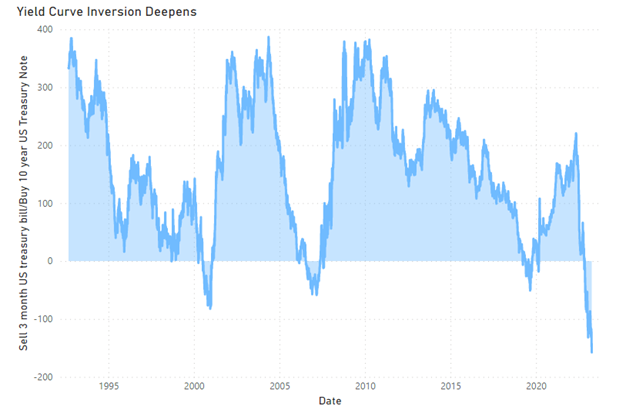
Our views are grounded in the reading of the ClearBridge Recession Risk Dashboard of 12 economic indicators, which has been flashing red for the past four months, indicating a recession. Eight of the 12 underlying indicators are signaling recession, including traditional recession precursors, like the 10- year/3-month Treasury yield curve, which inverted this fall. This portion of the yield curve has correctly anticipated the last eight recessions dating back to 1970, providing an average of 11 months of warning.

Image: Pexels/Mart Production

A recession is not a done deal, however. The most likely positive path involves what we have dubbed the “immaculate slackening” where the labor market tightens but not too many jobs are lost. Job openings are still more than 3 million above their pre-pandemic level (but down 1.5 million from the peak), while the total number of persons employed is only around 1 million greater than before COVID-19. This suggests room exists to loosen labor demand but not destroy as many jobs, which would help restore balance and ease wage gains. Importantly, this could help ease inflation, particularly in service industries where wages are a larger component of prices.

The most important factor to achieve a soft landing is a substantial reduction in inflation, which would allow the Fed to back off its aggressive actions. With inflation unlikely to return to 2% in 2023, and the labor market proving resilient, the Fed is likely to continue to tighten monetary policy to slow the economy and curb price increases, which will ultimately result in a recession. Monitoring the health of the labor market will be important in the coming year, given its role as a key inflation barometer for the Fed. We will also be looking for signs of weakening consumption outside of the most interest rate sensitive areas as evidence that a slowdown is taking deeper root.

ClearBridge Investments: Global infrastructure outlook by Portfolio Managers Charles Hamieh, Shane Hurst and Nick Langley

Infrastructure earnings more secure than global equities; U.S. expected to focus on renewables

From no growth in 2020 to rapid growth in 2021 to slow growth in 2022, we look at 2023 with a base case of recessions in the U.S., Europe and the U.K.

The impact on infrastructure, though, should be muted, particularly for our regulated assets, where the companies generate their cash flows, earnings and dividends from their underlying asset bases, as we expect those asset bases to increase over the next several years. As a result, infrastructure earnings look better protected compared to global equities.

Infrastructure assets more secure than global equities. Image from Franklin ClearBridge

Most infrastructure companies have a link to inflation in their revenue or returns. Regulated assets, such as utilities, have their regulated allowed returns adjusted for changes in bond yields over time. As real yields rise, utilities look poised to perform well, and we have currently tilted our infrastructure portfolios to reflect this.

As a result, the underlying valuations of infrastructure assets are relatively unaffected by changes in inflation and bond yields. However, we have seen equity market volatility associated with higher bond yields impact the prices of listed infrastructure securities, making them more compelling when compared with unlisted infrastructure valuations in the private markets.

On top of its relative appeal versus equities, infrastructure should benefit from several macro drivers in 2023 — and beyond. First, energy security is driving policy right now, and a significant amount of infrastructure will need to be built to attain energy security. High gas prices and supply constraints brought on by the Russia/Ukraine war have highlighted the importance of energy security and energy investment. This is supportive of energy infrastructure, particularly in Europe, where additional capacity is needed to supplant Russian oil and gas supply, and in the U.S., where new basins are starting up, in part to meet fresh demand from Europe. Continue Reading…

Vanguard says Balanced portfolios still offer best chance of success as Inflation gets beaten back

While the traditional 60/40 balanced portfolio has suffered its worst year in decades, and Recession is likely in 2023, the Vanguard Group is optimistic that balanced portfolios will thrive beyond 2023 and over the rest of the decade.

A balanced portfolio still offers the best chance of success,” is one of the top conclusions that will be unveiled Monday:  Vanguard Canada is hosting its Economic and Market Outlook for 2023, with a global virtual press conference scheduled at 11 AM [Dec. 12].  It includes Vanguard economists such as Global Chief Economist Joe Davis.

Below, received last week under embargo, are highlights of a report titled Vanguard Economic and Market Outlook for 2023: Beating back inflation. It runs about 60 pages, including numerous charts.

The text below consists mostly of excerpts from the Vanguard report, with the use of an ellipsis to indicate excisions, so there are no passages in quotation marks. Subheads are also taken from the original document. Apart from a handful of charts reproduced below, references to numerous other charts or graphs have been removed in the excerpts selected below.

Base case for 2023 is Disinflation

Our base case for 2023 is one of disinflation, but at a cost of a global recession. Inflation has likely already peaked in most markets, but reducing price pressures tied to labor markets and wage growth will take longer. As such, central banks may reasonably achieve their 2% inflation targets only in 2024 or 2025.

Consistent with our investment outlook for 2022, which focused on the need for higher short-term interest rates, central banks will continue their aggressive tightening cycle into early 2023 before pausing as inflation falls. As such, our base case has government bond yields generally peaking in 2023. Although rising interest rates have created near-term pain for investors, higher starting rates have raised our return expectations for U.S. and international bonds. We now expect U.S. and international bonds to return 4%–5% over the next decade.

Equity markets have yet to drop materially below their fair-value range, which they have historically done during recessions. Longer term, however, our global equity outlook is improving because of lower valuations and higher interest rates. Our return expectations are 2.25 percentage points higher than last year. From a U.S. dollar investor’s perspective, our Vanguard Capital Markets Model projects higher 10-year annualized returns for non-U.S. developed markets (7.2%–9.2%) and emerging markets (7%–9%) than for U.S. markets (4.7%–6.7%).

Global inflation: Persistently surprising

Our base case is a global recession in 2023 brought about by the efforts to return inflation to target … growth is likely to end 2023 flat or slightly negative in most major economies outside of China. Unemployment is likely to rise over the year but nowhere near as high as during the 2008 and 2020 downturns. Through job losses and slowing consumer demand, a downtrend in inflation is likely to persist through 2023. We don’t believe that central banks will achieve their targets of 2% inflation in 2023, but they will maintain those targets and look to achieve them through 2024 and into 2025 — or reassess them when the time is right. That time isn’t now.

Global fixed income: Brighter days ahead

The market, which was initially slow to price higher interest rates to fight elevated and persistent inflation, now believes that most central banks will have to go well past their neutral policy rates — the rate at which policy would be considered neither accommodative nor restrictive — to quell inflation.

Rising interest rates and higher interest rate expectations have lowered bond returns in 2022, creating near-term pain for investors. However the bright side of higher rates is higher interest payments. These have led our return expectations for U.S. and international bonds to increase by more than twofold. We now expect U.S. bonds to return 4.1%–5.1% per year over the next decade, compared with the 1.4%–2.4% annual returns we forecast a year ago. For international bonds, we expect returns of 4%–5% per year over the next decade, compared with our year-ago forecast of 1.3%–2.3% per year.

Global equities: Resetting expectations

The silver lining is that this year’s bear market has improved our outlook for global equities, though our Vanguard Capital Markets Model (VCMM) projections suggest there are greater opportunities outside the United States.

Stretched valuations in the U.S. equity market in 2021 were unsustainable, and our fair-value framework suggests they still don’t reflect current economic realities.

Although U.S. equities have continued to outperform their international peers, the primary driver of that outperformance has shifted from earnings to currency over the last year. The 30% decline in emerging markets over the past 12 months has made valuations in those regions more attractive. We now expect similar returns to those of non-U.S. developed markets and view emerging markets as an important diversifier in equity portfolios.

Within the U.S. market, value stocks are fairly valued relative to growth, and small-capitalization stocks are attractive despite our expectations for weaker near-term growth. Our outlook for the global equity risk premium is still positive at 1 to 3 percentage points, but lower than last year because of a faster increase in expected bond returns

Continue Reading…

Canada’s Real Estate Affordability Battle


By Dale Roberts, cutthecrapinvesting

Special to the Financial Independence Hub

In my latest for MoneySense, I look at the affordability battle in Canada. Home prices are falling at the fastest clip in the last 20 years. But borrowing costs are also increasing. Mostly, it’s a wash. Even from the bubble peak in February of 2022 to July 2022, things have not improved for homeowner wannabes. Real estate is the most interesting and ‘exciting’ sector in 2022. Have a read of the real estate affordability battle in Canada.

Higher rates take on falling home prices on MoneySense.

In this post I will offer up a few of the important charts, but check out that MoneySense post for the wider perspective.

Average home prices down 22% in July

Home prices are falling fast. After a strong COVID-inspired real estate run, prices are now in a free fall. After peaking at $816,720 in February 2022, the national average house price fell 18.5% to $665,850 in June. The average price fell again in July, settling at $629,971—nearly 22.9% below the peak.

The average national home price in August increased to $637,673.

CREA

The national average price is heavily influenced by sales in Greater Vancouver and the GTA, two of Canada’s most active and expensive housing markets. Excluding these two markets from the calculation cuts $114,800 from the national average price.

Real estate ridiculousness

And here’s some longer term history using average Toronto home prices as an example. It was a crazy run.

  •  Average Toronto home price in 2000: $243,255
  •  Average Toronto home price in 2010: $431,262
  •  Average Toronto home price in 2021: $1,095,336

Rates are going up, up, up

In that battle against runaway inflation, central bankers are raising rates. Borrowing costs mostly follow suit. Here’s the path in Canada for fixed and variable rates mortgages.

And of course, on Wednesday September 7, the Bank of Canada increased rates another 75 bps, or 0.75%. Variable is getting more expensive.

  • A 5-year fixed will now run you about 5.04%.
  • A 5-year variable will increase to about 4.90%.

The B0C offers that they’re not done yet. There are more rate hikes to come.

Given the outlook for inflation, the Governing Council still judges that the policy interest rate will need to rise further. Quantitative tightening is complementing increases in the policy rate. As the effects of tighter monetary policy work through the economy, we will be assessing how much higher interest rates need to go to return inflation to target. The Governing Council remains resolute in its commitment to price stability and will continue to take action as required to achieve the 2% inflation target.

Bank of Canada

Variable rates will automatically follow Bank of Canada rate hikes. Fixed rates will follow the bond market, and the bond market will make a guess about the near and future path of rate hikes. The rate hike on September 7 was mostly already priced into the bond markets.

The money chart on affordability

In the MoneySense post you’ll find the telling table comparing costs for variable and fixed rate mortgages, for 10% and 20% down payment scenarios. Here was the working copy table. Continue Reading…

Learn why you should Buy This, Not That

By Mark Seed, myownadvisor

Special to the Financial Independence Hub

Let’s face it, saving and investing should be simple.

  1. Save, automate your savings to buy stocks.
  2. Invest in stocks and/or low-cost products that invest in stocks to avoid mutual fund salespeople.
  3. Disaster-proof your life by having some cash stashed.
  4. Rinse and repeat.

But simple is not easy.

All too often, we humans love to make things far more complex than things need to be.

We’re wired that way unfortunately. Egos often get in the way. 

Given many people continue to struggle with personal finance, every day, there are tens of thousands of books published out there on this subject – building and maintaining a responsible investment portfolio is only part of the personal finance success equation…

Learn why you should Buy This, Not That

Sam Dogen (aka Financial Samurai) knows a thing or two about personal finance success.

Sam founded FinancialSamurai.com in July 2009 during the depths of the global financial crisis.

Sam’s goal through that site was to deliver and share a cathartic way to make sense of the chaos at the time. Fast forward to today, more than 90 million people have visited Financial Samurai, and tens of millions more have read his work on publications such as CNBC, Yahoo Finance, and Business Insider.

Sam was previously at Goldman Sachs and Credit Suisse for 13 years – but he’ll share more details below!

When Sam is not writing or playing with his kids, you can find him on a tennis court or softball field in San Francisco, or on My Own Advisor giving away a book!

Sam is a graduate of The College of William & Mary and received his MBA from UC Berkeley.

I got a chance to chat with Sam recently about his new book: Buy This, Not That – How to Spend Money Your Way to Wealth and Freedom.

Here is our interview below before Sam:

Sam, welcome to the site – I know you’ve left a few comments over the years and nice to see you back!

Mark, a pleasure. I enjoy reading about your personal finance independence journey in Canada and seeing you help others with their journeys at the same time as well!

Sam, maybe not everyone is aware of your financial journey and Financial Samurai beginnings. Can you share a bit of your bio with my readers? Where do you live, what have you invested in, and “how did you get here” to writing this book?

Sure thing, Mark.

I grew up in The Philippines, Zambia, Japan, Taiwan, and Malaysia before coming to America for high school and college at William & Mary. My parents were in the U.S. foreign service.

After college, I joined Goldman Sachs in NYC in their international equities department. It was a dream job, except for the fact I had to get in at 5:30 am and often leave after 7 pm! As a result, I decided to save and invest 50% of my after-tax paycheck so I could one day have options to escape.

In July 2009, I started Financial Samurai and helped kickstart the modern-day FIRE movement. It’s been great to see so many people embrace their financial independence journey since then. My definition of financial independence is having enough passive investment income to pay for your basic living expenses.

I decided to write Buy This, Not That because I felt it had to be written. When I started Financial Samurai, there weren’t a lot of personal finance bloggers with finance backgrounds. I noticed when I first got my book offer in early 2020, there weren’t many finance authors with finance backgrounds either! So, I decided to fill this hole and provide my perspective.

Instead of scratching the surface, I decided to go deep into many financial topics. I then tackled some of life’s biggest dilemmas many of us all face.

Learn why you should Buy This, Not That! Sam Dogen

Great stuff.

Sam, in your book, you wrote:

“My first hope with Buy This, Not That is to help you let go of the fear of making a wrong financial choice. Let that sink in: there are no wrong money choices, just as there are no perfect choices, only optimal or suboptimal.”

Talk to me about your investing and wealth-building journey. What mistakes did you make? What successes did you have? What did this teach you and what do you hope to pass along to others in the book?

Mark, I made the suboptimal choice of buying a vacation property I didn’t need in 2007. I got it for 15% off, but it ended up declining by another 40% during the financial crisis! Luckily, most of its value has recovered and I’ve been taking my kids there since 2018.

Not extrapolating my income into the future was my biggest lesson learned. I was paid very well in 2007 and thought my income was just going to go higher. Life is full of ups and downs. Therefore, please be conservative with your income and return forecasts.

One of the key takeaways from the book is to encourage readers to think in probabilities, not absolutes. Don’t think you need 100% certainty to make a choice. Otherwise, you’re going to miss out on a lot of great opportunities.

In The Psychology of Money, Morgan Housel wrote effectively:

You don’t have to be a perfect investor. Getting wealthy and staying wealthy is “about consistently not screwing up.”

I agree with this/have always agreed with this and this aligns nicely to your 70/30 decision making philosophy. Can you explain that for readers and why is that framework so important to you to convey in the book when it comes to investing and wealth-building?

Use my 70-30 decision-making framework to build wealth and make more optimal choices. The framework states that if you believe there’s a 70% probability or greater your choice is the correct one, go for it, while having the humility knowing that 30% of the time, you’re going to get it wrong. And when you do, you will learn from your mistakes and get better.

Once you start approaching everything with a probability matrix in mind, you’re going to gain a tremendous competitive advantage compared to those who don’t.

I like that.

Sam, I personally equate the definition of Financial Independence (FI) as your investments generate enough passive income to cover your day to day living expenses. I’m not into this Barista FIRE, etc. What’s your take? Agree? Disagree? Why?

Yes, since 2009, I’ve stated that being financially independent means having enough investment income to cover your basic living expenses. However, I think Barista FIRE is a reasonable stop gap where you can earn extra income and receive subsidized health care while working a traditionally lower-wage job.

But at the end of the day, don’t fool yourself. If you still need to work, then you are probably not financially independent.

When I left work in 2012 at age 34, I had about $80,000 a year in passive investment income. I knew I wouldn’t starve, but I also wasn’t 100% confident I was doing the right thing. Therefore, I had my wife, who is three years younger than me, keep on working until age 34. If everything worked out with my new adventure, she could join me. In 2015, she was also able to negotiate a nice severance and hasn’t been back to work since.

So, when did you realize FI (Financial Independence)?

In 2012 when I was 34. At the time, I had a net worth of about $3 million that generated about $80,000 a year in passive income. But the biggest catalyst was negotiating a severance that paid for 5-6 years’ worth of regular living expenses. My severance paid all my deferred cash and stock compensation over the next three years. I also had a private investment made in 2010 that wouldn’t come due until 2017 that was fully paid out. Continue Reading…