General

Practical ways to minimize unexpected Medical Bills 

By Emily Roberts

For the Financial Independence Hub

Many of us may  plan ahead for receiving medical bills and know what we need to do to settle them. However, receiving an unexpected medical bill is a whole different ballgame that can throw your finances into disarray. With this in mind, we will be considering some practical ways to minimize unexpected medical bills in the future.

Factors to Consider

Accidents happen all the time. While some of them may leave you unscathed, you should know what you could do to minimize your medical bills if and when you are faced with any.

  • Lawyers: They are particularly useful for those incidents where you got injured or experienced injury, and it was not your fault. Car accidents, incidents at work, and various other situations could lead to injury, and to unexpected medical bills. Hiring the services of personal injury lawyers can ensure that those who are liable for your accident are held accountable. Compensation that is acquired through their services can be used to cover medical bills.
  • Ask Questions: Asking plenty of questions before, during, and after treatment can help to minimize the medical bills that you receive. By regularly asking questions, you can ensure that any needed procedures are covered by your health insurance policy, or that they are affordable if they are outside the area of coverage. Make sure that you understand what your overall medical bill should be at the end of your procedure so that you are not hit by any unexpected costs.
  • Preauthorization Processes: Some health insurance options and some health centers require preauthorization from the insurance providers before going ahead with a procedure or treatment. While this could be an unfortunate discovery for those who desperately need medical attention — mainly if you are then unable to go forth with your treatment — it undoubtedly minimizes the medical bills that you are faced with. Once more, you know what the costs will be and whether your insurance provider covers the treatment, you can make better financial plans.

Emily Roberts is a young writer who is passionate about literature and blog writing.


How to generate retirement income

By Mark Seed, My Own Advisor

Special to the Financial independence Hub

You could argue beyond the how much do I need to retire question, this need comes up next: how to generate retirement income.

Rightly so.

I mean, we all want to know how best to use our retirement incomes sources wisely. Those retirement incomes sources are necessary to help fulfill income needs, while being tax efficient; income to provide some luxuries now and them, or to potentially deliver generational wealth should that be your goal.

My retirement income plan and options

I’ve been thinking about my income plan, or at least my semi-retirement income plan, for some time now.

I captured a list of overlooked retirement income planning considerations here.

Yet I can appreciate not everyone writes about nor thinks about this stuff.

There are obvious ways to generate retirement income but I suspect some might not appeal to you for a few reasons!

Option #1 – Save more

I doubt most people will like this option but it’s probably necessary for many Canadians: you’re going to need to save more than you think to fund your retirement. This is especially true if you have no workplace pension of any kind to rely on and/or you haven’t assessed your spending needs. More money saved will help combat inflationary pressure, rising healthcare costs and longevity risk.  Which brings me to option #2.

Option #2 – Work longer

If you didn’t like option #1, you might not like this one! Working longer into your 60s or potentially to your 70s might be the reality for a good percentage of Gen X and Y.  Part of the reasons these cohorts will need to work longer is because many Boomers remain in the workforce so they can fund their retirement. Some Boomers are continuing to work because they enjoy it. Some are continuing to work because they absolutely have to.

Option #3 – Spend less

The 4% rule remains a decent rule of thumb – it tells us we should be “safe” to withdraw approximately 4% of our portfolio with a minimal chance of running out of money.

Using 4%, a retiree would need $1-million invested to produce a steady income of $40,000 a year. Spending less, will absolutely help portfolio longevity and give stocks in your portfolio a longer time frame to run.

Our initial retirement income plan has us leveraging a mix of income streams in semi-retirement:

  1. Part-time work – to remain mentally engaged – in our 50s.
  2. Taxable but tax-efficient dividend income.
  3. Strategic RRSP withdrawals.

I’m not quite “there” yet in terms of other incomes streams, including TFSA withdrawals and exactly when to take those, but I’m working through that.

Generating retirement income

When it comes to you, options abound. You might have similar income streams or other ideas altogether. Remember, personal finance is personal.

I’ve had the pleasure of working with a few advice-only planners on this site and I’m happy to bring back Steve Bridge, a CFP from Vancouver for his detailed thoughts on this subject. Steve works as an advice-only financial planner with Money Coaches Canada (no affiliation with My Own Advisor). You can find him on that site for his services and you can follow him often on Twitter like I do at @SteveMoneyCoach.

Steve, welcome back to chat about this important subject!

Always a pleasure Mark. I love what you do here and I follow your journey. Continue Reading…

Are life settlements key to solving America’s retirement crisis?

By Lucas Siegel

Special to the Financial Independence Hub

As the retirement crisis continues, the need for workable options for funding retirement becomes even more vital. Today’s senior Americans are at risk of not having enough for necessary living expenses.

Over the years, misconceptions have developed about life settlements and their viability. The truth is, under the right circumstances, taking advantage of a life settlement and selling a life insurance policy to a third-party investor can help seniors unlock much-needed cash.

In the case of life settlements, we are talking about seniors having access to a significant amount of money. For instance, if eligible Americans took full advantage of life settlements, it could help cover more than US$42 billion in long-term care and retirement costs each year.

So, what is a life settlement?

A life settlement enables a qualifying life insurance policyholder to obtain a lump sum cash payment in exchange for selling their policy to a third party. The buyer takes on all responsibilities for the policy, including paying the premiums. The resulting money from the life settlement allows retirees to pay for necessary living and healthcare expenses, rather than struggle to make life insurance policy payments.

How to qualify for a life settlement

Many seniors are surprised to find how straightforward it is to qualify for a life settlement. They discover it isn’t necessary to have failing health or a terminal illness to receive a life settlement. The main requirements for a life settlement are being at least 70 years old and owning a life insurance policy valued at US$50,000 or more.

There is also no requirement in terms of how the money from a life settlement is spent. The money can be used for whatever the recipient wishes. Many seniors find the funds enable them to afford the rising costs of retirement. For instance, after receiving a life settlement, they may choose to pay down debt to decrease fixed expenses, pay for long-term care, pay for general living expenses, create an emergency fund, invest the money, or even spend the money on home renovations or a vacation.

Best states for life settlements

If you’re interested in learning more, you may be excited to find that you live in a state that is highly accommodating to life settlements. Our U.S. Life Settlement Index: The Best and Worst States for Life Settlements took a close look at seven attributes that affect life settlements in each state.

These attributes included existing state regulations for life settlements, the median monthly cost of long-term care, the face amount of life insurance per capita, and whether the state requires that policyholders receive life settlement disclosures. Additional considerations included the median household income, size of the population of those 75 and older, and average life expectancy.

Considering the various data, the U.S. Life Settlement Index identified the most and least accommodating states for life settlements. The top spots for most amenable went to California, which came in first, followed by Washington, New Jersey, and Illinois. Wisconsin and Massachusetts tied for fifth on the Index. Continue Reading…

Gold still trusted over Bitcoin, but gap is closing

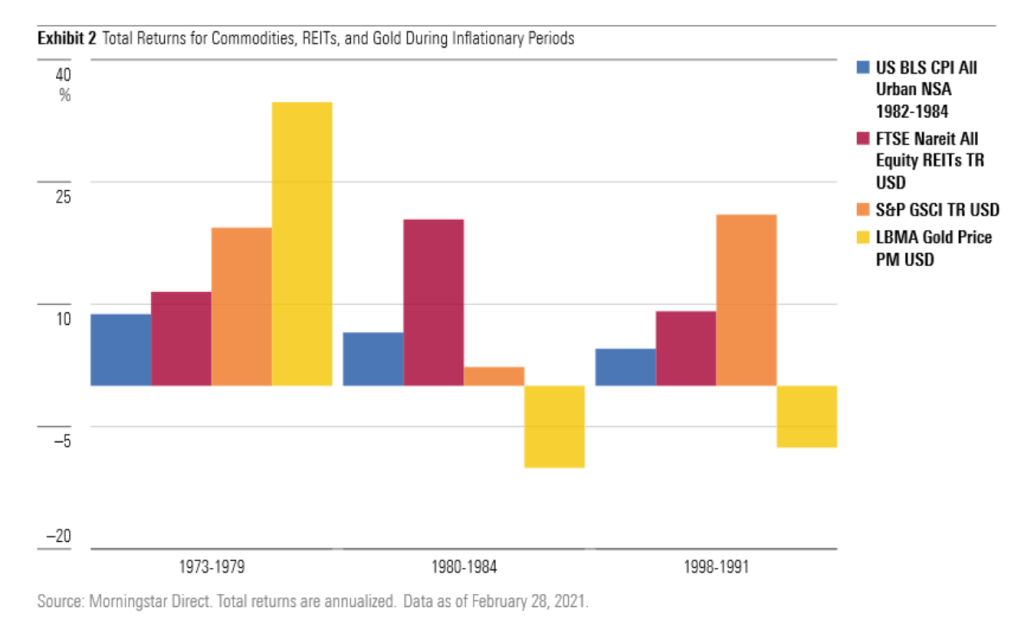
A report by LendEDU finds Bitcoin is making a lot of headway with investors over Gold. 56% said Bitcoin is a better investment to maximize profits, versus just 33% for gold. However, they still see gold as a better store of value against inflation, with 50% answering gold  (including 67% over the age of 54), and 39% saying bitcoin.

On behalf of New Jersey-based LendEDU, research firm Pollfish surveyed 1,000 Americans on April 21st to see how they would deploy an initial US$50,000 to build a retirement nest egg, and found gold only had a slight edge: 45% versus 42% for bitcoin. However, if the goal of the $50,000 investment is strictly to maximize profits, 49% specified bitcoin, versus just 37% for gold.

LendEDU Director of Communications Mike Brown says Bitcoin is up roughly 68,189,500% since its start in 2009, while gold is up 105% over the same period.

“Gold is proven as a reliable investment and safe haven against market volatility and inflation, which is especially relevant in 2021. Bitcoin is becoming a competitor for just the same thing, although its wild price fluctuations are not for the faint-hearted and attract a younger, more aggressive investor … We found gold is still trusted for more cautious investing, especially amongst older Americans, but bitcoin is closing that gap and is preferred for speculative investing, especially with the younger crowd.”

LendEDU’s Mike Brown

Brown says the survey results were “none too surprising; bitcoin has periods of monumental gain that make it a salivating buy for aggressive investors trying to make a profit. But it also has periods of monumental loss and faces constant regulatory and institutional scrutiny that make it a questionable buy if your first investment priority is protecting the money you already have.”

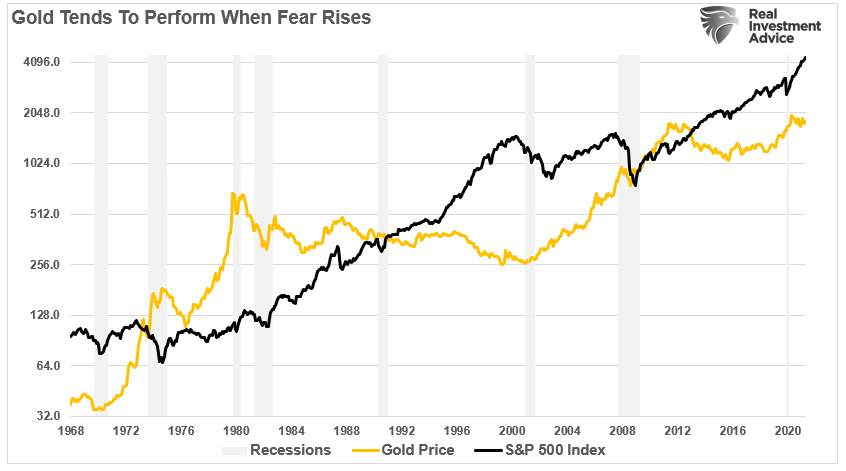
Gold, on the other hand, doesn’t have eye-popping surges like bitcoin but is safe and has historically delivered steady profits to the patient investor looking for a financial safe haven.

The survey reveals a younger bias towards bitcoin and an older population favoring gold. Thus, 56% of those between the ages of 18 and 24 thought bitcoin was the better speculative asset, while 29% thought gold was. The percentages were 29% and 55%, respectively, for poll participants over 54.

Similarly, 42% of the 18 – 24 cohort thought bitcoin was a better store of value to protect against inflation, while 44% said gold. For the over 54 cohort, those percentages were 16% and 67%, respectively.

Brown found the 35-44 age group surprising as they were quite bullish on bitcoin in all four questions and broke with the normal trend that had older respondents favoring gold and younger ones opting for bitcoin. “This could be due to this demographic getting in on bitcoin in the extremely early stages, around 2010 when they were in their mid-twenties or early-thirties.”

When asked if they have invested in bitcoin or gold recently amid concerns about inflation, 15% had invested in gold, 31% in bitcoin, 15% in both, and 36% in neither.

For retirement investing, gold still holds a dwindling edge

In another part of the survey, poll participants were given four increasing monetary values and asked if they would rather invest each value in either bitcoin or gold to build a retirement nest egg that they couldn’t touch until retirement. In nearly every scenario, gold was the preferred retirement investment choice over bitcoin. Only when $1,000 was the starting amount did more respondents (47%) want to invest in bitcoin over gold (43%).

But as the starting amount went up, so too did the risk, which is likely why respondents switched over to the less-risky, less-volatile gold to start building their retirement nest eggs as the questions progressed. As Brown notes, “Retirement accounts should be stable, and you’ll lose a lot less sleep investing $50,000 in gold instead of $50,000 in bitcoin.”

Even so, no matter the initial investment amount, most age groups preferred building their retirement nest egg through bitcoin rather than gold. For example, 46% of the 45-54 cohort wanted to invest $50,000 in bitcoin compared to 41% who said gold. Continue Reading…

Death and Taxes, Cross-border Style

Dollar Printing: Global Macro Shifts; Franklin Templeton Investments Licensed from Gettyimages

By David Cieslowski, CPA, CA, CFP, CIMA

(Sponsor Content)

As Benjamin Franklin famously wrote, “… in this world, nothing is certain except death and taxes.”  For US citizens, as well as some Canadians who own US assets, the first may be swiftly followed by the second.

In the United States, an estate tax is applied to the transfer of the taxable estate of every deceased  American citizen, resident or non-resident, including green card holders or others with dual US-Canadian citizenship. Even Canadian citizens who have never stepped foot in the United States, but hold US securities or other US assets, could find their estates subject to a tax on situs assets, which are defined as assets with a tangible or intangible direct US connection or location.

The low-down on US estate tax

Estate tax falls into the category of transfer taxes, as opposed to income tax. It can be substantial; those in the top marginal tax bracket may pay up to 40% on estates with assets of more than US$1 million. Moreover, for US citizens and residents this tax applies to assets held worldwide. Real estate ownership alone can easily exceed those limits.

Fortunately, the reality is somewhat more encouraging. Only around 2% of the US population actually pays estate tax, largely because of exclusions that effectively spare all but the largest estates.

The two most common exclusions are:

  • Annual exclusion of US$15,000 per person
  • Lifetime credit of US$11.7 million for 2021 and indexed annually. Something of a political football, this credit can rise or fall along with changes in government[1]. The current credit limit is set to expire at the end of January, 2025.

These annual exclusions are portable, meaning they can be used by any descendant of the deceased.

The gift that keeps on giving: to the IRS

In the battle of wills between those determined to transfer all of their wealth to succeeding generations and those determined to “tax to the max,” many strategies have been tried and failed. Gifting assets to relatives while the owner is still alive has been one of the more popular tactics. Not surprisingly, the IRS employs two additional taxes to thwart such attempts at tax-free wealth transfer.

The first is a garden-variety gift tax. For non-spouses, annual exclusions are the same as for estate taxes. For spouses they are more generous: unlimited for spouses who are US citizens and $159,000 for 2021 (indexed annually) for spouses who are not. Continue Reading…