Last summer I thought I’d be financially free by 40. Reality – and unplanned expenses – set in this year and I’ve adjusted that ambitious projection by five years. I’m still on track to reach a net worth of $1 million by the time I turn 41, but financial independence will have to wait a few more years.
Here’s why:
Remember, financial independence doesn’t necessarily mean retirement. It simply means the date your income from investments exceeds your day-to-day expenses so that you no longer have to rely on regular employment to meet your needs.
My initial projection was indeed ambitious – with us having a paid-off mortgage by 2020 and increasing the income withdrawn from our business by 100 per cent (from $3,000 per month to $6,000).
But borrowing $35,000 to develop our basement this year meant we couldn’t continue our aggressive mortgage pay-down, and a four-year car loan has cut into our ability to save as much as we wanted.
That’s okay – on paper the original plan didn’t factor in these expenses, plus I hadn’t fleshed out exactly how I’d make those numbers work. Now I have a better idea, but unfortunately it’ll cost us five years. Here’s our financial Freedom 45 plan:
Financial independence at 45
In late 2016, once we pay off the HELOC and car loan, we’ll have $27,000 per year to save toward our ‘findependence’ goal. With that amount, we’ll put $12,000 into my RRSP and $10,000 into our TFSAs, plus throw an extra $5,000 payment toward our mortgage.
That pushes our mortgage freedom date back to January 1, 2025. At that time, our home should be worth $600,000 (using a conservative 3 per cent annual growth rate), my RRSP should be worth $380,000, tax-free savings accounts should total in excess of $150,000, and the commuted value of my defined benefit pension will be roughly $310,000.
The key to paying our monthly expenses after financial independence will come from our business income. We currently withdraw $3,000 per month from our small business, which includes income earned from three websites, freelance writing, and from my fee-only financial planning business.
My original plan showed business income increasing to $6,000 per month in five years, but without any clear path to explain how to double revenue. And, after losing my main freelancing gig at the Toronto Star, this goal seemed unrealistic.
But the fee-only planning service has gone better than anticipated – earning $10,000 in less than one year and expected to grow to $18,000 in year two as existing clients stay on and I continue to add one or two clients per month.
After completing the CFP certification in two years I’ll have the opportunity to ramp up my efforts and potentially offer fee-only planning services full-time. At that point, between existing and new clients, the service could bring in roughly $36,000 per year.
My three blogs collectively earn about the same – $36,000 per year – after expenses and so if I can maintain or increase that income then I’ll be able to meet my $6,000 per month goal for business income.
Our projected expenses haven’t changed. After the mortgage is paid off we could live comfortably on $36,000 per year, which leaves the additional $36,000 of income to go toward taxes, short-term savings, and retirement.
Final thoughts
A financial plan is just words on a page unless you commit to taking action. Even if your financial independence date seems like a moving target, it’ll become more precise as you monitor and update projections based on your true reality.
While it’s disappointing to push financial independence back five years, it’s comforting to know that I’m zeroing in on a target date that’s based on reality and not a wild projection.
Editor’s Note:You can find the original version of this blog at Boomer & Echo earlier this week, here. Note too the several comments at the bottom. When we can coordinate at both ends, we hope to make Robb or Marie’s blog available here as many Thursdays as we can manage. Also, in his original headline, Robb used the phrase “Findependence Date.” When I asked why not “Day,” he said he “didn’t want to steal your thunder.” I realize that good bloggers respect others’ intellectual property but let me make it clear that I’m fine with people using the phrase Findependence Day and Findependence. Half the point of this site is to bring these terms into general usage and displace “Retirement.” — JC
My latest blog for MoneySense.ca revisits the topic of Decumulation, a subject to which we gave full column treatment in the print magazine early in the fall. Think of Decumulation as the mirror image of Wealth Accumulation. And of course, here at the Hub we have sections devoted to both.
For one-stop shopping and archival purposes, we’re publishing the blog below as well, with some different subheads, links and the addition of an illustration and a photo of Decumulation Institute founder John Por.
By Jonathan Chevreau
With 10,000 American baby boomers turning 65 every day, plus 1,200 Canadian boomers, there is fast approaching a major sea change in how this generation handles their investments.
When you’re working, things are somewhat automatic. Your employer deposits your paycheque into your bank account perhaps every second week, conveniently withholding income taxes at source. Perhaps you’ve automated your savings program and pension contributions.
In short, you are in Wealth Accumulation mode, and so likely is your financial advisor, since he or she is also probably personally in the same mode.
The Decumulation Institute
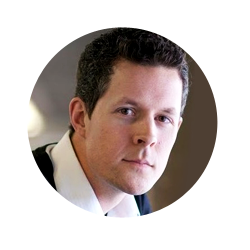
John Por, Decumulation Institute
But once you turn 65 or cease to draw a full-time salary, you are now in the “Decumulation” zone. We devoted a column to Decumulation in the September issue of MoneySense, in which we highlighted a new undertaking by John Por called the Decumulation Institute.
Last week, I attended the second meeting of this group, which includes Malcolm Hamilton, the retired actuary who continues to be quoted by this magazine and others. Except for John and Malcolm, most of the attendees didn’t wish to be identified or quoted directly.
1,500 Canadians will retire each working day until 2034
In his progress report, Por said that by the year 2022, some $2 trillion in financial assets held by various Canadian financial institutions will be converted into retirement income. Over the next 15 to 20 years, he says 1,500 Canadians will retire each working day. Record keepers on average roll over about 30% of Defined Contribution pension assets at the retirement of the members of those plans.
Por’s research shows that bank-based advisors are “poorly trained in discussing retirement income issues,” in part because of the focus on Wealth Accumulation. Por says a mindshift is required to go from Investments to Income.
From the perspective of individuals preparing for this shift, a number of things have to be considered. These include adjusting lifestyle expectations, considering longevity risk, saving more money, taking more investment risk or simply postponing retirement.
Por has created a website at www.decumulation.ca and begun work on Decumulation Workshops that may help DC pensions, financial advisors or possibly their clients prepare for this transition.
It was Por’s pioneering work on Decumulation that prompted us here at the Financial Independence Hub to include sections on both Wealth Accumulation and Decumulation, as well as Longevity & Aging.
Advisors slow to make the leap?
In my experience, relatively few financial advisors have made this leap. One that comes to mind because he’s written a book about it is Daryl Diamond of Diamond Retirement Planning. The second edition of his book, The Retirement Income Blueprint, expertly maps out the terrain. Rogers Group Financial’s Clay Gillespie is another who has a similar focus.
Both of them are listed in the Getting Help section of the Hub (as is MoneySense’s online directory of fee-only planners). A third, who is also contributing articles on Decumulation for the site, is Doug Dahmer, of Emeritus Retirement Income Specialists in Burlington. He provides a number of tools and even games that let you run “what if” scenarios on life expectancy, inflation, timing of government benefits, tax rates etc.
Jonathan Chevreau is MoneySense’s editor-at-large and recently launched the Financial Independence Hub. (https://findependencehub.com/). He can be reached at jonathan@findependenceday.com
We’ve mentioned Mark Venning and ChangeRangers.com several times in this site as well as sister site FindependenceDay.com. His insights on Aging and Longevity are a big reason why we have included a regular section of the Hub on this topic. One of his aphorisms is particularly insightful and directly related to financial planning and financial independence: “Plan for longevity, not retirement.”
As the previous blog in this section (by Doug Dahmer) explained, the fatal flaw in most retirement plans is failing to take into account extended longevity. Mark also regularly writes on this theme, as in a recent piece on Financing Longevity, which also provides a nod to the Financial Independence Hub.
Below, specially for the Hub, Mark has composed a year-end reflection on these themes, based on his recent travels. We hope to run more like this in the new year!
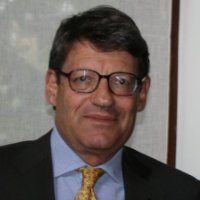
Mark Venning, ChangeRangers.com
By Mark Venning,
Special to the Financial Independence Hub
Hardly a day goes by that there isn’t some symposium, book or report (not to mention a blog post or three like this one) about an aging world, longevity and retirement. You can even Google search longevity calculators that can project how long you can expect to live. It’s an aging obsession.
As Ted C. Fishman says in his 2010 book, Shock of Gray – “…although the aging world is the sum of choices made by large populations, how we navigate the future of this world – how we love and care for ourselves and those we cherish – will also be an intensely personal matter.”
What, no pension plan? No early retirement package for the owner?
Of course not, you’re an entrepreneur and not dependent on anybody else to look after your welfare. But have you looked at the hard realities of exiting from your business to a comfortable and happy retirement? There are some special challenges.
When you do start looking it’s hard not to be envious of the friends and family on well-funded civil servant or big corporate pension plans. How did you miss that concept? Well, it may be too late now to change career paths, but it’s not too late to plan your exit strategy. Continue Reading…
Below is the text for a speech I delivered Monday evening at Toastmasters Port Credit. I’ll be devoting some full blogs to Toastmasters in time, probably under the Entrepreneurship section, because it helps people of any age cultivate two critical skills: public speaking and leadership. Since the idea is to speak without notes, my actual delivery was not identical to what you see below. It has been adapted for the blog but in a few days I may put up a video of my performance, which was clocked at around eight minutes. I imagine this expanded version would take 15!
Jon Chevreau (Twitter).
Thank you Mr. Toastmaster, fellow Toastmasters and esteemed guests. As I look around this room, I see a mix of people: everyone from students and those just embarking on the workforce to people who are already retired.
I’ve worked as a financial journalist for more than 20 years and can tell you the word Retirement is a favorite word of both the financial industry and the media. It’s a handy way to depict a far-in-the future “dream” that conveniently helps banks, mutual fund companies, insurance companies and others sell various financial products, from funds to annuities. And we in the media are almost as fond of the term retirement: I’ve seldom witnessed a newspaper, magazine or web site that turned away financial advertising!
I’m 61 and you could call me semi-retired. But my message to the younger people in the audience, and even some of the middle-aged ones who fear they’ve not saved enough, is FORGET RETIREMENT!
Is this heresy? Not at all. Because there is a better term: Financial Independence. As some of you may know, a month ago I launched a new web site called the Financial Independence Hub and everything I’m saying here can be found at the site.
XY Planning’s Alan Moore
In fact, it includes a guest blog by Alan Moore of XY Planning Network in the US who posted a blog on exactly the topic I’m talking about here. The X and Y refers to Generations X and Y, so he is providing financial planning advice to millennials and young people. And he too is telling them to forget about retirement but instead to seek Financial Independence.
Aren’t the two terms the same thing? Not really. To me, Retirement is the full-stop retirement our parents or grandparents enjoyed if they were lucky. They got a job out of college, enrolled in a Defined Benefit pension that guaranteed a certain steady future stream of income, hung in for the gold watch for 30 or 35 years, then retired at the traditional retirement age of 65. They could now watch day-time TV, golf, nap, play bridge or putter in the garden to their heart’s content for a decade or three. This is what I call the “full-stop” sudden retirement.
Perhaps some of you here are now enjoying such a retirement. Like Mark over there.
Show of hands: how many of you younger people here think they’ll be able to rely on a DB pension when they’re as old as Mark or me? And how many think they’ll stay with a single employer long enough to collect a big enough pension that they’ll never have to work again?
To the young, Retirement is a remote unattainable concept
The problem with the term Retirement is that it seems so terribly far away for young people. The official retirement age keeps rising: it’s now 67 for younger folk instead of 65, if you’re talking about the eligibility age for Old Age Security, and I wouldn’t be surprised if it reached 70 at some point. So telling a 20-year old they should cancel their SmartPhone service in order to save money for a retirement half a century away is hardly an inspiring message, is it?
But that’s what all the retirement peddlers want you to do: put away 10% or preferably 20% of your income by practicing delayed gratification. They may tell you that you’ll need a million dollars or more in order to retire one day. Too often, sadly, young people hear that and figure it’s so impossible they may as well give up and spend it while they have it.
In other words, they are telling young people that in order to enjoy a decade or two of leisure when you’re old and grey, that you need to deny yourself pleasures like travel or eating out while you’re enjoying your youth.
Let me tell you, any of the grey hairs here would probably love to take their retirement savings and use it to book passage on a time machine that would let them relive the Swinging Sixties. If you’re 20 today, I imagine that your 70-year old future self would feel the same way about your life right now.
A more attainable goal
So what do I suggest as a substitute for the word Retirement? I call it Findependence, which is just a contraction of Financial Independence. I’ve written a book, Findependence Day, which is just the day you’ve reached Financial Independence. The ebook I talked about in my third speech here is a sort of “Coles Notes” summary of that book.
Financial independence is generally used to describe the state of having sufficient personal wealth to live, without having to work actively for basic necessities.[1] For financially independent people, their assets generate income that is greater than their expenses.
In practice, I think this means being able to survive without the single stream of income most call a full-time job.
Leaving the nest at 27 is NOT Financial Independence!
Defined this way, Findependence can occur decades before the traditional Retirement, so it’s a goal that young people may find is more worth shooting for. Interestingly, last week I blogged at MoneySense and at the Hub about a study about young people and their financial readiness to leave home. They used what I consider an incorrect definition of financial independence: that if they left the nest and stopped depending on the Bank of Mum and Dad, that they were therefore financially independent. If they could get a job and pay their rent, that was the definition, which resulted in the absurd headline that most millennials hope to be financially independent by age 27.
I don’t think so. Even with DB pensions, the earliest most people aspired to Financial Independence was 55, which is the earliest some pensions permit early retirement. Anyone hear of Freedom 55? That London life campaign was one of the most successful sales pitches for Early Retirement. Yet only a few government workers or business executives who strike it rich ever retire that early.
Why do billionaires keep working?
Why is that billionaires like Warren Buffett continue to work? Or young tech entrepreneurs like Mark Zuckerburg? Don’t you think Zuckerburg, who’s all of age 31 or so, couldn’t be findependent by now? Obviously, they have passion and are driven by purpose.
What does that tell you? Age 55 is way too young to “retire’ in the classic sense of doing nothing: playing golf, watching daytime TV, reading all day. Yes, many people THINK they’ll travel all the time once they retire but as I wrote on another blog last week, travel is overrated and expensive, and is really something you would only want to do some of the time, not ALL of the time.
Integrating the Three Boxes of Life
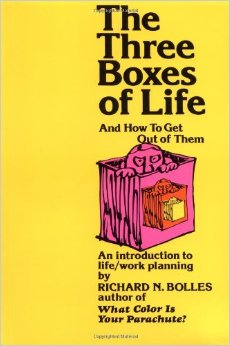
Findependence is about integrating education, work and play. On my sister site, Findependence.TV, I’m interviewed about a concept called The Three Boxes of Life, which is the title of a classic book by Richard Bolles. In the old days, we started life in the first box, Education, spent 15 or so years there, then graduated to the second box, Work. We stayed there for 35 to 50 years, and then came traditional Retirement, the third box of total play and leisure.
On the video, I talk about there being really only a single day: you work a bit each day and make money, you learn a bit each day and at the end of the day, you may “play” by getting some exercise, reading, watching TV or whatever.
On the site, there are blogs on concepts like mini-retirements and the four-hour workweek. Wouldn’t it make more sense to take the occasional mid-career sabattical or series of three-month vacations earlier in life, rather than saving it all for ten or 20 years of doing nothing when you’re too feeble to appreciate it? That’s why the subtitle of Findependence Day as well as The Financial Independence Hub is “While you’re still young enough to enjoy it.”
Plan for Longevity, not Retirement
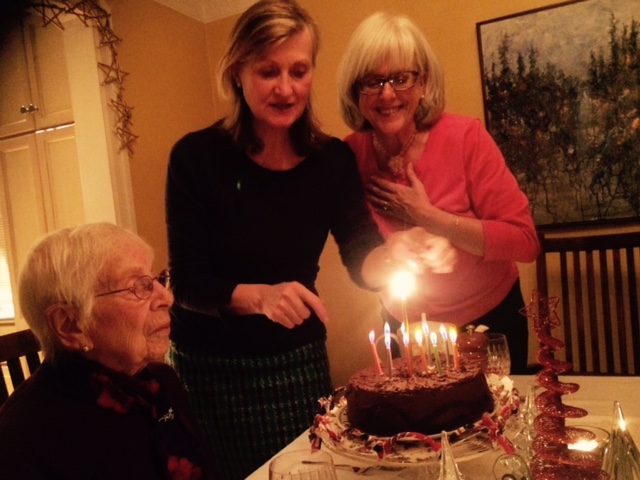
Meta celebrates her 98th birthday. With Alizon Sharon (c) and Ruth Snowden (r).
Life expectancies are on the rise because of advances in medical science and more of us are practicing better health habits, with a focus on proper diet and exercise.
We can all expect to live a lot longer than we once thought, which is why the “Hub” ends with a section on Aging and Longevity. There you’ll find some blogs by Mark Venning of ChangeRangers.com, who coined the phrase “Plan for Longevity, Not Retirement.” I think it’s a great concept.
And it isn’t just a theoretical concept. On Sunday, we had a dinner party for a female friend of ours who celebrated her 98th birthday. She showed us a custom-printed card from – get this – her co-workers. You see, Meta still works two half-days a week at a local printing company. So she still spends a little time in the Work box. She also reads a lot, swapping books with my wife (Ruth, above), so part of her days are in the Education box. And she still travels and parties, so that’s the Leisure box.


 Posted By