Building Wealth

For the first 30 or so years of working, saving and investing, you’ll be first in the mode of getting out of the hole (paying down debt), and then building your net worth (that’s wealth accumulation.). But don’t forget, wealth accumulation isn’t the ultimate goal. Decumulation is! (a separate category here at the Hub).

Semi-Retirement: the Halfway House between Employment and Full Retirement

As those who have clicked on some of the 37 interviews featured at this week’s Canadian Financial Summit will know, there’s a lot of content to absorb.

One of those 37 talks was my chat with Kornel Szrejber for a talk titled Semi-Retirement: the Halfway House between Employment and Full Retirement.

To find it, you need to click on this link and then scroll down to my name, or whichever of the other 36 speakers you are interested in hearing. Each name is highlighted in blue and is a hyperlink to the actual interview. At the bottom of this blog you’ll find a link to Thursday’s content, including my conversation with Kornel and PWL’s Ben Felix about the MoneySense ETF All-Stars.

Similar to my MoneyShow Zoom interview earlier this week that was also about the MoneySense ETF All-Stars 2021 edition, the video with Kornel shows me in my home office: like all regular Zoomers, some of the books I have written are not too subtly displayed over my right shoulder.

New 2nd US edition of Findependence Day

Regular readers of the Hub will likely find my interview with Kornel to be somewhat familiar. We cover the topic of Findependence, which is a term I invented and introduced with the first Canadian edition of my financial novel titled Findependence Day. You can still buy the original book by clicking on the site.

Alternatively, you can click on the “Buy US edition” tab and you can find the first US edition published by Trafford, or the just-published second US edition published by Best Books Media in New York. Apart from focusing on US financial rules, the second edition also includes end-of-chapter summaries that weren’t in the original edition. It also puts more emphasis on the “Work Optional” theme.

Victory Lap

As the title of the interview with Kornel suggests, I view Semi-Retirement as a halfway house between full traditional salaried employment and the old-time Full Retirement that used to commence the moment you reached age 65. I am now three years beyond that, so am well into what Retirement guru Doug Dahmer calls the “Work Optional” phase. Another term for this is Victory Lap Retirement, which is the title of a non-fiction book I coauthored with former banker Mike Drak.

During our chat, Kornel asks me about what I’ve been up to since I left full-time employment in 2014 and how Findependence differs from traditional Retirement. As I say to friends and family, I try to work just three or four hours a day but when you’re operating a website aiming for fresh content every business day, it’s hard to really “retire” in the usual sense of the word.  It’s all about “encore” careers, although I saw a clip on Twitter yesterday that suggested that in the post-Covid world, aging baby boomers are becoming a bit disillusioned with the Encore career idea and are increasingly inclined to really slow down and smell the roses while they and close friends and family are still healthy enough to enjoy their leisure.

More on the MoneySense ETF All-Stars

The other of my presentations at the Canadian Financial Summit was a three-way chat with Kornel and PWL Capital’s Ben Felix, about the MoneySense ETF All-Stars 2021. It’s an audio-only conversation taped in the summer and you can access it through the usual podcast platforms here. Continue Reading…

Virtual talks this week at Financial Summit and MoneyShow [continued & updated]


Yesterday, Wednesday, Kornel Szrejber’s all-virtual Canadian Financial Summit kicked off,  running until Saturday, Sept. 25. As the image above shows, you can register free. Here is the main link for info on the more than 35 presentations.

Now that Day One of the Summit has taken place, the organizers issued this update:

Good morning. If you couldn’t make it to the kickoff webinar last night, feel free to check out our recording here and then let me welcome you to the Canadian Financial Summit!

A special thank you to those of you that took the time to help us spread the word on social media, and who emailed us encouraging messages about the Summit Kickoff.

We’ve received hundreds of emails from attendees this week, so if you submitted a question, I promise that we’ll get to it, we’re just working through them in chronological order. If you don’t want to wait, then definitely check out the kick-off event video that I posted yesterday, as there’s a 90%+ chance that your question is answered in that video.

Today [Sept 23] we’re super excited to feature the following speakers (free for the next 48 hours):

Rob Carrick
Can Renting a Home Actually Make More Financial Sense for Some Canadians?

Ellen Roseman
How to Protect Yourself as a Canadian Consumer in 2021-2022 + Retirement Strategies for Canadians

Ed Rempel
Self-Made Dividends – Better than Ordinary Dividends in Every Way

Bridget Casey
What Role Should Cryptocurrency Play in Your Portfolio?

Kyle Prevost
Want an Unlimited TFSA? Move to These Countries and Build a Portfolio Tax-Free!

Ben Felix, Brendan Wood, Tim Nash
FAQs and Misconceptions about DIY Investing

Alanna Abramsky
Understanding Credit and Managing Debt

Jonathan Chevreau
Semi-Retirement: The Halfway House between Employment and Full Retirement

Mike Heroux
Are Dividend Stocks In a Bubble?  What Market Is Safe?

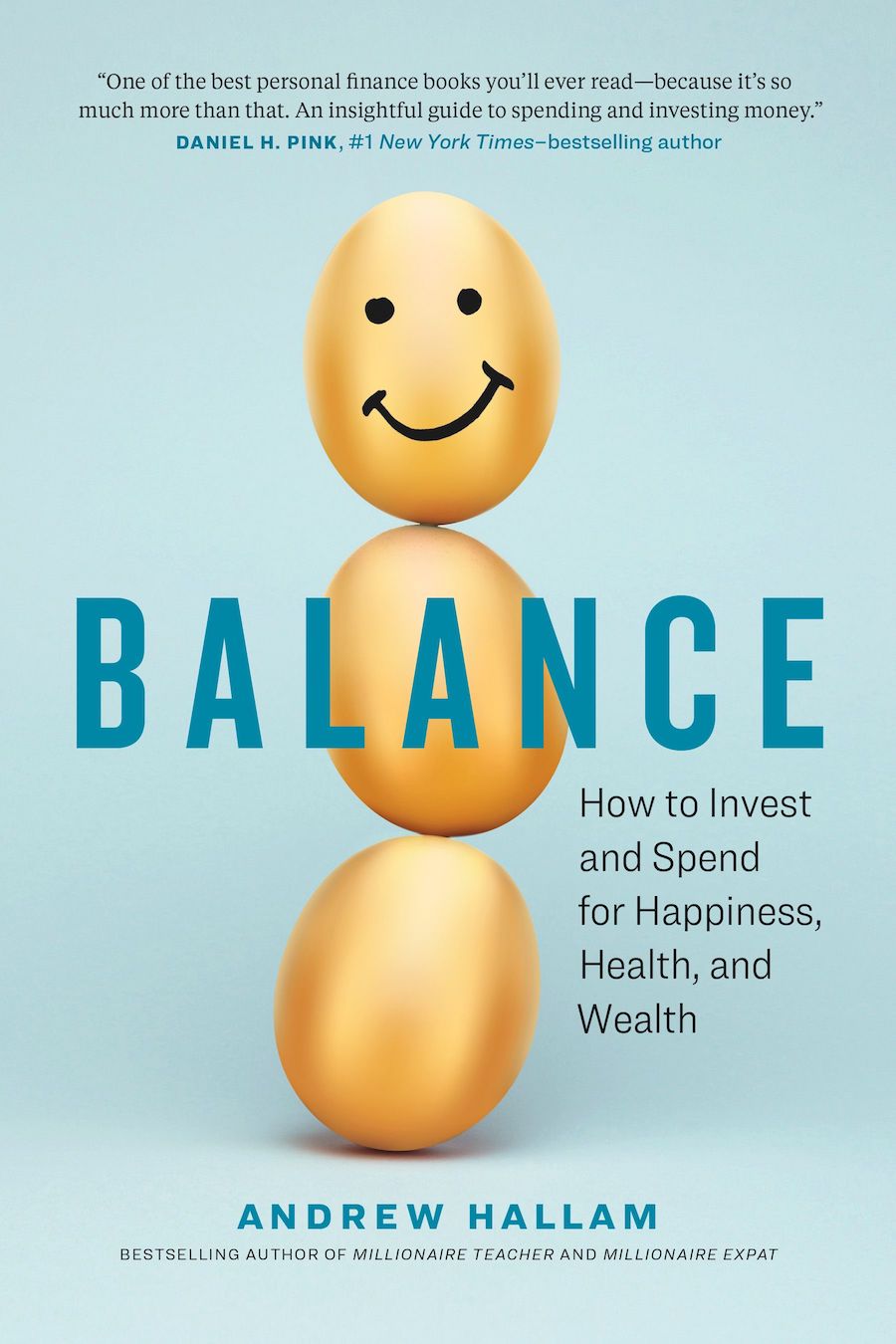
Andrew Hallam
Balance – How to Invest and Spend for Happiness, Health, and Wealth

Ben Felix
What is Factor Investing, Why Do Smart People Like It, and Can It Make You Money?

Robb Engen
Don’t Let FOMO Rule Your Investment Decisions

Click here to see your Day 1 Summit Sessions.

If the link doesn’t work, please try copy and pasting the following into your browser:
https://canadianfinancialsummit.com/2021-day-1/

My presentation is the one titled Semi-Retirement: the Halfway House between Employment and Full Retirement.

It consists of a 45-minute Zoom interview with Kornel is pretty wide-ranging but focuses on Retirement Income, as opposed to Wealth Accumulation. That’s Semi-retirement: or as Doug Dahmer and other retirement gurus have dubbed it, the “Work Optional” phase of our working careers.

Here’s the formal description for that talk:

September 23:

Should you transition into a semi-retirement instead of a full-stop retirement? What if doing so allowed you to ‘retire’ many years earlier?

Join us as we speak to someone who has done exactly that: Jonathan Chevreau, professional writer and former Editor-in-Chief of MoneySense Magazine takes us through his real-life lessons learned from transitioning to the decumulation phase and actually living off the investment portfolio

To access the video, click the highlighted title above and scroll down to Jonathan Chevreau, then click on the highlighted name.

We cover:

  • How Jon ensures that he doesn’t run out of money in retirement
  • The investment withdraw strategy that he prefers
  • How he withdraws from his investments in a tax efficient way
  • Important lessons to know before transitioning to semi-retirement or full-stop retirement 
On Friday, Sept 24, the MoneySense ETF All-stars are the focus of a three-way chat between myself, Kornel and PWL Capital’s Ben Felix (who is also an ETF panelist for the All-stars). Here’s the formal Summit description:
September 24:

MoneySense: Jonathan Chevreau, Ben Felix, Kornel Szrejber
The Best ETFs in Canada for 2021

In this video presentation, we’re going to cover the top ETFs in Canada, specifically for Canadian investors. 

These findings are based on 8 experts in this field who are part of the Best ETFs in Canada Guide which is published annually on MoneySense and written by the one and only Jonathan Chevreau.

In this interview and presentation, we’re going to talk about what the findings were with the creator of the guide, and one of the top Analysts from the panel (Benjamin Felix, Portfolio Manager at PWL Capital). Continue Reading…

How to protect against Inflation

By Dale Roberts, cutthecrapinvesting

Special to the Financial Independence Hub

It is probably the greatest (and potentially dangerous) misconception in the investing landscape, that stocks protect you from inflation. That’s simply not true. While stocks have a long term history of besting inflation, they can fail in many periods, short and extended. Stock markets do not always work as an inflation hedge. And Vanguard suggests that their effectiveness will wane as the types of stocks that can work against inflation no longer have strong representation in the broad market stock indices. We’ll show you how to protect against inflation on the Sunday Reads.

Let’s cut to the chase. It’s something I’ve known for quite some time and I’m more than happy to see Vanguard beat the drum. If you want to protect your portfolio from inflation or stagflation (its evil stag cousin) own commodities.

When you own commodities or a commodities index fund or ETF, you own the raw materials that make the products, foods and energy needed to sustain life and society as we know it.

Source: Investopedia

Stocks don’t work

Let’s get this out of the way first, shall we, from this Vanguard post, the potency of commodities as an inflation hedge

And that’s during a period when we’ve mostly had muted inflation. Stocks don’t like unexpected inflation, like the kind we’re having in 2021. That is, inflation above recent trends and expected trends.

If we go back to the stagflation period of the 1970’s and into the early 1980’s it’s a complete mess for stock investors. Have a look at MoneyChimp and be sure to hit that inflation button. This shows a negative real (inflation adjusted) return from 1968 through 1982, for US stocks. In real dollar terms, $1.00 became 94 cents.

Global stocks did not perform much better. And surprisingly neither did the Canadian stock market that was more commodities and energy-concentrated for the period.

Here’s global stocks for the period showing no return premium vs inflation. The chart is courtesy of ReSolve Asset Management.

And in this post on the Permanent Portfolio, you’ll see that even the traditional stock and bond balanced portfolio failed for an extended period during stagflation. There are other periods of ‘don’t work’ for the balanced portfolio (and for different reasons) within that chart.

Commodities hedge is strong and consistent

While stocks are not a consistent hedge for inflation, commodities have been, historically. And once again, this is during a period of mostly muted inflation, save for a few periods of unexpected inflation. Luckily for investors, that inflation has been transitory in the last few decades.

From that Vanguard post …

Over the last three decades, commodities have had a statistically significant and largely consistent positive inflation beta, or predicted reaction to a unit of inflation. The research, led by Sue Wang, Ph.D., an assistant portfolio manager in Vanguard Quantitative Equity Group, found that over the last decade, commodities’ inflation beta has fluctuated largely between 7 and 9. This suggests that a 1% rise in unexpected inflation would produce a 7% to 9% rise in commodities.

Here’s a great chart that shows gold, commodities and REITs as inflation hedges in periods of meaningful inflation. The orange bar is the commodities index.

While gold was the most explosive during the bulk of the period of stagflation, we see that a commodities basket is more reliable. Admittedly, gold can fall down as an inflation hedge in certain periods. That said, there are other reasons for holding gold as a hedge against declining real bond yields and as a form of disaster insurance and a long term hedge against ongoing currency debasement.

Image
Lance Roberts from RIA Advisors

In the above chart we see gold working in all of the stock market failures for the period shown. Again, most notably during stagflation.

I like to also hold some gold and gold stocks on the side in addition to commodities baskets. Readers will also know that I am also investing in bitcoin – that new gold or digital gold. Continue Reading…

Retired Money: Can retired Boomers afford to be the BOMAD to their kids?

My latest MoneySense Retired Money column looks at the question of whether almost-retired or already-retired Baby Boomer parents should provide financial assistance to their Millennial children seeking to get their first steps on the increasingly expensive housing ladder.

That is, is it wise for parents to cut into their own Retirement savings in order to become the BOMAD: the Bank of Mum and Dad?

It’s been said that 50 to 75% of millennials expect to tap the BOMAD for help coming up with a down payment.Click on the highlighted headline to retrieve the whole column: Should you help your adult children to buy Real Estate?

A couple of the column’s sources arose after I appeared on Patrick Francey’s The Everyday Millionaire podcast.

Francey is a seasoned entrepreneur and real estate investor who is CEO of REIN of the Real Estate Investment Network (REIN). These days, most REIN members who have at least one “door” (real estate investment property above and beyond a principal residence) are almost by definition millionaires. I appeared despite the fact our family owns no investment real estate, apart from REIT ETFs in a purely electronic portfolio: “clicks instead of bricks,” as I explained on the show.

REIN’s Patrick Francey, host of The Everyday Millionaire podcast

Interestingly, while he has helped his own kids with housing, Francey does not necessarily think parents should provide financial assistance to kids trying to break into the housing market: not if it jeopardizes their own retirement, and not if it means the kids will miss out on the character-building exercise of doing it on their own.

A similar stance came from retired mortgage broker and author Calum Ross, who also recently appeared on the podcast. Ross, of Toronto-based The Mortgage Management Group, has some experience with BOMAD as it relates to his two daughters.   “As a divorced Dad, BOMAD was restructured and now runs as a privately held entity BOD [Bank of Dad.],” Ross quips.

Ross says his parenting priorities are identical to how his parents raised him: 1) I taught them to be thoughtful, 2) I raised them with a work ethic, and 3) I taught them to save money and not spend it.

Adrian Mastracci, portfolio manager with Vancouver-based Lycos Asset Management, says BOMAD may be a great deal for the kids but Mum and Dad need to first ensure they have sufficient funding to see them through their retirement years. “Ensure that they can incur all expenses, health costs, effects of inflation, rising costs of providing for in-home services, a retirement home facility and rehabilitation costs of the current home.” Continue Reading…

Canadian Financial Summit 2021

The Canadian Financial Summit is back once again this fall with a terrific line-up of 35+ personal finance experts, including yours truly, to tackle the burning financial questions facing us today.

You’ll hear from PWL Capital’s Ben Felix, Millionaire Teacher Andrew Hallam, The Globe and Mail’s Rob Carrick, consumer advocate Ellen Roseman, along with long-time personal finance bloggers Barry Choi, Tom Drake, Mark Seed, Bob Lai, , Stephen Weyman and Jonathan Chevreau.

Topics discussed in this year’s online Summit include:

  • Buy back your family time with FIRE
  • How much does it cost to travel FOREVER?
  • How to take a tax holiday by working outside of Canada
  • Want an Unlimited TFSA? Try moving to these countries with territorial taxation
  • Are dividend stocks in a bubble?
  • The risks of investing in cryptocurrency
  • Should I have Bitcoin in my Portfolio?
  • Maximize the New Aeroplan and Post-Covid travel plans
  • Don’t let FOMO ruin your investment returns
  • Maximize Work From Home tax tips in a Post-Covid World
  • Will the Canadian Housing bubble finally pop?
  • How to setup a corporation, invest within it, and then pay yourself
  • The BEST ETFs in Canada
  • Why self-made dividends are better than ordinary dividends in every way!

I was happy to chat with co-host Kyle Prevost earlier this summer when we filmed our session about how not to let FOMO (fear of missing out) ruin your investment returns. It’s a topic at the forefront over the past 18 months as cryptocurrencies and meme stocks soared by triple and quadruple digits. Continue Reading…